

Loading, please wait...
Loading, please wait...

Transcatheter aortic valve implantation has evolved dramatically toward minimalist approaches that prioritize patient safety and rapid post-procedural recovery. During these interventions, interventional cardiologists frequently establish right radial artery access as their preferred secondary arterial entry. This secondary access site facilitates critical root angiographies, hemodynamic evaluations, and accurate valve deployment checks. However, severe vascular tortuosity and steep take-off angles can occasionally hinder straightforward catheter advancement. When conventional approaches stall, operators often face procedural delays or consider conversion to femoral access. The innovative CAST technique TAVI application addresses this specific clinical challenge effectively. By repurposing existing equipment, it delivers an elegant solution for repositioning catheters safely.
Minimalist transcatheter valve interventions depend heavily on smooth secondary arterial access to assess aortic root morphology during valve deployment. Interventional teams predominantly prefer the right radial route because it substantially lowers access-site bleeding and vascular complications compared to dual femoral access. Consequently, patients mobilize earlier and recover faster following the structural procedure. However, the arterial pathway from the right radial artery to the descending aorta presents formidable anatomical hurdles. Marked tortuosity in the right subclavian artery and brachiocephalic trunk frequently redirects catheters away from the intended path. Furthermore, an acute angle at the right subclavian-aortic arch junction can prevent a standard pigtail catheter from turning downward into the descending aorta. In elderly patients with degenerative aortic stenosis, severe vessel elongation and calcification compound this difficulty significantly. As a result, standard guidewire maneuvers often fail to steer the catheter across the transverse arch into the thoracic aorta. When operators cannot advance the pigtail catheter spontaneously, repeated manipulations increase procedural duration and radiation exposure. Additionally, aggressive maneuvers elevate the risk of traumatic vessel dissection or atheroembolic dislodgement. Therefore, cardiac teams require a reliable, non-traumatic strategy to steer secondary catheters through challenging supra-aortic anatomy.
The Capture-Assisted Safari Tracking maneuver, widely known as the CAST technique TAVI method, provides an ingenious procedural solution. Instead of introducing foreign hardware or secondary puncture sites, operators leverage the Safari XS guidewire that is already positioned across the aortic valve. During standard transfemoral valve delivery, this extra-small pre-shaped curve guidewire rests stably within the left ventricular apex to support valve deployment. Consequently, the stiff shaft of the guidewire spans across the aortic arch and down into the descending aorta. The interventional team utilizes this taut, rigid metallic shaft as a continuous mechanical rail. Under fluoroscopic guidance, the operator brings the radial pigtail catheter into proximity with the Safari guidewire inside the aortic arch. By engaging the curled loop of the pigtail around the taut wire, the system captures the catheter securely. Furthermore, the operator utilizes tension along the guidewire to alter the orientation of the pigtail tip without inducing arterial trauma. Because the Safari wire provides exceptional column support and shape stability, it easily directs the secondary catheter toward the descending aorta. Thus, this equipment-free maneuver overcomes unfavorable arch geometry while preserving the simplicity of minimalist structural interventions.
The successful performance of this repositioning maneuver relies on four sequential and reproducible operational stages. First, during the encounter phase, the operator advances the radial pigtail catheter under continuous fluoroscopy until it reaches the ascending aorta and meets the Safari wire. Second, in the capture stage, the clinician gently manipulates the catheter so its distal circular loop ensnares the stiff wire shaft. Furthermore, torqueing the catheter shaft helps loop the pigtail curve around the rigid wire rail securely. Third, the pull-down phase begins as the operator applies controlled backward traction on the pigtail catheter while maintaining wire stability. Because the Safari guidewire tracks naturally toward the descending aorta, this downward traction redirects the catheter away from the ascending aorta and arch vessels. Consequently, the catheter slides smoothly along the wire rail down into the descending thoracic aorta without resistance. Finally, during the release phase, the operator gently rotates and withdraws the pigtail loop to disengage it from the wire body. In addition, the clinician confirms free catheter movement and correct intraluminal positioning using a small contrast puff. Therefore, the team completes the maneuver in minutes without introducing foreign exchange wires or bulky guiding catheters.
Historically, when radial catheters failed to navigate complex supra-aortic curves, operators frequently established a contralateral femoral puncture. However, secondary femoral access introduces substantial morbidity, including retroperitoneal hematomas, pseudoaneurysms, and major access-site bleeding complications. In addition, adding another large-bore femoral puncture increases hospital length of stay and escalates overall medical expenditure. Furthermore, manual compression or closure device deployment at a second groin site complicates post-operative nursing care considerably. The CAST technique eliminates these clinical hazards completely by salvaging the primary radial trajectory. Moreover, the maneuver obviates the need for specialized crossing accessories, such as steerable sheaths, snare catheters, or expensive hydrophilic angled wires. By working solely with indwelling devices, the cardiac team minimizes inventory utilization and limits interventional clutter. Consequently, procedural efficiency improves markedly while overall fluoroscopy times drop. Patients also benefit directly from avoided groin complications, allowing early post-procedural ambulation and discharge. Therefore, adopting this elegant bail-out technique reinforces the clinical and economic advantages of minimalist transcatheter procedures across contemporary cardiovascular centers.
Although the CAST technique provides notable clinical utility, interventional cardiologists must maintain meticulous safety discipline during each procedural phase. Operators must constantly monitor the position of the Safari wire tip within the left ventricle during fluoroscopic manipulation. Any inadvertent advancement or aggressive pulling on the main guidewire could cause myocardial perforation or ventricular arrhythmias. Furthermore, clinicians should avoid excessive torque or forceful traction on the pigtail catheter to prevent knotting around the stiff wire. Gentle rotational maneuvers ensure smooth engagement and seamless detachment after reaching the descending thoracic aorta. Additionally, interventionalists operating in Indian centers frequently encounter elderly patients with severe thoracic vascular calcification and marked aortic elongation. In these challenging patient cohorts, forceful catheter advancement risks intimal disruption and stroke from atheromatous plaque dislodgement. By utilizing the Safari wire as an atraumatic guide, clinicians significantly decrease direct mechanical stress on the friable arch wall. Moreover, teams should always verify unrestricted pigtail mobility before injecting high-pressure contrast media for aortography. Thus, careful technique execution guarantees high clinical efficacy while maintaining absolute procedural safety for vulnerable valve replacement patients.
The technique serves as an equipment-free bail-out solution to reposition a secondary radial pigtail catheter into the descending aorta during minimalist transcatheter valve replacement. When severe vessel tortuosity or acute subclavian angulation impedes catheter advancement, operators capture the pigtail around the indwelling Safari guidewire. Consequently, the wire acts as a stabilizing traction rail that guides the catheter smoothly into the descending aorta without extra femoral punctures.
Elderly patients undergoing transcatheter valve replacement frequently exhibit elongated, calcified, and highly tortuous supra-aortic arteries. An acute angle between the right subclavian artery and the aortic arch often deflects advancing radial catheters toward the aortic valve or ascending aorta. Consequently, operators cannot spontaneously direct the pigtail into the descending aorta, which increases catheter manipulation time and elevates the risk of mechanical vessel trauma or stroke.
No, the procedure requires no extra hardware, dedicated exchange wires, or specialized retrieval snares. Instead, the technique innovatively repurposes the Safari XS stiff guidewire that the interventional team already positioned inside the left ventricle for valve deployment. By utilizing this existing support wire as a structural guide, the operator successfully navigates complex arch anatomy while lowering inventory expenses and avoiding secondary groin arterial punctures.
Disclaimer: This content is for informational and educational purposes only... Refer to the latest local and national guidelines for clinical practice.
References

Read summarized clinical updates, watch expert medical content, and earn CME certifications right from your smartphone.
Open your smartphone camera to scan and install.





The novel CAST technique utilizes the indwelling Safari XS guidewire as a tracking rail to reposition a radial pigtail catheter into the descending aorta during minimalist TAVI, overcoming challenging vascular anatomy without requiring secondary femoral access or specialized equipment.
Today
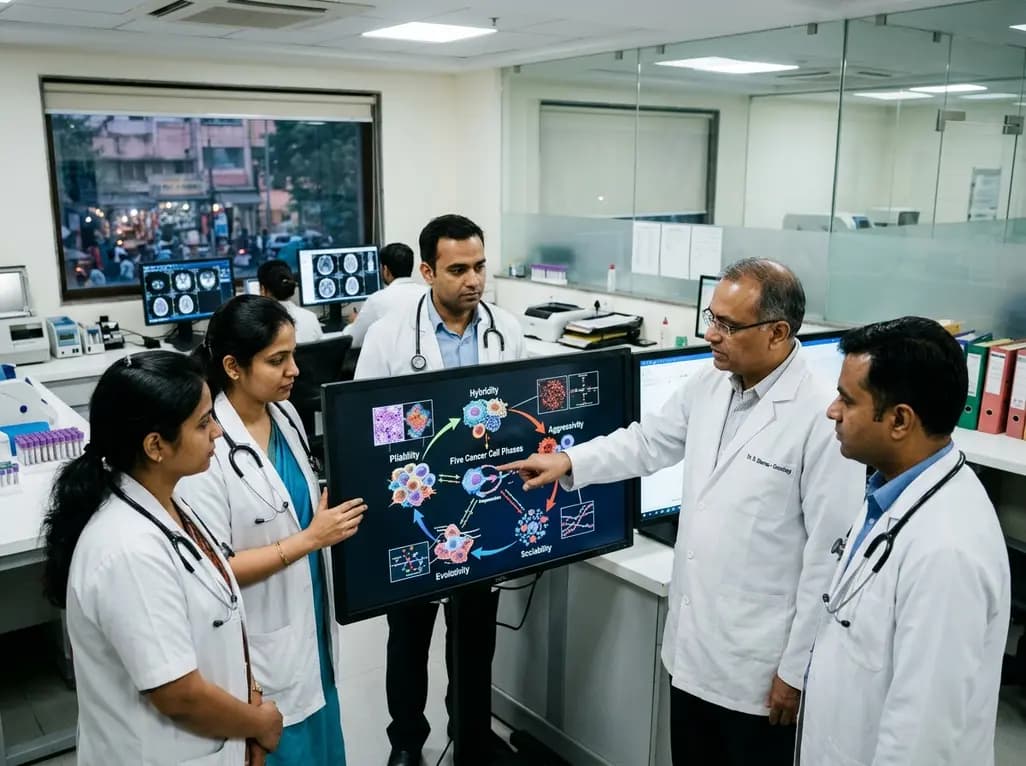
The PHASE framework conceptualizes cancer biology through five interacting processes: Pliability, Hybridity, Aggressivity, Sociability, and Evolutivity. This regulatory circuit offers a systems-level perspective on tumor heterogeneity, disease progression, and interaction-guided therapeutic strategies.
Today

Maternal cardiovascular risk factors such as hypertension, obesity, and diabetes significantly elevate offspring cardiovascular disease risk through placental dysfunction and fetal programming. Enhancing preconception screening and antenatal care offers clinicians a powerful strategy to protect long-term heart health.
Today

A retrospective cohort study reveals that lumbar spine bone mineral density does not distinguish extremity long bone fracture status in adults with severe motor and intellectual disabilities. Because age drove fracture risk rather than spinal density, clinicians must adopt comprehensive assessment tools.
Yesterday
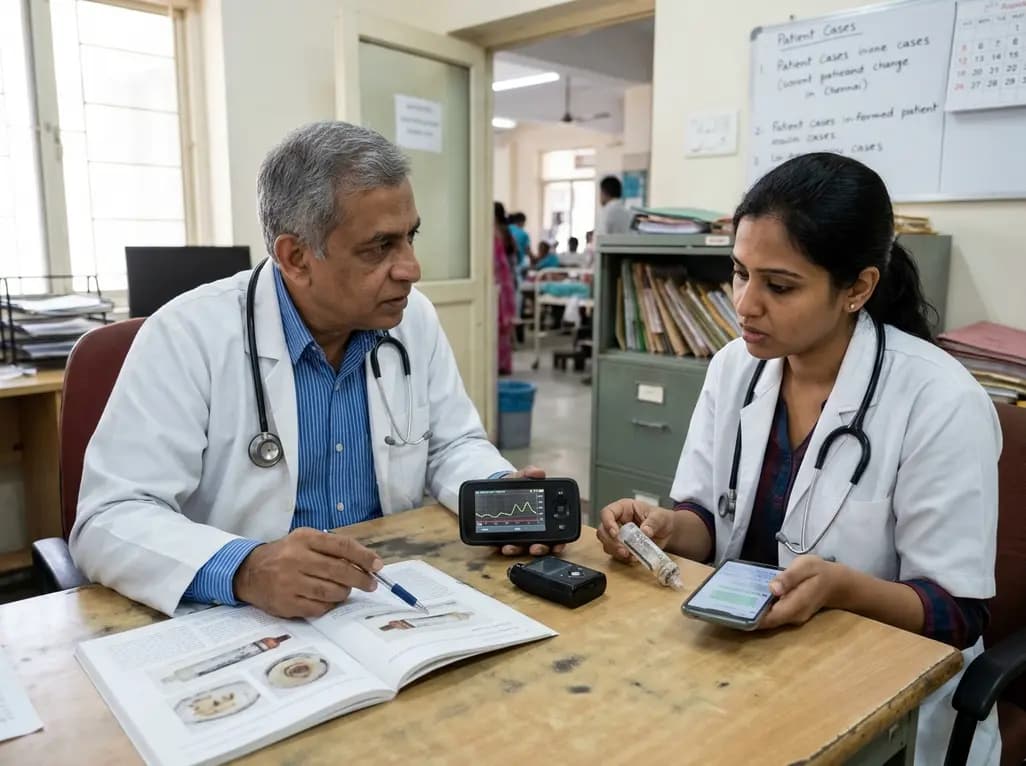
A case report details how reusing single-use insulin cartridges caused device failure and diabetic ketoacidosis in a type 1 diabetes patient using an advanced hybrid closed-loop system. The report highlights technological blindspots, mechanical degradation, and safety protocols during supply shortages.
Today
