.webp&w=384&q=75)

Loading, please wait...
Loading, please wait...
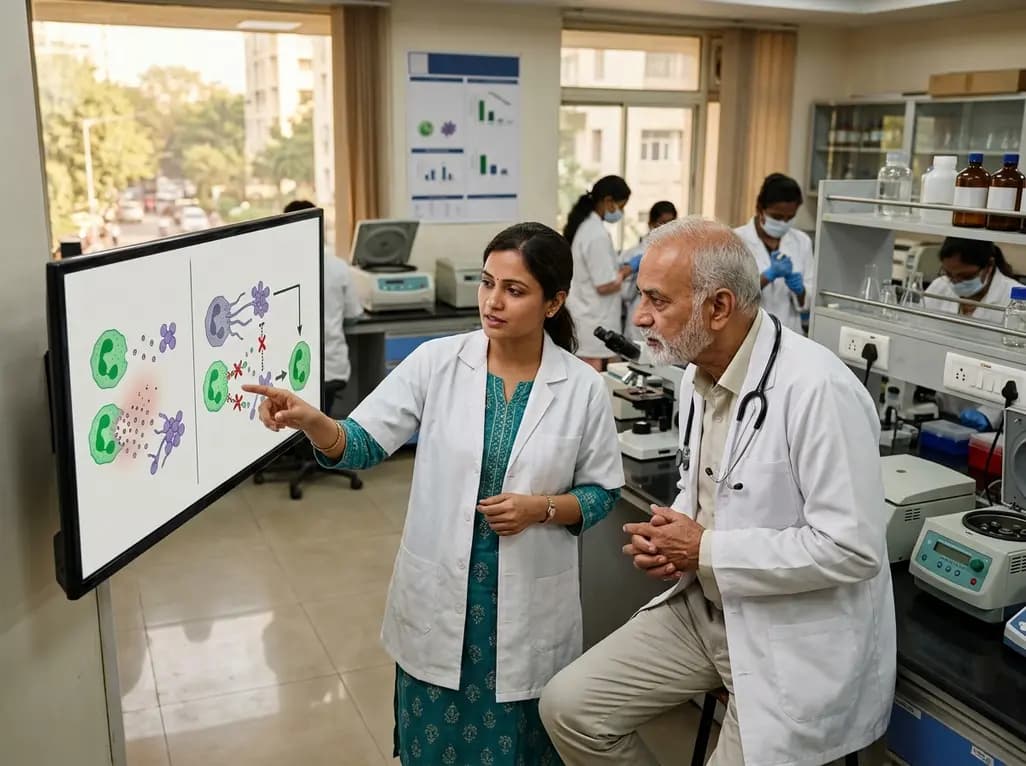
Fungal pathogens present an escalating threat to global public health. Among these, Candida albicans is a particularly stealthy opportunist. Specifically, for healthy individuals, this fungus typically resides harmlessly as part of the normal microbial flora. However, in patients with compromised immune systems, it can rapidly enter the bloodstream. Consequently, the pathogen triggers invasive candidiasis, which is a life-threatening systemic infection. Historically, clinicians have relied heavily on direct-acting antifungal drugs to clear these infections. Indeed, mortality rates for systemic candidiasis still approach fifty percent. Furthermore, the rise of multidrug-resistant species like Candida auris has complicated clinical management. To combat this crisis, researchers at the University of Sheffield recently investigated how this pathogen survives host defenses. Their groundbreaking research uncovers a novel mechanism of Candida immune evasion that actively blinds the body's first line of cellular defense. By understanding this suppression, scientists can now develop host-directed therapies to bolster patient immunity. Additionally, these therapies could complement standard antimicrobial regimens and improve survival. Therefore, this paradigm shift offers much-needed clinical strategies against emerging fungal superbugs.
Neutrophils serve as the primary responders during acute microbial invasion. Typically, these white blood cells employ multiple oxidative and non-oxidative mechanisms to destroy pathogens. For instance, neutrophils produce reactive oxygen species and release antimicrobial peptides. Moreover, they generate reactive nitrogen species, which are highly toxic to invading microbes. However, the Sheffield team discovered that Candida actively disrupts this defensive pathway. Specifically, the fungus suppresses the production of reactive nitrogen species within host neutrophils. Crucially, this suppression reduces protective molecules below their normal baseline levels. As a result, the host's innate immune response is severely dampened. This suppression is not unique to Candida albicans. Indeed, researchers observed similar effects in other critical fungal pathogens. Most notably, the multidrug-resistant species Candida auris demonstrated a matching capability. Consequently, this immune evasion allows the fungus to survive and replicate inside host tissues. The degree of this suppression also correlates directly with virulence. Thus, strains that suppress reactive nitrogen species more effectively cause higher mortality. Understanding this molecular blind spot is critical for developing modern anti-infective strategies. Therefore, studying these pathways in vivo is absolutely vital.
To understand the biochemistry of this suppression, researchers analyzed metabolic pathways during infection. Crucially, they focused on the production of nitric oxide, a key reactive nitrogen species. This molecule is synthesized by inducible nitric oxide synthase inside neutrophils. However, this enzyme requires the amino acid L-arginine as a primary substrate. Meanwhile, both the host and the fungus express arginase enzymes. These arginase enzymes also consume L-arginine, converting it into urea and ornithine. Consequently, a fierce metabolic competition occurs at the infection site. The study revealed that Candida uses both host and fungal arginases to deplete L-arginine. Specifically, using mutant fungal strains, the researchers demonstrated that the fungal car1 gene plays a major role. Similarly, host arginase-2 transgenic models showed increased substrate depletion. Thus, by consuming L-arginine, the fungus effectively starves inducible nitric oxide synthase of its fuel. As a result, neutrophils cannot synthesize sufficient reactive nitrogen species to kill the fungus. This biochemical theft represents an elegant survival strategy for the pathogen. Furthermore, it highlights the metabolic complexity of host-pathogen interactions. Identifying these metabolic bottlenecks is therefore essential. This knowledge will guide the development of target-specific therapeutic interventions.
After discovering how the fungus disables the immune response, researchers sought a way to reverse this process. Specifically, they targeted hypoxia-inducible factor 1-alpha, a key transcription factor in myeloid cells. This protein is known to regulate immune cells during hypoxia and inflammation. Moreover, previous studies established that stabilizing this factor increases neutrophil activity during bacterial infections. Therefore, the team hypothesized that stabilizing this pathway could rescue neutrophil function. Using a zebrafish infection model, they tested pharmacological stabilizers of this transcription factor. Remarkably, stabilizing the host factor successfully restored reactive nitrogen species production in neutrophils. Despite active fungal suppression, the neutrophils regained their ability to synthesize toxic nitrogen molecules. Consequently, host survival rates improved dramatically. However, when researchers blocked nitric oxide synthase-2, the protective effect disappeared. This outcome confirmed that the rescue was strictly dependent on restoring reactive nitrogen species. Additionally, the experimental models showed improved clearance of both Candida albicans and Candida auris. This immunological rescue represents a vital breakthrough. It proves that the immune system can be chemically re-armed. Ultimately, this approach avoids the need to target the fungus directly, reducing the selection pressure for drug resistance.
The rise of antimicrobial resistance demands innovative therapeutic models. While stabilizing host defenses represents a promising strategy, clinicians often achieve the best outcomes using combined approaches. Crucially, the researchers tested the synergy between host immune restoration and conventional antifungal medications. They combined the stabilization of hypoxia-inducible factor 1-alpha with standard clinical drugs. Interestingly, this combination therapy produced an additive effect. It dramatically enhanced both host survival and fungal clearance compared to monotherapy. Indeed, even low doses of antifungal drugs showed enhanced efficacy when neutrophils were active. Consequently, this synergy could help lower the required clinical doses of toxic antifungal agents. Furthermore, reducing drug exposure minimizes the risk of side effects in vulnerable patients. This discovery is highly relevant for managing patients with compromised immune systems. For example, chemotherapy recipients and transplant patients are at extreme risk of invasive candidiasis. Thus, strengthening their innate immune response is a logical therapeutic goal. This study highlights the massive potential of host-directed therapies. Therefore, future clinical research must prioritize translating these findings into medical practice.
Q1: How does Candida albicans manage to blind the host's immune system?
Candida albicans actively suppresses the production of reactive nitrogen species within host neutrophils, which are key frontline white blood cells. This suppression occurs because the fungus uses both host and fungal arginase enzymes to consume L-arginine rapidly. Since L-arginine is the primary substrate needed by neutrophils to synthesize toxic nitric oxide, this metabolic theft effectively starves the host's defenses, allowing the fungal pathogen to evade immune clearing and cause invasive disease.
Q2: What is a host-directed therapy, and how does it help fight fungal superbugs?
Host-directed therapy is an innovative treatment strategy that strengthens the patient's own immune response instead of directly attacking the pathogen. In the context of fungal infections, stabilizing host transcription factors like hypoxia-inducible factor 1-alpha successfully restores neutrophil reactive nitrogen species production. Consequently, this immune rescue helps clear drug-resistant superbugs like Candida auris. Crucially, because these therapies do not target the fungus directly, they significantly reduce the likelihood of the pathogen developing drug resistance.
Q3: Why are Candida albicans and Candida auris considered critical priority pathogens?
The World Health Organization has designated these fungal species as critical priorities due to the alarming global rise in drug resistance and a severe lack of effective clinical treatments. In vulnerable patients with compromised immune systems, these pathogens can enter the bloodstream, causing highly lethal invasive candidiasis. Because standard antifungal medications are increasingly failing, discovering new mechanisms of immune evasion is crucial for developing alternative treatments that can prevent high patient mortality rates.
Disclaimer: This content is for informational and educational purposes only. It does not constitute medical advice or replace professional judgment. Refer to the latest local and national guidelines for clinical practice.
References

Read summarized clinical updates, watch expert medical content, and earn CME certifications right from your smartphone.
Open your smartphone camera to scan and install.





A groundbreaking study reveals how Candida albicans and Candida auris actively suppress neutrophil reactive nitrogen species to disable the host immune response. This discovery paves the way for novel host-directed therapies that restore immune function to fight drug-resistant fungal superbugs effectively.
3 months ago
Explore vital recurrent stroke predictors in lacunar stroke patients managed with intensive blood pressure lowering. This analysis examines trial findings from SPS3 to uncover residual vascular risks, metabolic factors, and targeted secondary prevention strategies for high-risk neurological patients.
Today
A comprehensive scoping review synthesises evidence linking prenatal maternal mental health to long-term offspring neurodevelopment, evaluating neuroendocrine, inflammatory, and epigenetic pathways while highlighting clinical screening and future research priorities.
Today

The Directorate General of Health Services directs Indian states to halt the hazardous reuse and reprocessing of single-use medical devices. Discover regulatory implications under the Drugs and Cosmetics Act, critical infection risks, legal liabilities, and operational changes required across clinical specialties.
Today
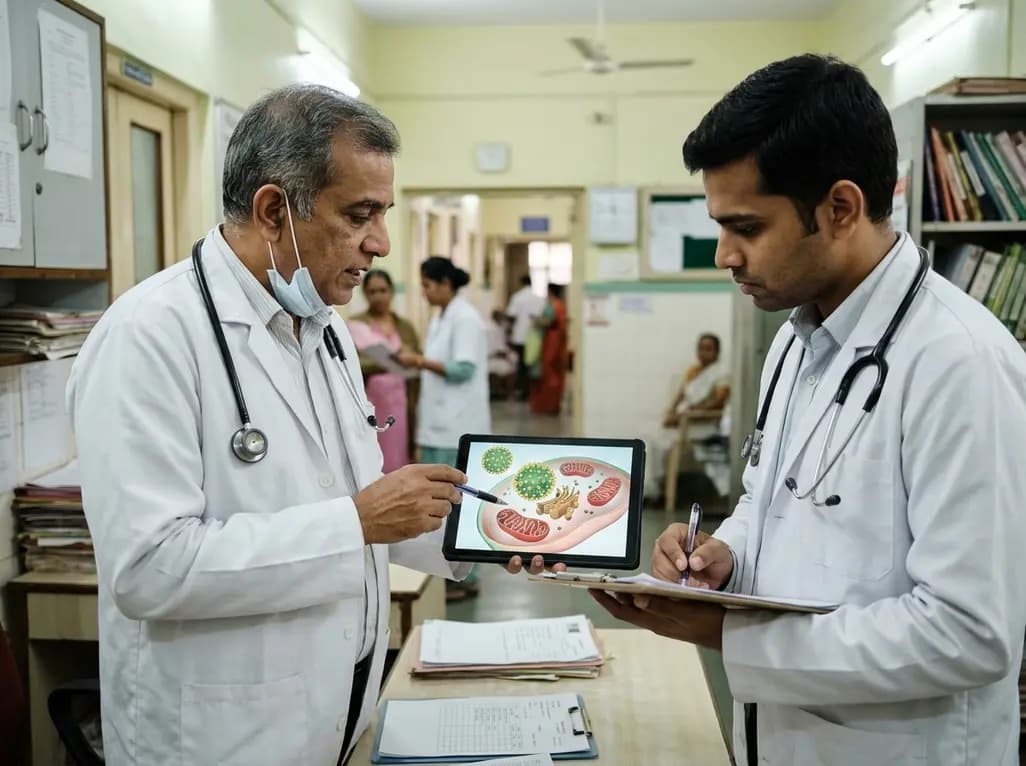
Mitochondria-targeted nanoparticles self-assembled from EGCG and L-glutamic acid effectively restore mitochondrial homeostasis, suppress synovial inflammation, and attenuate chondrocyte senescence in osteoarthritis, offering a promising disease-modifying nanotherapy.
Today

India is advancing preventive healthcare by integrating genomics, artificial intelligence, and quantum technologies. With the SANGAM programme sequencing one million Indian genomes, clinicians can unlock personalized therapies, detect cardiometabolic risks early, and curb the burden of diabetes and heart disease.
Today
