.webp&w=384&q=75)

Loading, please wait...
Loading, please wait...

Myasthenia gravis presents profound diagnostic and therapeutic challenges for modern clinicians across the globe. Consequently, recent advances have introduced innovative targeted immunotherapies, yet they also impose substantial financial strains on healthcare networks. Therefore, evaluating the total burden of myasthenia gravis is essential for designing sustainable care pathways and clinical policies. In particular, a comprehensive systematic review synthesised 44 original studies to quantify direct healthcare costs, indirect economic losses, and intangible societal detriments.
Direct medical expenses represent the most visible economic component of autoimmune neuromuscular disorders. Specifically, annual direct medical costs range between 3,500 and 12,000 euros per patient across Nordic and broader European nations. In the United States, however, annual costs climb markedly higher due to differing reimbursement models and intensive inpatient billing. Inpatient hospital admissions, frequent emergency department visits, and intensive care admissions drive the largest portion of acute expenditures. Consequently, patients experiencing myasthenic crises or severe exacerbations account for an enormous share of institutional spending. Furthermore, specialized diagnostic investigations, chronic outpatient consultations, and regular neurophysiological monitoring add persistent annual charges. Conventional maintenance regimens, including anticholinesterase agents, corticosteroids, and traditional immunosuppressants, remain relatively inexpensive. Conversely, emergency rescue therapies such as intravenous immunoglobulin infusions and therapeutic plasma exchange rapidly multiply hospital costs. Therefore, preventing acute exacerbations through diligent outpatient disease stabilization remains vital for controlling direct medical expenditures.
Indirect costs frequently match or exceed direct medical expenditure across several international cohorts. In the Nordic countries, indirect expenses average between 2,500 and 8,700 euros per patient annually. However, the highest figures emerge whenever analyses incorporate all dimensions of caregiver loss and lost work hours. Patients living with generalized muscle weakness experience profound occupational limitations, leading to premature workforce departure or forced career restructuring. In addition, frequent absenteeism and presenteeism substantially diminish workplace productivity. Social security registries demonstrate marked increases in disability pension allocations and state welfare disbursements for affected individuals. Furthermore, informal family caregivers dedicate extensive uncompensated hours to assist with daily living activities and hospital visits. Consequently, household incomes decline while caregiving demands concurrently surge. These societal losses place considerable long-term strain on national productivity. Therefore, healthcare economists emphasize that successful therapy must restore functional physical capacity to offset these heavy indirect economic penalties.
Intangible costs capture the profound subjective suffering associated with chronic illness, yet researchers rarely calculate them in monetary terms. Nonetheless, health economists estimate that intangible detriments represent nearly half of the entire societal burden of myasthenia gravis. These non-monetary losses encompass severe reductions in health-related quality of life, emotional distress, and lost quality-adjusted life years. Chronic fatigable weakness creates unpredictable fluctuations that impair personal independence, social relationships, and recreational pursuits. Moreover, patients continuously battle psychological strain, chronic fatigue, anxiety, and depression linked to potential respiratory failure. Standard health technology assessments often disregard these psychological burdens because direct pricing models cannot easily quantify human suffering. Consequently, conventional economic appraisals systematically underestimate the real impact of chronic neuromuscular weakness. Thus, holistic clinical evaluations must integrate validated patient-reported outcomes to accurately reflect overall disease detriment. When clinicians and policy leaders evaluate patient welfare, they must account for both emotional well-being and physical disability.
The therapeutic landscape for autoimmune myasthenia has expanded dramatically over recent years. Clinicians now have access to neonatal Fc receptor blockers and terminal complement inhibitors. These targeted agents provide rapid, clinically meaningful symptom relief and substantial steroid-sparing advantages. Nevertheless, their astronomical acquisition prices raise serious concerns regarding healthcare resource sustainability and equitable patient access. In many healthcare systems, an annual course of novel biological therapy exceeds hundred thousand dollars per individual. Consequently, unconditional prescription patterns could rapidly deplete public healthcare budgets and private health insurance schemes. Furthermore, high upfront acquisition prices do not automatically translate into overall budget savings unless they reliably eliminate emergency admissions. Health authorities must determine whether reduced hospitalizations and improved productivity sufficiently counterbalance the high purchase price of biological medicines. Therefore, rigorous health economic models must evaluate real-world cost-effectiveness across diverse patient populations.
Given the prohibitive expense of emerging biologics, regulatory authorities and clinical panels must construct transparent therapeutic frameworks. Specifically, health committees must formulate objective, evidence-based start and stop criteria to guide clinical utilization. Clinicians should restrict high-cost biologics to patients with refractory generalized disease who fail conventional immunosuppressive treatments. Furthermore, objective clinical metrics, such as validated quantitative disease score improvements, must substantiate ongoing drug administration. If a patient achieves stable remission, clinicians should explore structured tapering strategies or treatment discontinuation. Similarly, therapy must discontinue promptly whenever clear clinical futility or lack of efficacy occurs. In addition, clear stopping rules prevent wasteful spending and protect patients from unnecessary adverse exposure. Standardizing these criteria helps ensure that healthcare systems allocate expensive innovations fairly to those who derive verified clinical benefit. Consequently, standardized guidelines protect institutional resources while simultaneously maintaining high standards of clinical care.
Managing neuromuscular disorders in resource-constrained environments introduces unique socioeconomic challenges for practitioners and families. In countries like India, out-of-pocket spending finances the majority of medical consultations, diagnostics, and long-term pharmacotherapies. While European health systems absorb direct hospitalization expenses through state insurance, self-funding families face catastrophic medical expenditures. Specifically, recurrent hospitalizations for myasthenic crises and repetitive intravenous immunoglobulin administration can cause immediate personal debt. Furthermore, access to expensive monoclonal antibodies and Fc receptor blockers remains severely restricted for underprivileged populations. In response, clinicians must optimize affordable conventional regimens, such as azathioprine, mycophenolate mofetil, and timely thymectomy. Moreover, early identification of disease worsening minimizes expensive intensive care stays. Healthcare leaders must also advocate for universal reimbursement schemes and cheaper biosimilar formulations. Thus, combining prudent clinical management with broader policy reform will significantly alleviate the economic hardship of chronic autoimmune disease.
Inpatient hospitalizations and intensive care stays represent the largest components of direct healthcare expenditures. Specifically, acute myasthenic crises demand mechanical ventilation, emergency plasmapheresis, and high-dose intravenous immunoglobulins, which rapidly escalate total institutional costs compared to regular chronic outpatient maintenance.
Indirect costs contribute significantly by reducing workforce participation, causing severe workplace productivity loss, and demanding dedicated family caregiving time. Consequently, afflicted patients experience early retirement or wage reductions, while governments incur heightened welfare expenditures, generating societal costs comparable to direct medical spending.
Emerging targeted therapies carry exceptionally high acquisition prices that can overwhelm healthcare budgets. Therefore, objective start and stop criteria ensure that physicians prescribe these agents strictly to refractory candidates, verify continuous clinical improvement, and safely discontinue therapy if clinical futility or remission occurs.
Disclaimer: This content is for informational and educational purposes only... Refer to the latest local and national guidelines for clinical practice.
References

Read summarized clinical updates, watch expert medical content, and earn CME certifications right from your smartphone.
Open your smartphone camera to scan and install.





A systematic review assesses the economic and societal burden of myasthenia gravis, highlighting direct hospital costs, productivity losses, and the need for objective start-and-stop criteria for novel biological therapies.
Today
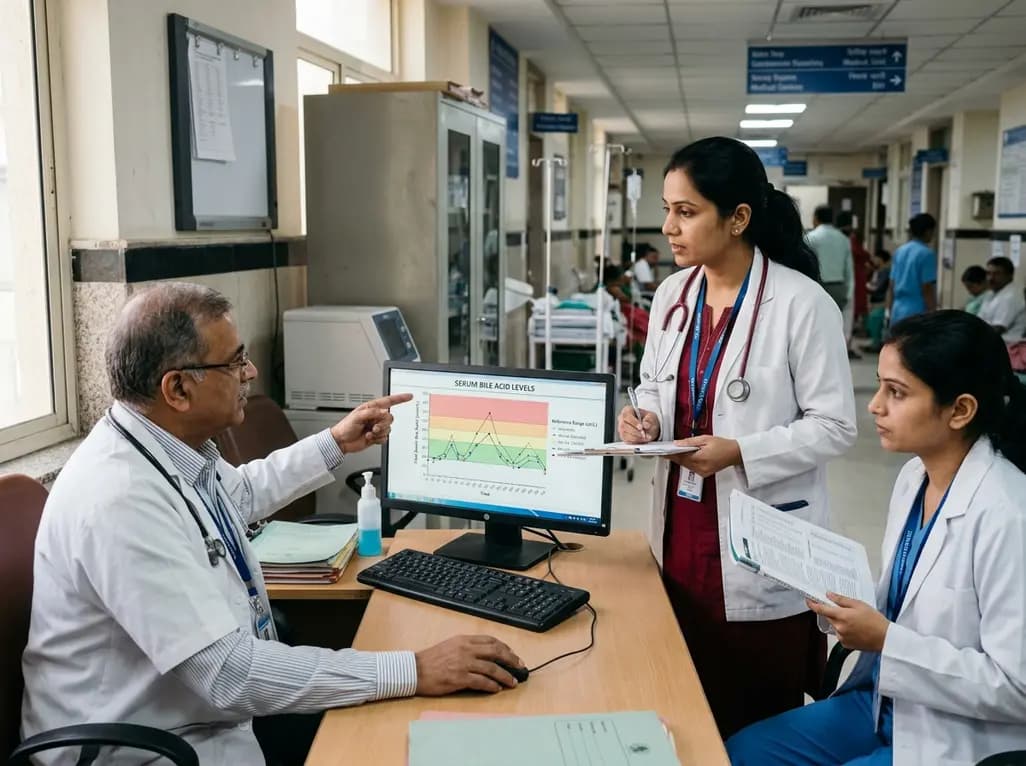
A comprehensive analysis of serum bile acid variability establishes robust reference ranges and reveals how sex, age, BMI, and smoking alter circulating profiles.
Today

A retrospective cost-minimization study of 16,695 Medicare patients reveals that pelvic floor muscle therapy and pessaries incur less than half the 1-year costs of primary sling surgery, supporting conservative management as initial therapy.
Today

A user-centered study demonstrates that AI-assisted carotid ultrasound enables nonexpert primary care staff to detect subclinical atherosclerosis. With real-time guidance and workflow optimization, this technology supports early cardiovascular risk communication and task-shifting in routine clinical practice.
Today

A hyaluronic acid-modified metal-polyphenol nanocomposite successfully eliminates reactive oxygen species in chondrocytes, halts cartilage breakdown, and promotes tissue anabolism, presenting a novel disease-modifying strategy for early osteoarthritis.
Today

A pilot randomized trial demonstrates that digital wellness applications and medically tailored meals significantly attenuate rapid weight regain following GLP-1 receptor agonist discontinuation, providing valuable transitional support for long-term obesity management.
Today
