.webp&w=384&q=75)

Loading, please wait...
Loading, please wait...
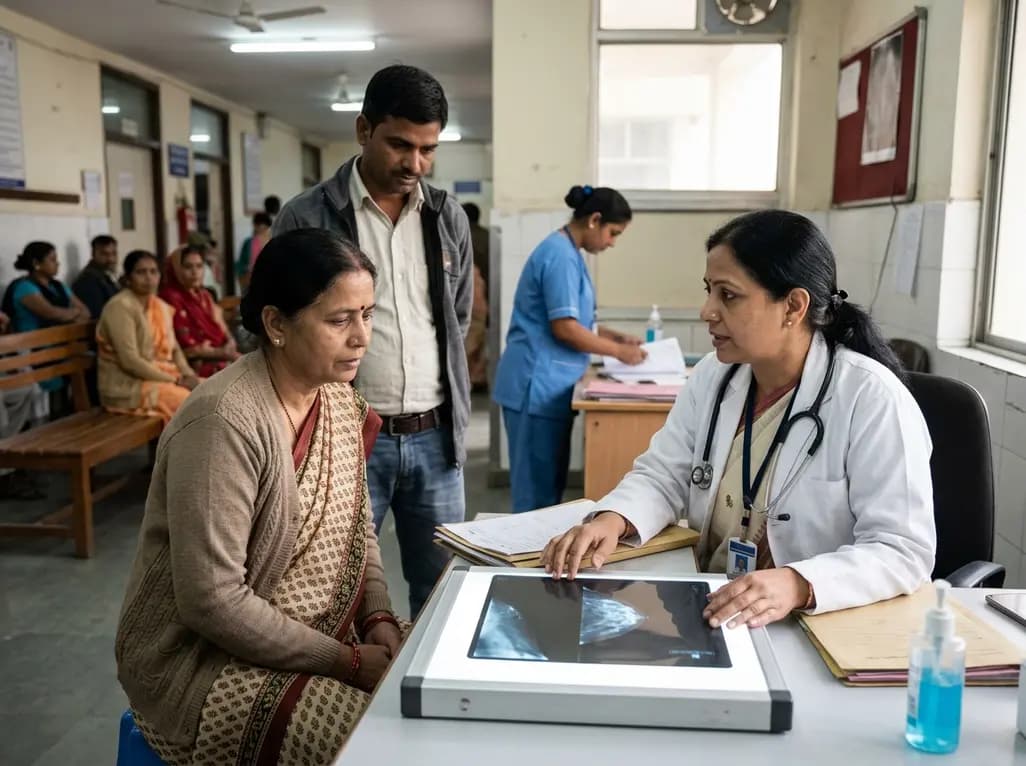
The World Health Organization recently released global five-year survival estimates, highlighting critical disparities in oncology care. Although clinical outcomes have improved, the breast cancer survival rate in India still lags behind developed nations. Consequently, this discrepancy emphasizes the urgent need for systemic healthcare reforms.
Nature Medicine published estimates showing India’s five-year survival rate at 65.7% for women diagnosed during 2017–2021. Meanwhile, the global median survival rate reaches 77.8%, exposing a significant performance gap in the domestic healthcare system. This figure means that only about two out of three Indian women survive for five years after diagnosis. In contrast, historical data from the 1990s showed survival rates between 31% and 54%. Therefore, the current statistics represent a substantial historical improvement. Furthermore, the National Cancer Registry Programme reported a 66.4% survival rate for the 2012–2015 cohort. However, Indian oncology researchers note that the nation continues to have vast scope for improvement. This slow progress highlights the ongoing challenges in delivering consistent, high-quality cancer care across diverse clinical practices. Consequently, medical educators must emphasize early screening protocols in medical schools to raise awareness. Ultimately, survival statistics serve as a primary indicator of how effectively a country detects and treats malignancies. Therefore, clinicians must focus on addressing the root causes of these unfavorable clinical outcomes. By implementing target-driven initiatives, Indian hospitals can begin to bridge this critical survival gap.
Comparing global regions exposes highly visible survival disparities. For example, survival reaches 87.3% in high-income countries, demonstrating the impact of advanced healthcare systems. Similarly, the WHO region of the Americas reports an 88.5% survival rate, while the European region shows 84%. Conversely, low-income nations struggle with a median five-year survival of only 41.9%. Lower-middle-income countries, including India, show a slightly better survival rate of 60.1%. Consequently, these numbers prove that breast cancer outcomes depend heavily on geographical location and national wealth. Developed countries have spent decades investing in early detection and robust diagnostics. Conversely, low-resource settings often lack the necessary infrastructure to deliver prompt care. Therefore, patients in developing countries face a much higher risk of mortality. To close this gap, the World Health Organization launched the Global Breast Cancer Initiative. This global campaign aims to reduce premature breast cancer mortality by 2.5% annually. Consequently, this program will save 2.5 million lives by 2040. Ultimately, achieving this target requires coordinated international action and extensive local health reforms. Additionally, national governments must align domestic policies to ensure long-term survival improvements.
India’s low survival rate reflects significant gaps across the entire cancer care continuum, rather than just treatment failures. For instance, many patients still present with advanced-stage disease due to extremely low awareness and lingering social stigma. Additionally, financial barriers prevent families from seeking immediate medical consultation. Consequently, diagnostic delays allow the tumor to progress to an incurable stage. In contrast, patients in developed countries usually undergo screening before symptoms manifest, allowing for early intervention. Moreover, the average tumor size at diagnosis in India is approximately 3.5 centimeters. Conversely, the average tumor size at diagnosis in the United States is only 1 centimeter. This stark difference indicates that Indian women often receive a diagnosis at stage three or four. Unfortunately, advanced stages carry a worse prognosis and higher treatment costs. Thus, low awareness and fear of societal exclusion directly impact patient outcomes. To resolve this crisis, healthcare providers must address these cultural and economic obstacles. Ultimately, demystifying the disease will encourage Indian women to seek routine screening exams. Furthermore, community support groups must assist patients in overcoming fear and obtaining timely diagnostic evaluations.
Disparities in medical infrastructure severely affect patient outcomes across different regions in India. Specifically, major cities contain advanced cancer centers with state-of-the-art diagnostic and therapeutic technologies. Meanwhile, rural regions and smaller towns face acute shortages of essential equipment and trained medical professionals. Consequently, patients in rural areas must travel long distances to access reliable pathology and imaging services. This geographical barrier leads to massive delays in obtaining a definitive diagnosis and starting therapies. Furthermore, the lack of local radiotherapy and systemic therapy facilities interrupts treatment continuity. Many rural patients subsequently abandon their treatment courses because of the overwhelming travel expenses. In contrast, urban patients generally benefit from better awareness and closer proximity to specialized clinics. Therefore, the rural-urban divide directly correlates with survival inequalities in Indian states. To address this imbalance, policymakers must prioritize decentralizing specialized oncology services. We must establish regional diagnostic hubs to ensure that rural populations receive timely and accurate care. Ultimately, equitable distribution of resources is essential to improve national survival rates. Additionally, mobile screening vans can bridge distance by delivering advanced diagnostics directly to remote villages.
Fortunately, the Indian government has initiated several programs to improve oncology care across the country. For example, community-based screening programs now actively target common cancers among women, including breast cancer. Additionally, the Ayushman Bharat-PMJAY scheme provides financial protection to millions of low-income families. This health assurance program helps reduce out-of-pocket expenditure, allowing vulnerable patients to afford advanced systemic therapies. However, public health experts emphasize that financial coverage represents only one part of the solution. Consequently, we must strengthen the transition from screening to actual clinical treatment. Often, administrative delays and complex referral pathways negate the benefits of early detection programs. Therefore, streamlining the patient journey from the first abnormal screen to therapeutic initiation is critical. Clinicians must also actively participate in public outreach to maximize the utility of these schemes. Furthermore, hospitals must expand their capacity to manage the growing volume of patients. By linking financial aid with efficient delivery systems, India can make high-quality oncology care universally accessible. Ultimately, these systematic, coordinated changes will empower more women to seek treatment on time and significantly improve their long-term survival prospects.
Q1: What is the current breast cancer survival rate in India compared to global figures?
Currently, India’s estimated five-year breast cancer survival rate stands at 65.7%. However, the global median survival rate is significantly higher at 77.8%. In Western countries, survival reaches over 84%. Consequently, this marked difference highlights the urgent need for India to improve early detection. Furthermore, the nation must expand clinical and medical infrastructure to ensure equitable access to quality oncology care.
Q2: Why is breast cancer diagnosed at later stages in India?
Several cultural and economic barriers lead to late-stage breast cancer diagnosis in India. For instance, many women avoid medical help due to low awareness and fear of stigma. Additionally, financial constraints prevent families from prioritizing routine clinical evaluations. Consequently, these delays allow the tumor to progress significantly. This rapid progression results in a much worse clinical prognosis.
Q3: What are the WHO Global Breast Cancer Initiative's 60-60-80 targets?
The World Health Organization established the 60-60-80 targets to improve global outcomes by 2040. Specifically, these targets mandate diagnosing at least 60% of invasive breast cancers at early stages. Additionally, facilities must complete diagnostic evaluations within 60 days of presentation. Subsequently, at least 80% of patients must undergo multimodality treatment. Ultimately, implementing these clinical standards will help reduce cancer mortality.
Disclaimer: This content is for informational and educational purposes only. It does not constitute medical advice or replace professional judgment. Refer to the latest local and national guidelines for clinical practice.
References

Read summarized clinical updates, watch expert medical content, and earn CME certifications right from your smartphone.
Open your smartphone camera to scan and install.





The World Health Organization's first country-wise estimates reveal that India's breast cancer survival rate lags behind rich nations at 65.7%. Explore the critical gaps in early diagnosis, geographical access, and clinical standards, and discover actionable strategies to bridge this public health divide.
3 months ago

A retrospective cohort study of 7,716 ICU patients from the MIMIC-IV database demonstrates that Gradient Boosting Decision Trees significantly outperform traditional SOFA scores in predicting in-hospital mortality among patients with sepsis and diabetes, with SHAP analysis providing clinical interpretability.
Today

A prenatal case highlights severe glutaric acidemia type II presenting as bilateral hyperechoic cystic kidneys at 18 weeks. Whole-exome sequencing revealed a novel homozygous ETFDH frameshift variant, demonstrating the power of rapid genetic testing in fetal renal anomalies.
Today
This article reviews the forensic and clinical complexities of acute myocarditis arising on left ventricular hypertrophy in children, highlighting early diagnostic red flags and multidisciplinary postmortem autopsy protocols.
Today

This comparative study evaluates posterior labral tears with and without glenohumeral instability, highlighting distinct demographic patterns, MRI underestimation in stable shoulders, and successful arthroscopic repair outcomes.
Yesterday

A clinical study demonstrates that early intervention with tocilizumab, either as monotherapy or bridged with corticosteroids, achieves significant proptosis reduction and resolves active inflammation in treatment-naive thyroid eye disease.
Yesterday
