.webp&w=384&q=75)

Loading, please wait...
Loading, please wait...
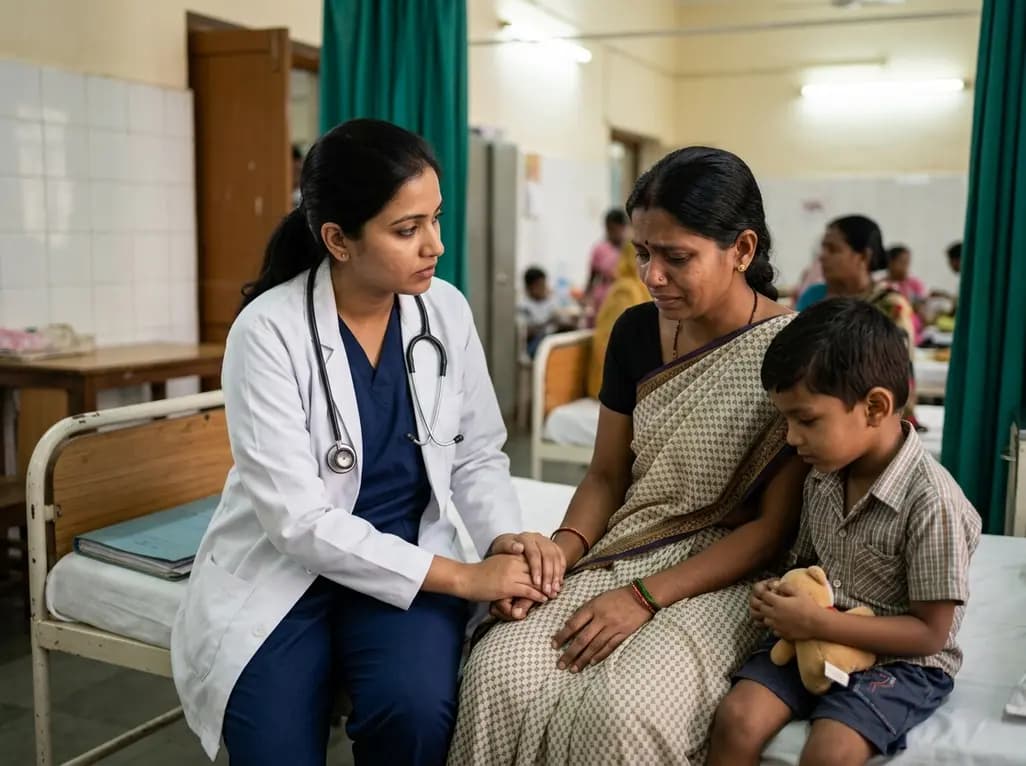
Mastering breaking bad news pediatrics remains one of the most emotionally demanding responsibilities in child healthcare. Clinical teams routinely confront critical illness, complex chronic disabilities, and acute trauma. While physicians frequently lead diagnostic disclosures, bedside nurses consistently shoulder the enduring emotional aftermath. Consequently, evaluating how pediatric nurses navigate these conversations offers essential insights into improving family-centered care and supporting the multidisciplinary workforce.
Navigating sensitive communications in pediatric units requires specialized clinical abilities. Recently, a cross-sectional study evaluated 382 pediatric nurses using a validated Breaking Bad News Ability Scale. This psychometric assessment evaluated personnel across five operational dimensions, maintaining high internal consistency and content validity. Overall, the findings revealed moderate communication proficiency, yielding a mean total score of 69.0 out of 100. Furthermore, researchers identified notable variations across clinical units and professional backgrounds. While staff demonstrated reliable conversational skills, substantial gaps emerged when facing acute deterioration or unexpected terminal trajectories. Therefore, standardized evaluation tools provide hospital leaders with meaningful benchmarks to measure baseline readiness. In addition, these instruments highlight specific areas where nurses require targeted institutional support. Pediatric nurses frequently interact with grieving parents and frightened young patients simultaneously. As a result, assessing individual competence serves as an essential step toward elevating communication standards. Ultimately, understanding current abilities allows clinical departments to design comprehensive interventions that foster resilience and elevate compassionate pediatric care.
The clinical scale investigated five distinct operational domains: pre-disclosure preparation, communication strategy, empathic response, child and family specificity, and communication self-reflection. Interestingly, nurses achieved their highest average performance in empathic response, registering a mean score of 14.2 out of 20. This outcome reflects strong compassionate instincts and natural interpersonal sensitivity among bedside clinicians. However, the evaluation uncovered clear vulnerabilities in pre-disclosure preparation and child or family specificity, which scored 13.5 and 13.6 respectively. These lower scores indicate that clinicians often enter distressful discussions without sufficient environmental and psychological arrangement. Moreover, tailoring delicate medical information to specific developmental stages and complex family dynamics presents persistent obstacles. Pediatric care inevitably requires a dual focus, addressing both the developing child and anxious caregivers. Consequently, healthcare workers must convey difficult truths without stripping away hope. In addition, structured self-reflection following emotionally charged encounters remains underutilized. Therefore, healthcare systems must systematically teach these weaker dimensions rather than relying solely on intuitive empathy during stressful bedside consultations.
Multiple demographic, professional, and educational factors directly influence how nurses navigate difficult clinical disclosures. In univariate and multivariate analyses, significant differences emerged across age, educational attainment, clinical titles, and cumulative years of pediatric nursing experience. Furthermore, clinicians stationed in intensive care units and neonatal wards exhibited distinct competency patterns compared to general ward teams. Most notably, formal communication training completed within the preceding six months strongly correlated with superior performance scores. This correlation confirms that communicative competence is not an unalterable personal trait, but rather a trainable clinical skill. Senior nursing professionals consistently demonstrated greater composure during unpredictable interactions, largely due to accumulated bedside exposure and experiential maturity. Conversely, junior nurses frequently reported elevated anticipatory anxiety and felt underprepared to handle intense parental grief. Consequently, hospitals must recognize that clinical seniority alone cannot substitute for structured professional education. Systematically tracking these workforce determinants ensures that continuing medical education programs address the precise professional needs of vulnerable nursing cohorts.
The observed deficits in pre-disclosure preparation and developmental adaptation demand deliberate organizational reform. Before initiating a difficult conversation, healthcare teams must review comprehensive diagnostic details, coordinate interprofessional messaging, and secure private physical surroundings. When clinicians skip thorough pre-briefing, conversations frequently become fragmented, causing unnecessary confusion and distress for family members. Furthermore, communicating bad news in pediatric medicine requires clinicians to respect developmental comprehension. For example, a young toddler processes illness very differently from an insightful adolescent or an overwhelmed parent. Nurses must therefore adjust vocabulary, pace, and conceptual explanations according to the developmental maturity of the young patient. Additionally, clinicians must recognize diverse family coping mechanisms, socioeconomic factors, and cultural belief systems. In multicultural clinical settings, these variables significantly shape how parents interpret diagnostic data. Therefore, pediatric teams must intentionally plan each disclosure step rather than approaching family meetings haphazardly. Establishing clear interprofessional alignment between attending physicians and bedside nurses ensures coherent clinical messaging. Ultimately, thorough pre-disclosure planning establishes emotional safety and preserves trust between families and clinicians.
To bridge the gap between clinical intent and practical execution, hospitals must integrate established communication models into continuing education. Frameworks such as the widely recognized SPIKES protocol and the region-adapted BREAKS protocol provide step-by-step guidance for delivering distressing medical facts. These validated methodologies guide practitioners through preparing the physical environment, evaluating existing patient perceptions, and obtaining explicit consent before sharing critical data. Furthermore, they emphasize delivering clinical details in concise, manageable chunks while pausing to observe emotional responses. Bedside nurses benefit immensely from incorporating these systematic techniques into daily interdisciplinary workflows. Simulation-based training using high-fidelity debriefing and standardized parent actors allows practitioners to practice difficult scenarios safely. During these realistic simulations, clinicians learn to manage sudden outbursts of anger, profound sorrow, or protective parental denial. Moreover, interprofessional simulation workshops unite pediatricians and nursing staff, thereby fostering seamless collaborative communication. Consequently, when genuine clinical crises emerge in pediatric wards, the entire healthcare team communicates with unified clarity and heartfelt empathy.
Delivering heartbreaking pediatric diagnoses takes a substantial emotional toll on nursing staff, frequently precipitating moral injury and compassion fatigue. When nurses regularly witness parental bereavement and pediatric suffering without psychological outlets, burnout inevitably follows. Therefore, healthcare institutions must establish structured peer debriefing sessions and institutional psychological support programs following traumatic deaths or distressing diagnoses. Encouraging open dialogue within clinical teams normalizes emotional vulnerability and dismantles the misconception that healthcare providers must remain stoically unaffected. Furthermore, fostering constructive self-reflection enables nurses to process their emotional reactions and glean vital professional insights from challenging encounters. Mindfulness practices, clinical supervision, and accessible mental health resources help clinicians sustain long-term empathy without sacrificing personal wellbeing. In addition, healthcare leadership should actively recognize bedside communication as a rigorous clinical competency worthy of dedicated resources. Protecting staff mental health ultimately safeguards clinical quality and reduces institutional turnover. By providing robust emotional scaffolding, healthcare institutions empower pediatric nurses to guide families through their darkest moments with enduring compassion.
Delivering distressing news in pediatrics requires managing a complex dynamic between the child, parents, and extended family. Clinicians must simultaneously adapt medical explanations to the patient's developmental age while addressing intense parental grief and fear. Furthermore, the unnatural trajectory of childhood illness heightens emotional distress for everyone involved. Consequently, pediatric healthcare professionals must balance clinical clarity, developmental sensitivity, and protective emotional support while coordinating a unified message across the entire care team.
Empirical research indicates that years of pediatric clinical experience, advanced educational attainment, professional title, and specialized clinical department significantly correlate with communication ability. Most critically, attending formal communication training within the preceding six months strongly predicts higher overall competence. These findings demonstrate that effective bad news delivery relies heavily on recent, deliberate educational reinforcement rather than inherent personal traits alone, highlighting the urgent need for regular hospital-sponsored communication workshops.
Hospitals can improve preparation by implementing standardized communication checklists and mandating pre-meeting interdisciplinary huddles between physicians and nurses. Providing dedicated, private spaces away from noisy wards ensures an undisturbed setting for sensitive family meetings. Additionally, institutions should incorporate simulation-based workshops into routine orientation and continuing education. These experiential sessions train clinicians to anticipate parental questions, align clinical objectives, manage emotional volatility, and enter difficult family discussions with confidence and strategic focus.
Disclaimer: This content is for informational and educational purposes only and does not constitute formal medical advice. Clinical decisions should align with individual patient needs, institutional protocols, and healthcare provider judgment. Refer to the latest local and national guidelines for clinical practice.
References

Read summarized clinical updates, watch expert medical content, and earn CME certifications right from your smartphone.
Open your smartphone camera to scan and install.





A cross-sectional study of 382 pediatric nurses highlights critical factors influencing bad news delivery and professional coping. While empathy scored highest, pre-disclosure preparation and developmental adaptation require targeted training to improve clinical communication and resilience.
Today

The randomized GLARIF trial evaluated early evening versus bedtime insulin glargine administration in type 1 diabetes during Ramadan. The study showed similar hypoglycemia rates and glycemic metrics between both regimens, highlighting the critical need for proactive monitoring and individualized dose management.
Today

A 3D transvaginal neurosonography study shows the fetal cavum septi pellucidi develops fluid cavitation around 19 weeks and a corpus callosal length of 11.25 mm. These insights help clinicians prevent premature false-positive diagnoses of absent septum pellucidum during second-trimester anomaly scans.
Today

The STADIA-HFpEF trial evaluated whether dapagliflozin improves left ventricular distensibility in phenotypically stratified HFpEF patients without significant myocardial fibrosis. While primary diastolic endpoints were neutral, exploratory improvements in left atrial conduit strain and biomarkers emerged.
Today

A 2-center cohort study demonstrates that insurance status significantly influences diagnostic and surgical timing in acute Achilles tendon rupture repair. Addressing administrative hurdles and expediting orthopedic referrals can optimize patient outcomes and reduce wound complications.
Today

A landmark multi-ethnic study of 40,132 participants demonstrates that risk-weighted apoB (RW-apoB) captures coronary risk beyond measured apoB. By integrating the atherogenic potency of triglyceride-rich lipoproteins and Lp(a), RW-apoB improves cardiovascular risk discrimination across diverse populations.
Yesterday
