.webp&w=384&q=75)

Loading, please wait...
Loading, please wait...

Managing type 1 diabetes during holy fasting presents profound physiological challenges for both patients and healthcare providers. During intermittent fasting, prolonged caloric restriction dramatically alters glucose kinetics and increases the threat of severe hypoglycemia. For years, clinicians have debated the optimal timing of basal insulin during this period. The landmark GLARIF trial offers fresh, evidence-based insights into how insulin glargine Ramadan fasting regimens function across different administration times. Understanding these findings helps physicians deliver precise counseling and safer clinical management for individuals observing Ramadan.
Fasting from dawn until sunset fundamentally disrupts circadian hormonal rhythms, dietary intake, and physical activity. In individuals with type 1 diabetes, endogenous insulin production is absent, making them utterly dependent on exogenous basal and prandial insulin. Consequently, prolonged fasting hours without carbohydrate intake create a substantial risk of hypoglycemia, particularly in the later hours of the daytime fast. Conversely, heavy nocturnal meals at Iftar and Suhoor can trigger severe postprandial hyperglycemia and acute glycemic excursions.
To mitigate daytime hypoglycemic episodes, conventional expert consensus has frequently suggested administering once-daily basal insulin earlier in the evening around Iftar rather than at bedtime. Proponents argued that shifting administration to early evening would align peak basal activity with evening carbohydrate digestion and prevent excessive insulin action during the vulnerable late-morning and afternoon fasting window. However, high-quality randomized evidence evaluating this chronotherapeutic hypothesis remained scarce. Many physicians in routine clinical practice continued to prescribe bedtime dosing out of familiarity, creating uncertainty regarding which timing protocol truly offers superior glycemic stability and clinical safety.
The GLARIF study addressed this persistent knowledge gap through a multicenter, open-label, randomized controlled trial conducted across four tertiary medical centers in Saudi Arabia. Investigators enrolled adult and adolescent participants diagnosed with type 1 diabetes who had a firm spiritual intention to fast during Ramadan. Researchers randomized participants into two parallel arms: one group administered insulin glargine in the early evening around Iftar, while the control group continued bedtime administration.
A total of 185 participants completed the study analysis, comprising 91 individuals in the early evening group and 94 in the bedtime cohort. Baseline clinical characteristics, including age, duration of diabetes, baseline glycated hemoglobin, and total daily insulin requirements, were balanced between both study arms. To capture comprehensive glycemic data throughout the holy month, investigators employed a multimodal monitoring approach. Participants utilized self-monitoring of blood glucose, intermittently scanned continuous glucose monitoring using FreeStyle Libre sensors, and retrospective blinded continuous glucose monitoring via Medtronic iPro2 devices. This multi-tiered glucose assessment ensured robust detection of asymptomatic nocturnal and daytime glycemic excursions.
The primary outcomes of the GLARIF trial challenged long-standing clinical assumptions regarding basal insulin chronotherapy. Fasting interruption occurred at virtually identical rates between the two cohorts, documented in 75.9% of participants in the early evening group versus 76.3% in the bedtime group. Hypoglycemia served as the primary trigger for fast cessation, accounting for 90% of all interruptions in both cohorts. Interestingly, hypoglycemia occurred predominantly during the morning hours regardless of basal insulin timing, contradicting the premise that evening administration shields patients from early daytime glucose crashes.
Continuous glucose monitoring metrics demonstrated no statistically significant differences between early evening and bedtime administration. The sensor time in range, defined between 70 and 180 mg/dL, was 44.6% in the early evening arm compared to 46.1% in the bedtime arm. Similarly, time below range showed comparable frequencies between both cohorts. Serious adverse events remained low but clinically notable: severe hypoglycemia occurred in two participants receiving early evening glargine and five receiving bedtime glargine. Additionally, each treatment arm recorded one admission for diabetic ketoacidosis, confirming that acute metabolic decompensation remains an ongoing concern throughout fasting.
Because the trial demonstrated equivalent glycemic outcomes between early evening and bedtime glargine, clinicians can deduce that basal injection timing alone cannot resolve fasting-induced hypoglycemia. Instead, comprehensive insulin glargine Ramadan fasting protocols require an integrated strategy combining dose adjustment, prandial bolus matching, and structured sensor surveillance. Simply shifting the injection hour without reducing absolute insulin exposure does not prevent excessive circulating insulin levels during morning hours. Basal glargine provides a relatively flat, protracted pharmacokinetic profile over 24 hours, which explains why shifting injection time by four to six hours exerts minimal impact on morning hypoglycemia.
Consequently, therapeutic success depends largely on proactive basal dose reductions initiated before fasting commences. Clinical guidelines recommend reducing the overall basal dose by 15% to 30% depending on the individual's baseline hypoglycemia risk and glycemic variability. Furthermore, clinicians must evaluate the carbohydrate content and timing of the Suhoor meal. Over-bolusing rapid-acting insulin at pre-dawn meals often contributes to precipitous morning glucose declines. Therefore, physicians should prioritize prudent bolus-to-carbohydrate ratios at Suhoor rather than focusing entirely on basal timing modifications.
In India, where millions of individuals observe Ramadan amidst diverse socioeconomic conditions and seasonal climate shifts, managing type 1 diabetes requires culturally attuned clinical vigilance. Indian practitioners frequently encounter patients who insist on fasting despite meeting high-risk exemption criteria. Healthcare teams should conduct structured pre-Ramadan assessments at least six to eight weeks prior to the fasting month. During these consultations, clinicians must evaluate recent hypoglycemia unawareness, renal function, cardiovascular status, and sensor access, while providing clear, non-judgmental guidance on risk stratification.
Physicians must emphasize that blood glucose monitoring through fingerstick testing or continuous sensors does not invalidate the fast under Islamic jurisprudence. Patients should check capillary glucose multiple times daily, specifically at Suhoor, midday, late afternoon, post-Iftar, and whenever symptomatic. Crucially, healthcare providers must reinforce mandatory fast-breaking rules: if blood glucose drops below 70 mg/dL or climbs above 300 mg/dL, the patient must break the fast immediately with fast-acting carbohydrates or appropriate corrective measures. Educating family members regarding glucagon administration and emergency hydration protocols further enhances safety for high-risk patients navigating intermittent fasting.
Clinical evidence from the GLARIF trial indicates that moving glargine from bedtime to early evening does not reduce morning hypoglycemia. In fact, most hypoglycemic dips occurred in the morning regardless of injection timing. Therefore, clinicians should not rely merely on chronotherapy to protect patients against fasting hypoglycemia. Instead, comprehensive pre-Ramadan education, continuous glucose monitoring, and individualized basal dose titration remain the most effective methods to maintain patient safety throughout the sacred month.
Patients with type 1 diabetes must break their fast immediately if their blood glucose falls below 70 mg/dL or rises above 300 mg/dL. Furthermore, they should terminate fasting if symptoms of acute hypoglycemia, dehydration, or ketoacidosis appear, regardless of glucose readings. Clinicians must reassure patients that breaking the fast for acute medical safety is a recognized religious dispensation. Prompt treatment with oral fast-acting carbohydrates avoids life-threatening emergencies and hospital admissions.
International and national guidelines recommend reducing the basal insulin dose by 15% to 30% when initiating Ramadan fasting. However, physicians should individualize this adjustment based on pre-Ramadan glycemic control, baseline hypoglycemia risk, and lifestyle activity. In addition, patients using multiple daily injections must avoid taking excessive boluses at Suhoor. Clinicians should conduct pre-fasting consultations six to eight weeks in advance to calculate safe initial dose adjustments and review monitoring protocols.
Disclaimer: This content is for informational and educational purposes only. It does not constitute medical advice and should not replace clinical judgement. Refer to the latest local and national guidelines for clinical practice.
References
Alamoudi R et al. Timing of Insulin Glargine Administration During Intermittent Ramadan Fasting in patients With Type1 Diabetes: A Randomized Controlled Trial (GLARIF). J Diabetes Sci Technol. 2026 Oct 17. doi: 10.1177/19322968261493574. PMID: 42891564.
Hassanein M, Afandi B, Yakoob Ahmedani M, et al. Diabetes and Ramadan: Practical guidelines 2021. Diabetes Res Clin Pract. 2021;172:108659.
Bajaj S, Das AK, Kalra S, et al. RSSDI Guidelines for the Management of Diabetes During Ramadan Fasting. Int J Diabetes Dev Ctries. 2022;42(Suppl 1):1-30.

Read summarized clinical updates, watch expert medical content, and earn CME certifications right from your smartphone.
Open your smartphone camera to scan and install.





The randomized GLARIF trial evaluated early evening versus bedtime insulin glargine administration in type 1 diabetes during Ramadan. The study showed similar hypoglycemia rates and glycemic metrics between both regimens, highlighting the critical need for proactive monitoring and individualized dose management.
Today

A 3D transvaginal neurosonography study shows the fetal cavum septi pellucidi develops fluid cavitation around 19 weeks and a corpus callosal length of 11.25 mm. These insights help clinicians prevent premature false-positive diagnoses of absent septum pellucidum during second-trimester anomaly scans.
Today

The STADIA-HFpEF trial evaluated whether dapagliflozin improves left ventricular distensibility in phenotypically stratified HFpEF patients without significant myocardial fibrosis. While primary diastolic endpoints were neutral, exploratory improvements in left atrial conduit strain and biomarkers emerged.
Today
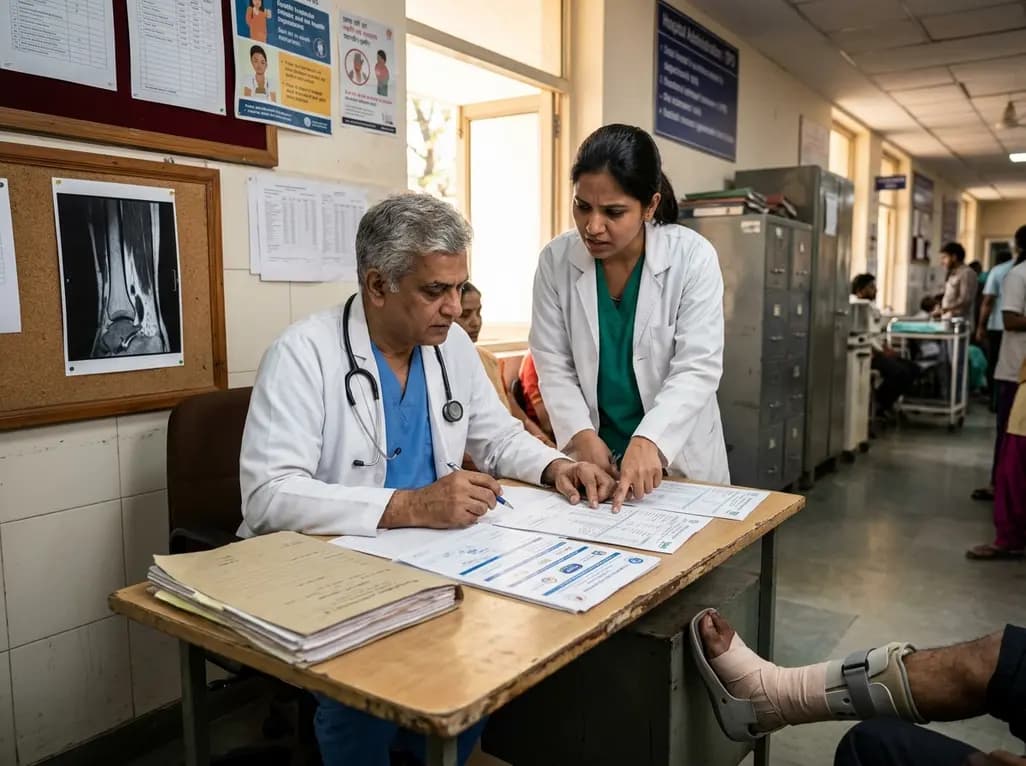
A 2-center cohort study demonstrates that insurance status significantly influences diagnostic and surgical timing in acute Achilles tendon rupture repair. Addressing administrative hurdles and expediting orthopedic referrals can optimize patient outcomes and reduce wound complications.
Today

A landmark multi-ethnic study of 40,132 participants demonstrates that risk-weighted apoB (RW-apoB) captures coronary risk beyond measured apoB. By integrating the atherogenic potency of triglyceride-rich lipoproteins and Lp(a), RW-apoB improves cardiovascular risk discrimination across diverse populations.
Yesterday
