.webp&w=384&q=75)

Loading, please wait...
Loading, please wait...

Intracerebral hemorrhage represents a catastrophic complication for patients living with brain metastases. Clinicians often struggle to predict which patients will suffer from these spontaneous events because reliable risk stratification tools remain scarce. Recent research by Grossenbacher and colleagues provides critical insights into brain metastasis hemorrhage risk by analyzing a large retrospective cohort of 806 adult patients. The researchers found that intratumoral bleeding occurred in nearly 12% of the population, highlighting the urgent need for tailored prognostic tools. Furthermore, this study demonstrates that many traditional factors we associate with bleeding in cardiovascular patients do not apply to the oncology setting. Consequently, clinicians must shift their focus toward tumor-specific characteristics to improve patient safety and outcomes.
Metastatic lesions in the brain are inherently unstable due to their disorganized vasculature. Therefore, the physiological environment of a tumor differs significantly from the systemic circulation addressed by standard hematological scores. While systemic bleeding risks are well-documented, the localized environment of a brain metastasis creates unique challenges for risk assessment. Importantly, this research underscores that hemorrhage is primarily driven by the biology of the tumor rather than the patient’s general cardiovascular health. Because of these findings, the medical community is moving toward more nuanced, disease-specific models for predicting neurological complications.
For years, medical practitioners have relied on tools like the HAS-BLED score to evaluate bleeding risks in patients requiring anticoagulation. However, these models were originally developed for cardiovascular populations, specifically those with atrial fibrillation. In the context of brain metastasis hemorrhage risk, the HAS-BLED score performed poorly, achieving an area under the curve (AUC) of only 0.54. This low value suggests that the score is barely better than random chance when applied to cancer patients. Such a significant discrepancy occurs because HAS-BLED focuses on systemic factors like hypertension, renal function, and age, which do not capture the microvascular fragility of metastatic brain tumors.
Moreover, the study revealed that traditional cardiovascular risk factors do not correlate with the likelihood of intratumoral hemorrhage. For instance, hypertension and elderly status, which are weighted heavily in cardiovascular scores, showed no significant association with bleeding within brain metastases. Additionally, other models developed for different populations failed to provide the necessary discrimination for neuro-oncology patients. Consequently, relying on inappropriate tools may lead to either unnecessary restriction of vital therapies or an underestimation of actual bleeding dangers. Practitioners should therefore exercise caution when using general bleeding scores for patients with secondary CNS malignancies.
The primary histology of the systemic tumor plays a decisive role in determining the risk of subsequent brain hemorrhage. Specifically, the study identified melanoma and seminoma as the two most dangerous primary tumor types. Patients with melanoma-derived metastases faced a five-fold increase in hemorrhage risk compared to other histologies. Even more strikingly, seminoma was associated with a seven-fold increase in the likelihood of intratumoral bleeding. These high-risk profiles likely stem from the high angiogenic potential and vascular permeability inherent to these specific malignancies. Therefore, when a patient presents with these histologies, clinicians should immediately consider them high-risk for neurological events.
Furthermore, the presence of multiple brain metastases was identified as an independent risk factor, doubling the risk of a hemorrhagic event. This suggests that a higher tumor burden within the cranium increases the statistical probability of vascular failure within at least one lesion. Additionally, the molecular mechanisms of these tumors often involve the overproduction of vascular endothelial growth factor (VEGF). Although anti-VEGF therapy itself was not statistically linked to increased bleeding in this specific cohort, the underlying biology of the tumor remains a primary driver of risk. Consequently, histology must be a cornerstone of any predictive model used in the clinical setting.
One of the most significant findings of the research involved the impact of various therapeutic agents on brain metastasis hemorrhage risk. Interestingly, antiplatelet therapy was associated with a two-fold increase in the risk of intratumoral hemorrhage. This finding is particularly relevant for the many oncology patients who take aspirin or other antiplatelet drugs for comorbid conditions. In contrast, therapeutic anticoagulation did not show a statistically significant association with increased bleeding risk in this study. This counterintuitive result challenges the common clinical fear that anticoagulants are the primary cause of hemorrhage in patients with brain metastases.
Additionally, the researchers examined the effects of common oncological treatments such as radiotherapy, chemotherapy, and steroids. None of these modalities were found to independently increase the risk of intratumoral hemorrhage. Specifically, the data suggested that neither whole-brain radiation nor stereotactic radiosurgery significantly altered the baseline risk of bleeding within the metastasis. Furthermore, the use of corticosteroids, often prescribed to manage peritumoral edema, appeared neutral in its effect on vascular stability. These results indicate that clinicians can often proceed with necessary oncological interventions without significantly exacerbating the risk of a spontaneous hemorrhagic event.
To address the inadequacies of existing models, the researchers developed a novel, BM-specific risk score. This model incorporates the four independent risk factors identified: multiple metastases, melanoma histology, seminoma histology, and the use of antiplatelet therapy. When tested, this new score achieved an AUC of 0.75, which represents a substantial improvement in predictive performance over HAS-BLED and other conventional models. By focusing on variables that actually matter in the neuro-oncological context, this score provides a more reliable foundation for clinical decision-making. Consequently, it allows for a more personalized approach to patient care.
Implementing such a score in daily practice could help identify patients who require more frequent neuroimaging or closer clinical monitoring. Moreover, it provides a structured framework for discussing risks and benefits with patients and their families. For example, a patient with melanoma and multiple metastases who is also on aspirin would be flagged as exceptionally high risk. In such cases, clinicians might reconsider the necessity of antiplatelet therapy or prioritize aggressive local control. Therefore, this BM-specific score serves as a valuable bridge between academic research and bedside patient management, potentially reducing the incidence of devastating neurological complications.
Managing the brain metastasis hemorrhage risk requires a multidisciplinary approach involving oncologists, neurologists, and neurosurgeons. Given the improved predictive power of the new score, practitioners should integrate these specific variables into their initial assessment of every patient with brain metastases. Furthermore, because antiplatelet therapy is a modifiable risk factor, a careful review of the patient's medication list is essential. If the indications for antiplatelet agents are not absolute, discontinuing them in high-risk patients may provide a measurable safety benefit. Additionally, patients with high-risk histologies like melanoma should be educated about the warning signs of intracranial hemorrhage to ensure rapid medical intervention.
Looking forward, prospective validation of this novel score is necessary to confirm its utility across different healthcare settings. While the retrospective data are compelling, clinicians should continue to use their clinical judgment alongside these new tools. Furthermore, future research should explore whether incorporating molecular markers or advanced imaging characteristics could refine the model even further. By continuously updating our understanding of tumor-specific bleeding risks, we can move toward a future where intracranial complications are more predictable and, ideally, preventable. Ultimately, the goal remains to provide the highest standard of care while navigating the complex risks associated with advanced systemic cancer.
The primary independent risk factors include specific tumor histologies like melanoma or seminoma, the presence of multiple brain metastases, and the use of antiplatelet therapy. These factors significantly increase the likelihood of intratumoral bleeding, whereas traditional cardiovascular risks like hypertension or age do not appear to have a strong correlation in this population.
Traditional scores like HAS-BLED were designed for cardiovascular patients and focus on systemic factors like renal function and hypertension. They fail to account for the unique microvascular environment and angiogenic instability of metastatic brain tumors. Consequently, they show very low predictive accuracy (AUC 0.54) when applied to patients with brain metastases.
The novel BM-specific score offers a much higher predictive accuracy (AUC 0.75) by focusing on tumor-related variables and antiplatelet use. This allows clinicians to identify high-risk patients more reliably, enabling personalized monitoring strategies and more informed decisions regarding the use of potentially risky medications or the frequency of follow-up neuroimaging.
Disclaimer: This content is for informational and educational purposes only and does not constitute medical advice, diagnosis, or treatment. Always seek the advice of your physician or other qualified health provider with any questions you may have regarding a medical condition. Refer to the latest local and national guidelines for clinical practice.
References
Grossenbacher B et al. Intratumoral hemorrhage in patients with brain metastasis from systemic tumors: risk factors and prognostic assessment. J Neurooncol. 2026 Jul 07. doi: 10.1007/s11060-026-05698-x. PMID: 42412253.
Türkkahraman B et al. Intratumoral hemorrhage in brain metastases: a correlation with imaging characteristics and vasogenic edema. Neurol Res. 2026 May 4. doi: 10.1080/01616412.2026.2667504. PMID: 42080474.
Donahue J et al. Antiplatelet medications and risk of intracranial hemorrhage in patients with metastatic brain tumors. Blood Adv. 2022 Mar 04. doi: 10.1182/bloodadvances.2021006470. PMID: 35245892.

Read summarized clinical updates, watch expert medical content, and earn CME certifications right from your smartphone.
Open your smartphone camera to scan and install.





A new retrospective study identifies melanoma, seminoma, and antiplatelet therapy as key risk factors for intratumoral hemorrhage in brain metastases, outperforming traditional scores like HAS-BLED with a novel predictive model.
3 months ago
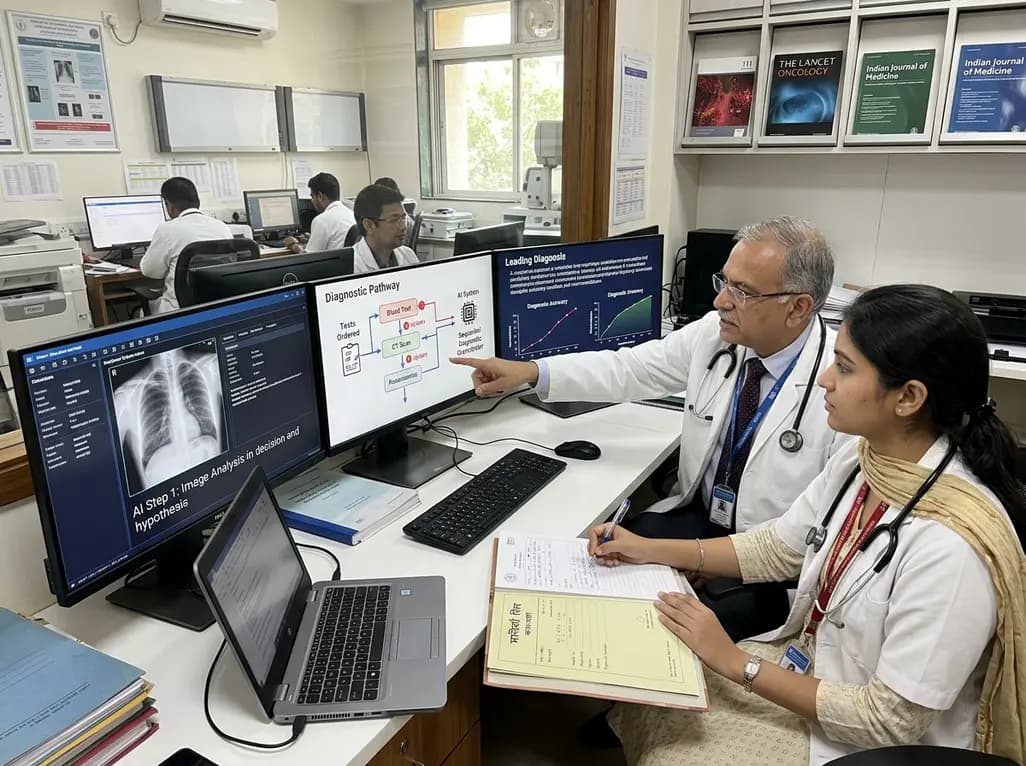
A breakthrough peer-reviewed study demonstrates that a sequential AI diagnosis system can mirror real-world clinical reasoning. By ordering stepwise tests and updating hypotheses dynamically, this multi-agent orchestrator achieved superior diagnostic accuracy while reducing investigative costs.
Today

A prenatal case highlights severe glutaric acidemia type II presenting as bilateral hyperechoic cystic kidneys at 18 weeks. Whole-exome sequencing revealed a novel homozygous ETFDH frameshift variant, demonstrating the power of rapid genetic testing in fetal renal anomalies.
Today

Review how tailored exercise programs benefit frail older patients with heart failure. Explore pathophysiological mechanisms, individualized training prescriptions, and strategies to overcome adherence barriers in clinical practice.
Yesterday

This comparative study evaluates posterior labral tears with and without glenohumeral instability, highlighting distinct demographic patterns, MRI underestimation in stable shoulders, and successful arthroscopic repair outcomes.
Yesterday

A clinical study demonstrates that early intervention with tocilizumab, either as monotherapy or bridged with corticosteroids, achieves significant proptosis reduction and resolves active inflammation in treatment-naive thyroid eye disease.
Yesterday
