.webp&w=384&q=75)

Loading, please wait...
Loading, please wait...

Colorectal cancer (CRC) remains a significant global health challenge. Indeed, recent evidence highlights the oncogenic role of Fusobacterium nucleatum (Fn). However, the interaction between this bacterium and host stromal cells like bone marrow mesenchymal stem cells (BMSCs) is now a primary focal point. Notably, a groundbreaking study illustrates the BMSC-Fn synergism that drives colorectal tumorigenesis through gut microbiome dysbiosis.
To begin with, researchers used an established Apc mouse model to investigate these interactions. Specifically, they assigned animals to four groups: control, Fn-only, BMSCs-only, and co-treatment. Consequently, the team analyzed the gut microbiota over eight weeks using metagenomic sequencing. Furthermore, they predicted functions using PICRUSt2 to understand metabolic changes. In addition, they monitored functional shifts continuously.
As a result, the findings revealed that the Fn+BMSCs group had the highest Fn enrichment. Additionally, this group showed the greatest reduction in microbial diversity. Specifically, the co-treatment induced a decline in symbionts like Lactobacillus while increasing pathobionts such as Escherichia-Shigella. Therefore, this shift creates a distinct pro-tumorigenic environment.
Moreover, metagenomic analysis identified a unique enhancement of butanoate metabolism in the co-treatment group. Similarly, researchers discovered profoundly elevated Lipopolysaccharide (LPS) levels. Consequently, this triggers the pro-inflammatory TLR4/NF-κB pathway. Furthermore, BMSCs fuel CRC progression by providing oncogenic Wnt3a signals. Ultimately, this dual mechanism accelerates tumor development because it alters the gut microbiome ecology.
In conclusion, targeting the synergistic BMSC-Fn axis offers a novel therapeutic strategy. Thus, addressing the microbiome ecology could improve CRC outcomes. Finally, these insights provide a new direction for precision oncology.
It promotes inflammation and tumor growth by interacting with host cells and disrupting the gut microbiome through various signaling pathways.
BMSCs provide oncogenic Wnt3a signals and work synergistically with bacteria to create a pro-tumorigenic microenvironment and drive microbial dysbiosis.
This pathway is hyperactivated by elevated LPS levels, leading to increased pro-inflammatory and proliferative signals that fuel cancer progression.
Disclaimer: This content is for informational and educational purposes only and does not constitute medical advice. Always seek the advice of a qualified healthcare provider with any questions regarding a medical condition. Refer to the latest local and national guidelines for clinical practice.
References
Zhang K et al. Bone marrow mesenchymal stem cells synergize with fusobacterium nucleatum to drive colorectal tumorigenesis via gut microbiome dysbiosis. Gut Pathog. 2026 May 29. doi: 10.1186/s13099-026-00839-z. PMID: 42216221.
Lozano C, et al. Dysbiosis and colorectal cancer: conducive factors, biological and molecular role, and therapeutic prospectives. PMC. 2025. doi: 10.1186/s12967-025-06123-x.
Perez-Castaño Y, et al. The Role of the Gut Microbiome in Colorectal Cancer Development and Therapy Response. NIH. 2025. doi: 10.3390/ijms26125432.
"
Read summarized clinical updates, watch expert medical content, and earn CME certifications right from your smartphone.
Open your smartphone camera to scan and install.





Research highlights how bone marrow mesenchymal stem cells and F. nucleatum interact to promote colorectal cancer via gut microbiome dysbiosis....
4 months ago
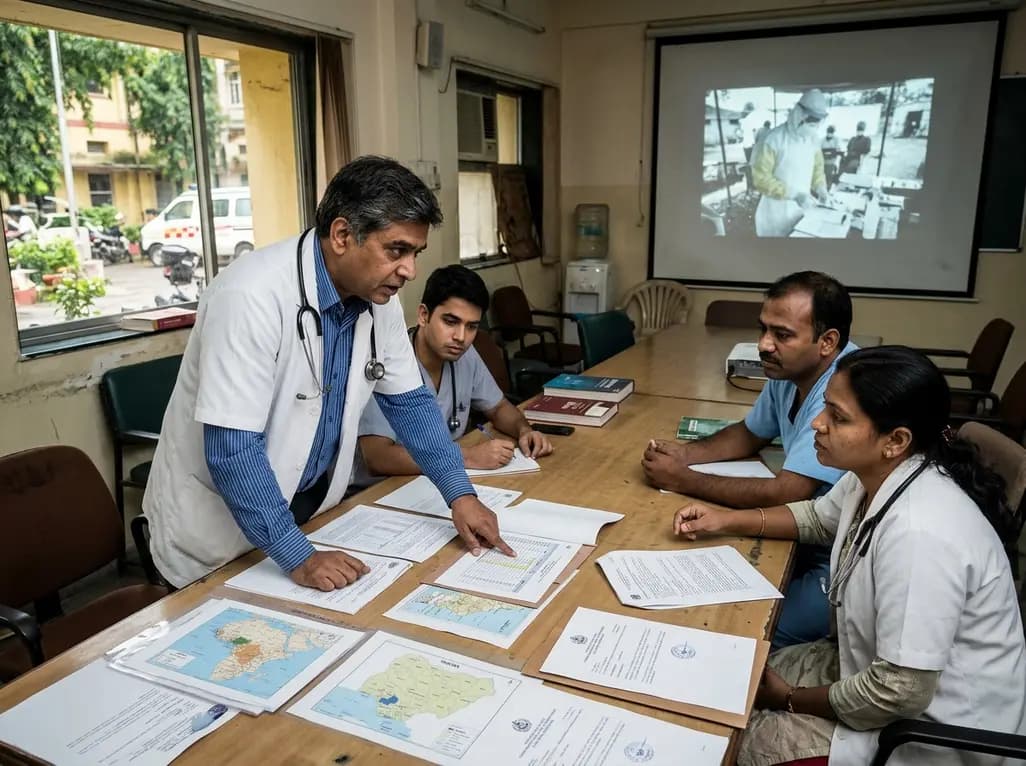
Following Nigeria's first recorded Ebola case linked to regional travel, the Africa CDC has convened an emergency ministerial summit. This alert underscores critical clinical priorities for healthcare professionals, including differentiating early viral infection from malaria, implementing barrier nursing, and triage.
Today

Leucine Rich Bio has introduced South Asia's first comprehensive vaginal microbiome test, BugSpeaks. By profiling microbial dysbiosis, pathogens, and antimicrobial resistance, this next-generation diagnostic platform provides clinicians with deeper insights into recurrent infections, fertility, and reproductive health.
Today

Review how tailored exercise programs benefit frail older patients with heart failure. Explore pathophysiological mechanisms, individualized training prescriptions, and strategies to overcome adherence barriers in clinical practice.
Today

This comparative study evaluates posterior labral tears with and without glenohumeral instability, highlighting distinct demographic patterns, MRI underestimation in stable shoulders, and successful arthroscopic repair outcomes.
Today

A clinical study demonstrates that early intervention with tocilizumab, either as monotherapy or bridged with corticosteroids, achieves significant proptosis reduction and resolves active inflammation in treatment-naive thyroid eye disease.
Today
