.webp&w=384&q=75)

Loading, please wait...
Loading, please wait...

Chronic subdural hematoma (CSDH) represents one of the most frequent neurosurgical pathologies encountered in elderly patients globally. Although clinicians traditionally classify CSDH as an extra-axial compressive disease, emerging clinical evidence indicates that it exerts direct parenchymal stress. Consequently, researchers now use circulating biomarkers for brain injury to capture this underlying cellular damage. A prospective clinical study from Uppsala University Hospital examined eighty-five surgical patients to evaluate how blood-based indicators shift pre- and postoperatively. The investigators specifically quantified glial fibrillary acidic protein (GFAP), neurofilament light chain (NfL), neuron-specific enolase (NSE), and tau species. Their findings demonstrate that fluid biomarkers effectively monitor acute neurological recovery and forecast long-term functional quality of life.
Historically, surgeons considered chronic subdural hematoma to be a mechanical disorder of fluid accumulation rather than an parenchymal insult. However, persistent mass effect from the hematoma produces mechanical compression, local ischemia, and neuroinflammation in adjacent cerebral tissue. This mechanical compromise disrupts the blood-brain barrier and triggers cellular distress within both glial cells and neuronal axons. Therefore, measuring circulating biomarkers for brain injury provides unprecedented insight into real-time tissue damage beneath the hematoma. Astrocytic damage liberates GFAP into the extracellular space, whereas axonal shear and degeneration release NfL and tau proteins. In this prospective trial, researchers found markedly elevated concentrations of GFAP, NfL, and tau in patient plasma prior to surgical evacuation. Furthermore, hematoma fluid aspirated during surgery showed exceptionally high concentrations of these structural proteins. This substantial concentration gradient between the subdural space and peripheral blood confirms localized cerebral injury. Consequently, biofluid profiling provides clinicians with an objective diagnostic window into ongoing parenchymal injury before invasive intervention.
Surgical drainage remains the cornerstone of treatment for symptomatic chronic subdural hematomas. Interestingly, this study revealed rapid clearance dynamics of key neural proteins immediately following surgical evacuation. Blood samples collected between 6 and 24 hours postoperatively demonstrated significant decreases in circulating GFAP, NfL, and total tau levels. Glial fibrillary acidic protein and tau concentrations dropped sharply once surgeons evacuated the compressive subdural fluid. This rapid clearance suggests that acute parenchymal relief halts active biomarker release into cerebral capillaries. In contrast, neuron-specific enolase and brain-derived tau levels exhibited a downward trend without reaching statistical significance. Confounding factors such as perioperative hemolysis can occasionally distort peripheral NSE measurements. Nevertheless, the swift reduction in glial and axonal proteins confirms that prompt surgical decompression mitigates ongoing mechanical trauma. These dynamic shifts illustrate that brain parenchyma begins recovery within hours of successful hematoma drainage. Thus, serial biomarker sampling offers an effective method for verifying operative decompression.
Patient characteristics significantly influence baseline biomarker levels in chronic subdural hematoma. Specifically, the study identified advanced age and larger hematoma volume as strong determinants of elevated preoperative GFAP, NfL, and brain-derived tau. Older patients naturally display higher baseline axonal degradation due to age-related neurodegenerative changes. Additionally, senescent cerebral tissue is more vulnerable to prolonged distortion caused by extra-axial collections. As hematoma volume expands, the resulting mass effect amplifies intracranial compliance failure and microvascular ischemia. Consequently, patients presenting with large fluid collections demonstrate the highest biomarker concentrations in their preoperative blood samples. Moreover, marked midline shift and extensive cortical compression correlate with pronounced biomarker leakage. These observations show that biofluid analysis reflects the exact anatomical and physiological severity of the hematoma. Therefore, combining radiological parameters with plasma biomarker levels offers clinicians a superior framework for assessing parenchymal strain. This dual approach helps neurosurgeons identify vulnerable patients who require urgent surgical decompression.
Long-term neurological recovery after subdural hematoma surgery varies considerably, especially among frail geriatric patients. To evaluate recovery, the researchers measured health-related quality of life at six months postoperatively using the five-level EQ-5D questionnaire. Higher preoperative biomarker levels and greater postoperative dynamics correlated strongly with worse functional outcomes across several life domains. Patients with severe biomarker release experienced higher mobility difficulties, diminished self-care capabilities, and persistent functional dependency. Most notably, multivariable regression showed that preoperative plasma NfL independently predicted the EQ-5D visual analog scale score at six months. Because NfL reflects structural axonal breakdown, extensive axonal injury before surgery appears to limit complete functional recuperation. Thus, circulating NfL serves as an objective prognostic indicator for long-term health outcomes. By utilizing this biomarker, clinicians can identify individuals who need structured rehabilitation early in their postoperative course. Consequently, molecular stratification significantly enhances traditional prognostic assessments in chronic subdural hematoma.
The discovery of rapid biomarker dynamics and prognostic utility holds transformative implications for neurosurgical practice. Currently, neurosurgeons prioritize operative timing primarily based on gross neurological deficits and cranial computed tomography findings. However, elderly patients with significant cerebral atrophy often mask substantial compression without exhibiting overt clinical symptoms. In these deceptive scenarios, elevated biomarkers for brain injury can alert surgical teams to progressive axonal and glial damage. Hence, biomarker screening could optimize triage by identifying patients who require urgent intervention despite mild initial complaints. Furthermore, postoperative tracking can help clinicians detect occult hematoma recurrence or persistent parenchymal distress before repeat imaging occurs. Future clinical workflows could incorporate benchtop point-of-care testing to rapidly guide surgical timing and discharge planning. As these neurochemical assays gain widespread clinical adoption, they will support personalized post-acute rehabilitation pathways. Ultimately, integrating molecular diagnostics into routine care will modernize the management of chronic subdural hematoma worldwide.
The primary biomarkers evaluated include glial fibrillary acidic protein for astrocytic distress, neurofilament light chain for axonal damage, neuron-specific enolase for neuronal injury, and brain-derived tau. These proteins enter systemic circulation following parenchymal compression, allowing clinicians to quantify cerebral injury objectively through routine peripheral blood samples.
Surgical drainage immediately relieves mechanical mass effect, tissue distortion, and localized microvascular compression against the cerebral cortex. This rapid decompression terminates active cellular leakage from injured astrocytes and neurons. Consequently, the clearance of circulating biomarkers outpaces new cellular release, producing a marked drop in blood concentrations within 24 hours.
Neurofilament light chain reflects structural damage to deep axonal architecture within the brain parenchyma. High baseline concentrations indicate substantial axonal degeneration that may not fully regenerate after decompression. As a result, elevated preoperative levels correlate independently with reduced functional independence and lower six-month health-related quality-of-life scores.
Disclaimer: This content is for informational and educational purposes only and does not constitute medical advice. Refer to the latest local and national guidelines for clinical practice.
References
Svedung Wettervik T et al. Blood biomarkers for brain injury in chronic subdural hematomas: postoperative dynamics and relation to long-term outcome. J Neurosurg. 2025 Aug 01. doi: 10.3171/2025.1.JNS242942. PMID: 40250046.
Hjortdal Grønhøj M et al. Optimal drainage time after evacuation of chronic subdural haematoma (DRAIN TIME 2): a multicentre, randomised trial. Lancet Neurol. 2024;23(8):787-796.
Fiorella D et al. Middle meningeal artery embolization as adjunct treatment for chronic subdural hematoma. N Engl J Med. 2025;392(4):341-352.

Read summarized clinical updates, watch expert medical content, and earn CME certifications right from your smartphone.
Open your smartphone camera to scan and install.





A prospective study demonstrates that blood biomarkers for brain injury, including GFAP and NfL, decline rapidly after surgical evacuation of chronic subdural hematoma. Furthermore, preoperative neurofilament light chain levels reliably predict functional quality-of-life outcomes at six months.
Today

The CARE study protocol introduces a multilingual, RAG-powered conversational interface designed by IIT Bombay to support tobacco cessation in India. Evaluating feasibility and behavioral outcomes across three cessation centers, this digital health initiative aims to enhance quitting support for diverse users.
Today

A large UK cohort study of 1.4 million women shows that pregnancy complications, including gestational diabetes, hypertension, and preterm birth, substantially raise long-term risks for hypertension, chronic kidney disease, type 2 diabetes, and cardiovascular events, highlighting early postpartum intervention needs.
Today
A cross-sectional study reveals that hypertension knowledge, illness perceptions, depression, and substance use significantly predict self-care behaviors. Addressing mental health and cognitive beliefs in primary care is crucial for optimal blood pressure control and cardiovascular disease prevention.
Today
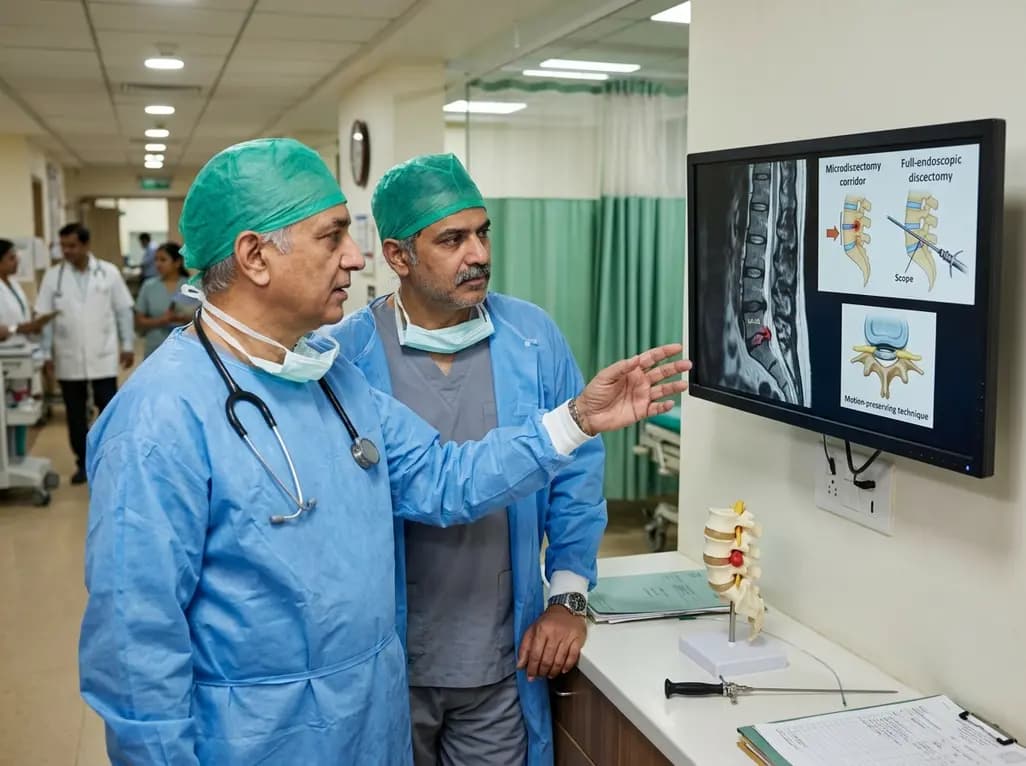
This clinical overview examines recent advancements in lumbar disc herniation surgery, comparing microscopic and full-endoscopic discectomy while highlighting biportal techniques and emerging motion-preserving innovations for spine specialists.
Today

Small interfering RNA (siRNA) therapeutics harness RNA interference to degrade disease-causing messenger RNA. By delivering hepatocyte-targeted, durable gene silencing, agents targeting PCSK9, LPA, and angiotensinogen offer potent cardiovascular risk reduction with infrequent, biannual dosing schedules.
Today
