

Loading, please wait...
Loading, please wait...

Oncology diagnostics is currently witnessing a paradigm shift as liquid biopsies redefine early disease interception. For years, clinicians and translational researchers feared that non-tumour DNA would swamp delicate oncological signals in the peripheral circulation. However, a multicentre clinical study from India has dismantled this long-standing assumption. The research reveals that leukocyte DNA can actually enhance tumour-related signals rather than dilute them. Consequently, this discovery provides critical biological answers to why test sensitivity often fluctuates among individuals presenting with identical clinical stages. Furthermore, these insights directly advance the development of blood-based cancer detection across diverse clinical populations.
Historically, laboratory oncologists presumed that rising levels of non-malignant cell-free DNA (cfDNA) created overwhelming background noise. Specifically, investigators believed that excess genomic material shedding from white blood cells (WBCs) would suppress minimal concentrations of circulating tumour DNA (ctDNA). Because early-stage neoplasms shed tiny amounts of genetic material, pathologists considered high leukocyte turnover a major technical hindrance. Therefore, diagnostic platforms often struggled to maintain diagnostic sensitivity in early-stage disease without generating unacceptable false-positive signals.
Nevertheless, rigorous new evidence published in the Proceedings of the National Academy of Sciences (PNAS) contradicts this long-held hypothesis. Researchers evaluated the CancerSpot platform, an innovative multi-cancer early detection assay developed by Strand Life Sciences. By integrating next-generation sequencing with artificial intelligence, the platform scrutinises DNA methylation signatures across thousands of genomic regions. Instead of observing diagnostic dilution, researchers documented that higher total cfDNA concentrations directly correlated with stronger cancer-associated signals. Thus, the presence of genomic material from immune cells appears to reflect coordinated systemic activity rather than mere technical interference.
To unravel the biological mechanism behind this observation, investigators examined the kinetic relationship between host immunity and malignant tissue. Surprisingly, tumour-derived and immune-cell-derived DNA fragments enter the bloodstream in close biological synchrony. As systemic inflammatory responses or tumour necrosis expand, immune cells release additional cell-free fragments alongside malignant cellular debris. Tumour-derived signals frequently keep pace with, or even outpace, the volume of leukocyte-derived background DNA. Consequently, elevated total cfDNA concentrations indicate heightened biological activity that amplifies detectable methylation patterns.
Additionally, this biological synchrony sheds light on why clinical test performance varies significantly among patients who share identical anatomic staging. Conventional staging models categorise disease burden solely by physical tumour dimensions and lymph node involvement. However, these anatomical metrics fail to measure the dynamic host-tumour immune interface. Total cfDNA concentrations mirror systemic physiological interactions, including anti-tumour inflammatory responses and tissue turnover. Therefore, evaluating circulating cell-free DNA concentrations alongside traditional staging provides clinicians with a much sharper diagnostic lens.
The clinical trial enrolled 1,480 participants across 43 tertiary hospitals throughout India over a four-year window. The cohort encompassed healthy controls, patients with benign lesions, and individuals diagnosed with 14 different forms of cancer. Notably, the study specifically included participants with high tobacco and alcohol exposure to replicate realistic community health profiles. By testing the platform against complex real-world variables, investigators ensured that the assay remained resilient against typical demographic confounders.
During independent validation, the assay demonstrated an overall sensitivity of 72 per cent while maintaining an exceptional false-positive rate of only 1.4 per cent. Furthermore, the system successfully predicted the primary tissue of origin in approximately 76 per cent of detected cases. Minimising false positives remains paramount in community screening, because inaccurate test flags provoke substantial patient anxiety and prompt invasive diagnostic interventions. Consequently, achieving high analytical specificity confirms that machine-learning classifiers can differentiate normal physiological changes from genuine malignancy without inflating false alarms.
The clinical impact of total cfDNA concentration became exceptionally obvious during subgroup evaluations of early-stage disease. Among Stage I cancer patients displaying low circulating cfDNA levels, the detection sensitivity registered at 52 per cent. Conversely, among Stage I patients with elevated circulating cfDNA levels, sensitivity escalated dramatically to 85 per cent. This remarkable statistical disparity demonstrates that biological shedding characteristics exert far greater influence on molecular detection than microscopic tumour diameter alone.
Accordingly, these observations demand that researchers revise how they evaluate emerging liquid biopsy protocols. Historically, researchers expected liquid biopsies to fail in early-stage disease due to insufficient biological shedding. Yet, these latest findings illustrate that patients with robust immune-mediated DNA turnover generate robust, highly readable molecular signals even when tumours remain physically small. Therefore, future clinical trials must stratify cohorts using baseline cfDNA concentrations alongside classical TNM staging to accurately appraise diagnostic efficacy.
Presently, healthcare systems face significant obstacles regarding late-stage cancer presentations, particularly across low- and middle-income nations. In India, clinicians frequently diagnose malignancies at advanced stages when curative therapeutic options remain limited. Furthermore, standard population-level screening programmes only address a handful of malignancies, such as cervical, breast, and oral cancers. Lethal malignancies involving the pancreas, stomach, gallbladder, and ovaries completely lack validated population screening frameworks. Multi-cancer early detection technologies offer a viable avenue to intercept these neglected tumours before extensive metastasis occurs.
Nevertheless, clinicians must recognise that molecular blood tests function as opportunistic screening tools rather than stand-alone diagnostic tests. These assays can never replace established screening gold standards, including mammography, low-dose computed tomography, and colonoscopy. Instead, an abnormal screening result signals the urgent necessity for comprehensive clinical workups, directed imaging, and confirmatory histopathology. Similarly, a negative result cannot definitively exclude microscopic malignancy. As these tests enter clinical workflows, multidisciplinary teams must ensure appropriate patient selection and judicious diagnostic follow-up.
Q1: How does white blood cell DNA influence blood-based cancer detection?
White blood cell DNA was previously thought to dilute tumour signals in the bloodstream. However, recent evidence shows that immune-cell and tumour-derived DNA release often increase in synchrony. As a result, higher total cell-free DNA concentrations strengthen readable tumour-specific methylation signatures. This synchronous release enhances assay sensitivity across patients, even during the earliest stages of malignancy.
Q2: Can CancerSpot replace conventional cancer screening tests like mammography?
No, CancerSpot and similar multi-cancer early detection assays cannot replace established screening modalities such as mammography, colonoscopy, or low-dose computed tomography. Instead, they complement existing diagnostic pathways by identifying malignancies that lack standard population-level screening programmes. Positive test results require systematic clinical confirmation through targeted radiological imaging, direct endoscopic visualization, or definitive tissue biopsy.
Q3: Why does test sensitivity differ among patients diagnosed at the same stage?
Conventional staging focuses strictly on anatomical tumour dimensions and regional spread. In contrast, blood-based molecular assays depend heavily on cell-free DNA concentration and biological shedding dynamics. Patients with active immune responses and higher DNA turnover release stronger tumour-associated methylation signals. Consequently, individuals with higher baseline cell-free DNA achieve higher detection rates than patients with lower circulating concentrations.
Disclaimer: This content is for informational and educational purposes only. It does not constitute medical advice or replace professional judgment. Refer to the latest local and national guidelines for clinical practice.
References

Read summarized clinical updates, watch expert medical content, and earn CME certifications right from your smartphone.
Open your smartphone camera to scan and install.





A landmark Indian multi-centre study published in PNAS reveals that white blood cell DNA enhances rather than dilutes tumour signals. Evaluating Strand Life Sciences' CancerSpot test across 1,480 participants, researchers found that higher circulating DNA levels significantly improve early-stage cancer sensitivity.
Today

A large cohort study demonstrates that fetal growth restriction in a first pregnancy raises maternal cardiovascular risk within five years postpartum, including elevated rates of heart failure, stroke, and myocardial infarction. Clinicians must initiate proactive postpartum screening and cardiovascular prevention.
Today

An NHANES analysis reveals that meeting 24-hour movement guidelines significantly lowers the odds of cardiovascular disease, obesity, hypertension, and diabetes among adults with disabilities, emphasizing the power of combined physical activity, sleep, and limited sedentary time.
Today

A paired cadaveric study compared triple and quintuple percutaneous Achilles tendon lengthening. While quintuple hemisection showed numerically greater elongation, differences were not statistically significant.
Yesterday
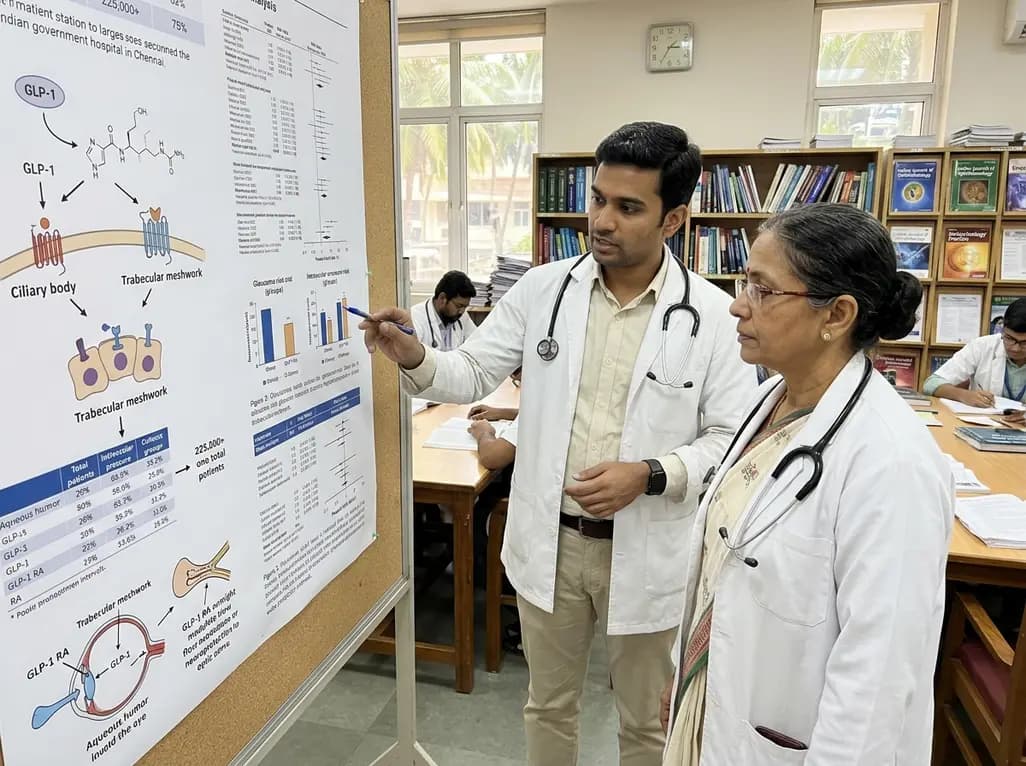
A systematic review and meta-analysis of over 225,000 patients explores whether GLP-1 receptor agonists reduce the risk of glaucoma and ocular hypertension. While pooled data show a 31% lower risk, low certainty and wide prediction intervals urge cautious optimism and further randomized trial evaluation.
Today
