.webp&w=384&q=75)

Loading, please wait...
Loading, please wait...

Trauma resuscitation units frequently encounter complex casualties presenting with severe tissue disruption and life-threatening physiological instability. However, hospital administrators and surgical leaders often struggle to anticipate the disproportionate healthcare operational demands generated by unconventional mechanisms. A recent landmark study published by Quint and colleagues systematically analyzed the blast trauma resource burden compared with blunt injury presentations in a high-volume Level I trauma center. Consequently, the findings provide vital insights into resource allocation, critical care capacity, and operating room logistics during mass casualty surges and routine acute surgical care.
Explosive detonations generate unique patterns of physical trauma that differ drastically from typical blunt impacts. Specifically, blast injuries involve four primary mechanisms that act simultaneously upon the human body. Primary blast waves exert severe barotrauma on gas-containing hollow organs, frequently causing pulmonary contusions, intestinal perforations, and tympanic membrane ruptures. In addition, secondary blast injuries result from accelerating fragments and flying debris, producing extensive penetrating lacerations. Tertiary blast effects throw the victim against stationary structures, precipitating severe blunt force skeletal fractures and traumatic brain injuries. Finally, quaternary mechanisms inflict thermal burns, toxic gas inhalation, and significant chemical contamination. Because these forces occur together, patients present with multi-cavitary injuries that overwhelm typical triage evaluations. Moreover, the hidden nature of blast barotrauma often masks internal microvascular disruption and acute tissue ischemia. Therefore, emergency clinicians cannot rely solely on conventional blunt trauma algorithms when evaluating explosion victims. Instead, trauma protocols must account for rapid clinical decompensation and evolving physiological shock.
To evaluate resource utilization accurately, the researchers reviewed 321 blast trauma patients and compared them against 9,172 blunt trauma casualties. However, raw trauma comparisons frequently suffer from baseline selection biases due to variable injury severities and patient demographics. Therefore, the investigative team implemented rigorous propensity score matching based on age, biological sex, and Injury Severity Score. This rigorous methodology generated 1,481 highly comparable blunt trauma controls. Notably, blast trauma patients demonstrated a primary composite institutional resource burden of 78.2 percent compared to only 51.2 percent in matched blunt trauma controls. Furthermore, multivariable statistical analysis confirmed an adjusted odds ratio of 3.42, underscoring an immense escalation in hospital resource demands. Blast victims required immediate resuscitation in shock-trauma rooms ten times more frequently than their blunt trauma counterparts. Additionally, the requirement for urgent surgical exploration within six hours of initial presentation was more than seven times higher among blast casualties. These findings demonstrate that equivalent injury severity scores between blast and blunt injuries do not translate into equivalent institutional workloads.
The blast trauma resource burden extends far beyond the initial emergency department resuscitation phase. Indeed, the investigation revealed stark disparities across multiple secondary institutional endpoints. Patients surviving blast detonations exhibited an extraordinary twelvefold increase in the likelihood of undergoing three or more surgical procedures. Furthermore, critical care admissions occurred over five times more frequently among blast victims than matched blunt cohorts. Consequently, intensive care unit resources experienced sustained saturation following explosive casualty admissions. In addition, the massive transfusion protocol was activated nearly twelve times more often for blast-injured casualties. Because blast shock waves produce extensive microvascular disruption, coagulopathy develops rapidly and aggressively in these patients. Therefore, clinical teams must mobilize large quantities of packed red blood cells, fresh frozen plasma, and platelets early during initial resuscitation. Massive ongoing hemorrhage and continuous tissue devitalization also necessitate prolonged mechanical ventilation. As a result, these patients remain dependent on specialized intensive care beds for extended periods, straining overall hospital capacity.
Surgical management of explosion victims requires a disciplined damage control philosophy rather than definitive single-stage reconstruction. Because blast trauma inflicts widespread tissue destruction, primary wound closures frequently fail due to progressive secondary necrosis. Furthermore, foreign bodies and unburned explosive residue embed deeply into soft tissues, exponentially elevating subsequent infectious complications. Consequently, surgical teams must perform serial operative debridements and staged washouts before considering wound coverage or skeletal fixation. Meanwhile, blast lung injury presents unique anesthetic challenges during prolonged surgical procedures. Positive pressure ventilation can worsen pulmonary barotrauma, precipitate systemic air embolism, or aggravate existing alveolar hemorrhage. Therefore, anesthesiologists must employ lung-protective ventilation strategies while maintaining adequate systemic oxygenation and perfusion. Moreover, severe shock and hypothermia exacerbate traumatic coagulopathy, forcing operative teams to truncate interventions rapidly using temporary abdominal packing and external fixation. Thus, each blast casualty demands coordinated schedules across multiple surgical subspecialties, directly monopolizing operating suites and surgical nursing personnel.
The immense logistical footprint demonstrated in this study underscores the necessity for proactive institutional preparedness. Level I trauma centers must design disaster response pathways that immediately scale beyond standard blunt trauma protocols. Specifically, blood banks must maintain robust surge capabilities to support concurrent massive transfusion activations. Furthermore, trauma centers require structured cross-matching workflows and readily accessible uncrossed type O blood supplies. In addition, hospital administrators must establish rapid de-escalation protocols to discharge non-critical inpatients and free surgical beds. Operating theater supervisors must immediately designate clean operative suites exclusively for urgent damage control laparotomies and vascular repairs. Meanwhile, hospital leaders should ensure dedicated stockpiles of advanced surgical supplies, such as negative pressure wound therapy systems and temporary vascular shunts. Consequently, hospitals that implement dynamic surge drills will effectively mitigate resource exhaustion during unexpected mass casualty events. Ultimately, institutional readiness hinges on recognizing that blast victims consume exponentially higher material and human resources than everyday trauma admissions.
Trauma centers across India frequently manage severe blunt injuries from motor vehicle accidents, industrial mishaps, and agricultural incidents. However, Indian tertiary hospitals also face catastrophic blast emergencies resulting from industrial chemical explosions, commercial boiler failures, and domestic gas cylinder accidents. Therefore, the findings from this comparative study offer critical lessons for Indian trauma networks and municipal healthcare systems. Most Indian public hospitals operate near peak critical care capacity under normal daily circumstances. Consequently, the sudden arrival of multiple blast victims can quickly overwhelm local intensive care units and blood banks. To counter these systemic bottlenecks, regional health authorities should establish coordinated trauma networks that distribute casualties evenly across secondary and tertiary facilities. Furthermore, emergency departments must update triage guidelines to identify occult primary blast injuries before patients deteriorate in observation wards. In addition, surgical training programs must emphasize damage control resuscitation and phased debridement techniques. By adopting these evidence-based interventions, Indian healthcare institutions can substantially enhance survival rates and protect vital hospital resources.
Blast injuries combine multiple destructive mechanisms, including supersonic pressure waves, penetrating fragments, thermal burns, and blunt impact trauma. Consequently, blast victims suffer multi-cavitary injuries, severe tissue devitalization, and occult barotrauma. These complex physiological insults require immediate shock-trauma resuscitation, frequent massive blood transfusions, urgent emergency surgical procedures, and repeated operative debridements. In contrast, isolated blunt trauma often follows predictable anatomical injury patterns that demand fewer repeat surgical explorations and shorter overall intensive care stays.
Primary blast waves cause alveolar tearing, intrapulmonary hemorrhage, and microvascular disruption, commonly known as blast lung injury. Therefore, conventional mechanical ventilation can induce severe barotrauma, pneumothorax, or fatal systemic air embolism. Critical care physicians must implement lung-protective ventilation with permissive hypercapnia and low tidal volumes. Furthermore, prolonged respiratory failure and secondary bacterial pneumonia frequently extend intensive care unit length of stay, which rapidly depletes critical hospital ventilator reserves and monitoring equipment during mass casualty incidents.
Hospitals must establish rapid-activation massive transfusion protocols and maintain pre-thawed plasma and group O uncrossed blood supplies. Additionally, trauma centers must designate dedicated emergency operative suites and implement staged damage control resuscitation pathways. Facilities should conduct routine mass casualty drills, expand critical care bed surge capacities, and establish mutual-aid transfer networks. Finally, clinical staff need targeted training to recognize occult blast barotrauma early, preventing premature ward transfers and unexpected patient deterioration.
Disclaimer: This content is for informational and educational purposes only... Refer to the latest local and national guidelines for clinical practice.
References

Read summarized clinical updates, watch expert medical content, and earn CME certifications right from your smartphone.
Open your smartphone camera to scan and install.





A propensity score-matched study demonstrates that blast injuries trigger a markedly higher institutional resource burden than blunt trauma, tripling high-intensity medical utilization and significantly increasing the demand for emergency operations, critical care admissions, and massive blood transfusions.
Today
Fatigue affects nearly half of IBD patients even during clinical remission. Discover how a novel 7-week app-based cognitive behavioral therapy intervention aims to transform fatigue management, enhance patient self-efficacy, and reduce disease burden in quiescent Crohn's disease and ulcerative colitis.
Today
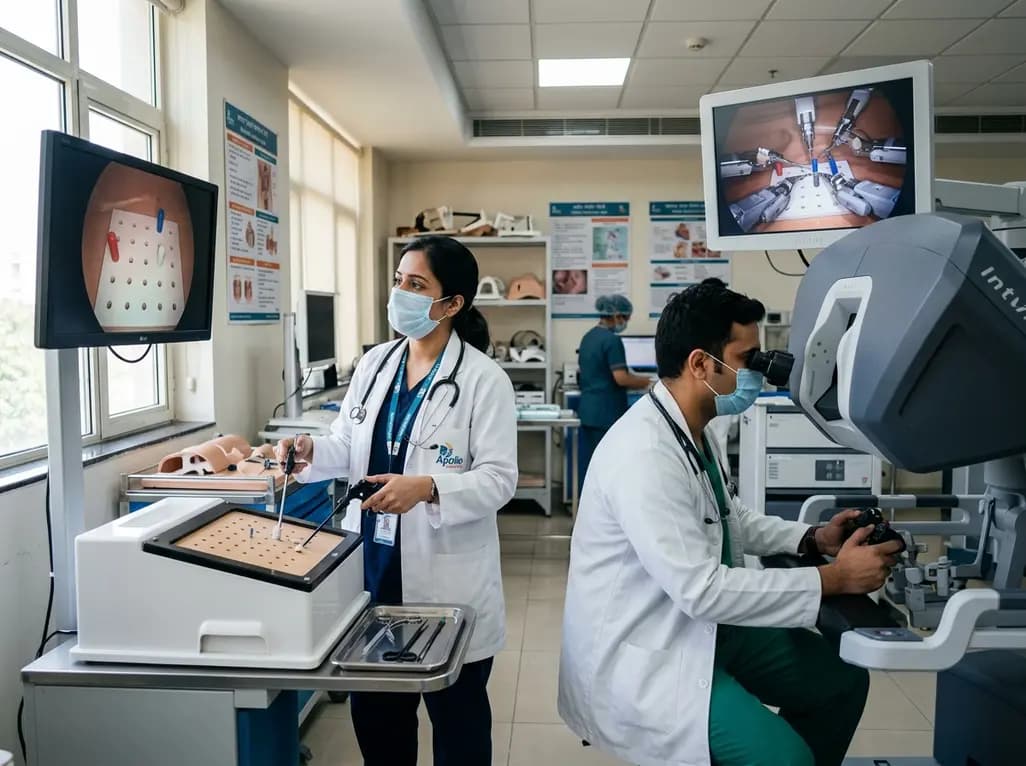
A randomized crossover study demonstrates that conventional and robotic laparoscopy require distinct neuropsychological and psychomotor skills. While trainees master conventional laparoscopy faster, robotic proficiency demands individualized, adaptive curricula tailored to specific learner profiles.
Today
A retrospective study of 109 patients undergoing elective carotid artery stenting evaluated radiation exposure on biplane flat-panel systems. Standardized workflows and dedicated low-dose protocols provide crucial baseline data to establish neurointerventional diagnostic reference levels and optimize patient safety.
Today

A scoping review of 51 studies reveals that spinal manual therapy on the lumbo-pelvic area is commonly used for isolated lower extremity pain, predominantly knee conditions. While thrust manipulation is frequent, reporting deficits highlight the need for standardized technique descriptions to guide practice.
Today
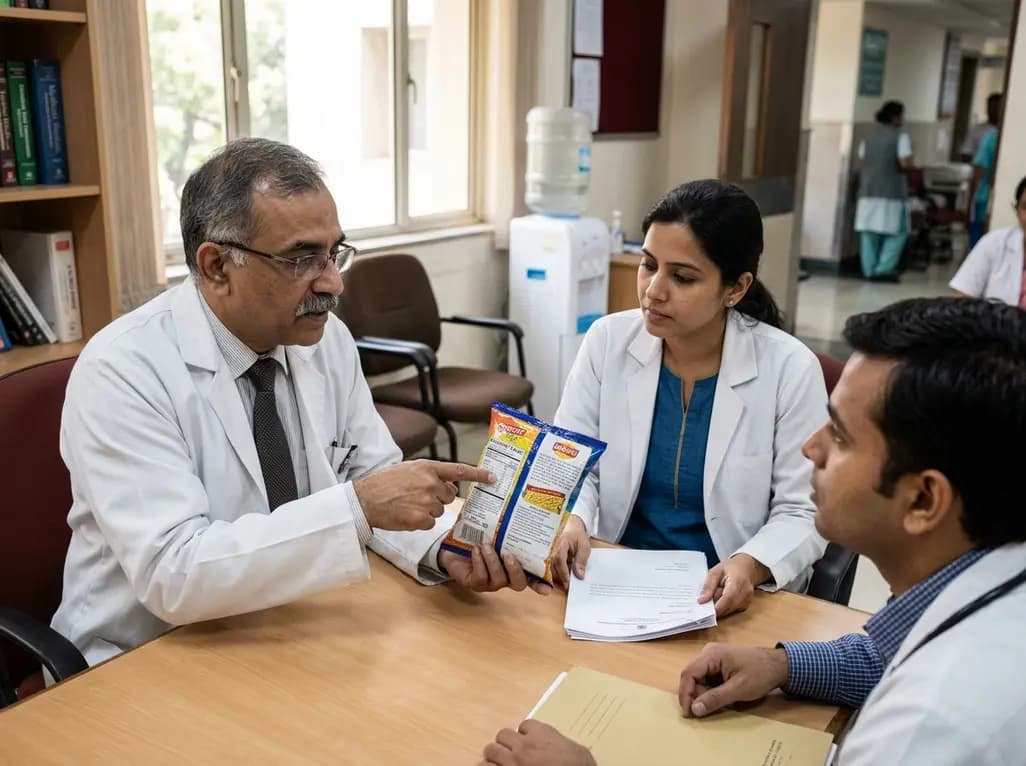
The Supreme Court has reserved its judgment on FSSAI's proposed front-of-pack nutritional warning labels for packaged foods. With debates over compliance timelines, added versus total sugars, and ultra-processed food definitions, this landmark decision carries profound public health implications for India.
Today
