.webp&w=384&q=75)

Loading, please wait...
Loading, please wait...
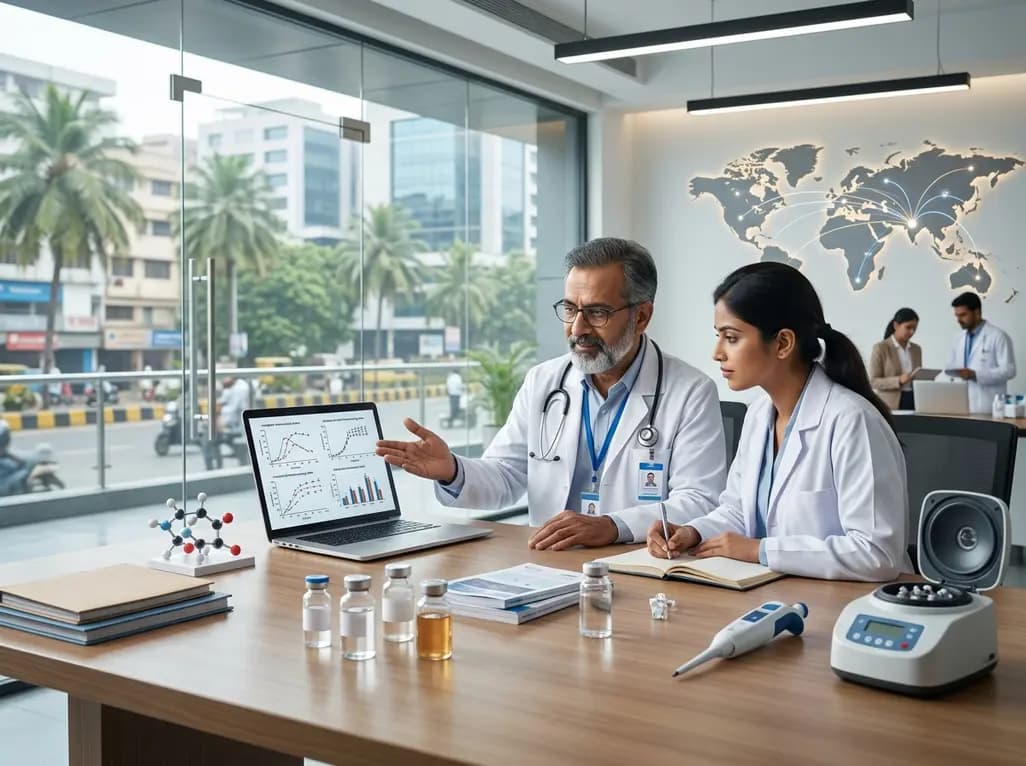
The landscape of biosimilar regulatory frameworks is undergoing a significant transformation. Historically, demonstrating biosimilarity required extensive and costly comparative efficacy studies. However, global regulatory expectations are now shifting toward a more streamlined, stepwise approach. This "totality-of-evidence" strategy emphasizes high-resolution analytical similarity and functional characterization as the foundation of approval. By focusing on targeted clinical pharmacology rather than routine large-scale trials, agencies aim to reduce development timelines and costs.
Major international agencies, including the EMA and FDA, are increasingly recognizing that robust analytical data can address most scientific uncertainties. This shift in biosimilar regulatory frameworks allows for a reduced role for comparative efficacy studies, particularly for well-characterized molecules like monoclonal antibodies. Advanced technologies and artificial intelligence are now being leveraged to improve model-informed development and functional characterization. In India, the CDSCO is also aligning its guidelines with these global trends, proposing reduced requirements for animal testing and clinical trials when analytical equivalence is proven.
Greater alignment in comparator policies and study expectations across borders is essential for the future. Harmonized biosimilar regulatory frameworks facilitate the use of foreign comparators and reliance pathways, which prevents redundant testing. Such convergence not only streamlines the path to market but also improves patient access to life-saving biologic therapies by fostering competition and lowering prices. As these trends continue, the integration of real-world evidence and digital tools will further refine how biosimilarity is assessed globally.
Regulators are moving away from mandatory large-scale comparative efficacy trials, instead prioritizing deep analytical characterization and pharmacokinetic data to confirm similarity.
The Indian CDSCO is updating its "Similar Biologics" guidelines to align with international standards, emphasizing analytical evidence and reducing the need for repetitive local clinical studies.
Harmonization reduces the duplication of clinical trials and allows developers to use a single data package for multiple regions, significantly lowering the cost of treatment.
Disclaimer: This content is for informational and educational purposes only. It does not constitute medical advice or a substitute for professional consultation. Refer to the latest local and national guidelines for clinical practice.
References
Khan MS et al. Comparative overview of Biosimilar regulatory frameworks and international harmonization trends. Expert Opin Biol Ther. 2026 Jun 12. doi: 10.1080/14712598.2026.2689744. PMID: 42284082.
Central Drugs Standard Control Organization (CDSCO). Draft Guidelines on Similar Biologics: Regulatory Requirements for Marketing Authorization in India. 2025-2026.
U.S. Food and Drug Administration (FDA). Promotional Labeling and Advertising Considerations for Prescription Biological Reference and Biosimilar Products: Questions and Answers. 2026.

Read summarized clinical updates, watch expert medical content, and earn CME certifications right from your smartphone.
Open your smartphone camera to scan and install.





Biosimilar development is evolving toward a totality-of-evidence approach, prioritizing analytical and clinical pharmacology over routine efficacy studies. This global shift, supported by agencies like the FDA and CDSCO, aims to streamline approvals and enhance patient access through international harmonization.
4 months ago

Review how tailored exercise programs benefit frail older patients with heart failure. Explore pathophysiological mechanisms, individualized training prescriptions, and strategies to overcome adherence barriers in clinical practice.
Today

Leucine Rich Bio has introduced South Asia's first comprehensive vaginal microbiome test, BugSpeaks. By profiling microbial dysbiosis, pathogens, and antimicrobial resistance, this next-generation diagnostic platform provides clinicians with deeper insights into recurrent infections, fertility, and reproductive health.
Today

In high-risk pulmonary embolism complicated by severe anemia and active uterine bleeding, systemic thrombolysis is contraindicated. Large-bore aspiration thrombectomy provides rapid hemodynamic rescue without fibrinolysis, supported by inferior vena cava filter placement and multidisciplinary critical care.
Today

This comparative study evaluates posterior labral tears with and without glenohumeral instability, highlighting distinct demographic patterns, MRI underestimation in stable shoulders, and successful arthroscopic repair outcomes.
Today

A clinical study demonstrates that early intervention with tocilizumab, either as monotherapy or bridged with corticosteroids, achieves significant proptosis reduction and resolves active inflammation in treatment-naive thyroid eye disease.
Today
