.webp&w=384&q=75)

Loading, please wait...
Loading, please wait...
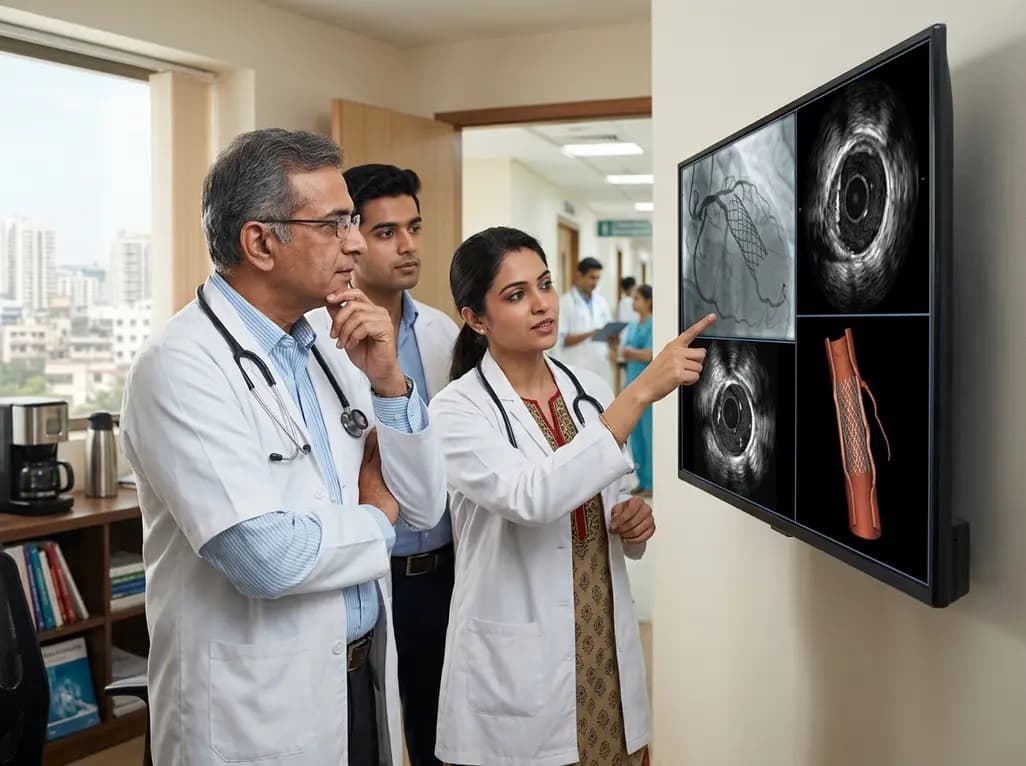
Recent advancements in interventional cardiology focus on identifying and treating coronary lesions prone to future cardiovascular events. The bioresorbable magnesium scaffold (DREAMS 3G) represents a significant leap in this field. While clinicians often debate the invasive treatment of high-risk plaques, newer scaffold technologies offer a temporary structural solution. The BIOMAG-I study provides critical evidence regarding the vascular response of these specific plaques to the DREAMS 3G system.
Researchers conducted a post-hoc analysis of the BIOMAG-I study to evaluate how high-risk plaque morphology affects late lumen loss (LLL). They defined high-risk plaques using advanced imaging metrics, specifically a micro-vessel density (μFR) of ≤0.80 and a plaque burden (PB) of ≥70%. Surprisingly, the results indicated that patients with high-risk plaques achieved similar LLL outcomes at follow-up compared to those with lower-risk lesions. This suggests that the scaffold provides consistent luminal support regardless of the underlying plaque vulnerability.
Furthermore, the study stratified subgroups based on the presence of a minimum lumen area (MLA) <3.5 mm². Even in these more constricted vessels, the scaffold demonstrated robust performance. Magnesium alloys disappear after the initial healing phase, which prevents long-term foreign body reactions. Consequently, this technology might resolve the historical concerns associated with permanent metallic drug-eluting stents. Therefore, physicians can consider this as a viable alternative for complex lesion management.
Additionally, the use of intravascular ultrasound (IVUS) and optical coherence tomography (OCT) in BIOMAG-I allowed for precise tracking of vascular remodeling. The bioresorbable magnesium scaffold maintained its radial strength during the critical first few months. Subsequently, it resorbed almost completely by 12 months. This timeline matches the vessel's natural healing process, thereby reducing the risk of late stent thrombosis and allowing for the restoration of natural vasomotion.
A high-risk plaque is a coronary lesion that is more likely to rupture and cause a heart attack. In the BIOMAG-I study, these were identified by high plaque burden and low fractional flow reserve (via imaging).
Unlike traditional drug-eluting stents that remain in the artery forever, the DREAMS 3G magnesium scaffold provides temporary support and then fully resorbs into the body within approximately 12 months.
Late lumen loss measures the reduction in the size of the artery opening after a procedure. Low LLL indicates that the vessel has remained open and successfully resisted restenosis (re-narrowing).
Disclaimer: This content is for informational and educational purposes only and does not constitute medical advice, diagnosis, or treatment. Always seek the advice of your physician or other qualified health provider with any questions you may have regarding a medical condition. Refer to the latest local and national guidelines for clinical practice.
References
Rubio PM et al. Outcomes of Patients With High-Risk Plaques Treated With a Bioresorbable Magnesium Scaffold: Insights From the BIOMAG-I Study. Catheter Cardiovasc Interv. 2026 Jun 07. doi: 10.1002/ccd.70655. PMID: 42252499.
Haude M et al. Clinical outcomes of the third-generation resorbable magnesium scaffold for coronary artery lesions: three-year results of the BIOMAG-I study. EuroIntervention. 2025 Apr 14;21:971-973. doi: 10.4244/EIJ-D-25-00396.
Seguchi M et al. Preclinical evaluation of the degradation kinetics of third generation resorbable magnesium scaffolds. EuroIntervention. 2023;18:10.4244/EIJ-D-22-00718.

Read summarized clinical updates, watch expert medical content, and earn CME certifications right from your smartphone.
Open your smartphone camera to scan and install.





BIOMAG-I study shows DREAMS 3G magnesium scaffolds are effective for high-risk plaques, with late lumen loss comparable to non-high-risk lesions....
4 months ago

Explore why official drug package inserts fail to reflect modern evidence for clozapine prescribing. Learn how legal standards of care, case law, slow titration, and vital adverse event monitoring empower clinicians to prioritize evidence-based medical practice over outdated manufacturer labeling.
Today

Occult maternal malignancy accounts for 3.82% of persistent unreportable NIPT results with genomic noise. Multiple chromosomal aberrations, notably on chromosome 18, warrant thorough oncological evaluation and whole-body MRI to ensure timely maternal diagnosis while preserving fetal care.
Today

This article reviews the forensic and clinical complexities of acute myocarditis arising on left ventricular hypertrophy in children, highlighting early diagnostic red flags and multidisciplinary postmortem autopsy protocols.
Today
A randomized controlled trial demonstrates that an eight-week dual-task training intervention significantly improves static and dynamic postural control over standard balance exercises in individuals with chronic ankle instability, addressing critical neurocognitive deficits during athletic and daily activities.
Today

A retrospective cohort study of 7,716 ICU patients from the MIMIC-IV database demonstrates that Gradient Boosting Decision Trees significantly outperform traditional SOFA scores in predicting in-hospital mortality among patients with sepsis and diabetes, with SHAP analysis providing clinical interpretability.
Today
