.webp&w=384&q=75)

Loading, please wait...
Loading, please wait...

Traditional bone tissue engineering often struggles with poor structure and insufficient bioactivity. For clinicians in orthopedics and dentistry, achieving effective endogenous bone regeneration remains a clinical priority. Conventional organic-inorganic composites frequently fail to replicate the complex, anisotropic architecture of native bone. Consequently, researchers are turning to biomimetic strategies to guide tissue repair more precisely.
A recent study introduced a nano-homogeneous, radially oriented hybrid scaffold developed via directional freeze-casting technology. The research team employed tunicate nanocellulose (TCNC) as a high-efficiency dispersant and mechanical reinforcer. This component ensures that carbon nanotubes (CNT) distribute evenly within a chitosan matrix. Furthermore, in situ biomimetic mineralization generates uniformly distributed hydroxyapatite (HAP). Notably, this specific composition mimics the structural and chemical complexity of natural skeletal tissue.
Infection remains a significant risk in regenerative procedures. Specifically, the incorporation of carbon nanotubes provides these scaffolds with strong photothermal antibacterial properties. Upon activation, the material achieved an antibacterial rate exceeding 98% against Staphylococcus aureus. This multifunctional approach combines tissue growth support with active pathogen defense, reducing the reliance on systemic antibiotics.
The anisotropic channels within the oriented scaffolds play a crucial role in cellular behavior. These structures promote cell adhesion, alignment, and proliferation far more effectively than random porous designs. In a rat cranial defect model, the oriented scaffold demonstrated superior osteogenic performance. Importantly, the bone mineral density reached 0.688 g/cm³ after just three months of implantation. These results suggest that mimicking the native bone architecture is essential for successful endogenous bone regeneration.
The integration of nano-homogeneous materials and anisotropic architecture offers a promising pathway for bone repair. By combining mechanical strength, bioactivity, and antibacterial protection, these scaffolds provide a comprehensive environment for tissue restoration. Ultimately, this biomimetic strategy could transform clinical outcomes for patients with complex bone injuries.
Tunicate nanocellulose acts as both a mechanical reinforcer and a dispersant. It ensures that carbon nanotubes are distributed homogeneously, which enhances the scaffold's overall structural integrity and functionality.
Oriented or anisotropic channels mimic the natural grain of bone. This architecture guides cells to align and migrate more effectively, which accelerates the formation of organized, functional bone tissue compared to random pore structures.
Yes, the inclusion of carbon nanotubes enables photothermal antibacterial action. This feature has shown a kill rate of over 98% against common pathogens like S. aureus, offering a localized defense against infection during the healing process.
Disclaimer: This content is for informational and educational purposes only and does not constitute medical advice. It is not intended to be a substitute for professional medical judgment, diagnosis, or treatment. Refer to the latest local and national guidelines for clinical practice.
References
1. Yu H et al. Oriented Nano-Homogeneous Biomimetic Scaffolds Regulate Cell Alignment and Promote Endogenous Bone Regeneration. Small. 2026 Apr 05. doi: 10.1002/smll.202514683. PMID: 41937200.
2. Ahangar P et al. Biomimetic Strategies for Bone Regeneration: Smart Scaffolds and Multiscale Cues. Pharmaceutics. 2025 Dec 27. doi: 10.3390/pharmaceutics1712xxxx.
3. Khan A et al. Perspective Applications and Associated Challenges of Using Nanocellulose in Treating Bone-Related Diseases. Frontiers in Nanotechnology. 2022 Mar 15. doi: 10.3389/fnano.2022.846988.
"
Read summarized clinical updates, watch expert medical content, and earn CME certifications right from your smartphone.
Open your smartphone camera to scan and install.





Oriented nano-homogeneous scaffolds mimic native bone architecture to promote cell alignment, antibacterial activity, and endogenous bone regeneration....
6 months ago
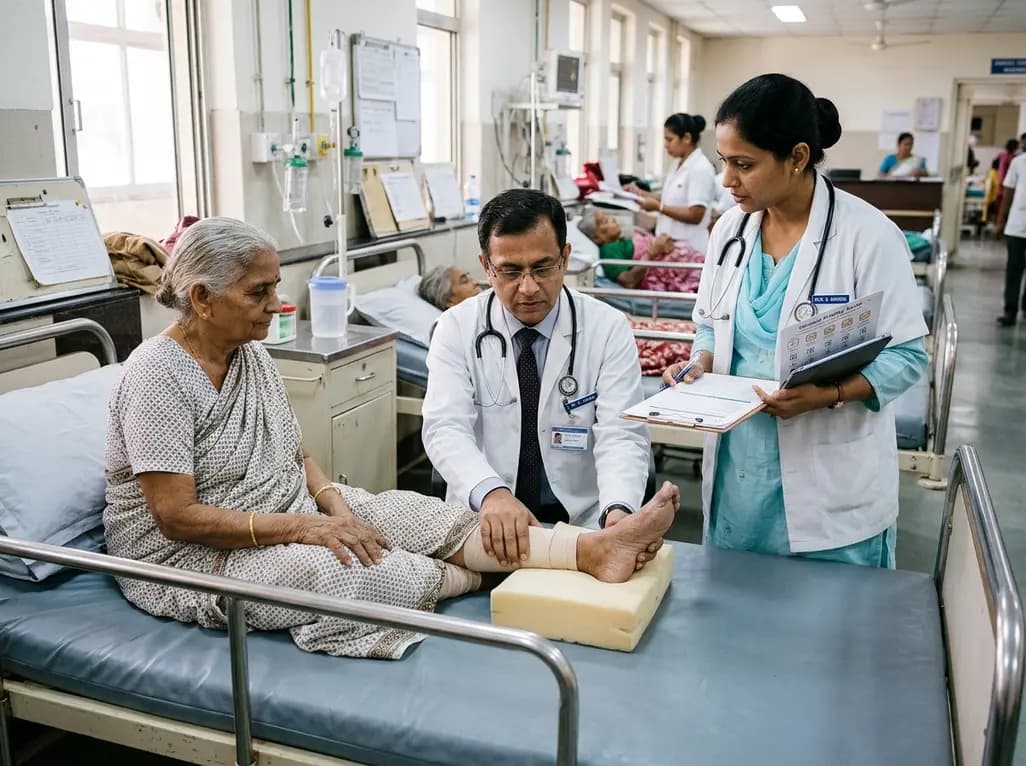
A retrospective cohort study reveals that frailty quadruples the odds of pressure injuries in hospitalized older adults. Integrating the Clinical Frailty Scale with comprehensive geriatric care is crucial for identifying vulnerability early and implementing targeted multidisciplinary prevention.
Today

Occult maternal malignancy accounts for 3.82% of persistent unreportable NIPT results with genomic noise. Multiple chromosomal aberrations, notably on chromosome 18, warrant thorough oncological evaluation and whole-body MRI to ensure timely maternal diagnosis while preserving fetal care.
Today

This article reviews the forensic and clinical complexities of acute myocarditis arising on left ventricular hypertrophy in children, highlighting early diagnostic red flags and multidisciplinary postmortem autopsy protocols.
Today

A randomized controlled trial demonstrates that an eight-week dual-task training intervention significantly improves static and dynamic postural control over standard balance exercises in individuals with chronic ankle instability, addressing critical neurocognitive deficits during athletic and daily activities.
Today

A retrospective cohort study of 7,716 ICU patients from the MIMIC-IV database demonstrates that Gradient Boosting Decision Trees significantly outperform traditional SOFA scores in predicting in-hospital mortality among patients with sepsis and diabetes, with SHAP analysis providing clinical interpretability.
Today
