

Loading, please wait...
Loading, please wait...

Emergency departments evaluate millions of patients with mild traumatic brain injury every year across the globe. Clinicians commonly apply validated clinical decision rules to identify acute intracranial pathology and guide neuroimaging decisions. However, established guidelines frequently suffer from limited specificity, which promotes widespread neuroimaging overuse. Consequently, acute trauma units face severe resource strain, substantial financial expenditures, and avoidable patient radiation exposure. Researchers have sought practical secondary screening methods to optimize neuroimaging referrals without missing critical intracranial hematomas.
Clinicians heavily rely on decision algorithms like the Canadian CT Head Rule to evaluate acute head trauma. This validated rule provides near-perfect sensitivity for detecting neurosurgical lesions, yet its modest specificity prompts excessive cranial computed tomography scans. In crowded emergency rooms, negative scans consume valuable scanner availability and healthcare funding. Furthermore, repeated exposure to medical radiation creates potential long-term biological risks for trauma patients. Although scanning every symptomatic patient appears conservative, it overwhelms radiology departments and delays treatment for critically ill patients. Therefore, clinical investigators actively seek cost-effective adjunctive tools to refine imaging stratification. By accurately filtering out low-risk individuals who trigger minor imaging criteria, hospitals can preserve scanning resources for truly urgent emergencies. Moreover, a streamlined diagnostic pathway improves department throughput and shortens patient wait times. Physicians need reliable stratification methods that never compromise clinical safety. Simple blood-based markers represent an attractive solution because standard emergency panels already measure these parameters during initial trauma evaluations.
Recent investigations highlight the physiological connection between systemic inflammation and acute neurotrauma. Specifically, acute cranial trauma triggers rapid systemic immune cascades, stress hormone release, and endothelial activation. Investigators analyzed complete blood counts and routine biochemistry panels to detect reliable physiological signals in trauma patients. Consequently, they identified three major blood indices that correlate significantly with positive computed tomography findings. The neutrophil-to-lymphocyte ratio rises sharply in response to intracranial parenchymal damage and stress-induced granulocyte release. Similarly, the platelet-to-lymphocyte ratio reflects heightened prothrombotic signaling and systemic immune alterations following cranial impact. In addition, the glucose-to-potassium ratio demonstrates remarkable elevation among patients harboring traumatic intracranial hematomas. This metabolic disturbance mirrors sympathetic hyperactivation, cortisol surges, and acute catecholamine release. Importantly, standard automated hospital analyzers measure these routine haematological parameters within thirty minutes of presentation. Because every secondary and tertiary care hospital routinely performs these baseline tests, adopting these markers requires zero novel infrastructure.
To improve clinical utility, investigators synthesized these accessible biomarkers with classic neurological signs into a unified multivariable prediction model. The resulting logistic regression equation combined the neutrophil-to-lymphocyte ratio, platelet-to-lymphocyte ratio, and serum glucose levels with clinical loss of consciousness and repeated vomiting. In the primary development cohort of 110 patients, this integrated model demonstrated outstanding predictive accuracy. Specifically, the model achieved an area under the receiver operating characteristic curve of 0.94. Furthermore, the algorithm showed an impressive sensitivity of 94.7 percent and an overall diagnostic accuracy of 90.0 percent. The model also delivered a specificity of 62.5 percent, which substantially exceeds standard clinical decision rules alone. Internal bootstrap validation confirmed strong internal consistency, yielding an optimism-corrected discrimination area of 0.90. Thus, adding haematological parameters successfully reduced theoretical false positives without dropping detection rates for acute intracranial injuries. Clinicians can potentially utilize this scoring algorithm to identify borderline patients who can safely avoid urgent neuroimaging.
Although initial model results appeared exceptional, rigorous validation is essential before clinical translation. Researchers evaluated the identical diagnostic model within an independent temporal validation cohort comprising 127 patients. Notably, the model maintained high sensitivity at 92.2 percent, ensuring that it missed very few clinically meaningful intracranial lesions. However, overall discrimination declined to an area under the curve of 0.78 within this temporal group. This drop in specificity highlights the inherent fragility of predictive models when exposed to temporal variations in patient demographics and trauma severity. In addition, retrospective data collection introduces potential selection biases that alter biomarker baseline values. Extracranial injuries, pre-existing systemic inflammation, and metabolic comorbidities like diabetes can independently elevate glucose levels and inflammatory ratios. Therefore, emergency physicians cannot rely entirely on blood markers in isolation. Clinicians must interpret these mathematical predictions alongside thorough serial physical examinations. Furthermore, prospective studies must establish standardized cut-off thresholds that remain robust across diverse emergency settings.
These findings offer valuable insights for clinical practice, particularly in high-volume emergency centres across India. Traumatic head injuries represent a massive public health challenge in developing nations due to road traffic collisions and falls. In resource-constrained environments, access to computed tomography remains limited, and patient transfers generate heavy logistical burdens. Consequently, primary healthcare providers need inexpensive triage instruments to prioritize neuroimaging referrals. Routine laboratory tests like complete blood counts and blood glucose are cheap, rapid, and universally available across district facilities. Combining these accessible parameters with structured clinical assessments can help physicians safely defer unnecessary scans in low-risk individuals. Furthermore, this selective imaging strategy protects patients from ionizing radiation and reduces acute crowding in tertiary trauma hubs. Nevertheless, because current data stem from a single-centre pilot study, clinicians must await prospective multicentre trials before changing established protocols. Until broader validation confirms these findings, emergency physicians should adhere strictly to current local guidelines.
Routine biomarkers like the neutrophil-to-lymphocyte ratio and glucose reflect systemic inflammation and stress cascades triggered by intracranial injury. Adding these objective markers to clinical signs sharpens diagnostic specificity. Consequently, emergency clinicians can safely identify low-risk patients, reducing unnecessary computed tomography scans, healthcare expenditures, and diagnostic radiation exposure.
No, biomarker models cannot replace thorough neurological examinations or established clinical decision rules. Physicians must use these laboratory ratios strictly as adjunctive risk-stratification tools. Clinical red flags like progressive loss of consciousness, repeated vomiting, or focal neurological deficits always warrant immediate computed tomography, regardless of normal biomarker results.
Model discrimination declined from an AUC of 0.94 to 0.78 primarily because patient demographics, injury mechanisms, and trauma severity shifted across different recruitment periods. Furthermore, unmeasured confounding variables such as systemic inflammation, extracranial trauma, or chronic medical disorders can distort biomarker values across separate patient populations.
Disclaimer: This content is for informational and educational purposes only and is not intended as a substitute for professional medical advice, diagnosis, or treatment. Always seek the advice of a qualified healthcare provider with any questions you may have regarding a medical condition. Refer to the latest local and national guidelines for clinical practice.
References
Lampros M et al. Development and validation of an adjunctive diagnostic tool for Canadian CT head rule-positive patients: a pilot study. Neurosurg Rev. 2026 Nov 09. doi: 10.1007/s10143-026-04572-8. PMID: 43000583.
Stiell IG, Wells GA, Vandemheen K, et al. The Canadian CT Head Rule for patients with minor head injury. Lancet. 2001;357(9266):1391-1396.
Undén J, Ingebrigtsen T, Romner B; Scandinavian Neurotrauma Committee. Scandinavian guidelines for initial management of minimal, mild and moderate head injuries in adults: an evidence and consensus-based update. BMC Med. 2013;11:50.

Read summarized clinical updates, watch expert medical content, and earn CME certifications right from your smartphone.
Open your smartphone camera to scan and install.





A pilot study validates an adjunctive diagnostic tool combining routine inflammatory biomarkers with clinical criteria to optimize CT use in mild traumatic brain injury.
Today

A large retrospective cohort study demonstrates that explainable machine learning models, notably XGBoost, accurately predict hospital admission at emergency triage. By analyzing routine triage parameters, hospitals can streamline bed allocation, decrease boarding times, and alleviate acute care overcrowding.
Today

A new quality-improvement initiative reveals that universal maternal mental health screening in the NICU increased screening rates from 29.5% to 95.0%, with nearly 60% of screened mothers requiring psychosocial referrals, highlighting the urgent need for embedded mental health resources.
Today
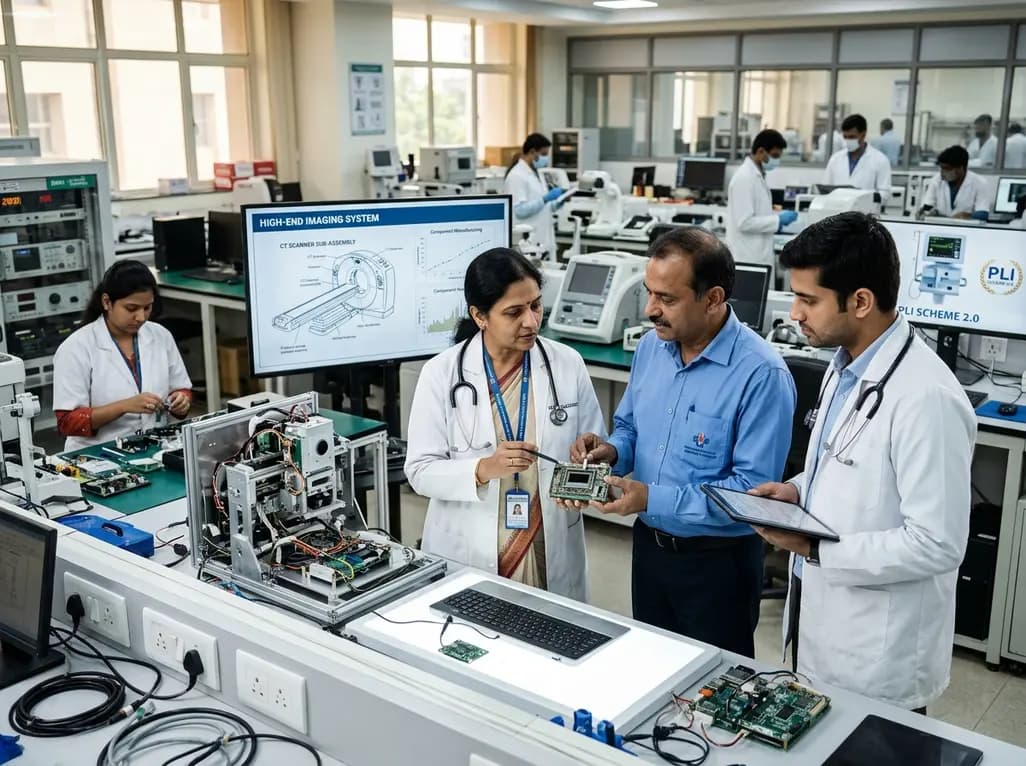
The Department of Pharmaceuticals has extended the medical devices PLI scheme to 2035-36 with a Rs 2,700 crore outlay. Featuring relaxed investment barriers and eliminated sales thresholds, the revised framework targets deep manufacturing, high-end diagnostics, critical MedTech components, and supply resilience.
Today
A metabolomic study reveals that aging delays glutathione synthesis and gamma-glutamylcysteine accumulation following muscle injury. Although precursor supplementation targets this enzymatic bottleneck, in vitro tests show no immediate effect on myogenesis, highlighting the complexity of muscle repair in older adults.
Today

A systematic review evaluates psychological interventions for smoking cessation in diabetes, showing short-term success but highlighting challenges in long-term abstinence.
Today
