.webp&w=384&q=75)

Loading, please wait...
Loading, please wait...
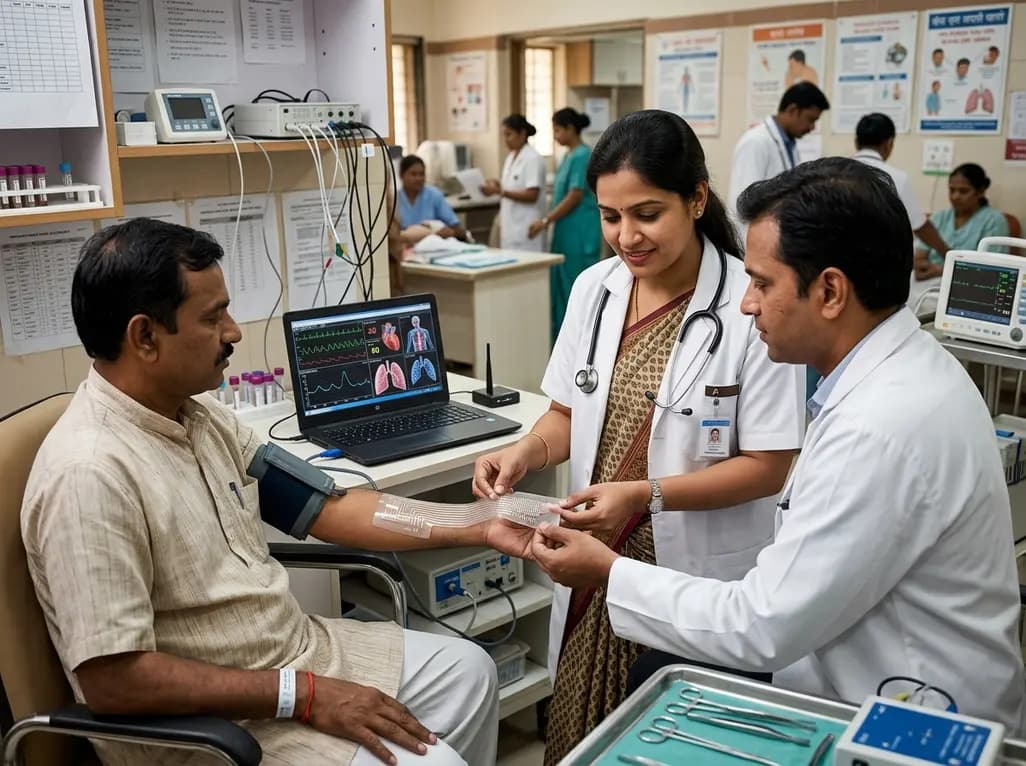
Continuous physiological thermometry serves as a cornerstone of clinical diagnostics and intensive patient monitoring. However, conventional rigid thermistors frequently fail to provide seamless conformal contact with delicate internal organs or dynamic mucosal surfaces. Recent advances in bioelectronics have driven significant interest in soft ionic conductors to address these mechanical mismatches. Despite this enthusiasm, earlier iterations of soft ionic devices suffered from intrinsically low thermal sensitivity and signal interference. A breakthrough materials design now addresses this fundamental limitation through biomimetic molecular engineering. By taking inspiration from biological thermosensitive ion channels, researchers have developed ultrasensitive flexible temperature sensors that revolutionize non-invasive and intraoperative physiological surveillance. These devices bridge the gap between microscopic thermal fluctuations and real-time bedside clinical analytics. Consequently, clinicians gain unprecedented precision when tracking minute hemodynamic shifts, respiratory airflow dynamics, and regional tissue perfusion changes during critical care interventions.
Standard soft ionic conductors typically exhibit averaged energy landscapes and competing transport mechanisms. Consequently, these structural characteristics severely dilute their responsiveness to subtle thermal fluctuations. Traditional ionic conductors rarely provide the thermal coefficient of resistance required for nuanced physiological assessment. When clinicians evaluate internal visceral perfusion or slight microvascular changes, low sensitivity introduces diagnostic ambiguity. Furthermore, standard flexible electronics often experience severe signal crosstalk between thermal, mechanical, and tactile inputs. For instance, mechanical compression or tissue movement frequently distorts pure temperature readings. To resolve this challenge, bioengineers investigated biological transient receptor potential channels that gate ionic currents with extreme thermal selectivity. Emulating these biological channels allows synthetic materials to switch ionic conductance across narrow physiological ranges rapidly. As a result, synthetic polymers can now mimic nature's most sophisticated thermal transducers. This paradigm shift provides clinicians with resilient, high-fidelity monitoring tools that maintain measurement accuracy despite ongoing anatomical movement.
The newly engineered material incorporates localized hydrogen-bond traps with heterogeneous energy distributions within a deep eutectic solvent gel network. In standard conductors, ions move along continuous pathways without discrete thermal barriers. In contrast, this tailored network transforms continuous ion transport into a confined, thermally activated hopping process. Therefore, slight temperature elevations provide the exact activation energy required for ions to escape their molecular traps and migrate freely. This elegant hopping mechanism generates an unprecedented temperature coefficient of resistance of 178% per degree Celsius. In addition, the material demonstrates an exceptional thermal sensitivity B value of 7880 Kelvin. The system also suppresses multimodal crosstalk because mechanical deformation does not inadvertently trigger the thermally activated hopping cascade. As a result, the sensor distinguishes thermal signals from tactile pressure and ambient proximity without complex computational filtering. This structural stability ensures continuous data integrity across diverse clinical and laboratory environments.
Miniaturization represents a critical milestone in translating bioelectronic materials into surgical workflows. Fabricating the sensing material into a miniature flexible probe measuring just one millimeter by one millimeter unlocks direct intraoperative applications. For example, surgical teams can position this ultra-compact probe directly on parenchymal organs during complex transplantations, vascular reconstructions, or oncological resections. Because regional organ temperature directly mirrors microvascular blood flow, the probe detects early tissue ischemia long before systemic hemodynamic markers deteriorate. Furthermore, intensive care units can utilize these pliable probes for continuous monitoring of cerebral cortex temperature in traumatic brain injury or postcardiac arrest patients. Conventional catheters frequently cause focal mechanical trauma or deliver sluggish thermal responses. In contrast, soft probes conform gently to delicate anatomical surfaces without producing pressure necrosis or disrupting microcirculation. Consequently, intensivists obtain rapid, actionable diagnostic insights that guide timely pharmacologic or surgical interventions.
Beyond invasive surgical monitoring, these flexible temperature sensors deliver remarkable advantages in non-invasive respiratory diagnostics. Human respiration produces distinct thermal oscillations within the exhaled and inhaled air column. Because the biomimetic sensor demonstrates rapid response kinetics, it accurately captures subtle temperature differentials during each respiratory cycle. Clinicians can integrate the miniature probe into lightweight wireless patches or standard oxygen masks to monitor respiratory patterns continuously. Therefore, the device effortlessly detects shallow breathing, tachypnea, and dangerous apneas in real time. Moreover, wireless data transmission allows remote tracking of uncooperative pediatric patients or frail geriatric individuals without restrictive cables. In pulmonary medicine wards, continuous respiratory thermometry provides early warning signs of acute respiratory distress, bronchospasm, or nocturnal ventilatory failure. Consequently, nursing teams can initiate prompt supportive therapy before hypercapnia or severe hypoxemia ensues.
The ability to suppress multimodal interference facilitates the development of decoupled trimodal sensing systems. By isolating thermal, pressure, and proximity inputs, a single integrated interface independently resolves diverse physical interactions. This technological achievement holds transformative implications for medical robotics and advanced prosthetics. In robotic-assisted surgery, robotic instruments equipped with decoupled sensing can distinguish tissue contact, gripping force, and local thermal variations simultaneously. Consequently, surgeons operating console systems receive enhanced tactile and thermal feedback, which prevents accidental thermal damage or excessive mechanical traction. Furthermore, smart prosthetic limbs utilizing these ionic networks can restore natural somatosensory perception to amputees. Patients can safely perceive the temperature of handled objects while adjusting their grasp pressure appropriately. Therefore, this innovation bridges a crucial gap in modern bio-interfacing, making human-robot interaction in clinical settings significantly safer and more intuitive.
The deployment of cost-effective, high-precision wearable sensors offers substantial advantages for healthcare delivery across India. In tertiary critical care centers and rural district hospitals alike, continuous physiological surveillance remains essential yet resource-intensive. Because deep eutectic solvent gels utilize accessible, cost-effective chemical precursors, scalable manufacturing can lower the cost of disposable patient-monitoring patches. Furthermore, integrating wireless flexible probes into community-level tele-triage platforms enables remote health workers to identify critically ill patients early. For instance, peripheral thermal monitoring in neonates and postoperative surgical patients can drastically reduce preventable morbidity in resource-limited settings. As domestic biomedical manufacturing expands under national digital health initiatives, adopting bioinspired soft sensing technology will modernize patient care pathways. Consequently, Indian clinicians can leverage robust, localized diagnostic platforms that provide hospital-grade continuous monitoring across diverse socioeconomic landscapes.
Conventional clinical thermistors rely on rigid metallic or semiconductor elements that cannot conform comfortably to irregular biological tissues. In contrast, bioinspired flexible temperature sensors utilize soft ionic conductors with localized hydrogen-bond traps. This unique architecture provides extreme mechanical compliance alongside an ultrahigh temperature coefficient of resistance. Consequently, they deliver rapid, highly sensitive thermometry without causing tissue irritation or mechanical distortion.
Continuous organ temperature monitoring provides direct, real-time insight into local microvascular perfusion and cellular metabolic activity. During organ transplantation or major reconstructive surgery, sudden drops in localized tissue temperature indicate vascular compromise or hypoperfusion before systemic vital signs shift. Therefore, soft miniaturized probes allow surgical and intensive care teams to detect early ischemia promptly and perform corrective vascular interventions immediately.
Decoupled trimodal sensing independently measures temperature, pressure, and proximity without signal interference. In robotic-assisted surgery, this capability enables instruments to distinguish tissue contact and gripping pressure from thermal energy generated by electrocautery devices. Consequently, surgical consoles provide precise multivariable feedback to surgeons, preventing accidental tissue burning, excessive mechanical strain, and avoidable intraoperative complications during delicate operative dissections.
Disclaimer: This content is for informational and educational purposes only. It is not intended as medical advice, diagnosis, or treatment. Healthcare professionals should exercise their clinical judgment and verify vital parameters against standard calibrated devices. Patients must consult qualified healthcare providers for medical guidance. Refer to the latest local and national guidelines for clinical practice.
References

Read summarized clinical updates, watch expert medical content, and earn CME certifications right from your smartphone.
Open your smartphone camera to scan and install.





Bioinspired flexible temperature sensors using hydrogen-bond traps offer ultrahigh thermal sensitivity for organ monitoring, wireless respiratory tracking, and robotic surgery without signal crosstalk.
last month

A systematic review of 41 preclinical studies reveals that baicalin dampens systemic inflammation, inhibits NF-κB and NLRP3 pathways, and improves organ preservation in sepsis models. However, substantial study heterogeneity and a complete lack of human clinical trials highlight the need for further translational research.
Today
Discover the crucial distinctions between mesonephric and mesonephric-like proliferations of the female genital tract. Learn the key histomorphologic, immunohistochemical, and molecular differences essential for accurate diagnosis and clinical management.
Today
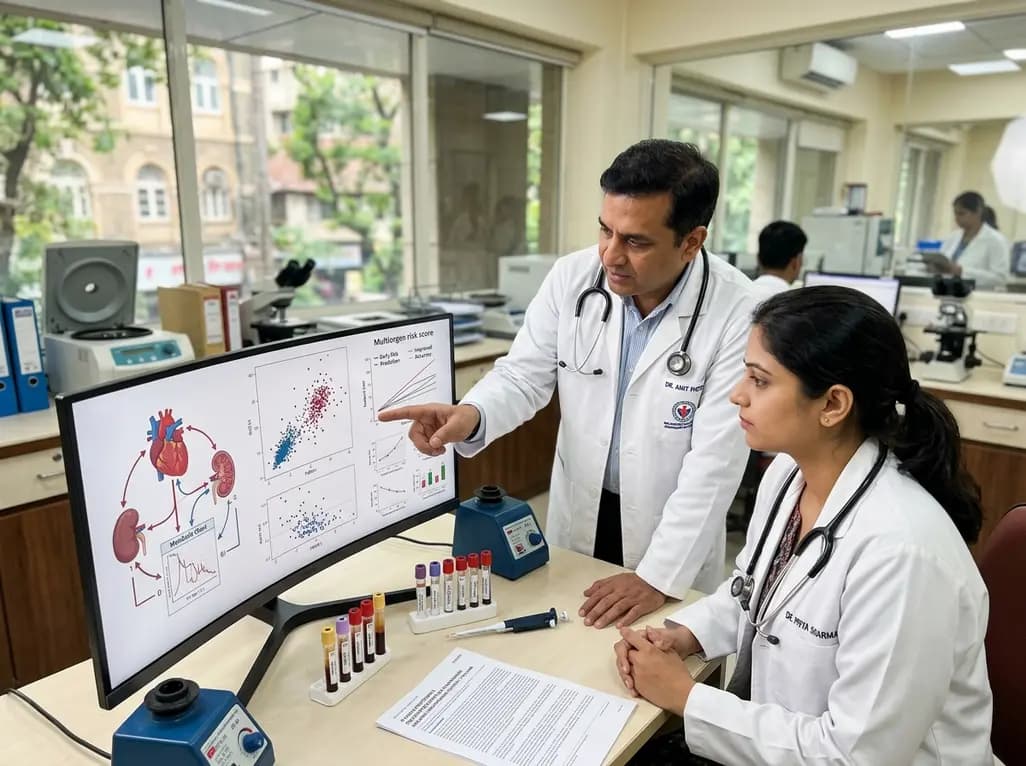
A large UK Biobank study reveals that plasma proteomic signatures capture preclinical organ damage and improve multiorgan risk prediction across early CKM syndrome stages 0 to 2 beyond traditional PREVENT clinical models.
Today
A narrative review investigates whether the articularis genus muscle functions as an independent anatomical entity or blends with the vastus intermedius. We evaluate its morphology, role in retracting the suprapatellar bursa, and direct clinical significance in anterior knee pain and arthroplasty.
Today

A Bayesian multilevel meta-analysis reveals that aerobic training combined with moderate carbohydrate restriction modestly lowers HbA1c in type 2 diabetes. However, sparse data and very low certainty leave incremental benefits over exercise or diet alone unproven, highlighting the need for individualized care.
Today
