.webp&w=384&q=75)

Loading, please wait...
Loading, please wait...
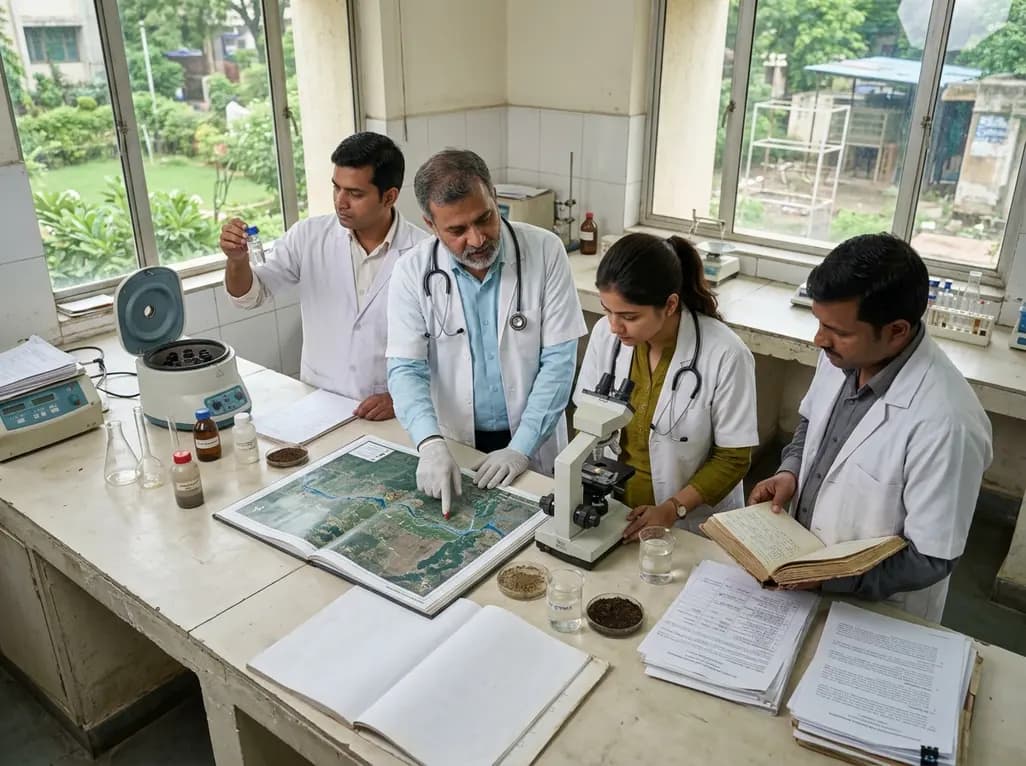
Global biodiversity is experiencing unprecedented declines due to multiple compounding environmental pressures. Habitat destruction, invasive species, climate change, resource overexploitation, and pollution continuously disrupt delicate ecosystems worldwide. While researchers widely recognize chemical exposure as a significant driver of ecosystem degradation, quantifying its exact relative contribution remains a challenging scientific hurdle. A comprehensive understanding of biodiversity and chemical regulation is therefore vital for environmental health, toxicology, and modern preventive medicine. Establishing clear quantitative relationships between chemical exposures and ecological shifts helps regulators design meaningful safety thresholds. International scientific frameworks increasingly demand coordinated actions across diverse ecological and regulatory landscapes.
Human activities release thousands of synthetic chemicals into soil, freshwater, and atmospheric systems every single year. Consequently, these xenobiotics interact with climate shifts and habitat fragmentation, accelerating species decline at alarming rates. While regulatory frameworks monitor single-compound toxicities, real-world species continually experience complex chemical mixtures. Therefore, scientists struggle to isolate the direct ecological impact of individual pollutants from broader environmental stressors. In addition, chemical exposure can alter physiological resilience, reproductive success, and food web dynamics across various trophic levels. For example, sublethal pesticide exposures frequently impair non-target pollinators, creating cascading disruptions throughout agricultural biomes. Similarly, industrial effluents introduce persistent pollutants that bioaccumulate along aquatic food chains, affecting top predators and aquatic microorganisms alike. Because ecosystems are inherently interconnected, biodiversity loss ultimately undermines ecosystem stability, clean water access, and public health security. Addressing these multifaceted drivers requires proactive risk assessment models that account for combined toxicological and ecological stressors.
In response to severe environmental decline, international authorities have deployed extensive policy frameworks to safeguard ecosystems. The European Union has pioneered several major initiatives, including the Biodiversity Strategy for 2030, the Zero Pollution Action Plan, and the Chemicals Strategy for Sustainability. Furthermore, foundational chemical laws such as REACH and the Plant Protection Products Regulation aim to minimize ecotoxicological damage. However, current regulatory documentation largely references biodiversity through qualitative definitions rather than quantitative, standardized benchmarks. Most environmental risk assessments still evaluate surrogate laboratory species under controlled settings rather than entire natural populations. As a result, existing protocols struggle to measure whether specific chemical restrictions actually restore or maintain native species richness. Regulators therefore face considerable difficulty in translating high-level conservation targets into actionable chemical safety standards. Bridging this operational disconnect is essential for modernizing chemical safety legislation.
A recent comprehensive review conducted by an ECETOC multidisciplinary task force systematically examined European policies and peer-reviewed literature. Their findings revealed that academic biodiversity research rarely focuses on chemical pollution mechanisms with regulatory utility. Instead, ecological investigations often prioritize land use and global warming while overlooking subtle chemical stressors. Moreover, academic literature employs widely inconsistent definitions, metrics, and ecological indices across diverse biomes. For instance, studies measuring aquatic microbial diversity rarely align with terrestrial soil health metrics or vertebrate population models. Consequently, regulatory scientists cannot easily integrate published ecological findings into standardized chemical hazard evaluations. This widespread fragmentation hinders the development of evidence-based protection goals for threatened ecosystems. Systematic harmonization of scientific methodologies is necessary to resolve these persistent information blind spots.
To overcome these data gaps, scientific experts propose several clear structural interventions for regulatory systems. First, agencies must establish standardized, operational definitions of biodiversity applicable across diverse legislative frameworks. Second, researchers must develop harmonized indicators and field metrics that quantify specific community-level responses to toxicant exposure. Third, establishing a centralized, open-access data platform will significantly accelerate collaboration between academic ecologists, toxicologists, and policymakers. In addition, modern risk assessment must leverage advanced technologies, including high-throughput genomic screening and machine learning algorithms. These computational predictive tools can model multi-chemical toxicity across thousands of non-model species efficiently. Ultimately, aligning chemical risk assessments with broader conservation policies will foster greater coherence, scientific rigor, and environmental protection globally.
Planetary health and human wellbeing share deep, inseparable biological linkages with surrounding ecosystem stability. The One Health framework emphasizes that animal health, environmental integrity, and human disease susceptibility remain fundamentally interdependent. For example, environmental chemical contaminants frequently enter human food supplies and drinking water reservoirs, causing systemic endocrine and metabolic disturbances. Furthermore, degrading microbial diversity in natural soils impairs nutrient cycling and encourages the emergence of zoonotic pathogens. When regulatory policies protect biodiversity, they simultaneously safeguard critical ecosystem services that sustain clinical public health. Medical practitioners, epidemiologists, and toxicologists must advocate for robust chemical governance to prevent chronic environmental disease burdens. Interdisciplinary collaboration across medicine, ecology, and regulatory science represents the foundation of sustainable planetary health.
Chemical pollution alters species survival, fertility, and developmental health through acute toxicity, bioaccumulation, and persistent endocrine disruption. Furthermore, chemical exposures disrupt symbiotic interactions, degrade critical habitats, and reduce population resilience against secondary environmental stresses such as climate change and disease. Consequently, whole communities suffer systemic biodiversity loss.
Natural ecosystems experience multiple concurrent stressors, including habitat destruction and climate warming, making single-chemical attribution difficult. Additionally, standard regulatory assessments rely primarily on isolated laboratory test species. As a result, these simplistic models fail to capture complex food web interactions, sublethal chronic exposures, and long-term population shifts across wild ecosystems.
Advanced computational platforms, including machine learning models and quantitative structure-activity relationship tools, predict chemical toxicity across diverse species rapidly. Moreover, these digital technologies analyze extensive multi-omic and environmental monitoring datasets. Consequently, regulators can evaluate thousands of emerging compounds without relying exclusively on extensive, slow animal testing.
Disclaimer: This content is for informational and educational purposes only. It is not intended to provide specific medical or regulatory advice. Refer to the latest local and national guidelines for clinical practice.
References
Gladbach A et al. Biodiversity and chemical regulation: Status quo, data gaps, and recommendations for future action. Integr Environ Assess Manag. 2026 Aug 26. doi: undefined. PMID: 42644825.
European Chemicals Agency. Guidance on Information Requirements and Chemical Safety Assessment: Environmental Risk Assessment. ECHA Guidelines. 2024;14(2):1-112.
World Health Organization. Principles and Methods for Assessing the Risk of Chemicals in Children and Ecosystems. Environmental Health Criteria. 2023;240:45-98.

Read summarized clinical updates, watch expert medical content, and earn CME certifications right from your smartphone.
Open your smartphone camera to scan and install.





Global biodiversity faces steep declines from pollution and climate stress. This expert review explores chemical regulation, existing data gaps, and strategic recommendations to align environmental safety with global conservation goals.
last month

A nationwide multicenter study identified three COPD clinical phenotypes, finding that mild smoking males experience the highest rate of rapid lung function decline. A CatBoost model using six routine clinical and socioeconomic variables accurately stratifies high-risk patients for early therapeutic intervention.
Today
Discover the crucial distinctions between mesonephric and mesonephric-like proliferations of the female genital tract. Learn the key histomorphologic, immunohistochemical, and molecular differences essential for accurate diagnosis and clinical management.
Today
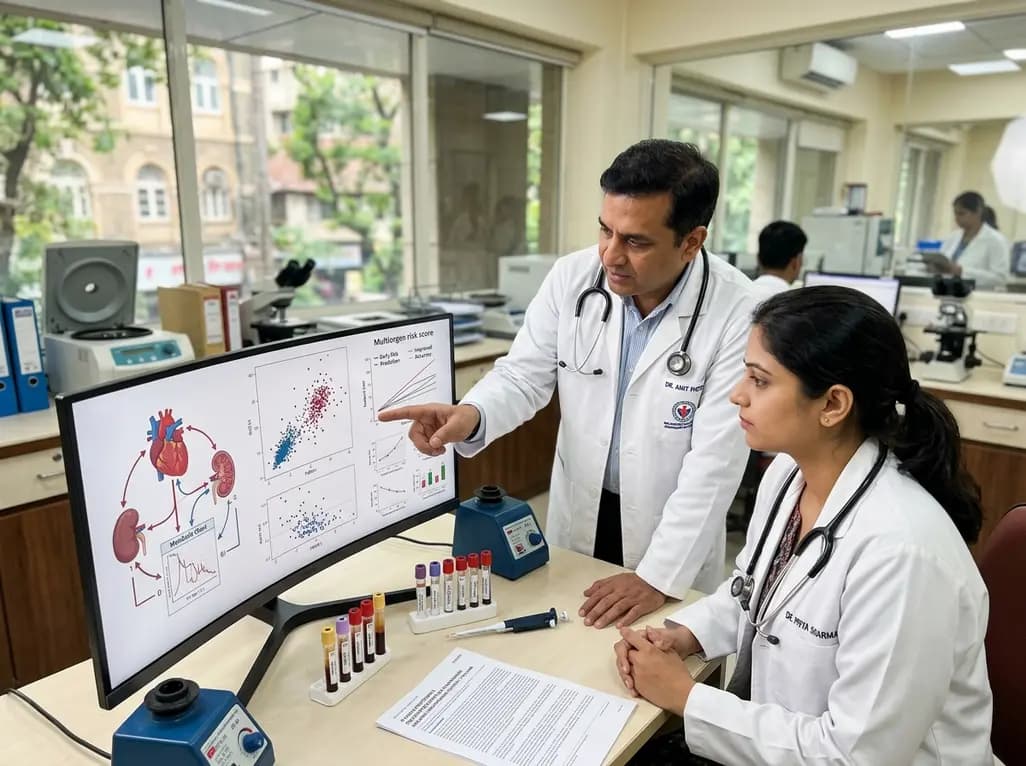
A large UK Biobank study reveals that plasma proteomic signatures capture preclinical organ damage and improve multiorgan risk prediction across early CKM syndrome stages 0 to 2 beyond traditional PREVENT clinical models.
Today
A narrative review investigates whether the articularis genus muscle functions as an independent anatomical entity or blends with the vastus intermedius. We evaluate its morphology, role in retracting the suprapatellar bursa, and direct clinical significance in anterior knee pain and arthroplasty.
Today

A Bayesian multilevel meta-analysis reveals that aerobic training combined with moderate carbohydrate restriction modestly lowers HbA1c in type 2 diabetes. However, sparse data and very low certainty leave incremental benefits over exercise or diet alone unproven, highlighting the need for individualized care.
Today
