.webp&w=384&q=75)

Loading, please wait...
Loading, please wait...

Biomolecular condensate dynamics represent a critical frontier in understanding how cells organize complex biochemical reactions. These membraneless organelles depend on precise molecular interactions to maintain their liquid-like or gel-like states. A recent study has investigated how the length of peptide chains influences the local hydrogen-bonding landscape within these environments. Specifically, researchers examined poly-l-arginine (poly-R) interacting with adenosine monophosphate (AMP) to isolate these effects.
Furthermore, the investigation utilized advanced spectroscopic techniques like FTIR and ultrafast 2D IR to analyze various poly-R lengths. Although the peptide backbone conformations remained invariant across different chain lengths, the picosecond dynamics showed a significant dependence on size. Specifically, longer peptide chains exhibited a pronounced slowing of molecular movement. This slowdown suggests enhanced multivalency and increased network connectivity within the condensed phase. Consequently, these findings indicate that chain length acts as a major molecular determinant of the chemical environment inside biocondensates.
Additionally, these insights are highly relevant for clinical research. Dysregulated phase separation is a known factor in several neurodegenerative diseases and certain types of cancer. Therefore, understanding the fundamental physics of hydrogen-bond dynamics could lead to novel therapeutic strategies. For example, researchers might design molecules that specifically modulate the connectivity of these networks to reverse pathological protein aggregation.
Longer chains increase multivalency and promote stronger network formation. As a result, molecular rearrangement slows down, which can shift the condensate toward a more stable or even arrested state.
Hydrogen bonds determine the local chemical environment and solvent organization. These dynamics are essential for the proper functioning of cellular processes and the structural integrity of membraneless organelles.
Disclaimer: This content is for informational and educational purposes only. It does not constitute professional medical advice, diagnosis, or treatment. Refer to the latest local and national guidelines for clinical practice.
References

Read summarized clinical updates, watch expert medical content, and earn CME certifications right from your smartphone.
Open your smartphone camera to scan and install.





This study identifies peptide chain length as a key driver of hydrogen-bond dynamics in biomolecular condensates, influencing their physical properties....
5 months ago

A retrospective cohort study reveals that frailty quadruples the odds of pressure injuries in hospitalized older adults. Integrating the Clinical Frailty Scale with comprehensive geriatric care is crucial for identifying vulnerability early and implementing targeted multidisciplinary prevention.
Today

Occult maternal malignancy accounts for 3.82% of persistent unreportable NIPT results with genomic noise. Multiple chromosomal aberrations, notably on chromosome 18, warrant thorough oncological evaluation and whole-body MRI to ensure timely maternal diagnosis while preserving fetal care.
Today

This article reviews the forensic and clinical complexities of acute myocarditis arising on left ventricular hypertrophy in children, highlighting early diagnostic red flags and multidisciplinary postmortem autopsy protocols.
Today
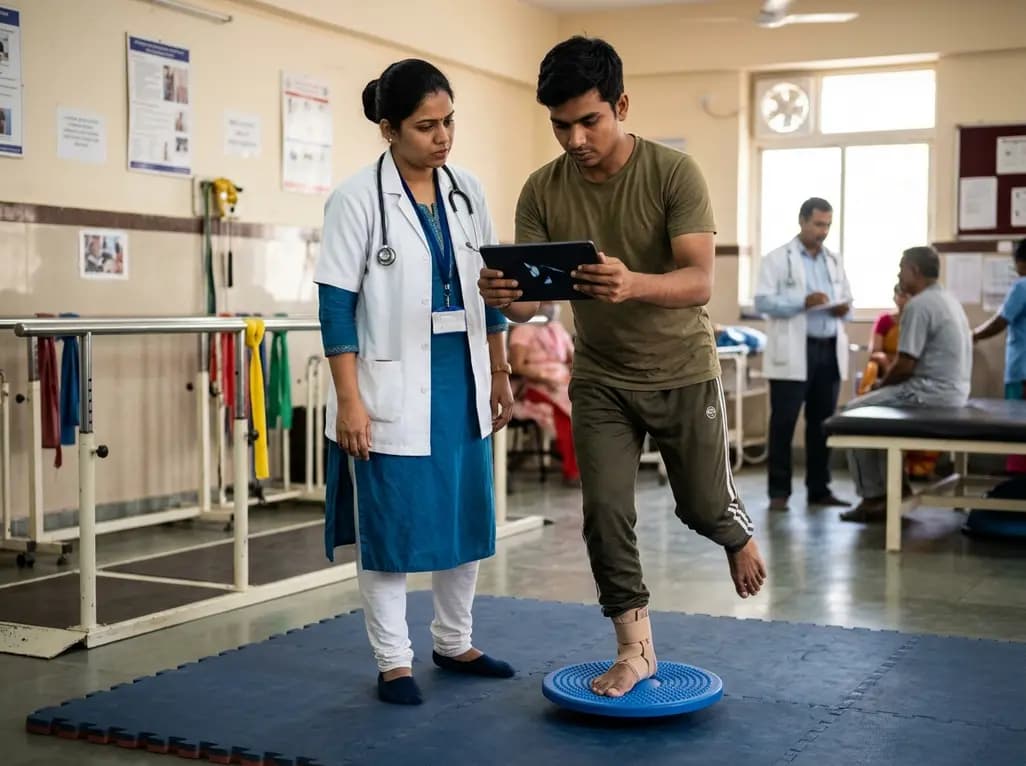
A randomized controlled trial demonstrates that an eight-week dual-task training intervention significantly improves static and dynamic postural control over standard balance exercises in individuals with chronic ankle instability, addressing critical neurocognitive deficits during athletic and daily activities.
Today

A retrospective cohort study of 7,716 ICU patients from the MIMIC-IV database demonstrates that Gradient Boosting Decision Trees significantly outperform traditional SOFA scores in predicting in-hospital mortality among patients with sepsis and diabetes, with SHAP analysis providing clinical interpretability.
Today
