.webp&w=384&q=75)

Loading, please wait...
Loading, please wait...

Essential tremor represents one of the most common movement disorders encountered in neurological practice worldwide. Although pharmacotherapy provides initial symptom control, many individuals eventually develop medically refractory symptoms. In such challenging cases, unilateral stereotactic radiosurgery targeting the ventral intermedius thalamic nucleus reliably controls contralateral symptoms. However, most individuals experience debilitating bilateral involvement that impairs daily function. Historically, surgical teams avoided bilateral thalamic interventions because invasive procedures often caused severe speech or gait complications. Fortunately, a prospective phase 2 trial has evaluated staged bilateral gamma knife radiosurgery to address this therapeutic dilemma. This groundbreaking investigation reveals encouraging safety and efficacy outcomes for patients suffering from severe functional impairment.
Essential tremor produces persistent kinetic and postural tremors that disrupt essential activities of daily living. Consequently, affected individuals frequently struggle with feeding, writing, drinking, and independent hygiene. First-line pharmacotherapy, including propranolol and primidone, provides meaningful relief for approximately half of all patients. Nevertheless, nearly thirty percent of patients discontinue medication due to adverse side effects or diminished efficacy. Deep brain stimulation offers remarkable symptom control, yet surgical implantation requires invasive intracranial hardware. In addition, some elderly individuals or patients on anticoagulant therapy cannot safely undergo open cranial surgery. Radiofrequency ablation represents another therapeutic option, but bilateral thermal lesions carry unacceptable rates of dysarthria and ataxia. Therefore, clinicians urgently require effective non-invasive alternatives. Stereotactic radiosurgery delivers focused ionizing radiation to disrupt pathological thalamic oscillation loops without craniotomy. Unilateral thalamotomy has long provided durable benefit with minimal morbidity. Even so, unilateral intervention leaves the ipsilateral limb severely disabled. Because essential tremor typically affects both hands symmetrically, addressing both hemispheres remains crucial for restoring true functional independence. Thus, validating safe bilateral treatment protocols remains an essential priority in modern movement disorder management.
To address these safety concerns, researchers launched a prospective, single-arm, phase 2 trial across a dedicated radiosurgical center. The study enrolled thirty-three adult patients presenting with medically refractory essential tremor and substantial bilateral disability. Importantly, investigators applied rigorous inclusion criteria. Candidates had to demonstrate successful unilateral thalamic response without any residual speech, gait, or balance impairment. Furthermore, candidates underwent detailed pre-therapeutic baseline testing. The team administered comprehensive neuropsychological evaluations, quantitative voice assessments, formal gait analyses, and volumetric magnetic resonance imaging. Clinicians then performed second-side radiosurgical thalamotomy targeting the contralateral ventral intermedius nucleus. The surgical team used a single four-millimeter collimator helmet to deliver precise ionizing radiation. Crucially, clinicians mandated an extended delay between procedures. The mean interval between the first and second radiosurgery was 28.7 months. This generous spacing allowed full biological maturation of the initial lesion before creating the contralateral ablation. Consequently, investigators minimized overlapping tissue edema and protected neurological networks. All thirty-three enrolled patients, comprising nineteen males and fourteen females, completed the full twelve-month post-procedure follow-up. This complete retention underscores excellent treatment compliance and systematic study oversight.
The trial demonstrated remarkable functional gains across validated tremor evaluation scales at one-year follow-up. Overall, the mean tremor severity score improved significantly by 58.5% compared to baseline. Moreover, patients achieved an outstanding 84.8% reduction in their overall disability score. Functional impact assessments also revealed a 68.6% improvement, confirming profound recovery in self-care activities. When examining upper limb mechanics, twenty-nine out of thirty-three patients achieved substantial clinical relief. Specifically, these responding patients demonstrated an average 74.4% tremor reduction in their newly treated upper extremity. Only four individuals failed to experience measurable functional improvement. Patients regained the capacity to write legibly, hold utensils steadily, and drink liquids without spillage. Consequently, disease-specific quality of life scores improved significantly across emotional, physical, and social domains. Furthermore, these clinical gains mirrored the benefits obtained after initial unilateral procedures. The gradual radiobiological ablation disrupted pathological cerebello-thalamo-cortical oscillations without abrupt physiological disruption. Thus, bilateral gamma knife radiosurgery successfully restored bilateral hand utility, providing long-sought independence for severely compromised individuals.
The primary endpoint of this landmark investigation focused rigorously on procedure safety. Historically, open surgical thalamotomies caused unacceptable rates of dysarthria, pseudobulbar symptoms, and postural imbalance. In contrast, this staged radiosurgical approach maintained an exceptionally favourable safety record. Neuropsychological examinations at six and twelve months demonstrated preserved cognitive function without detectable executive decline. Similarly, formal voice and speech testing revealed stable phonation and articulation across nearly all participants. Quantitative gait and posturography assessments also confirmed preserved equilibrium and walking stability. In total, investigators documented only a single adverse event among the thirty-three participants. Specifically, one patient developed hemi-proprioceptive ataxia and mild dysarthria eleven months after the second procedure. Magnetic resonance imaging demonstrated local parenchymal hyper-response surrounding the ablation site. Fortunately, no other subjects suffered motor deficits, persistent dysphagia, or permanent cerebellar symptoms. Therefore, staged radiosurgery effectively avoids the catastrophic neurological toxicities often observed after simultaneous open ablations. The biological latency inherent to ionizing radiation appears to foster safe physiological adaptation within central motor networks.
These prospective results deliver transformative insights for functional neurosurgeons and movement disorder neurologists. For decades, bilateral ablative thalamic interventions remained largely contraindicated due to historical complications. However, contemporary radiosurgical targeting with modern neuroimaging permits submillimeter accuracy. Consequently, radiosurgery enables clean focal necrosis while sparing adjacent internal capsule and sensory pathways. For patients who cannot tolerate general anesthesia, cranial trephination, or implanted electrical hardware, staged radiosurgery offers a viable alternative. Elderly individuals taking systemic anticoagulants can undergo this non-invasive outpatient therapy without interrupting essential medications. Nevertheless, clinician teams must respect crucial prerequisites before offering second-side treatment. Surgeons must enforce a rigorous waiting interval of at least eighteen to twenty-four months between stages. Additionally, multidisciplinary teams must confirm the absolute absence of speech or balance complications from the first intervention. While larger multicenter randomized trials will provide further validation, this prospective trial establishes a robust clinical foundation. Ultimately, carefully staged radiosurgical thalamotomy expands therapeutic horizons, offering durable bilateral tremor control without sacrificing patient safety or neurological function.
Staged bilateral gamma knife radiosurgery delivers focused ionizing radiation to the ventral intermedius thalamic nucleus on each side of the brain sequentially. Surgeons perform the second procedure after a mandatory delay of eighteen to twenty-four months, safely treating bilateral essential tremor without requiring invasive open cranial surgery.
Clinicians enforce a prolonged delay between treatments to allow complete tissue maturation and resolution of any radiation-induced edema. This staged timeline ensures that the first ablation produces no persistent speech, balance, or cognitive deficits before surgeons proceed with contralateral thalamic lesioning, maximizing overall neurological safety.
Ideal candidates have severe, medically refractory essential tremor causing bilateral disability who achieved excellent tremor relief from their first radiosurgical procedure. Additionally, patients must demonstrate completely normal speech, stable gait, and preserved cognitive performance on comprehensive neuropsychological and neurological evaluations before undergoing the contralateral treatment.
Disclaimer: This content is for informational and educational purposes only and should not be construed as medical advice. Always consult a qualified healthcare provider for diagnosis and treatment decisions. Refer to the latest local and national guidelines for clinical practice.
References

Read summarized clinical updates, watch expert medical content, and earn CME certifications right from your smartphone.
Open your smartphone camera to scan and install.





A prospective phase 2 trial demonstrates that staged bilateral gamma knife radiosurgery targeting the ventral intermedius thalamic nucleus offers significant tremor reduction and functional recovery with a favourable safety profile in medically refractory essential tremor.
Today

The CARE study protocol introduces a multilingual, RAG-powered conversational interface designed by IIT Bombay to support tobacco cessation in India. Evaluating feasibility and behavioral outcomes across three cessation centers, this digital health initiative aims to enhance quitting support for diverse users.
Today

A large UK cohort study of 1.4 million women shows that pregnancy complications, including gestational diabetes, hypertension, and preterm birth, substantially raise long-term risks for hypertension, chronic kidney disease, type 2 diabetes, and cardiovascular events, highlighting early postpartum intervention needs.
Today
A cross-sectional study reveals that hypertension knowledge, illness perceptions, depression, and substance use significantly predict self-care behaviors. Addressing mental health and cognitive beliefs in primary care is crucial for optimal blood pressure control and cardiovascular disease prevention.
Today
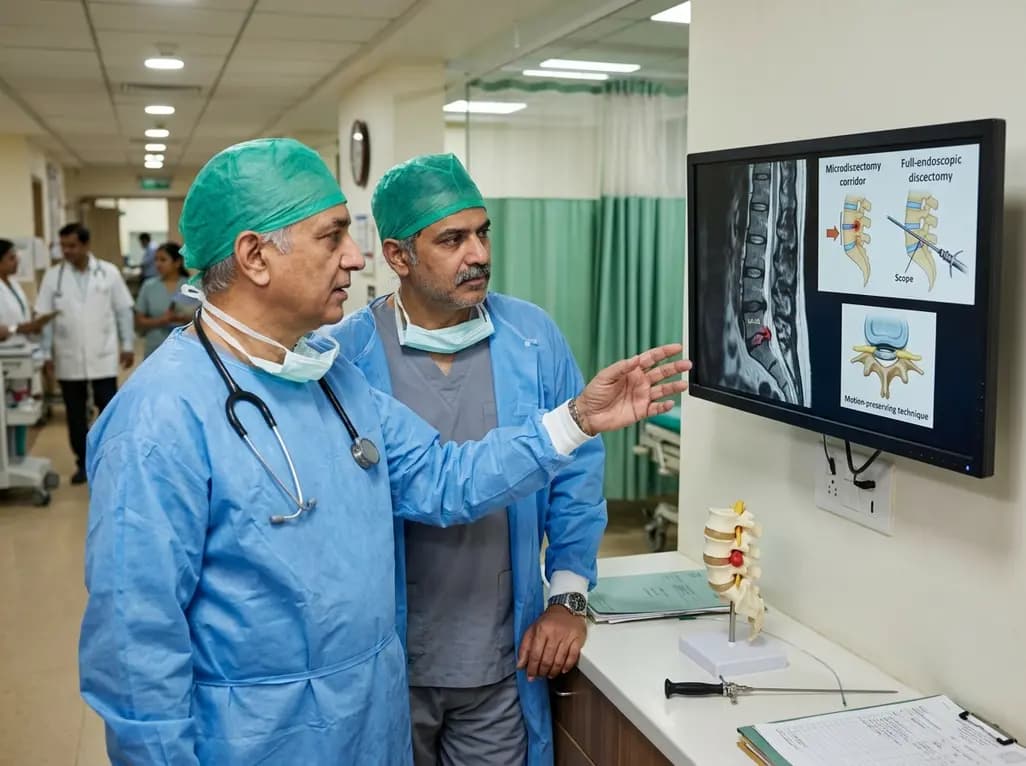
This clinical overview examines recent advancements in lumbar disc herniation surgery, comparing microscopic and full-endoscopic discectomy while highlighting biportal techniques and emerging motion-preserving innovations for spine specialists.
Today

Small interfering RNA (siRNA) therapeutics harness RNA interference to degrade disease-causing messenger RNA. By delivering hepatocyte-targeted, durable gene silencing, agents targeting PCSK9, LPA, and angiotensinogen offer potent cardiovascular risk reduction with infrequent, biannual dosing schedules.
Today
