.webp&w=384&q=75)

Loading, please wait...
Loading, please wait...

Bedside laryngeal visualization is transforming how intensivists manage airway complications in the intensive care unit. After prolonged endotracheal intubation, patients often suffer from laryngeal dysfunction, including impaired vocal fold motion. These issues frequently complicate core respiratory therapy tasks like cough evaluation. Consequently, clinicians need precise tools to evaluate vocal fold motion and secretion pooling. Specifically, transnasal fiberoptic laryngoscopy (TFL) offers a direct view of the airway to identify mucosal trauma and aspiration risks.
In addition, translaryngeal ultrasound (TLU) serves as an efficient and accessible screening method for laryngeal health. These tools enable personalized airway clearance strategies that significantly improve patient recovery. Furthermore, TFL ensures the correct placement of suction catheters in difficult cases where blind attempts fail. Implementing these techniques requires structured local training and strict adherence to infection-prevention protocols. However, the diagnostic value they add in challenging cases enhances both clinical safety and workflow efficiency. Therefore, hospital pathways should integrate these visualization modalities for high-risk critically ill patients.
It allows clinicians to directly observe vocal fold movement and airway patency. By visualizing the laryngeal response during a cough, therapists can tailor airway clearance techniques to the patient's specific physiological needs.
TLU is noninvasive, highly accessible, and can be performed quickly at the bedside. It helps identify patients with suspected laryngeal dysfunction early, allowing for targeted follow-up with more invasive TFL assessments when necessary.
Disclaimer: This content is for informational and educational purposes only. It does not constitute professional medical advice, diagnosis, or treatment. Always seek the advice of your physician or other qualified health provider with any questions you may have regarding a medical condition. Refer to the latest local and national guidelines for clinical practice.
References
Ntoumenopoulos G et al. Scope and Scan Led Airway Care: Therapist Laryngeal Visualization. Respir Care. 2026 May 02. doi: 10.1177/19433654261444706. PMID: 42068205.
Brodsky MB, et al. Laryngeal Injury and Upper Airway Symptoms after Oral Endotracheal Intubation with Mechanical Ventilation During Critical Care: A Systematic Review. Crit Care Med. 2018.
Seder DB, et al. The Role of Bedside Laryngeal Ultrasound in Critical Care. Journal of Intensive Care Medicine. 2023.

Read summarized clinical updates, watch expert medical content, and earn CME certifications right from your smartphone.
Open your smartphone camera to scan and install.





Discover how bedside laryngeal visualization via TFL and TLU optimizes airway clearance and cough function for critically ill ICU patients....
4 months ago

Dendritic cells bridge innate and adaptive immunity in myocardial infarction. This review explores their pathological roles, circulating dynamics, novel tolerogenic interventions, and how standard cardiovascular medications modulate dendritic cells to improve post-infarction myocardial repair and patient outcomes.
Today

A premature neonate developed upper limb compartment syndrome after uterine rupture extruded the arm through a scar defect. Conservative management with continuous monitoring yielded complete functional recovery and normal limb growth at 10-year follow-up, highlighting non-operative safety in selected cases.
Today
Atherosclerosis involves extensive glycometabolic reprogramming across immune and vascular cells. This review examines how glycolysis, the pentose phosphate pathway, and lactate-driven epigenetic shifts fuel plaque vulnerability, while highlighting novel therapeutic targets like PFKFB3 and LDHA.
Today
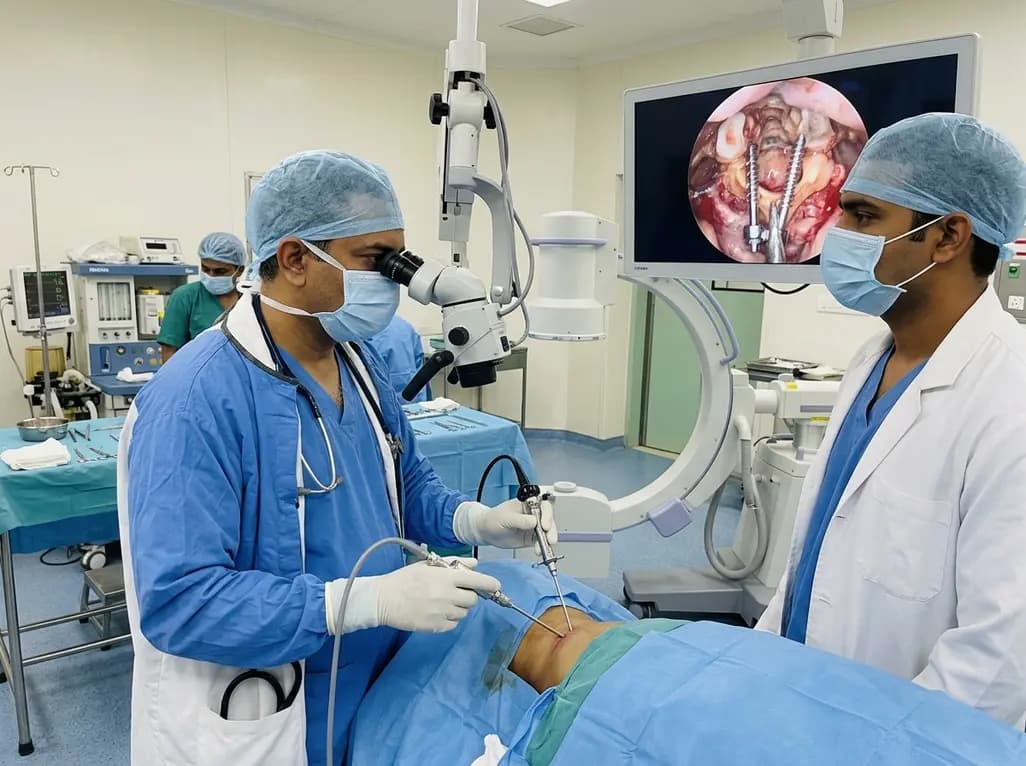
Endoscopic posterior cervical fusion combines minimally invasive decompression, joint preparation, and rigid screw-rod fixation for atlantoaxial pathologies. Early clinical findings demonstrate solid bony union, excellent symptom relief, and minimal soft-tissue morbidity without significant vascular compromise.
Yesterday

The All-India Food Processors' Association has approached the Supreme Court to oppose FSSAI's proposed per-100g benchmark for front-of-pack warning labels, advocating instead for a per-serving threshold. We explore the regulatory showdown, nutritional evidence, and implications for clinical lifestyle counseling.
Today
