.webp&w=384&q=75)

Loading, please wait...
Loading, please wait...

Researchers recently explored the molecular mechanisms behind endometrial atrophy (EA). Specifically, they investigated how autophagy genes thin endometrium and influence programmed cell death. This study focused on peripheral blood mononuclear cells (PBMCs) in patients suffering from persistent endometrial thinning. The results showed a significant increase in the expression of key genes like ATG5 and LC3B compared to healthy controls. Consequently, these findings suggest a systemic link between autophagy and uterine health.
The study found that autophagy genes were significantly upregulated in the patient group. Furthermore, the researchers observed a positive correlation between LC3B expression and the frequency of apoptotic cells. This indicates that autophagy and apoptosis work together to drive endometrial thinning. Moreover, the EnrichR tool identified crucial enriched pathways, including FOXO signaling and mitophagy. Therefore, these molecular markers provide a deeper understanding of why some patients fail to achieve adequate endometrial thickness during reproductive cycles.
Understanding these pathways helps clinicians address implantation failure more effectively. In India, where IVF success is a primary clinical priority, identifying reliable biomarkers is essential. Additionally, the study suggests that PBMCs might serve as a minimally invasive window into local uterine pathology. Therefore, targeting these autophagy-related pathways could eventually lead to novel therapeutic interventions. Clinicians should monitor these developments as they may redefine diagnostic protocols for thin endometrium in the future.
Autophagy genes, when overexpressed, can lead to increased cellular degradation and apoptosis. This process contributes to the thinning of the endometrial lining, which hinders successful embryo implantation.
Yes, recent research indicates a strong correlation between the expression of autophagy genes in PBMCs and the physiological state of the endometrium. This suggests that blood-based molecular tests could potentially serve as diagnostic tools.
The study identified several key genes, including ATG5, ATG7, LC3B, Beclin1, and the FOXO family (FOXO1, FOXO3a, FOXO4, FOXO6), as being significantly upregulated in patients with thin endometrium.
Disclaimer: This content is for informational and educational purposes only. It does not constitute professional medical advice, diagnosis, or treatment. Always seek the advice of your physician or other qualified healthcare provider with any questions you may have regarding a medical condition. Refer to the latest local and national guidelines for clinical practice.
References
Aslanian-Kalkhoran L et al. Investigating Autophagy Genes Expression and their Possible Relations with Apoptosis in PBMCs of Patients with Thin Endometrium. Iran J Immunol. 2026 Mar 10. doi: 10.22034/iji.2026.109223.3128. PMID: 41804751.
Rhee JS et al. The Multifaceted Role of Autophagy in Endometrium Homeostasis and Disease. PMC NIH. 2021 Apr 20. doi: 10.3390/ijms22084224.
Pei T et al. Molecular mechanisms and Biological Functions of Autophagy in Endometrial Diseases. Medsci. 2025 Oct 27. doi: 10.7150/ijbs.82145.
"
Read summarized clinical updates, watch expert medical content, and earn CME certifications right from your smartphone.
Open your smartphone camera to scan and install.





A study reveals that elevated autophagy genes in PBMCs correlate with apoptosis and thin endometrium, offering potential biomarkers for endometrial atrophy....
7 months ago
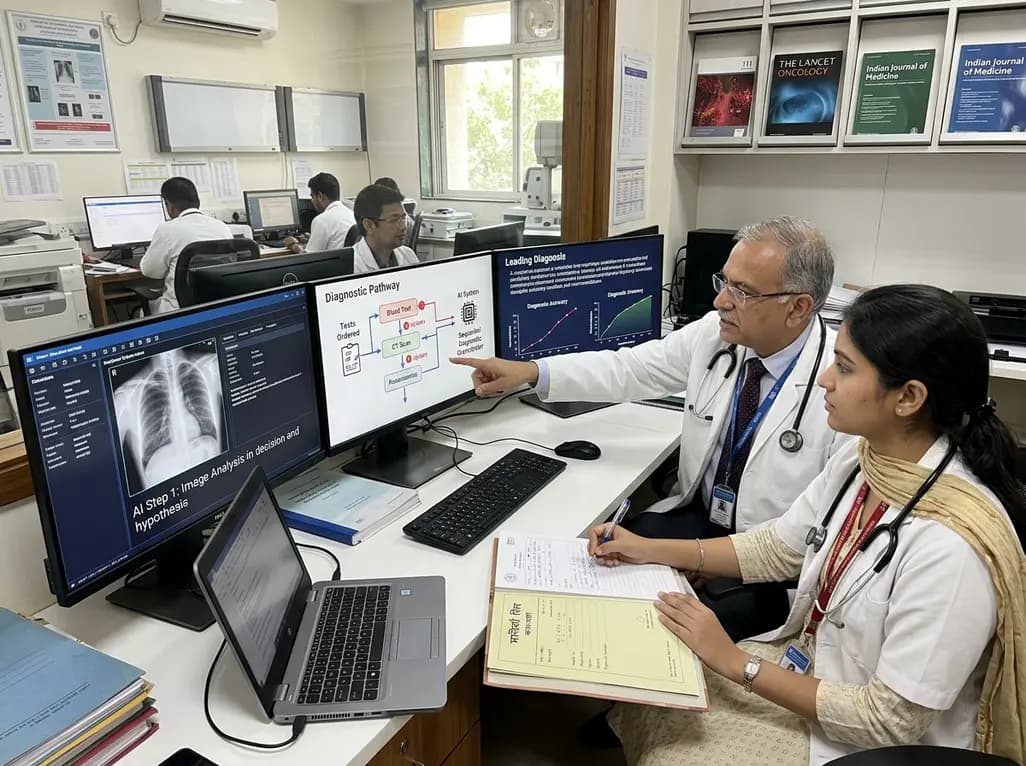
A breakthrough peer-reviewed study demonstrates that a sequential AI diagnosis system can mirror real-world clinical reasoning. By ordering stepwise tests and updating hypotheses dynamically, this multi-agent orchestrator achieved superior diagnostic accuracy while reducing investigative costs.
Today

A prenatal case highlights severe glutaric acidemia type II presenting as bilateral hyperechoic cystic kidneys at 18 weeks. Whole-exome sequencing revealed a novel homozygous ETFDH frameshift variant, demonstrating the power of rapid genetic testing in fetal renal anomalies.
Today

Review how tailored exercise programs benefit frail older patients with heart failure. Explore pathophysiological mechanisms, individualized training prescriptions, and strategies to overcome adherence barriers in clinical practice.
Yesterday

This comparative study evaluates posterior labral tears with and without glenohumeral instability, highlighting distinct demographic patterns, MRI underestimation in stable shoulders, and successful arthroscopic repair outcomes.
Yesterday

A clinical study demonstrates that early intervention with tocilizumab, either as monotherapy or bridged with corticosteroids, achieves significant proptosis reduction and resolves active inflammation in treatment-naive thyroid eye disease.
Yesterday
