.webp&w=384&q=75)

Loading, please wait...
Loading, please wait...
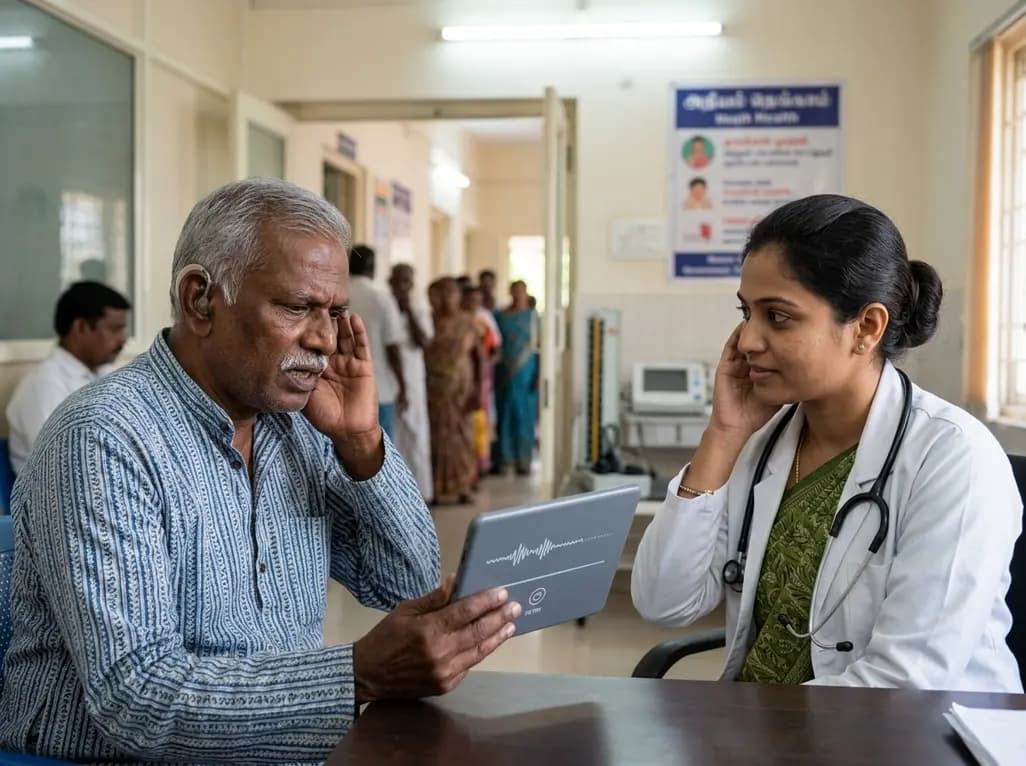
Modern healthcare increasingly integrates voice-driven interfaces, assistive captioning devices, and artificial intelligence into everyday clinical documentation. Modern assistive technologies rely heavily on automated speech recognition to bridge communication gaps for individuals who are deaf or hard of hearing. These systems convert spoken dialogue into real-time captions during phone calls, clinical interactions, and video consultations. However, a major recent investigation demonstrates that automated transcription platforms systematically underperform when processing accented speech compared to standard broadcast accents. Consequently, these technical limitations compromise communication fidelity and pose notable challenges in multilingual healthcare settings.
Historically, software engineers and medical informatics researchers evaluated transcription accuracy primarily through Word Error Rate. This standard metric counts word substitutions, deletions, and insertions between a reference speech file and its transcribed output. Although Word Error Rate provides a standardized quantitative baseline, it treats every linguistic error with equal mathematical weight. For example, missing a minor grammatical article produces the same penalty as altering a crucial medication dose or changing a clinical negation. Therefore, traditional evaluations frequently miss the true communicative impact of transcription inaccuracies.
To overcome these limitations, recent investigative frameworks incorporate semantic similarity measures alongside Word Error Rate. Semantic similarity assesses whether the core meaning of a spoken utterance remains intact after algorithmic conversion. When automated speech recognition processes accented speech, phoneme shifts and rhythmic variations often trigger substitutions that completely distort the speaker's original intent. Thus, combining semantic evaluation with word-level scoring delivers a far more clinically relevant assessment of assistive transcription performance in diverse patient populations.
The latest multicenter benchmarking study evaluated leading commercial speech-to-text engines, including platforms developed by Microsoft Azure, IBM Watson, and Google Cloud. The investigators tested speech inputs across a wide variety of global accents and compared them against the standard United States Broadcasting Mid-Western accent. The research team evaluated both verbatim accuracy and semantic preservation to determine how well these engines maintained contextual integrity.
The findings demonstrated a significant drop in performance across all evaluated commercial engines when processing accented voices. Accented speakers experienced markedly higher error rates and significantly lower semantic similarity scores. Importantly, the degradation in semantic quality meant that automated transcriptions frequently conveyed inaccurate medical or conversational meaning. This disparity highlights persistent algorithmic biases rooted in training datasets that disproportionately favor standardized Western speech patterns over diverse global dialects.
In assistive hearing technology, real-time captioning serves as an indispensable lifeline for individuals with severe hearing impairment or auditory processing disorders. When automated transcription tools misinterpret accented speech, hard-of-hearing patients may misinterpret vital health instructions, lifestyle advice, or emergency guidance. Consequently, communicative misunderstandings can elevate anxiety, reduce treatment adherence, and compromise patient autonomy during clinical discussions.
Furthermore, the rapid expansion of telemedicine and remote consultations magnifies these operational risks. Virtual care platforms frequently embed automated speech recognition to provide real-time subtitles or generate automated clinical summaries. If a patient or provider speaks with a regional or non-native accent, unrecognized phonemic patterns can alter the electronic health record documentation. Therefore, clinicians must remain vigilant and verify automated transcriptions before confirming therapeutic plans, surgical consents, or medication reconciliations.
The clinical implications of speech recognition disparities are particularly pronounced in linguistically diverse environments such as India. Healthcare providers and patients across the Indian subcontinent communicate in hundreds of distinct regional languages and English dialects characterized by unique phonetic inflections. When hospitals deploy digital health platforms trained on Western acoustic models, transcription errors occur frequently.
Moreover, geriatric patients and individuals using assistive communication devices often present with distinct vocal changes, tremors, or regional accents. If ambient scribing tools or captioning services cannot accurately process these variations, diagnostic errors and documentation delays inevitably rise. Healthcare administrators and medical technology developers must therefore prioritize local linguistic calibration. Integrating multilingual acoustic datasets and region-specific training models ensures that digital health interventions support equitable patient care across all socioeconomic and demographic strata.
Addressing algorithmic disparities in speech recognition requires concerted collaboration among software developers, audiologists, otolaryngologists, and healthcare providers. Technology companies must diversify their underlying training corpora by incorporating diverse phonetic datasets, international speech archives, and natural conversational audio. Furthermore, fine-tuning large language models to correct phonetic misinterpretations using medical context can dramatically enhance semantic fidelity.
Within healthcare facilities, clinicians should implement standard verification protocols whenever utilizing automated captioning or ambient voice documentation. Patients relying on assistive caption phones should receive clear guidance on potential transcription errors, especially during critical consultations. Additionally, health systems must advocate for inclusive regulatory standards that evaluate medical artificial intelligence algorithms across diverse ethnic, regional, and demographic groups before clinical deployment.
Most commercial speech recognition models are trained predominantly on standardized broadcast accents, such as standard American or British English. Consequently, these models struggle to identify variations in pitch, cadence, vowel length, and consonant articulation common in regional or non-native accents. This lack of phonetic diversity in training datasets leads to increased transcription errors and distorted contextual meaning during real-time speech processing.
Word Error Rate measures verbatim accuracy by calculating the percentage of substituted, inserted, or deleted words, treating all errors equally. In contrast, semantic similarity evaluates whether the overall meaning and clinical intent of the spoken sentence are preserved in the transcription. This metric provides a more realistic understanding of how transcription errors affect actual communication and patient comprehension in assistive technology settings.
Clinicians should never rely entirely on unverified automated speech-to-text outputs for clinical records, medication orders, or patient communications. Healthcare providers must review and manually verify voice-generated documentation before signing charts or dispatching discharge instructions. Additionally, facilities should select assistive technologies validated across diverse linguistic backgrounds and maintain clear visual indicators reminding staff that automated captions may contain errors.
Disclaimer: This content is for informational and educational purposes only and is not intended as medical advice. It should not be used as a substitute for professional medical judgment, diagnosis, or treatment. Always seek the advice of your physician or other qualified healthcare provider with any questions you may have regarding a medical condition or treatment options. Never disregard professional medical advice or delay in seeking it because of something you have read here. Rapidly evolving clinical data means standards of care change frequently. Refer to the latest local and national guidelines for clinical practice.
References

Read summarized clinical updates, watch expert medical content, and earn CME certifications right from your smartphone.
Open your smartphone camera to scan and install.





Recent research reveals automated speech recognition systems underperform with diverse non-standard accents when evaluated using semantic similarity and word error rates, posing significant communication barriers in assistive hearing technologies and clinical telemedicine.
last month

A nationwide multicenter study identified three COPD clinical phenotypes, finding that mild smoking males experience the highest rate of rapid lung function decline. A CatBoost model using six routine clinical and socioeconomic variables accurately stratifies high-risk patients for early therapeutic intervention.
Today
Discover the crucial distinctions between mesonephric and mesonephric-like proliferations of the female genital tract. Learn the key histomorphologic, immunohistochemical, and molecular differences essential for accurate diagnosis and clinical management.
Today
A large UK Biobank study reveals that plasma proteomic signatures capture preclinical organ damage and improve multiorgan risk prediction across early CKM syndrome stages 0 to 2 beyond traditional PREVENT clinical models.
Today
A narrative review investigates whether the articularis genus muscle functions as an independent anatomical entity or blends with the vastus intermedius. We evaluate its morphology, role in retracting the suprapatellar bursa, and direct clinical significance in anterior knee pain and arthroplasty.
Today

A Bayesian multilevel meta-analysis reveals that aerobic training combined with moderate carbohydrate restriction modestly lowers HbA1c in type 2 diabetes. However, sparse data and very low certainty leave incremental benefits over exercise or diet alone unproven, highlighting the need for individualized care.
Today
