

Loading, please wait...
Loading, please wait...

Atherosclerosis represents a major vascular contributor to progressive cognitive impairment across aging populations globally. Clinicians often correlate systemic arterial stiffness and luminal narrowing with cerebral small vessel injury, notably manifesting as white matter hyperintensities on neuroimaging. However, macrostructural lesions alone do not fully explain why patients with comparable vascular burdens experience divergent rates of cognitive deterioration. Emerging evidence suggests that the connectome preserves functional capacity through complex topological buffering. Consequently, evaluating structural network resilience provides crucial insights into how vascular insults undermine whole-brain connectivity and hasten neurodegenerative decline.
Systemic atherosclerosis initiates a cascade of cerebral perfusion deficits, neurovascular uncoupling, and persistent endothelial inflammation. Chronic reductions in microvascular flow impair oligodendrocyte metabolism, which destabilizes axonal sheaths across vulnerable subcortical projection pathways. Therefore, arterial stiffness directly compromises white matter tract integrity before overt tissue infarction manifests clinically. In addition, pulsatile mechanical stress damages the blood-brain barrier, allowing neurotoxic plasma proteins to leak into surrounding interstitial parenchyma. This continuous inflammatory milieu triggers reactive astrogliosis and microglial activation, compounding localized neuronal stress. Consequently, chronic cerebral hypoperfusion impairs the anatomical substrates that maintain coordinated inter-regional communication. Clinicians must recognize that peripheral arterial disease extends pathological effects far beyond localized focal ischemic strokes. Atherosclerotic remodeling progressively degrades the cerebral macro-architecture, creating widespread disruption across critical neurocognitive circuits. As arterial walls thicken and calcify, global cerebral autoregulation gradually fails. Thus, chronic vascular injury sets the stage for extensive neural network vulnerability throughout the human brain.
To withstand pathological attacks, the human brain relies on complex graph-theoretical topological arrangements. Structural network resilience quantifies the capacity of the connectome to maintain structural integrity and communication pathways despite local nodal insults. Researchers calculate this metric by constructing diffusion-weighted tractography matrices and simulating progressive disconnectivity across white matter hubs. Specifically, network resilience reflects the preservation of central hub nodes and communication efficiency between intact anatomical states and simulated disconnection profiles. Highly resilient networks contain rich-club organizations that sustain communication alternate pathways even when specific white matter tracts suffer ischemic destruction. However, severe vascular pathology attacks these central topological anchors directly. When atherosclerosis disrupts hub integrity, the brain loses its capacity to reroute neural traffic effectively. Consequently, localized ischemic injury propagates functional failure across distant cortical zones. Graph-theoretical modeling demonstrates that topological network breakdown mirrors cognitive degradation far more accurately than volumetric lesion measurements. Therefore, quantifying resilience shifts clinical paradigms from static focal lesion inspection to systemic topological network appraisal.
A landmark investigation utilizing the community-based Polyvascular Evaluation for Cognitive Impairment and Vascular Events cohort evaluated 2160 participants. The investigators constructed whole-brain structural connectivity profiles and mathematically simulated white matter hyperintensity-induced structural disconnections. Notably, structural network resilience demonstrated stronger odds ratios for arterial disease severity than traditional volumetric measurements of white matter hyperintensities alone. This observation reveals that systemic vascular pathology compromises global topological architecture before extensive white matter hyperintensities accumulate visible volume. Furthermore, the researchers observed that atherosclerosis accelerates the loss of brain network resilience with increasing age. Older individuals with marked arterial plaque burden showed precipitously steeper declines in topological stability than age-matched controls with healthy vasculature. Consequently, chronological aging and systemic atherosclerosis interact synergistically to erode cerebral network reserves. These rigorous cohort data prove that vascular injury undermines structural hubs systematically. Thus, measuring structural resilience exposes early neurovascular vulnerability that conventional neuroimaging sequences frequently underestimate.
To decipher the precise path from vascular disease to cognitive impairment, investigators deployed sophisticated chain mediation modeling. The statistical analyses demonstrated that systemic atherosclerosis does not trigger cognitive decline purely through direct parenchymal destruction. Instead, white matter hyperintensities and degraded structural network resilience serve as sequential mediators linking arterial atherosclerosis to poor neuropsychological scores. First, chronic arterial disease induces widespread microvascular damage, generating quantifiable white matter hyperintensity lesions. Subsequently, these ischemic lesions disrupt key axonal tracts connecting critical topological hubs, thereby degrading structural network resilience. Finally, this topological collapse deprives the brain of alternative rerouting pathways, precipitating measurable cognitive deficits in memory, processing speed, and executive control. Importantly, structural network resilience retained an independent mediating contribution alongside focal lesion volume. This finding proves that the strategic architectural location of vascular lesions matters far more than gross lesion load. Therefore, chain mediation explains why patients with minimal white matter hyperintensities can experience disproportionate cognitive decline if lesions sever primary structural hubs.
These findings carry immediate relevance for multidisciplinary clinical care involving cardiologists, neurologists, geriatricians, and general physicians. Systemic atherosclerosis must be managed aggressively as a primary neurodegenerative risk factor, rather than merely a cardiac or stroke hazard. Clinicians should view the presence of carotid plaque or peripheral arterial disease as an early warning sign of impending topological brain network vulnerability. Furthermore, conventional MRI reports that only summarize white matter hyperintensities as mild, moderate, or severe provide an incomplete picture of functional risk. Integrating structural network resilience into future neuroimaging pipelines will allow physicians to identify patients nearing a critical threshold of cognitive decompensation. In clinical practice, early identification mandates intensive risk factor management. Controlling hypertension, lowering low-density lipoprotein cholesterol, optimizing glycemic indices, and managing lifestyle factors preserve microstructural network connectivity. Consequently, proactive interventions may prevent the irreversible degradation of hub architecture, preserving cognitive reserve long before severe vascular dementia becomes irreversible.
As computational neuroimaging becomes more accessible, structural network resilience holds significant promise as a sensitive biomarker for clinical trials. Current pharmaceutical studies targeting vascular cognitive impairment often struggle with insensitive cognitive endpoints or slow-moving volumetric lesion outcomes. In contrast, graph-theoretical metrics of resilience capture dynamic architectural changes across time with high fidelity. Therapeutic agents that improve endothelial nitric oxide bioavailability, resolve vascular inflammation, or enhance neurovascular coupling could preserve network topology effectively. Furthermore, resilience biomarkers can guide patient selection, stratifying candidates who possess salvageable network reserves from those with terminal topological disconnection. In parallel, multimodal neurorehabilitation and structured cognitive training could stimulate alternate neuroplastic pathways to restore topological resilience. By combining systemic vasculoprotective therapies with connectome-guided neuroprotection, modern medicine can better shield the aging brain against atherosclerotic damage. Ultimately, evaluating structural resilience establishes an essential bridge uniting cardiovascular medicine and cognitive neurology.
Structural network resilience reflects the capacity of the brain connectome to maintain structural communication despite local white matter damage. Diffusion MRI tractography maps whole-brain structural connections. Computational algorithms then simulate lesions based on white matter hyperintensities, measuring how closely hub architecture matches the intact baseline state.
Atherosclerosis triggers chronic hypoperfusion and widespread endothelial dysfunction across multiple vascular beds. Instead of producing isolated local damage, systemic arterial stiffness damages deep penetrating arterioles that feed critical subcortical structural hubs. Consequently, this multi-focal insult disconnects essential rich-club white matter pathways that coordinate global cerebral communication.
Clinicians must view peripheral and systemic atherosclerosis as direct threats to cerebral network reserve. Identifying arterial stiffness or carotid plaque warrants aggressive vascular risk optimization, including strict blood pressure management, high-intensity statin therapy, and regular aerobic exercise, which protects microstructural white matter integrity against progressive disconnection.
Disclaimer: This content is for informational and educational purposes only and does not constitute medical advice, diagnosis, or treatment. Healthcare professionals should exercise their independent clinical judgment when applying this information. Refer to the latest local and national guidelines for clinical practice.
References

Read summarized clinical updates, watch expert medical content, and earn CME certifications right from your smartphone.
Open your smartphone camera to scan and install.





A large cohort study reveals that atherosclerosis accelerates cognitive decline by disrupting brain structural network resilience alongside white matter hyperintensities. Quantifying network resilience provides critical insights into vascular brain health and guides future preventive interventions.
Today

A complex clinical case reveals how adipsic hypernatremia after traumatic brain injury, combined with hyperosmolar hyperglycemic state, triggers life-threatening dehydration and extensive venous thromboembolism, emphasizing the vital role of meticulous fluid management and vigilance.
Today

Large genomic databases like gnomAD and All of Us offer crucial insights into the population prevalence of partial RHD genotypes. Identifying these variants helps clinicians mitigate anti-D alloimmunization risks in transfusion medicine and obstetric care across diverse ancestral populations.
Yesterday
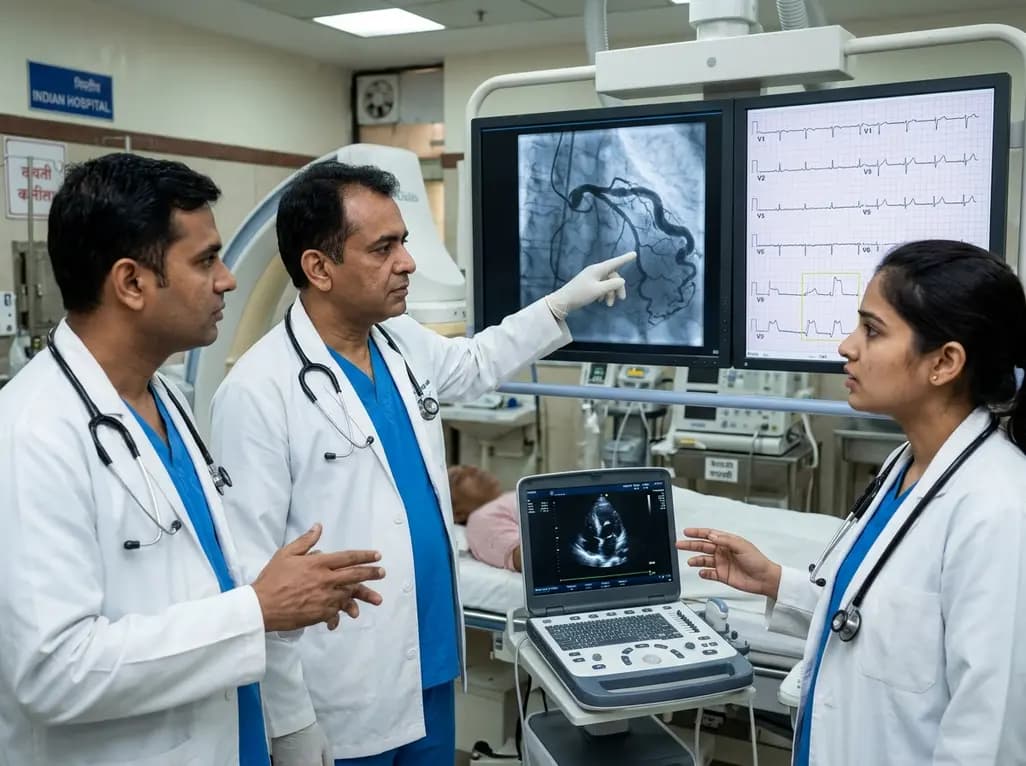
A hyperdominant left circumflex artery supplies extensive myocardial regions, creating a perilous diagnostic blind spot during acute occlusion. Standard ECGs often conceal posterior infarction, requiring clinicians to employ posterior leads and rapid echocardiography for early invasive catheterization.
Today

Deep intramuscular vascular malformations in pediatric Klippel-Trenaunay syndrome can mimic Maffucci syndrome. Multimodality imaging with Doppler ultrasound and MRI, along with histopathology, ensures prompt differential diagnosis, targeted surgical debulking, and optimized conservative surveillance.
Today

Discover essential clinical insights into AGLP1-type amyloidosis, a rare localized complication of glucagon-like peptide-1 analog injections. Learn how histopathology and mass spectrometry differentiate benign iatrogenic amyloidomas from systemic disease, preventing misdiagnosis and unwarranted therapies.
Yesterday
