

Loading, please wait...
Loading, please wait...
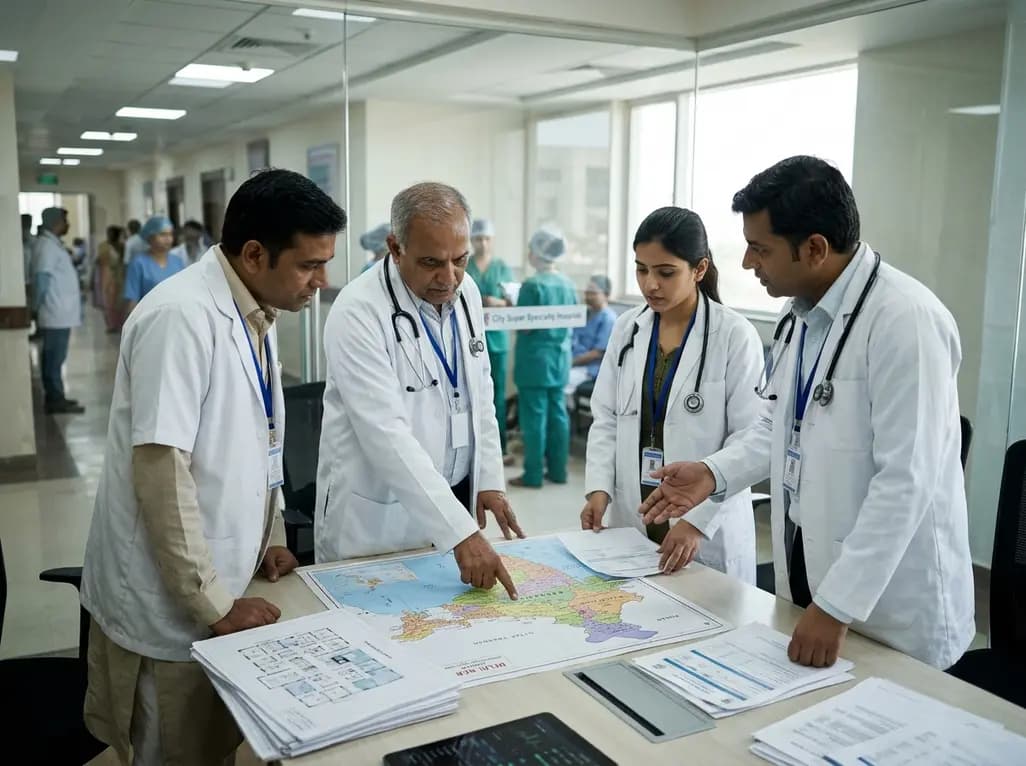
Recent market transactions signal that hospital consolidation in India is entering an aggressive phase of strategic recalibration. Aster DM Quality Care Ltd., backed by global investment heavyweight Blackstone Inc., is currently exploring an acquisition of northern Indian assets from Narayana Hrudayalaya Ltd. This potential transaction carries an estimated valuation of approximately $150 million. Consequently, it reflects a broader industry ambition to achieve pan-Indian delivery scale. Furthermore, the development underscores how corporate healthcare entities increasingly rely on mergers to establish footprint dominance in highly competitive metropolitan corridors.
The rapid pace of hospital consolidation in India highlights deep structural shifts across the private healthcare ecosystem. Leading institutional hospital operators no longer depend solely on slow greenfield hospital projects. Instead, these providers actively pursue acquisitions of existing facilities to fast-track clinical operations. For instance, brownfield hospital acquisitions enable health systems to bypass lengthy municipal licensing protocols and land development cycles. Therefore, acquiring operational multi-specialty centres provides immediate access to established patient volumes and local referring clinicians.
Moreover, private equity investors provide substantial liquidity to fuel these multi-regional transactions. Major global funds have invested over ten billion dollars into Indian hospital infrastructure across recent years. Consequently, secondary platform transactions have become an essential tool for institutional investors seeking market expansion. Additionally, hospital operators face escalating pressure to maintain consistent bed-occupancy ratios across urban and semi-urban catchment areas. By aggregating tertiary bed capacity under unified management, healthcare networks can optimize supply procurement. Ultimately, this economic leverage enables corporate operators to negotiate superior terms for diagnostic equipment and medical hardware.
Navigating the competitive dynamics of northern Indian healthcare presents significant hurdles for southern and western hospital platforms. Historically, major metropolitan hubs like Delhi NCR boast entrenched tertiary hospital networks with deep physician relationships. Indeed, Narayana Hrudayalaya previously described market conditions across northern territories as exceedingly challenging. The organization encountered entrenched corporate rivals operating aggressive bed expansion initiatives and robust patient acquisition machinery. Consequently, sustaining high clinical utilization rates in these northern outposts proved capital intensive and operationally burdensome.
Therefore, divesting regional peripheral units allows healthcare chains to concentrate resources on high-margin core geographic corridors. In contrast, acquiring organizations view northern states as essential demographic terrain characterized by rising disposable incomes. Furthermore, expanding private insurance coverage creates robust demand for complex surgical, cardiovascular, and oncological procedures. While establishing novel standalone hospitals requires significant gestation periods, acquiring existing assets immediately secures vital market presence. As a result, healthcare networks can rapidly deploy specialized clinical protocols without enduring multi-year commissioning delays. Thus, strategic acquisitions enable healthcare groups to redistribute assets toward regional strongholds effectively.
The sustained influx of private equity capital continues to reshape Indian hospital ownership and organizational governance models. Institutional heavyweights such as Blackstone, KKR, Advent International, and Temasek view healthcare delivery as a resilient defensive sector. Blackstone holds approximately thirty percent of Aster DM and identifies the chain as a marquee international asset. Furthermore, these private investment sponsors seek aggressive market consolidation through targeted roll-up transactions. Consequently, medical facilities that once operated autonomously increasingly join broader institutional hospital chains.
Additionally, private capital infusions accelerate technological modernization across inpatient care environments. Financial sponsors prioritize investments in advanced robotic surgical systems, modern linear accelerators, and digital infrastructure. However, this private capital reliance also introduces strict financial benchmarks across routine clinical workflows. Hospital management teams must constantly balance return on capital expectations with transparent clinical practice. For medical practitioners, private equity governance frequently brings standardized performance scorecards and unified inventory management systems. In addition, centralized corporate structures streamline administrative operations, allowing clinicians to focus primarily on direct patient care. Consequently, private capital reshapes the operational environment for medical departments across India.
When hospital systems merge, clinical teams experience substantial realignments in institutional workflows and operational culture. First, integrating divergent hospital information systems often creates initial friction among nursing staff and resident medical officers. Therefore, administrative leaders must prioritize comprehensive onboarding programs to maintain patient safety standards throughout the transition. Furthermore, standardization of clinical pathways across newly acquired hospitals demands rigorous physician engagement and departmental consensus. When corporate owners harmonize clinical care pathways, variations in antibiotic stewardship protocols and surgical practices decrease.
Moreover, hospital consolidation directly influences medical referral networks across secondary and tertiary medical hubs. Consolidated hospital networks centralize complex subspecialty care into regional centres of excellence. Consequently, community doctors gain structured referral pathways for organ transplants, complex cardiac interventions, and advanced pediatric care. Nevertheless, medical administrators must ensure that physician autonomy remains intact amidst corporate standardization efforts. Clinicians must actively participate in hospital medical boards to safeguard evidence-based clinical decision-making. Therefore, effective clinical leadership bridges the gap between financial efficiency metrics and compassionate, individualized patient outcomes.
The ongoing corporatization of regional hospitals carries significant implications for healthcare affordability and patient accessibility across India. Private hospital chains frequently introduce modernized diagnostic suites and improved intensive care facilities. Consequently, patients in expanding urban centres receive prompt access to advanced medical modalities without migrating to distant metropolitan cities. Furthermore, national insurance programs like Ayushman Bharat require hospital operators to scale operations while managing capped procedure tariffs. Therefore, larger hospital platforms can absorb thin reimbursement margins by distributing fixed operational costs across a broader bed base.
However, healthcare economists frequently express concerns regarding rising out-of-pocket expenses associated with corporate consolidation. When dominant private equity-backed chains acquire regional competitors, market concentration increases. As a result, hospitals may raise diagnostic tariffs and elective procedure costs, impacting uninsured patient populations. In addition, health insurance providers face stronger pricing leverage from consolidated hospital networks during annual tariff negotiations. Thus, regulatory agencies must closely evaluate healthcare mergers to prevent anti-competitive practices within localized catchment areas. Ultimately, achieving sustainable healthcare delivery requires balancing private commercial investment with equitable, accessible community care.
Q1: Why are corporate hospital networks actively expanding across northern India?
Northern India features large urban populations and rising private health insurance penetration, generating high demand for tertiary medical specialties. Furthermore, many northern cities possess fewer accredited tertiary beds per capita compared to southern medical hubs. Consequently, corporate healthcare networks seek strategic acquisitions in northern regions to build nationwide referral channels, improve brand visibility, and capture expanding patient markets for complex cardiovascular, oncological, and surgical interventions.
Q2: How does private equity investment influence clinical operations in Indian hospitals?
Private equity investments provide substantial capital to upgrade diagnostic imaging systems, robotic surgical consoles, and medical intensive care units. In addition, financial sponsors implement standardized clinical data management systems to enhance operational efficiency. However, clinicians often face increased administrative scrutiny regarding bed-turnover times and resource utilization. Therefore, medical directors must balance commercial performance metrics with uncompromised physician autonomy and evidence-based patient management.
Q3: What challenges do hospital chains encounter when divesting non-core regional facilities?
Divesting hospital assets requires complex regulatory approvals, staff retention strategies, and extensive operational due diligence. Moreover, hospital operators must manage local branding transitions without disrupting ongoing outpatient clinics or elective surgical schedules. Additionally, transferring biomedical equipment leases and electronic medical records demands meticulous oversight to safeguard patient confidentiality. Consequently, successful divestments allow hospital chains to streamline corporate balance sheets while refocusing resources onto core regional hospital clusters.
Disclaimer: This content is for informational and educational purposes only. It does not constitute medical advice or replace professional judgment. Refer to the latest local and national guidelines for clinical practice.
References

Read summarized clinical updates, watch expert medical content, and earn CME certifications right from your smartphone.
Open your smartphone camera to scan and install.





Blackstone-supported Aster DM Quality Care is evaluating a 150 million dollar acquisition of Narayana Hrudayalaya facilities across northern India. This analysis explores the strategic shift in hospital infrastructure, corporate deal flows, and clinical practice dynamics for healthcare professionals.
Today

A recent scoping review examines structured communication and transitional care interventions between acute hospitals and skilled nursing facilities. While multimodal strategies show workflow and satisfaction gains, evidence on reducing readmissions remains mixed, highlighting key gaps in clinical implementation.
Today

The GESS-AEEM consensus establishes a clear clinical implementation framework for testosterone therapy in postmenopausal women with hypoactive sexual desire disorder, focusing on transdermal dosing, precise laboratory monitoring, and safety communication.
Today
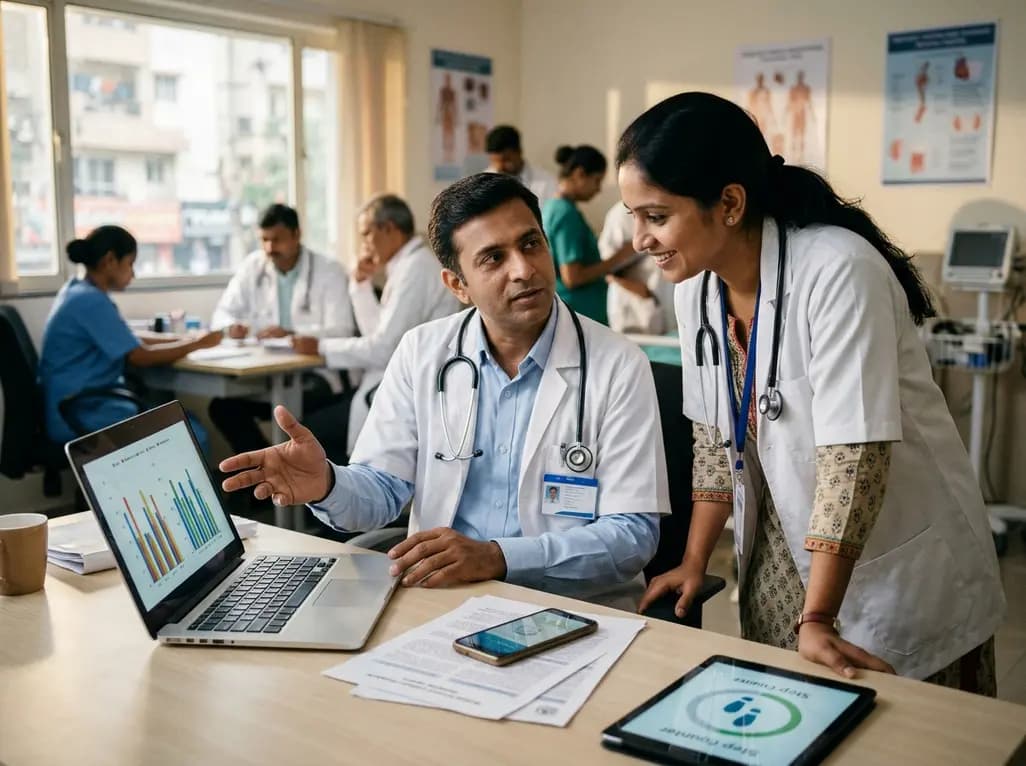
A Bayesian component network meta-analysis of 130 RCTs reveals that self-monitoring and gamification provide the clearest positive effects in mHealth physical activity interventions, while social comparison may have adverse psychological trade-offs.
Today

A paired cadaveric study compared triple and quintuple percutaneous Achilles tendon lengthening. While quintuple hemisection showed numerically greater elongation, differences were not statistically significant.
2 days back
A systematic review and meta-analysis evaluates the clinical outcomes of metformin in patients with advanced chronic kidney disease, assessing all-cause mortality, cardiovascular endpoints, end-stage kidney disease progression, and the true incidence of lactic acidosis in clinical practice.
Today
