

Loading, please wait...
Loading, please wait...
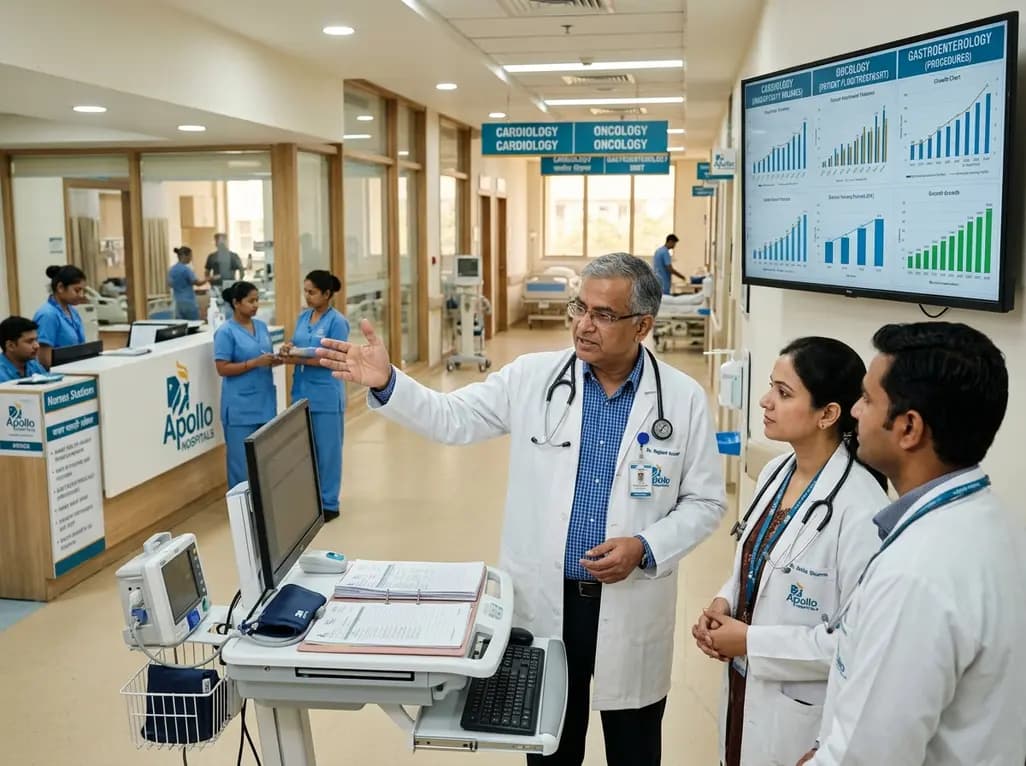
The Indian private healthcare sector continues to demonstrate substantial operational maturation. Recently, Apollo Hospitals Enterprise Limited announced its operational milestones for the second quarter of FY27. Consequently, the latest Apollo Hospitals Q2 results demonstrate strong top-line momentum across multiple tertiary care disciplines. Consolidated revenue grew by 23 percent year-on-year to reach ₹7,615 crore for the quarter ended September 30, 2026. Furthermore, consolidated net profit surged 32 percent to ₹630 crore. These achievements reflect expanding domestic healthcare requirements and strengthening institutional trust across regional centers.
During the second quarter of FY27, Apollo Hospitals delivered broad-based financial expansion across its clinical verticals. Consolidated EBITDA rose 29 percent year-on-year to ₹1,191 crore. Consequently, operating margins demonstrated strong stability despite rising administrative costs and workforce investments. Healthcare services, representing the core hospital delivery network, generated ₹3,900 crore in quarterly revenue. This performance marked a 23 percent annual increase for the hospital division. In addition, the hospital services segment produced an operating EBITDA of ₹937 crore. Across the entire first half of the fiscal year, consolidated revenue expanded by 22 percent to ₹14,547 crore. Furthermore, cumulative net profit for the six-month period climbed 33 percent to ₹1,211 crore. Therefore, disciplined capital allocation reinforced institutional resilience across the corporate healthcare network. Healthcare administrators view these steady gains as indicators of sustainable clinical financing.
Volume expansion across complex clinical specialties served as the primary catalyst for institutional growth. Specifically, Apollo reported accelerated demand for advanced medical procedures and multi-specialty surgical interventions. Oncology delivered outstanding performance, recording a 28 percent year-on-year growth in departmental revenue. Similarly, the gastroenterology specialty expanded by 27 percent, reflecting higher case admissions for complex hepatobiliary procedures. Furthermore, urology registered an impressive 26 percent increase, while cardiology and orthopedic departments expanded by 20 percent each. Management highlighted that tertiary case-mix optimization significantly enhanced clinical productivity and bed realization. High-complexity interventions require coordinated multidisciplinary teams and modern surgical suites. As a result, the hospital network attracted more complex quaternary referrals from across the country. Additionally, specialized clinical work enabled clinicians to handle challenging patient cohorts effectively. Thus, continued clinical specialization strengthens both care delivery and institutional resilience across tertiary care centers.
Operational performance metrics across network facilities demonstrated rising healthcare access and high patient throughput. Overall hospital bed occupancy reached 73 percent in Q2 FY27, improving from 69 percent in Q2 FY26. Consequently, higher bed utilization reflected steady domestic demand alongside efficient clinical turnaround times. Inpatient admissions grew by 14 percent across network hospitals, highlighting widespread clinical trust. Meanwhile, the average revenue per patient rose 8 percent year-on-year to reach ₹1,86,880. This increase stemmed from a higher proportion of complex surgical admissions and advanced technological treatments. Moreover, international patient services experienced a dramatic 37 percent revenue surge during the quarter. Foreign patient footfalls contributed substantially to higher operational realizations and quaternary bed occupancy. Therefore, consistent institutional quality and accredited treatment standards continue to strengthen India's global medical standing.
To accommodate burgeoning clinical demand, Apollo Hospitals is actively pursuing an ambitious multi-year infrastructure program. Specifically, the healthcare major remains firmly on track to add approximately 5,800 hospital beds over five years. Management aims to execute this capacity rollout through balanced greenfield developments and capital-efficient brownfield hospital expansions. For example, the upcoming 470-bed super-specialty hospital in Gurugram approaches operational readiness, with commissioning scheduled in FY27. Furthermore, strategic project developments are underway in high-density regions including Mumbai, Hyderabad, Bengaluru, and Kolkata. Consequently, these infrastructure additions will relieve operational pressure on existing tertiary units. Expanding physical infrastructure allows medical departments to introduce advanced intensive care wings and hybrid operative theaters. In addition, increasing operational bed capacity directly supports local employment opportunities for doctors and nurses. Therefore, long-term capital deployment reinforces national healthcare delivery frameworks significantly.
Beyond core hospital facilities, the group experienced accelerated expansion across its integrated healthcare businesses. Apollo HealthCo, which encompasses pharmacy distribution networks and digital platform operations, reported a 23 percent revenue increase to ₹3,286 crore. Furthermore, the division generated an EBITDA of ₹193 crore, rising from ₹110 crore in the previous year. Operating profit after tax reached ₹118 crore compared to ₹73 crore in Q2 FY26. The physical pharmacy network expanded steadily to over 7,660 retail centers across the country. Meanwhile, the Apollo 24/7 digital health ecosystem maintained strong transactional volume across consultations and diagnostics. In addition, Apollo’s Health and Lifestyle business, representing primary clinics and diagnostics, recorded revenue of ₹429 crore. Crucially, this primary care segment achieved a profit after tax of ₹26 crore. Consequently, this interconnected network establishes seamless care continuity between digital consultations, retail diagnostics, and tertiary admissions.
The sustained operational performance of Apollo Hospitals highlights important broader structural trends within India's tertiary healthcare ecosystem. Private healthcare organizations increasingly face the dual responsibility of managing elevated clinical volumes while preserving care quality. Rising rates of chronic non-communicable disorders, such as cardiovascular diseases and cancer, necessitate robust inpatient infrastructure. Moreover, the simultaneous expansion of health insurance coverage empowers wider populations to seek timely tertiary interventions. Consequently, tertiary hospitals experience sustained bed occupancy rates and expanding elective surgical volumes. However, healthcare leaders must continually balance capacity expansion with strict clinical quality assurance and patient safety protocols. Integrating primary diagnostics, retail pharmacies, and digital outreach ensures earlier illness detection and reduced hospitalization intervals. As leading health systems execute ambitious multi-bed expansion plans, standardizing clinical pathways will prove indispensable. Ultimately, corporate hospital expansion will shape clinical standards, specialist training opportunities, and health access across India.
Q1: What were the key financial results reported in the Apollo Hospitals Q2 results?
Apollo Hospitals reported a 23 percent year-on-year increase in consolidated revenue to ₹7,615 crore for the second quarter of FY27. Consolidated EBITDA climbed 29 percent to ₹1,191 crore, while consolidated profit after tax surged 32 percent to ₹630 crore. Furthermore, these financial gains were primarily driven by expanding inpatient admissions, higher bed occupancy, and substantial volume growth across key tertiary clinical specialties.
Q2: Which medical specialties drove the strongest volume growth for Apollo Hospitals?
The highest clinical volume and revenue growth occurred in oncology, which registered a notable 28 percent year-on-year increase during the quarter. In addition, gastroenterology expanded by 27 percent, urology recorded 26 percent growth, and cardiology and orthopedics grew by 20 percent each. Consequently, this robust departmental expansion reflects increasing demand for high-complexity surgical treatments and specialized tertiary medical care across network facilities.
Q3: How is Apollo Hospitals planning to expand its hospital bed capacity?
Apollo Hospitals is actively implementing an expansion program designed to add approximately 5,800 hospital beds across India over the next five years. Specifically, this strategic capacity addition combines greenfield hospital constructions with brownfield tower developments in key metropolitan clusters. A notable near-term milestone includes the commissioning of a new 470-bed tertiary care facility in Gurugram during the third quarter of FY27.
Disclaimer: This content is for informational and educational purposes only. It does not constitute medical advice or replace professional judgment. Refer to the latest local and national guidelines for clinical practice.
References

Read summarized clinical updates, watch expert medical content, and earn CME certifications right from your smartphone.
Open your smartphone camera to scan and install.





Apollo Hospitals demonstrated robust operational growth during the quarter ending September 30, 2026. Aided by double-digit volume increases across oncology, gastroenterology, and cardiology, bed occupancy touched 73%, while the group advanced its 5,800-bed network expansion across Indian healthcare clusters.
Today
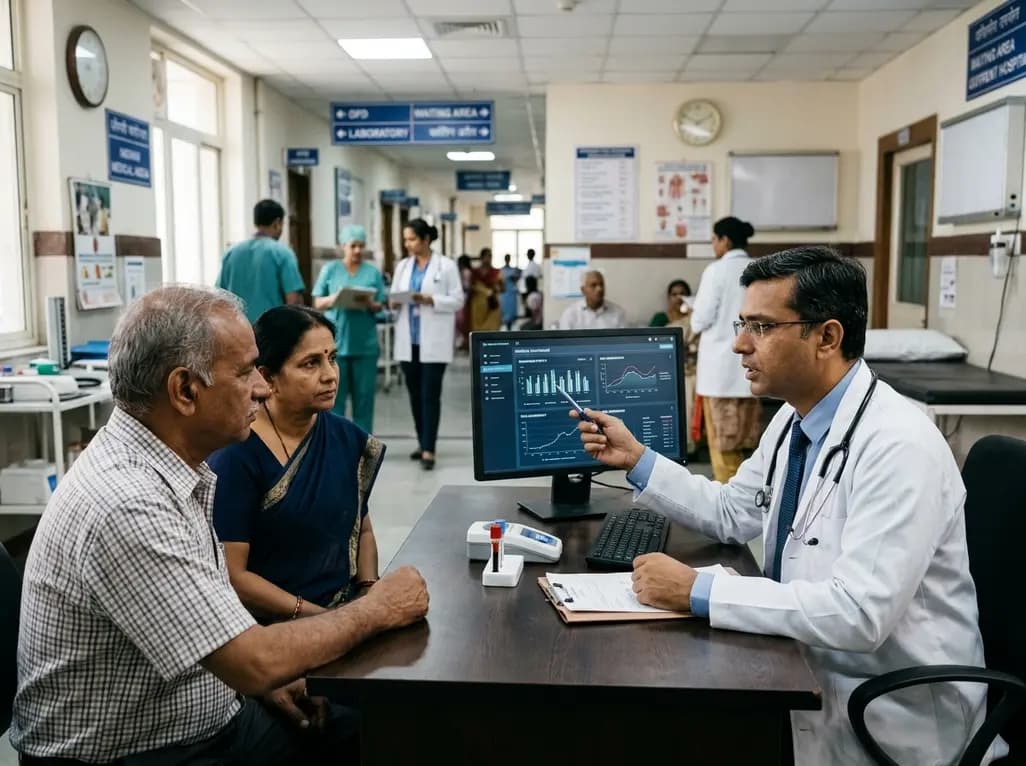
A pioneering clinical trial across 200 general practices in England evaluates cutting-edge blood tests to detect vague abdominal malignancies earlier. By combining artificial intelligence with protein biomarker profiling, clinicians aim to triage high-risk patients rapidly and improve long-term survival.
Today
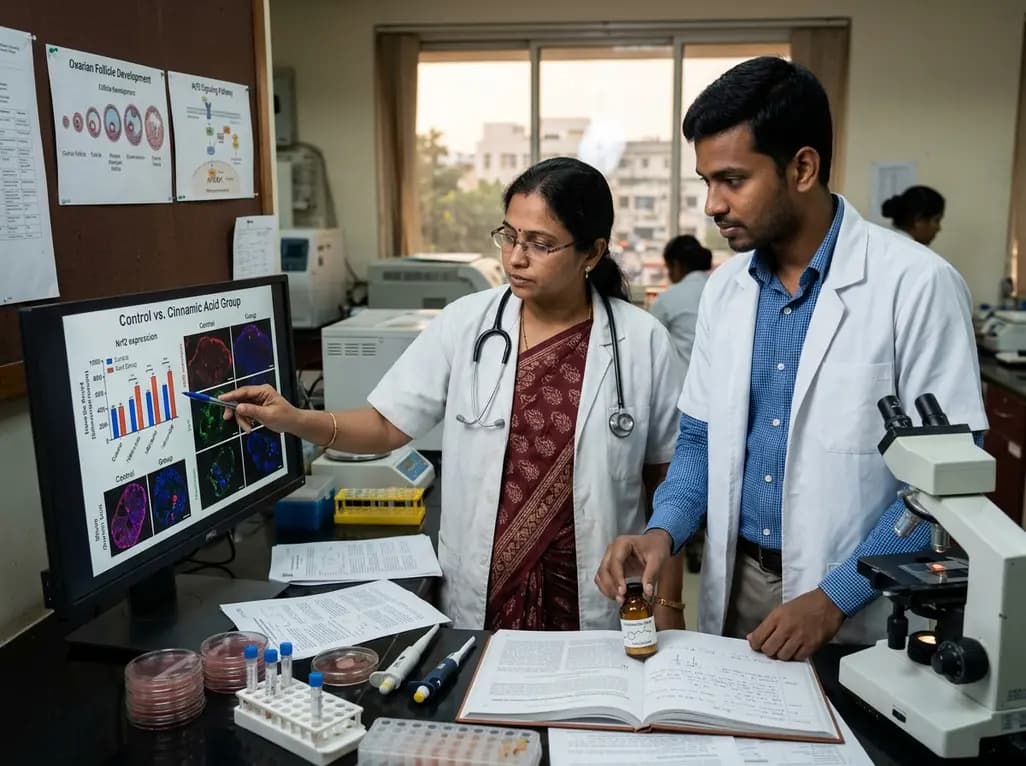
A preclinical study reveals that cinnamic acid counters D-galactose-induced premature ovarian failure in mice. By enhancing total antioxidant capacity and upregulating protective genes like Nrf2 and Foxo3a, cinnamic acid improved estrous cyclicity and follicular reserve, offering new insights into ovarian health.
Today

A systematic review of 18 studies reveals very low certainty evidence for cardiac autonomic modulation following intermittent normobaric hypoxia, showing insufficient data to confirm reproducible changes in heart rate variability or baroreflex sensitivity.
Today

An 8-week functional restoration program provides sustained psychological benefits at six-month follow-up for workers' compensation patients. The multidisciplinary intervention significantly improved pain self-efficacy, reduced anxiety and depression, and progressively resolved chronic insomnia severity.
Today
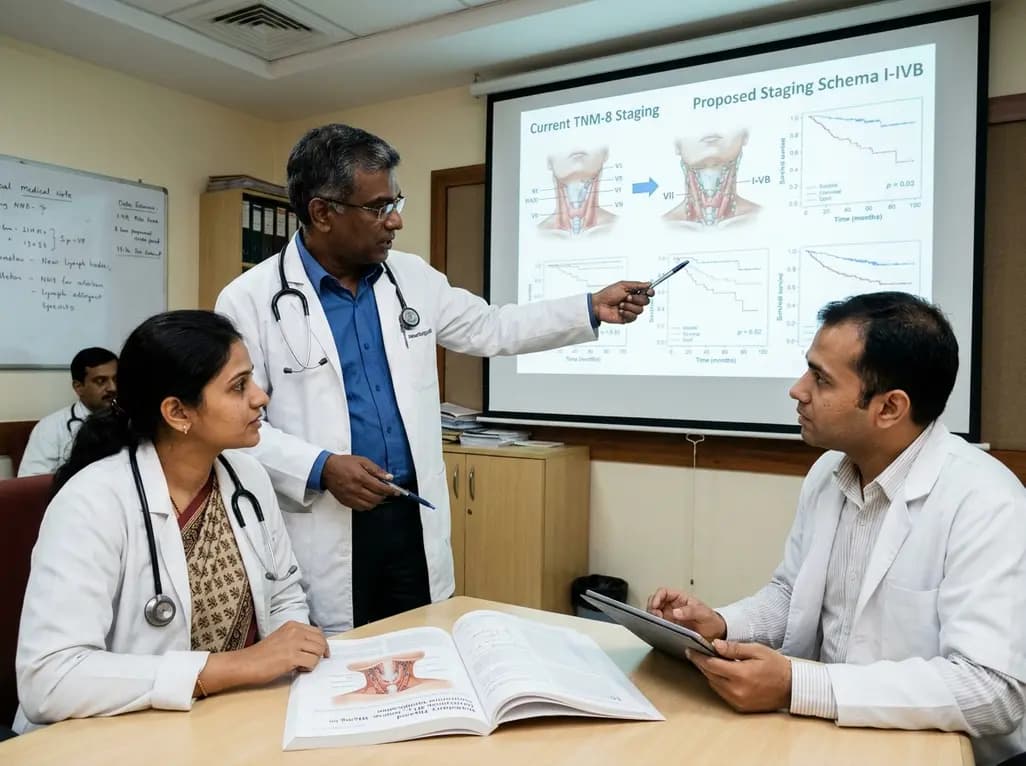
A multinational study of 2,573 medullary thyroid cancer patients refines AJCC TNM-8 staging, proposing N1c for level VII nodes and a new I-IVB schema for better survival stratification.
Today
