

Loading, please wait...
Loading, please wait...

Evaluating the intricate link between APOE genotype sleep architecture offers fundamental insights into preclinical neurodegeneration. Apolipoprotein E epsilon 4 stands as the most established genetic risk factor for late-onset Alzheimer's disease. While researchers recognize that sleep disruption accelerates amyloid-beta and tau deposition, conventional clinical assessments often fail to capture early electrophysiological abnormalities. Recently, investigators evaluated over three thousand community-dwelling older adults from the Sleep Heart Health Study to delineate these genetic differences. Surprisingly, participants across diverse genotypes showed comparable gross sleep metrics, including time spent in non-rapid eye movement stages and wake after sleep onset. However, deep spectral profiling revealed significant micro-level divergence across allelic cohorts. In particular, epsilon 4 carriers displayed profound reductions in fast sleep spindle activity alongside altered arousability. Therefore, these electrophysiological findings challenge the historic assumption that neurodegenerative risk manifests primarily through gross insomnia or overt sleep fragmentation. Instead, subclinical disruptions in cortical synchrony emerge long before clinical dementia manifests. Understanding these subtle electrophysiological variations enables physicians to identify early physiological vulnerability and conceptualize targeted chronobiological interventions.
Clinical sleep evaluations traditionally focus on macroarchitecture, which quantifies sleep stages, total sleep duration, and efficiency. However, macro-level measurements often remain stable until advanced stages of neurodegeneration. In this large cross-sectional investigation, epsilon 4 carriers spent similar proportions of time in slow-wave sleep and rapid eye movement sleep compared to epsilon 3 homozygotes. Conversely, microarchitecture measures revealed striking physiological divergence. Researchers evaluated micro-level traits using high-resolution spectral analyses, sleep spindle metrics, and the continuous odds ratio product. The odds ratio product serves as an objective marker of sleep depth and arousal propensity. Interestingly, epsilon 4 carriers demonstrated lower odds ratio product values and reduced arousal indices across nocturnal recordings. Moreover, these microstructural differences widened substantially with advancing age. These findings prove that macroscopic sleep staging lacks the sensitivity required to track early cortical vulnerability. Therefore, clinicians must look beyond superficial sleep architecture to evaluate microscopic neuronal oscillations. Consequently, advanced quantitative spectral profiling bridges the critical gap between asymptomatic genetic carrier status and early thalamocortical dysregulation.
Sleep spindles represent transient bursts of oscillatory neural activity generated by the thalamic reticular nucleus. Furthermore, these oscillatory rhythms coordinate hippocampal-cortical communication to support memory consolidation and neuroplasticity. The study identified lower spindle power among epsilon 4 homozygotes compared to non-carriers. Additionally, researchers noted a progressive, dose-response decrease in spindle frequency at peak power with each additional epsilon 4 allele. This finding holds immense diagnostic and therapeutic significance. Previous neuroimaging studies confirm that epsilon 4 carriers accumulate amyloid pathology within thalamocortical networks years before memory symptoms emerge. Thus, the observed loss of spindle power directly mirrors underlying thalamic and cortical reticular disruption. Because sleep spindles facilitate memory replay and glymphatic clearance, their deterioration accelerates neurotoxic waste accumulation. Furthermore, these spindle abnormalities persisted after adjusting for demographic factors, cognitive baseline status, and circulating plasma biomarkers. Consequently, spindle degradation serves as an independent functional indicator of preclinical disease, demonstrating that genetic susceptibility directly degrades the neural circuitry that orchestrates restorative sleep.
Intriguingly, the study revealed that epsilon 4 carriers experience fewer brief arousals and lower odds ratio product scores throughout the night. At first glance, reduced sleep fragmentation might appear beneficial. However, neurophysiologists interpret this phenomenon as a pathological reduction in cortical responsiveness. Specifically, the diminished arousal index likely reflects electroencephalographic slowing and higher awakening thresholds caused by early neurodegenerative changes. As cholinergic and monoaminergic ascending arousal systems degenerate, the brain loses its capacity to shift dynamically between deep sleep and wakefulness. Moreover, the widening disparity in odds ratio product among older carriers underscores an age-dependent worsening of neural plasticity. Therefore, lower arousability does not indicate deeper or restorative sleep. Instead, it suggests a rigid, impaired cortical network that cannot mount appropriate micro-arousals in response to physiological stimuli. Importantly, clinicians evaluating sleep studies must not mistake suppressed arousals for sleep stability. Consequently, recognizing these non-linear electrophysiological changes prevents clinicians from misinterpreting polysomnographic data in patients carrying the high-risk epsilon 4 allele.
Current diagnostic pathways for Alzheimer's disease depend heavily on invasive cerebrospinal fluid sampling and costly positron emission tomography scans. While blood-based biomarkers such as phosphorylated tau and amyloid ratios gain clinical adoption, non-invasive functional biomarkers remain scarce. Notably, the associations between the epsilon 4 allele and altered microarchitecture remained robust regardless of amyloid-beta forty-two to forty ratios or phosphorylated tau levels. This independence suggests that microstructural sleep deficits capture distinct neurodegenerative processes that occur concurrently with or prior to systemic protein accumulation. Furthermore, quantitative electroencephalography provides an accessible, non-invasive, and repeatable modality for longitudinal monitoring. In regions with limited access to specialized radiotracers, sleep microarchitecture profiling could offer clinicians valuable supplementary prognostic data. Therefore, integrating automated spindle tracking and odds ratio product quantification into routine polysomnography strengthens preventive neurological assessments. By identifying individuals with decaying thalamocortical synchrony, physicians can triage high-risk patients toward closer cognitive surveillance and aggressive cardiovascular risk modification.
These neurophysiological discoveries provide clear actionable avenues for preventive geriatric healthcare. Physicians caring for older adults should prioritize sleep optimization as a vital pillar of neuroprotection. Although clinicians cannot alter genetic risk profiles, they can modify sleep hygiene, treat nocturnal hypoxemia, and avoid medications that suppress sleep spindles. Specifically, many common pharmacological agents, including benzodiazepines and sedating antihistamines, disrupt natural spindle architecture and worsen cortical slowing. Instead, clinicians should encourage non-pharmacological behavioral sleep interventions and evaluate patients for obstructive sleep apnea. Moreover, novel therapeutic strategies, such as auditory closed-loop stimulation and transcranial electrical stimulation, actively target slow-wave spindle coupling to enhance memory consolidation. Because microarchitecture deficits emerge decades before clinical cognitive decline, early intervention offers a significant therapeutic window. Ultimately, bridging genetic screening with quantitative sleep neurophysiology transforms how clinicians approach neurodegenerative risk. Proactive management of sleep quality preserves thalamocortical network integrity, empowering clinicians to decelerate cognitive decline and improve long-term outcomes in vulnerable aging populations.
Carriers of the APOE ε4 allele demonstrate distinct electroencephalographic microarchitecture alterations despite preserving standard macro-level sleep durations. Specifically, these individuals exhibit reduced sleep spindle power, slower peak frequencies, and diminished arousal responsiveness. Consequently, these findings suggest that subtle thalamocortical network degradation precedes overt sleep disruption during preclinical neurodegenerative stages.
Sleep spindles reflect synchronized rhythmic bursts generated by thalamocortical circuits during non-rapid eye movement rest. They facilitate memory consolidation, synaptic maintenance, and nocturnal waste clearance. Therefore, spindle deficits indicate early subclinical cortical dysfunction and localized neuropathology, explaining why ε4 carriers face elevated susceptibility to accelerated neurodegeneration and cognitive decline.
Standard clinical polysomnography primarily scores macro-level metrics, which frequently miss subtle electrophysiological changes. However, advanced quantitative EEG algorithms can capture microarchitecture features like spindle frequency, spectral density, and the odds ratio product. Adopting these advanced computational tools in specialized neurophysiology laboratories offers practical utility for identifying vulnerable geriatric individuals.
Disclaimer: This content is for informational and educational purposes only. It is not intended to be a substitute for professional medical advice, diagnosis, or treatment. Always seek the advice of your physician or another qualified health provider with any questions you may have regarding a medical condition. Refer to the latest local and national guidelines for clinical practice.
References
Cho G et al. An Investigation of Sleep Macro- and Microarchitecture by APOE Genotype. Ann Neurol. 2026 Nov. doi: 10.1002/ana.78312. PMID: 42770547.
Winer JR et al. Sleep Disturbance, Amyloid, and Tau in Alzheimer's Disease. Neurobiol Dis. 2021;156:105411.
Mander BA et al. Sleep and Human Aging: Neuromuscular and Cognitive Consequences. Neuron. 2017;94(1):19-36.

Read summarized clinical updates, watch expert medical content, and earn CME certifications right from your smartphone.
Open your smartphone camera to scan and install.





A large cross-sectional study reveals that while APOE genotypes show similar macro-level sleep stages, APOE ε4 carriers exhibit notable microarchitecture deficits, including reduced sleep spindle power and lower arousability, offering novel electrophysiological insights into preclinical Alzheimer's risk.
Today

A large retrospective cohort study demonstrates that explainable machine learning models, notably XGBoost, accurately predict hospital admission at emergency triage. By analyzing routine triage parameters, hospitals can streamline bed allocation, decrease boarding times, and alleviate acute care overcrowding.
Today

A new quality-improvement initiative reveals that universal maternal mental health screening in the NICU increased screening rates from 29.5% to 95.0%, with nearly 60% of screened mothers requiring psychosocial referrals, highlighting the urgent need for embedded mental health resources.
Today
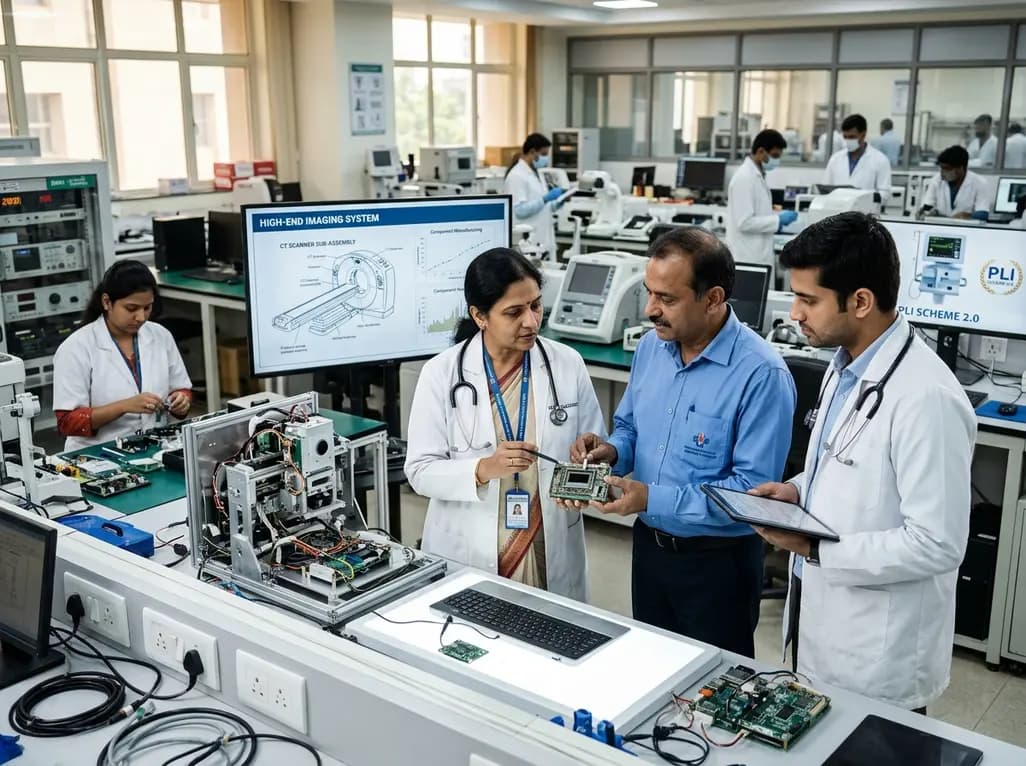
The Department of Pharmaceuticals has extended the medical devices PLI scheme to 2035-36 with a Rs 2,700 crore outlay. Featuring relaxed investment barriers and eliminated sales thresholds, the revised framework targets deep manufacturing, high-end diagnostics, critical MedTech components, and supply resilience.
Today
A metabolomic study reveals that aging delays glutathione synthesis and gamma-glutamylcysteine accumulation following muscle injury. Although precursor supplementation targets this enzymatic bottleneck, in vitro tests show no immediate effect on myogenesis, highlighting the complexity of muscle repair in older adults.
Today

A systematic review evaluates psychological interventions for smoking cessation in diabetes, showing short-term success but highlighting challenges in long-term abstinence.
Today
