.webp&w=384&q=75)

Loading, please wait...
Loading, please wait...

Interpersonal conflicts and relational transgressions occur routinely across adult romantic partnerships. Clinicians in psychiatric and primary care settings frequently evaluate patients who experience severe emotional turmoil following relational ruptures. Understanding the psychological determinants of conflict response is essential for effective couple therapy and mental healthcare. A critical determinant is how attachment orientations interact with partner communication. Specifically, investigating anxious attachment conflict resolution processes provides vital clarity regarding how individuals navigate hurt, perceived rejection, and relationship restoration.
Attachment theory explains how early relational experiences establish persistent cognitive schemas regarding interpersonal trust and self-worth. Individuals exhibiting high attachment anxiety typically experience an intense fear of abandonment and rejection. Consequently, they remain hypervigilant toward subtle cues of partner detachment or relational instability. When transgressions occur, anxiously attached individuals frequently activate hyperactivating coping strategies. Furthermore, these individuals often perceive transgressions not merely as isolated mistakes, but as direct threats to relationship survival. Therefore, their behavioral responses can escalate from vulnerable expressions of distress into overt hostility or destructive retaliation. In clinical consultations, recognizing these underlying attachment insecurities allows healthcare providers to contextualize maladaptive patient responses. Rather than viewing destructive reactions merely as interpersonal aggression, clinicians can identify them as frantic efforts to restore emotional proximity. In addition, understanding these attachment dynamics provides a solid foundation for evaluating how post-transgression partner behaviors influence conflict trajectories.
When a partner commits a transgression, their subsequent communication strongly shapes the emotional trajectory of the victim. Sincere apologies validate the victim's pain and facilitate emotional repair. However, offending partners often resort to nonapologies, which include defensiveness, dismissal, gaslighting, or outright counter-attacks. For example, transgressors may lash out or blame the victim for initiating the dispute. Consequently, these nonapologies invalidate the victim's emotional experience and exacerbate relational insecurity. Recent empirical studies demonstrate that nonapologetic responses produce distinctly negative outcomes when received by highly anxious individuals. Instead of mitigating tension, a nonapology signals profound unresponsiveness and a lack of emotional accountability. As a result, victims with high attachment anxiety experience heightened distress. Furthermore, nonapologetic communication confirms their worst fears regarding partner unreliability. Thus, transgressor nonapologies serve as a potent catalyst that transforms minor disagreements into destructive relational crises.
Recent empirical investigations have clarified the cognitive and perceptual pathways linking attachment anxiety to destructive conflict behaviors. Researchers evaluated whether perceived partner availability and responsiveness account for destructive reactions during romantic ruptures. Interestingly, when an offending partner responds with an explicit nonapology, anxiously attached victims consistently demonstrate heightened destructive responses. Furthermore, researchers observed an intriguing pattern regarding silent or absent partner responses. When an offending partner offers no response at all, anxiously attached victims perceive significantly lower partner availability and responsiveness compared to when the partner responds nonapologetically. Therefore, complete silence or emotional stonewalling appears particularly devastating for individuals with high attachment anxiety. This profound sense of perceived unavailability intensifies their emotional panic. Consequently, anxious individuals may adopt destructive communicative tactics, such as aggressive confrontation, to force an emotional reaction. Recognizing these nuanced psychological mechanisms enables therapists to guide couples toward healthier conflict containment.
These empirical findings offer valuable guidance for mental health professionals, family physicians, and sexologists conducting couples therapy. Clinicians must actively assess attachment styles when evaluating interpersonal distress and domestic friction. Furthermore, therapeutic interventions should target both cognitive appraisals and communicative habits within the couple dyad. For anxious individuals, therapists can introduce cognitive reframing techniques to moderate catastrophic interpretations of partner unresponsiveness. Additionally, emotional regulation training can prevent immediate destructive retaliation during high-stress conflicts. Simultaneously, clinicians must train offending partners on the critical importance of constructive, non-defensive apologies. Because defensive lashing out severely triggers attachment distress, transgressors must learn to offer authentic remorse and active reassurance. Moreover, clinicians must caution couples against emotional stonewalling, as complete silence significantly degrades perceived partner availability. Implementing these evidence-based communicative adjustments fosters emotional safety and stabilizes vulnerable partnerships.
Primary care doctors and psychiatrists frequently encounter somatic complaints and mood disorders stemming from chronic marital discord. Therefore, integrating attachment-informed assessments into routine evaluations enhances holistic patient management. Clinicians should educate patients on how attachment anxiety influences emotional reactivity during domestic disputes. Furthermore, structured couple interventions, such as Emotion-Focused Therapy, can successfully rebuild secure interpersonal bonds. Practitioners can encourage vulnerable dialogue rather than destructive escalation, enabling partners to express primary fears effectively. In addition, medical professionals should collaborate with specialized psychotherapy services to provide comprehensive psychosocial support. By addressing both individual attachment vulnerabilities and dyadic communication patterns, healthcare providers can facilitate long-term relational resilience. Ultimately, transforming how couples manage transgressions reduces chronic interpersonal stress, thereby improving overall mental health and quality of life.
Individuals with an anxious attachment style typically experience chronic anxiety regarding relationship security, partner loyalty, and fear of abandonment. Furthermore, they remain hypervigilant toward emotional distance and often require constant validation. Consequently, during relationship conflicts, they may react intensely or engage in hyperactivating behaviors to demand reassurance and restore intimacy.
Nonapologies, such as defensiveness or blaming the victim, invalidate the victim's emotional pain and signal a lack of partner empathy. For anxiously attached individuals, this behavior confirms profound fears of emotional unresponsiveness and neglect. Therefore, feeling threatened and dismissed, anxious victims often resort to destructive responses, including confrontation or retaliatory anger.
Partner silence or emotional withdrawal significantly reduces perceived partner availability and responsiveness for an anxiously attached individual. Because anxious individuals interpret silence as total abandonment, their relational panic escalates rapidly. Consequently, complete silence can provoke severe emotional distress, frequently driving the anxious partner toward destructive communicative tactics to elicit an emotional response.
Disclaimer: This content is for informational and educational purposes only and does not constitute formal medical or psychological advice. Refer to the latest local and national guidelines for clinical practice.
References
Davison B et al. The Association Between Victims' Anxious Attachment and Transgressors' Nonapology on Conflict Resolution in Romantic Relationships. J Soc Psychol. 2026 Aug 29. doi: 10.1080/00224545.2026.2724518. PMID: 42667667.
Mikulincer M, Shaver PR. Attachment in Adulthood: Structure, Dynamics, and Change. 2nd ed. Guilford Press; 2016.
Feeney BC, Collins NL. A New Look at Social Support: A Theoretical Perspective on Support Challenges in Romantic Relationships. Pers Soc Psychol Rev. 2015;19(2):113-147.

Read summarized clinical updates, watch expert medical content, and earn CME certifications right from your smartphone.
Open your smartphone camera to scan and install.





Recent research highlights how anxious attachment shapes destructive responses during romantic conflict, especially when partners offer nonapologies. Clinicians can use these findings to guide couples therapy and emotional regulation strategies.
4 weeks back

Targeting ferroptosis provides a compelling strategy to dismantle hypoxia- and acidosis-driven immunosuppression in solid tumors, enhancing response to modern immunotherapy.
Today

Findings from Project Viva indicate that sustained postpartum weight retention, rather than excessive gestational weight gain alone, directly worsens women's mid-life cardiovascular health, degrading blood pressure and glycemic parameters decades after delivery.
Today
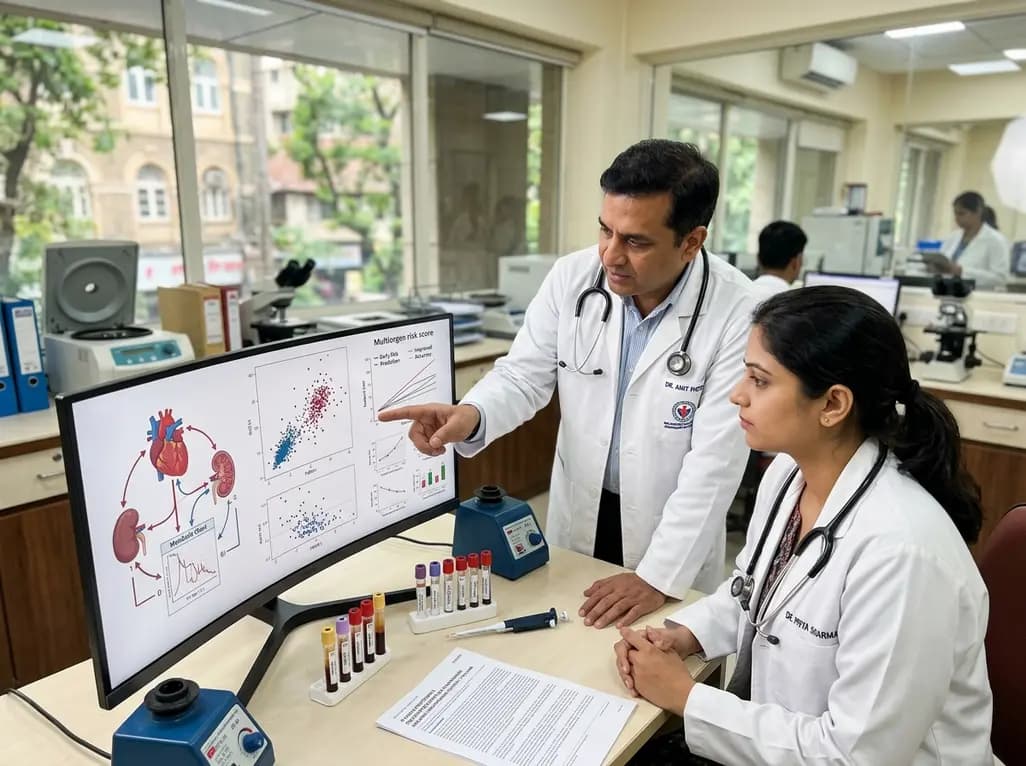
A large UK Biobank study reveals that plasma proteomic signatures capture preclinical organ damage and improve multiorgan risk prediction across early CKM syndrome stages 0 to 2 beyond traditional PREVENT clinical models.
Today

A retrospective CBCT study reveals that superior TMJ space asymmetry correlates moderately with occipital condyle-atlas-axis asymmetry in unilateral TMJ osteoarthritis, highlighting an imaging correlate between jaw biomechanics and upper cervical alignment rather than a standalone diagnostic marker.
Today

A Bayesian multilevel meta-analysis reveals that aerobic training combined with moderate carbohydrate restriction modestly lowers HbA1c in type 2 diabetes. However, sparse data and very low certainty leave incremental benefits over exercise or diet alone unproven, highlighting the need for individualized care.
Today
