.webp&w=384&q=75)

Loading, please wait...
Loading, please wait...

Understanding the role of Antral Follicle Count IVF is essential for any clinician managing infertility today. Consequently, many patients look for concrete numbers and realistic expectations before starting their first retrieval cycle. A recent retrospective study evaluated how baseline antral follicle count predicts the yield of mature oocytes in 362 women. The findings suggest that while AFC is a highly useful biomarker, it only explains approximately 26.7% of the total variance in mature oocyte retrieval. Therefore, doctors must integrate this data into a broader, more nuanced counseling framework to avoid setting unrealistic expectations.
Moreover, researchers discovered that multivariate models including variables like age and BMI do not significantly boost the predictive power beyond what AFC already provides. However, the baseline count remains the strongest independent predictor currently available for anticipating the outcome of a single stimulation cycle. In addition to oocyte quantity, clinicians must remember that age remains the primary driver of oocyte quality and overall live birth rates. Therefore, using these statistics during initial consultations allows for a more transparent discussion regarding the likely number of mature eggs. Furthermore, this data-driven approach helps reduce patient anxiety and improves overall satisfaction with the complex treatment process.
Although higher antral counts generally lead to better oocyte yields, the individual variation among patients remains remarkably high. Consequently, medical professionals should never rely on a single metric for a definitive prognosis. Instead, clinicians can use the Antral Follicle Count IVF as a guide to help patients prepare for the range of possible outcomes. By providing evidence-based ranges rather than exact numbers, specialists can foster a more resilient patient-doctor relationship. Ultimately, the goal is to bridge the gap between social media expectations and clinical reality.
While AFC is a statistically significant predictor, it only accounts for about a quarter of the variation in mature oocyte yield. Other biological factors and individual responses to medication also play major roles.
No, a high AFC suggests a robust ovarian reserve but does not guarantee success. Age and egg quality are equally important factors that determine the health of the resulting embryos.
According to recent research, adding BMI or age to a predictive model based on AFC does not significantly improve the accuracy of predicting mature oocyte yield.
Disclaimer: This content is for informational and educational purposes only. It does not constitute professional medical advice, diagnosis, or treatment. Always seek the advice of your physician or other qualified healthcare provider with any questions you may have regarding a medical condition. Refer to the latest local and national guidelines for clinical practice.
References
Cronin AE et al. Baseline Antral Follicle Count Compared to Mature Oocytes Retrieved During Autologous In Vitro Fertilization Cycles. Mil Med. 2026 Mar 19. doi: undefined. PMID: 41851045.
Bhattacharya S et al. Effect of age on antral follicle count, AMH levels and pregnancy outcomes in ART. Int J Reprod Contracept Obstet Gynecol. 2026 Mar;15(3):958-964.
Hendriks DJ et al. Antral follicle count in the prediction of poor ovarian response and pregnancy after in vitro fertilization: a meta-analysis. Fertil Steril. 2005 Feb;83(2):291-301.
"
Read summarized clinical updates, watch expert medical content, and earn CME certifications right from your smartphone.
Open your smartphone camera to scan and install.





This study analyzes how baseline antral follicle count (AFC) predicts the number of mature oocytes retrieved during IVF-ICSI cycles for better patient couns...
7 months ago

Machine learning models using routine peripheral blood markers provide high diagnostic accuracy for early-stage pulmonary sarcoidosis in patients presenting with normal serum ACE activity, aiding differentiation from tuberculosis and malignancy.
Today
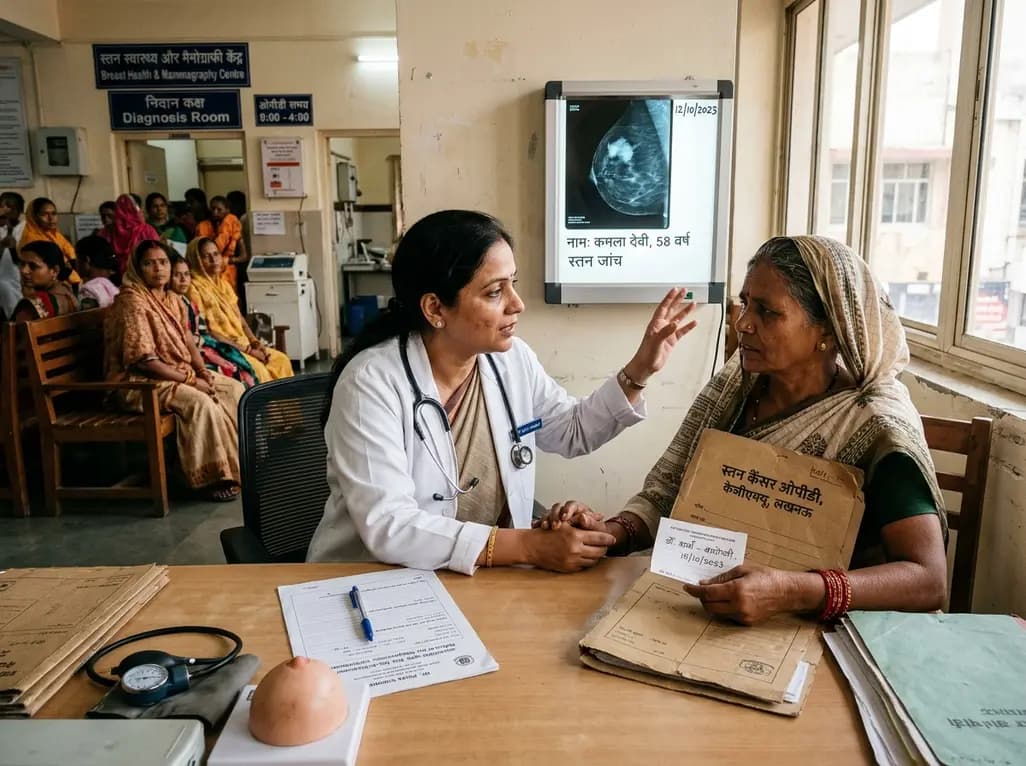
A KGMU study reveals over half of women with breast abnormalities fail to undergo diagnostic confirmation, leading to advanced-stage detection. Discover the socio-cultural barriers, clinical risks of incomplete resection, and community-level solutions needed to bridge the critical screening-to-diagnosis gap in India.
Today
A meta-analysis of 18 studies reveals that bariatric surgery does not significantly alter circulating homocysteine levels, regardless of follow-up duration. Clinicians must maintain vigilance over post-surgical micronutrient supplementation to prevent hyperhomocysteinemia.
Today

Researchers have engineered a self-powered Zn/C micro-galvanic electrospun membrane that couples sustained zinc release with endogenous microcurrents. This bioelectric scaffold stimulates M2 macrophage polarization and accelerates bone deposition to achieve robust cranial defect regeneration.
Today

A nationwide UK Cystic Fibrosis Registry study demonstrates that higher updated mean HbA1c levels correlate with a graded, significant increase in all-cause mortality among individuals with cystic fibrosis-related diabetes, reinforcing the critical need for proactive glycemic monitoring and intervention.
Today
