.webp&w=384&q=75)

Loading, please wait...
Loading, please wait...
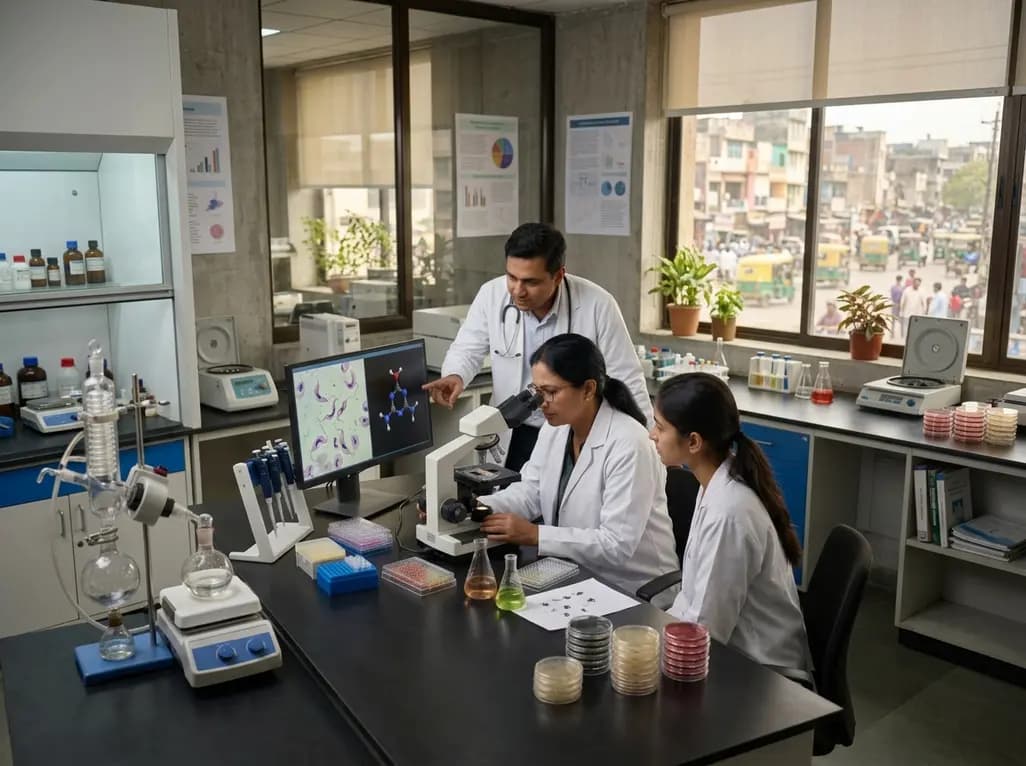
Neglected tropical diseases (NTDs) represent a significant hurdle for global health, particularly in developing nations like India. Among these, Chagas disease and leishmaniasis stand out due to their high morbidity and mortality rates. These infections, caused by the kinetoplastid parasites Trypanosoma cruzi and Leishmania species, respectively, impact over six million individuals annually. In India, visceral leishmaniasis, commonly known as Kala-azar, has historically been a major public health concern. While India has made monumental strides toward the elimination of Kala-azar, the emergence of drug-resistant strains continues to threaten long-term success. Furthermore, the current pharmacological arsenal is notoriously limited. Traditional therapies often involve high toxicity, severe side effects, and complex administration routes. Consequently, the field of antiparasitic drug development is shifting toward identifying novel chemical scaffolds that offer better safety profiles and higher efficacy. Researchers are increasingly exploring molecular editing and hybridization techniques to create more potent compounds that can bypass existing resistance mechanisms. These efforts are crucial for ensuring that the hard-won progress in managing these parasitic infections is not undone by the limitations of older therapeutic agents.
The pursuit of innovative treatments has led scientists to adopt a molecular editing strategy that combines fragments of natural products with heterocyclic scaffolds. This approach, known as hybridization, seeks to enhance biological activity while minimizing toxicological risks. In the latest advancements within antiparasitic drug development, the 1,2,3-triazine 1-oxide ring has emerged as a promising core structure. Heterocyclic compounds often provide a versatile framework for attaching various chemical groups that can interact with specific parasitic enzymes. By utilizing fragments from natural sources, such as terpenoids or simple esters, medicinal chemists can create semisynthetic derivatives that the parasite’s metabolic machinery may not easily recognize or counteract. This strategy essentially leverages the evolutionary benefits of natural products alongside the precision of synthetic chemistry. The goal is to develop molecules that possess high selectivity for parasitic targets without interfering with human physiological processes. As these hybrid molecules undergo testing, they offer a dual advantage: they can disrupt essential parasitic pathways and simultaneously offer improved bioavailability. This methodology represents a significant departure from traditional drug discovery, focusing instead on the rational design of multifunctional agents tailored to fight resilient kinetoplastid parasites effectively.
A recent study focused on a new series of semisynthetic 4-carboxylate-1,2,3-triazine 1-oxide derivatives designed specifically for their antiparasitic potential. The researchers synthesized these compounds and meticulously evaluated their performance in both in vitro and in vivo settings. Among the diverse library of molecules, compound TS-14 and TS-16 demonstrated exceptional promise. TS-14 features a specific geranyl ester group at the 4-position and an ethyl group at the 5-position on the triazine ring. Conversely, TS-16 incorporates a similar geranyl ester but utilizes an n-pentyl group at the 5-position. These subtle structural variations are critical in determining how the molecule fits into the active sites of its target enzymes. The inclusion of the geranyl fragment, derived from natural sources, appears to significantly boost the lipophilicity and cellular uptake of the compounds. Analytical data revealed that these modifications not only increased the potency of the molecules against the parasites but also improved their pharmacokinetic properties. This detailed characterization underscores the importance of precise chemical substitution in the development of next-generation anti-infective agents, providing a roadmap for future optimizations in heterocyclic chemistry and drug design.
The effectiveness of the newly synthesized compound TS-14 was compared against standard reference drugs commonly used in clinical practice, such as benznidazole and nifurtimox. In vitro assays against two distinct strains of T. cruzi, Ninoa and A1, yielded remarkable results. TS-14 exhibited an inhibitory concentration (IC50) of 1.75 µM for the Ninoa strain and 1.16 µM for the A1 strain. These values are significantly lower than those for benznidazole, which showed IC50 values of 30.3 µM and 39.8 µM, respectively. Additionally, TS-14 outperformed nifurtimox, which required much higher concentrations to achieve the same level of parasitic inhibition. The superior potency of TS-14 suggests it could potentially serve as a more effective alternative with lower dosing requirements. Transitioning to in vivo models, TS-14 continued to demonstrate strong performance by reducing parasitemia by over 40% in infected subjects. This reduction is particularly noteworthy because many compounds that show promise in a lab setting fail to maintain their efficacy inside a complex biological system. The consistent performance of TS-14 across different models highlights its potential as a lead candidate for further development in the fight against American trypanosomiasis, potentially offering a more tolerable treatment regimen for patients.
Beyond its activity against T. cruzi, the research explored the leishmanicidal properties of this new chemical series, specifically targeting Leishmania mexicana. Compound TS-16 proved to be highly effective, exhibiting significantly better activity against the FCQEPS and M379 strains compared to the reference drug glucantime. For instance, while glucantime required concentrations exceeding 125 µM for inhibition, TS-16 achieved similar results at a mere 2.11 µM for the M379 strain. This stark difference in potency highlights the limitations of current antimonials, which have been used for decades despite their high toxicity. Furthermore, in vivo assays confirmed the efficacy of other derivatives within the series. Compounds TS-21 and TS-30 achieved the highest reductions in parasitemia, reaching 60% and 64.1%, respectively, against L. mexicana. These results are incredibly encouraging, as they suggest that the 1,2,3-triazine 1-oxide scaffold is versatile enough to target different types of kinetoplastid parasites. The high percentage of parasitemia reduction in living models is a strong indicator of the clinical potential of these agents. Consequently, these findings pave the way for more comprehensive studies to determine the safety and dosing parameters required for human trials, bringing us one step closer to a more effective treatment for leishmaniasis.
To understand why these compounds are so effective, the researchers investigated their impact on key metabolic pathways within the parasites. Specifically, they focused on trypanothione reductase (TcTryR) and trypanothione synthetase (TcTryS), which are unique to the Trypanosomatidae family. These enzymes are essential for maintaining the parasite's internal redox balance and protecting them from oxidative stress. Because these pathways do not exist in humans, they represent ideal targets for drug intervention without causing collateral damage to host cells. The study found that compounds TS-14 and TS-32 exerted an uncompetitive inhibitory effect on TcTryR. Moreover, TS-32 also demonstrated an inhibitory effect on TcTryS. This dual action or high selectivity for these specific enzymes explains the high mortality rates observed in the treated parasites. By disrupting the trypanothione system, the compounds leave the parasites vulnerable to reactive oxygen species, leading to cellular death. This mechanistic insight is invaluable for the future of antiparasitic drug development, as it confirms the viability of the 1,2,3-triazine 1-oxide scaffold as a potent inhibitor of critical parasitic survival mechanisms. Such targeted approaches are essential for overcoming the broad-spectrum toxicity associated with older medications.
The new 1,2,3-triazine 1-oxide derivatives, such as TS-14, offer significantly higher potency and lower inhibitory concentrations than traditional drugs like benznidazole. While benznidazole often requires high doses that cause severe side effects, these semisynthetic compounds target specific parasitic enzymes like TcTryR. This high selectivity potentially allows for lower therapeutic doses, reducing the risk of toxicity while maintaining superior efficacy against resistant strains of Trypanosoma cruzi.
The trypanothione system, including the enzymes TcTryR and TcTryS, is unique to parasites like Leishmania and T. cruzi and is entirely absent in human cells. This fundamental difference allows for the development of drugs that can selectively kill the parasite without interfering with the human host's metabolic processes. By inhibiting these enzymes, the parasite loses its ability to manage oxidative stress, which eventually leads to its rapid destruction within the host body.
Yes, these findings are highly relevant. While the study specifically looked at L. mexicana, the enzymatic targets like TcTryR are conserved across various Leishmania species, including those responsible for visceral leishmaniasis in India. The high efficacy of TS-16 and other derivatives suggests they could be adapted or further refined to treat Indian strains, providing a much-needed alternative to pentavalent antimonials, which have seen rising resistance in the Indian subcontinent recently.
Disclaimer: This content is for informational and educational purposes only. It is not intended to provide medical advice or to take the place of such advice or treatment from a personal physician. All readers/viewers of this content are advised to consult their doctors or qualified health professionals regarding specific health questions. Neither the publisher nor the author takes responsibility for possible health consequences of any person or persons reading or following the information in this educational content. Refer to the latest local and national guidelines for clinical practice.
References
Navarrete-Carriola DV et al. Chemical synthesis and biological activity of semisynthetic derivatives against Chagas disease and leishmaniasis composed of fragments of natural products and 1,2,3-triazine 1-oxide scaffold. Biomed Pharmacother. 2026 Jul 21. doi: undefined. PMID: 42480148.
Singh OP et al. Current challenges in treatment options for visceral leishmaniasis in India: a public health perspective. Infectious Diseases of Poverty. 2016. doi: 10.1186/s40249-016-0112-2.
Fiorillo A. Trypanothione Reductase: Structural Analysis for Drug Discovery. Encyclopedia. 2021.

Read summarized clinical updates, watch expert medical content, and earn CME certifications right from your smartphone.
Open your smartphone camera to scan and install.





A breakthrough study identifies semisynthetic 1,2,3-triazine 1-oxide derivatives, specifically TS-14 and TS-16, as highly potent agents against Chagas disease and Leishmaniasis, outperforming traditional treatments like benznidazole and glucantime in both in vitro and in vivo models.
3 months ago

As monsoon seasons elevate arboviral disease threats, Tamil Nadu has initiated an ICMR-monitored evaluation of the tetravalent dengue vaccine in Tenkasi district. Clinicians emphasize clinical monitoring, public prevention, and high-quality early pediatric care to reduce disease morbidity across endemic regions.
Today

A comparative cohort study evaluates vNOTES vs TLH hysterectomy for benign conditions, demonstrating shorter operative duration, faster return to daily activities, and equivalent female sexual function scores without increased dyspareunia.
Today

Review how tailored exercise programs benefit frail older patients with heart failure. Explore pathophysiological mechanisms, individualized training prescriptions, and strategies to overcome adherence barriers in clinical practice.
Today

This comparative study evaluates posterior labral tears with and without glenohumeral instability, highlighting distinct demographic patterns, MRI underestimation in stable shoulders, and successful arthroscopic repair outcomes.
Today

A clinical study demonstrates that early intervention with tocilizumab, either as monotherapy or bridged with corticosteroids, achieves significant proptosis reduction and resolves active inflammation in treatment-naive thyroid eye disease.
Today
