.webp&w=384&q=75)

Loading, please wait...
Loading, please wait...

Antimicrobial resistance poses an existential threat to modern healthcare systems worldwide. However, patient choices and clinical interactions heavily influence antibiotic effectiveness. A newly published systematic review evaluated international research to characterize common antimicrobial resistance beliefs and determine how ordinary citizens perceive pathogen biology. Therefore, understanding these public viewpoints allows medical practitioners to identify root causes of inappropriate consumption. Furthermore, the systematic review analyzed thirty-three distinct investigations from high-income nations, representing more than thirty-three thousand individuals. Clinicians regularly witness how persistent misunderstandings complicate outpatient consultations for minor ailments. In addition, patients frequently expect antibacterial therapy for self-limiting upper respiratory infections. Consequently, clear communication regarding microbiological mechanisms remains critical for preserving lifesaving therapeutics. Healthcare providers must proactively assess what patients understand before issuing prescriptions. In contrast, assuming that patients grasp resistance concepts often leads to poor compliance and therapy failure. Thus, identifying underlying cognitive misconceptions provides the foundation for sustainable behavioural change in clinical practice. Moreover, addressing community misconceptions directly relieves clinicians from unnecessary patient pressure during acute primary care encounters.
Public perceptions regarding bacterial resistance diverge sharply from biological reality. For example, many individuals incorrectly believe that the human body becomes immune to antibiotics rather than bacteria acquiring resistance mutations. Furthermore, this flawed premise leads people to assume that resistance does not threaten healthy individuals. Consequently, patients often fail to recognize that resistant pathogens spread easily through communities and healthcare environments. In addition, participants across numerous evaluated studies could not distinguish viral etiologies from bacterial infections. Many survey respondents stubbornly maintained that antibacterial medications effectively cure acute viral conditions such as influenza and common colds. Therefore, these persistent gaps generate unwarranted treatment expectations during routine clinical consultations. When doctors refuse antibacterial therapy, disappointed patients may experience frustration or seek medications elsewhere. Moreover, several studies demonstrated that patients frequently save leftover capsules for future self-treatment. This unmonitored self-administration severely amplifies the global dissemination of resistant organisms. Similarly, patients often misunderstand the necessity of diagnostic testing, viewing microbiological cultures as redundant delays rather than vital stewardship safeguards. Hence, overcoming these entrenched diagnostic misconceptions requires continuous clinician-patient dialogue.
Inappropriate patient behaviours directly exacerbate the global burden of drug-resistant infections. Specifically, the systematic review highlighted three destructive practices: premature treatment cessation, sharing stored antibiotics, and obtaining medicines without prescriptions. Although patients often discontinue medication once initial symptoms resolve, incomplete courses encourage selective bacterial survival. Furthermore, individuals regularly share unused antibiotics with family members or friends who exhibit nonspecific symptoms. Consequently, patients ingest inappropriate chemical agents at subtherapeutic doses. In addition, qualitative research in the review revealed that convenience and financial considerations frequently motivate medication hoarding. Patients keep residual tablets because they want rapid relief during subsequent illnesses without paying for consultation fees. However, empirical findings demonstrated substantial cross-country variations in these counterproductive routines. Nations with rigorous pharmacy regulations and restrictive dispensing laws reported significantly fewer episodes of self-medication. Nevertheless, informal distribution networks and illicit online pharmacies continue to undermine antimicrobial governance globally. Therefore, regulatory enforcement must accompany public education to restrict non-prescription antibiotic acquisition effectively. Clinicians must also remind patients to return unused tablets to pharmacies for safe disposal.
The systematic review evaluated sociodemographic factors, including gender differences and educational attainment, to understand behavioural patterns. However, reported gender disparities across the included studies demonstrated notable inconsistencies. In several cohorts, female participants displayed slightly greater baseline awareness regarding bacterial infections and appropriate antibiotic indications. Conversely, other investigations showed that mothers experienced intense pressure to demand immediate antimicrobial treatments for febrile children. Therefore, caregivers often prioritized rapid symptomatic relief over long-term public health considerations. Furthermore, individuals with higher health literacy generally exhibited superior knowledge regarding resistance biology. Nevertheless, advanced general education did not automatically translate into prudent consumption habits. For instance, affluent patients frequently demanded broad-spectrum antimicrobial prescriptions to accelerate recovery from minor respiratory illnesses. Thus, clinicians cannot assume that educated patients possess accurate microbiological insights. Instead, medical teams must provide standardized educational counseling to all patient cohorts regardless of social background. Moreover, busy practice environments often tempt clinicians to yield to vocal patient expectations rather than dedicating valuable consultation minutes to de-escalation counseling.
Overcoming antimicrobial resistance requires multidisciplinary coordination that extends beyond individual outpatient clinics. As the systematic review concluded, antimicrobial resistance represents a complex, system-wide problem demanding collective engagement from all One Health sectors. Specifically, policymakers must align human clinical medicine, veterinary practices, agricultural antibiotic usage, and environmental sanitation policies. Furthermore, governments must enforce stringent pharmaceutical regulations to eliminate over-the-counter antibiotic sales completely. At the clinic level, doctors should validate patient discomfort while firmly explaining why viral infections do not respond to antibacterial drugs. Delayed prescribing techniques also serve as an effective clinical compromise for borderline respiratory cases, curtailing overall antibiotic consumption while preserving therapeutic rapport. In addition, public health agencies should craft targeted mass media campaigns that debunk common microbiological myths. Public awareness initiatives must emphasize that resistant bacteria threaten entire communities rather than isolated individuals. When society recognizes antimicrobials as shared, finite global resources, community norms shift toward conservation. Therefore, comprehensive policy reforms combined with point-of-care clinical stewardship offer the best defense against multidrug-resistant pathogens.
Misconceptions exert substantial prescribing pressure because anxious patients frequently equate antibiotic administration with prompt medical recovery. When individuals incorrectly believe that antibacterial agents alleviate viral colds or fever, they actively demand prescriptions from their physicians. Consequently, practitioners often perceive implicit pressure to satisfy patients and avoid dissatisfaction. Clinicians who understand these behavioral drivers can address underlying anxieties directly, explaining symptomatic alternatives while avoiding inappropriate antibacterial prescriptions.
This persistent misconception leads people to assume that antimicrobial resistance only harms individuals who frequently consume antibiotics. In reality, bacteria become resistant through genetic adaptation, not human tissues. Consequently, drug-resistant strains spread readily across communities, endangering vulnerable patients who have never taken antimicrobial therapy. Correcting this conceptual misunderstanding helps patients realize that unnecessary antibiotic consumption creates collective public health hazards rather than harmless personal choices.
Clinicians can employ structured communication frameworks that validate patient suffering before addressing treatment limitations. Specifically, doctors should explicitly identify viral syndromes, explaining that antibiotics provide zero benefit against viral pathogens. Furthermore, providing concrete symptom relief plans, including analgesic recommendations and hydration guidelines, reassures symptomatic individuals. Utilizing delayed prescriptions also reduces consumption safely while establishing clear safety-net criteria for scheduled reassessment if severe symptoms emerge.
Disclaimer: This content is for informational and educational purposes only... Refer to the latest local and national guidelines for clinical practice.
References
Shields C et al. Public knowledge, beliefs and behaviours related to antimicrobial resistance and antibiotics: a systematic review of studies in high-income countries. JAC Antimicrob Resist. 2026 Oct undefined. doi: 10.1093/jacamr/dlag213. PMID: 42819703.
World Health Organization. Global Action Plan on Antimicrobial Resistance. Geneva: World Health Organization; 2015.
National Centre for Disease Control. National Action Plan on Antimicrobial Resistance (NAP-AMR) 2017-2021. Directorate General of Health Services, Ministry of Health and Family Welfare, Government of India; 2017.

Read summarized clinical updates, watch expert medical content, and earn CME certifications right from your smartphone.
Open your smartphone camera to scan and install.





A comprehensive systematic review reveals widespread public knowledge gaps and counterproductive behaviours regarding antimicrobial resistance and antibiotic use. Clinicians must address persistent patient misconceptions through structured communication and robust antimicrobial stewardship.
Today
This clinical review examines the dangerous intersection of climate change and antimicrobial resistance (AMR). It highlights thermal selection, altered transmission pathways, and the imperative for One Health and Planetary Health adaptation frameworks to preserve therapeutic efficacy.
Today
Discover the crucial distinctions between mesonephric and mesonephric-like proliferations of the female genital tract. Learn the key histomorphologic, immunohistochemical, and molecular differences essential for accurate diagnosis and clinical management.
Today
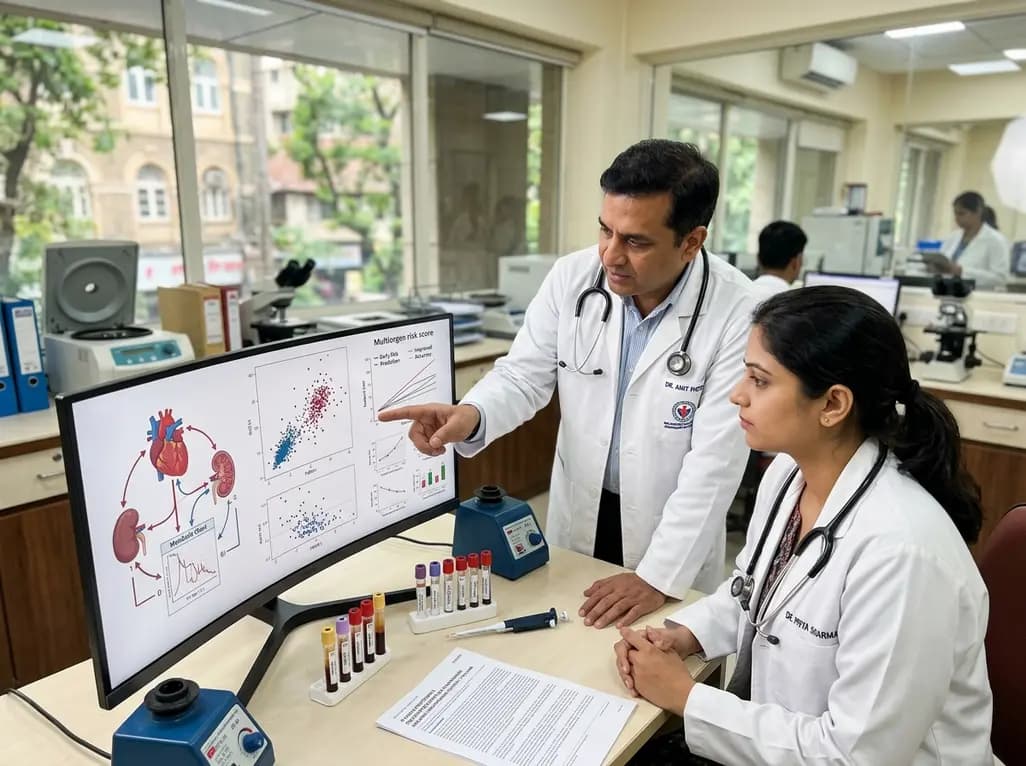
A large UK Biobank study reveals that plasma proteomic signatures capture preclinical organ damage and improve multiorgan risk prediction across early CKM syndrome stages 0 to 2 beyond traditional PREVENT clinical models.
Today
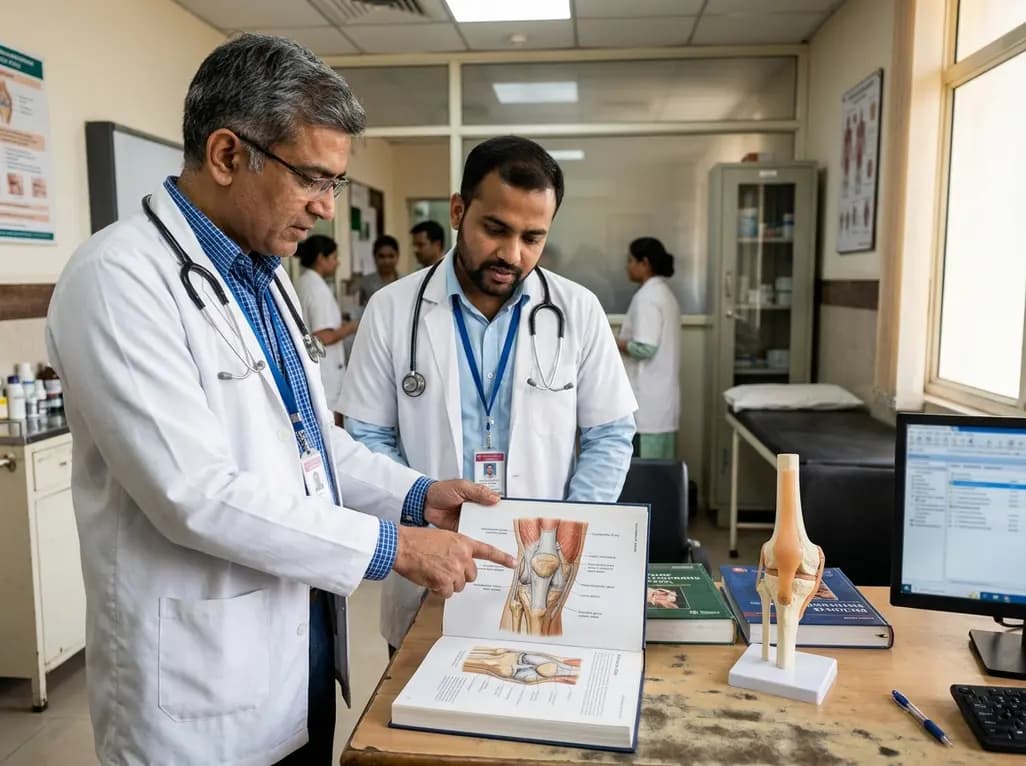
A narrative review investigates whether the articularis genus muscle functions as an independent anatomical entity or blends with the vastus intermedius. We evaluate its morphology, role in retracting the suprapatellar bursa, and direct clinical significance in anterior knee pain and arthroplasty.
Today

A Bayesian multilevel meta-analysis reveals that aerobic training combined with moderate carbohydrate restriction modestly lowers HbA1c in type 2 diabetes. However, sparse data and very low certainty leave incremental benefits over exercise or diet alone unproven, highlighting the need for individualized care.
Today
