.webp&w=384&q=75)

Loading, please wait...
Loading, please wait...

Multidrug-resistant Gram-negative pathogens present a significant challenge to modern medicine, especially in regions with high antibiotic resistance rates. These bacteria often utilize outer membrane vesicles (OMVs) as a primary defense mechanism. Recent research reveals that Antimicrobial Peptide Binding is significantly influenced by the structural organization of these vesicles. These OMVs act as decoys, sequestering antimicrobial peptides (AMPs) like polymyxins before they can reach the bacterial cell wall. Consequently, understanding the membrane dynamics of these vesicles is essential for developing more effective therapies.
Using advanced molecular dynamics simulations, researchers investigated the structural dynamics of OMV models. They discovered that lipopolysaccharides (LPS) and phospholipids (PLs) naturally separate within the membrane's outer leaflet. This separation creates distinct microenvironments, including LPS-rich and PL-rich regions. Specifically, the mismatched orientation between LPS and PL molecules results in geometric defects at their interfaces. These unique structural gaps facilitate Antimicrobial Peptide Binding by allowing peptides to penetrate more effectively than in uniform membrane regions.
Interestingly, the study found that polymyxins preferentially bind to these interface defects. The hydrophobic portions of the peptides insert into PL-rich regions, while their positively charged residues anchor to the exposed phosphate groups of lipid A. Furthermore, this biased localization at LPS-PL interfaces appears consistent across various AMP types, including LL-37 and Melittin. Therefore, these interfaces serve as high-affinity binding sites that enhance the decoy effect of OMVs. These mechanistic insights provide a roadmap for designing next-generation AMPs that can bypass OMV-mediated protection.
OMVs function as molecular decoys that bind and sequester antibiotics or antimicrobial peptides in the extracellular space. This reduces the effective concentration of the drug reaching the actual bacterial cell membrane.
LPS-PL interfaces are boundary regions where lipopolysaccharides and phospholipids meet. Due to structural mismatches, these areas often contain geometric defects that facilitate easier penetration for certain molecules.
Understanding these binding mechanisms allows researchers to design novel antimicrobial peptides. These new drugs could potentially evade the sequestration effect of vesicles, making them more potent against multidrug-resistant infections.
Disclaimer: This content is for informational and educational purposes only. It does not constitute medical advice or establish a doctor-patient relationship. Refer to the latest local and national guidelines for clinical practice.
References
Mu K et al. Lipopolysaccharide-Phospholipid Separation in the Outer Membrane Vesicle Model Promotes Preferential Binding of Antimicrobial Peptides at Lipid Interfaces. J Chem Inf Model. 2026 Apr 08. doi: 10.1021/acs.jcim.5c03173. PMID: 41952065.
Balhuizen MD, van Dijk A, Jansen JWA, van de Lest CHA, Veldhuizen EJA, Haagsman HP. Outer membrane vesicles protect Gram-negative bacteria against host defense peptides. mSphere. 2021;6(4):e00523-21. doi: 10.1128/mSphere.00523-21.
Jiang X, Yang K, Yuan B, et al. Molecular dynamics simulations informed by membrane lipidomics reveal the structure-interaction relationship of polymyxins with the lipid A-based outer membrane of Acinetobacter baumannii. J Antimicrob Chemother. 2020;75(12):3534-3543. doi: 10.1093/jac/dkaa376.
"
Read summarized clinical updates, watch expert medical content, and earn CME certifications right from your smartphone.
Open your smartphone camera to scan and install.





Research reveals how structural defects in bacterial outer membrane vesicles promote the binding of antimicrobial peptides at specific lipid interfaces....
6 months ago

Explore vital recurrent stroke predictors in lacunar stroke patients managed with intensive blood pressure lowering. This analysis examines trial findings from SPS3 to uncover residual vascular risks, metabolic factors, and targeted secondary prevention strategies for high-risk neurological patients.
Today

Odisha has established India's first state-level clinical protocol specifically tailored for pregnant women with sickle cell disease. Developed with NHM and UNICEF, the framework provides structured antenatal screening, crisis mitigation, standardized referral pathways, and specialized interdisciplinary care.
Today

India is advancing preventive healthcare by integrating genomics, artificial intelligence, and quantum technologies. With the SANGAM programme sequencing one million Indian genomes, clinicians can unlock personalized therapies, detect cardiometabolic risks early, and curb the burden of diabetes and heart disease.
Today
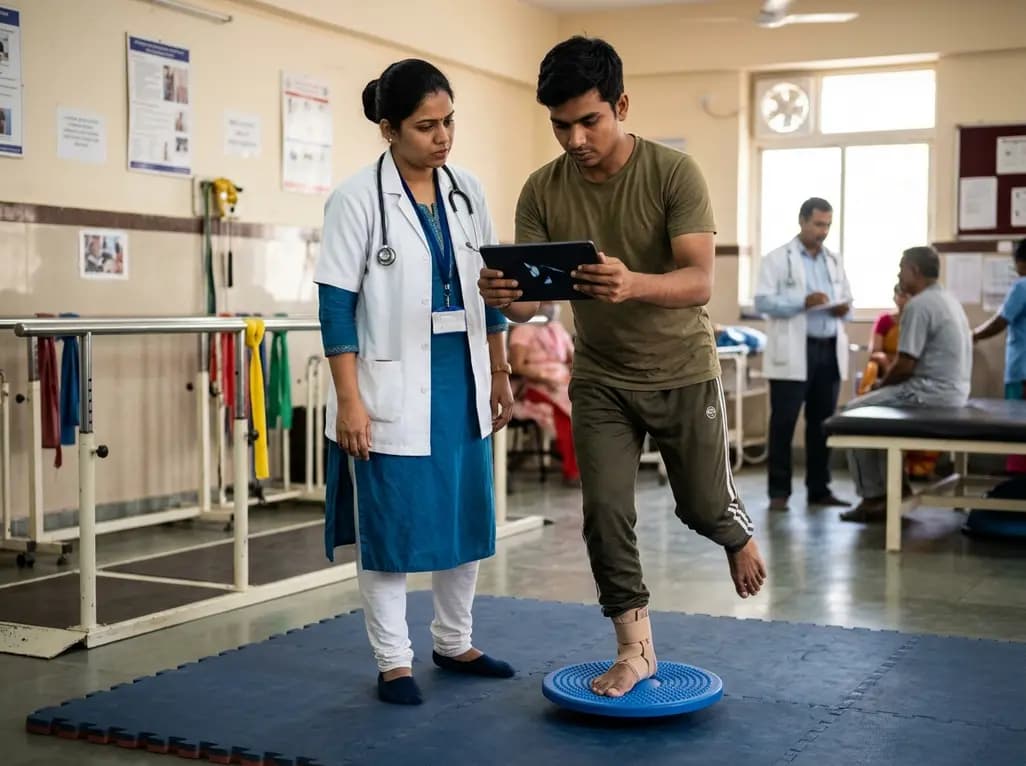
A randomized controlled trial demonstrates that an eight-week dual-task training intervention significantly improves static and dynamic postural control over standard balance exercises in individuals with chronic ankle instability, addressing critical neurocognitive deficits during athletic and daily activities.
Today

A retrospective cohort study of 7,716 ICU patients from the MIMIC-IV database demonstrates that Gradient Boosting Decision Trees significantly outperform traditional SOFA scores in predicting in-hospital mortality among patients with sepsis and diabetes, with SHAP analysis providing clinical interpretability.
Today
