.webp&w=384&q=75)

Loading, please wait...
Loading, please wait...

Modern oncology relies heavily on small molecule targeted therapeutics and cytotoxic agents to achieve optimal patient outcomes. Consequently, rigorous quality assurance and anticancer drug impurity profiling have become indispensable pillars of contemporary pharmaceutical manufacturing and clinical safety. Regulatory authorities mandate stringent control over synthetic intermediates, degradants, and trace mutagenic contaminants. Because oncology patients receive intensive treatment regimens, even minute chemical deviations can compromise therapeutic efficacy or heighten toxicity. Evaluating recent analytical advances provides clinicians and pharmaceutical scientists with essential insights into the stability, purity, and clinical integrity of essential targeted inhibitors and cytotoxic taxanes.
Small molecule tyrosine kinase inhibitors, commonly known as tinibs, display distinct chemical impurity profiles compared to plant-derived taxanes. For example, imatinib mesylate, dasatinib, and nilotinib frequently harbor process-related synthesis intermediates, oxidative degradation variants, and mutagenic nitrosamines. Additionally, alkyl sulfonate esters can emerge during salt formation when manufacturers utilize sulfonic acids in alcoholic media. In contrast, taxanes such as paclitaxel, docetaxel, and cabazitaxel present complex degradation pathways linked to their intricate diterpenoid structures. Taxane impurity profiles predominantly consist of epimerization products, 10-deacetylated derivatives, side-chain cleavage fragments, and starting plant precursors. Understanding these structural degradation pathways enables manufacturers to predict drug stability under diverse thermal and hydrolytic conditions. Furthermore, oncologists benefit from this chemical clarity because degradation directly influences product potency and adverse event profiles in routine practice.
High-performance liquid chromatography serves as the premier separation technique across pharmaceutical impurity investigations. In fact, reversed-phase high-performance liquid chromatography accounts for 63.6% of published analytical workflows for tinibs and taxanes. Furthermore, ultra-high-performance liquid chromatography represents another 16.4% of validated methods, offering superior chromatographic resolution and substantially shorter analysis run times. These standard chromatographic platforms achieve limits of detection ranging between 0.005 and 2.0 micrograms per milliliter. Therefore, liquid chromatography reliably quantifies routine oxidative degradants, hydrolytic derivatives, and diastereomeric impurities in both raw active substances and formulated dosage forms. Chromatographic separation ensures that closely related structural variants resolve cleanly without overlapping peaks. Consequently, quality control laboratories depend heavily on robust reversed-phase columns to maintain batch-to-batch consistency and therapeutic bioequivalence.
Standard spectrophotometric detection often lacks sufficient sensitivity for trace genotoxic compounds. Consequently, hyphenated mass spectrometry has emerged as an essential tool for toxicological impurity profiling. Liquid chromatography coupled with tandem mass spectrometry or high-resolution mass spectrometry comprises 9.1% of published methodologies. Notably, LC-MS/MS achieves remarkably low detection limits of 0.003 to 0.005 nanograms per milliliter for potent mutagenic contaminants in tinib formulations. Meanwhile, gas chromatography-mass spectrometry accounts for 5.5% of analytical methods, providing unparalleled performance for volatile process solvents and residual alkyl sulfonates. Headspace gas chromatography and supercritical fluid chromatography also resolve volatile organic impurities down to sub-microgram and low parts-per-billion concentrations. As a result, advanced mass spectrometric detection ensures that trace mutagens remain well below perilous biological thresholds before formulations reach hospital oncology wards.
International harmonization frameworks strictly govern permissible impurity thresholds in human pharmaceuticals. Specifically, the ICH Q3A(R2) and Q3B(R2) guidelines establish clear qualification, reporting, and identification limits for bulk substances and finished pharmaceutical formulations. However, mutagenic impurities require specialized oversight under the ICH M7(R2) regulatory guidance. This framework implements the threshold of toxicological concern concept, establishing acceptable daily intakes based on lifetime or short-term clinical exposures. Furthermore, the ICH S9 guideline permits tailored risk-benefit calculations for advanced cancer therapeutics, recognizing that acute antineoplastic efficacy outweighs negligible hypothetical carcinogenic risks. Manufacturers must also comply with ICH Q3C limits regarding residual organic solvents utilized during chemical crystallization. Integrating these regulatory frameworks allows multidisciplinary oncology teams to verify that commercial generic and branded agents uphold exceptional toxicological safety benchmarks.
Pharmaceutical analytical chemistry is advancing rapidly toward smarter and more sustainable monitoring methodologies. In particular, green analytical chemistry principles now drive the replacement of hazardous organic mobile phases with environmentally benign solvents. Additionally, process analytical technology enables real-time, inline monitoring of crystallization, synthesis, and degradation directly within manufacturing reactors. This continuous quality-by-design approach minimizes unexpected batch variations and prevents reactive intermediate accumulation. Moreover, artificial intelligence and predictive quantitative structure-activity relationship models now accurately forecast degradation pathways before empirical testing begins. These digital tools streamline chromatographic method development while identifying potential toxicophores in novel drug candidates. Ultimately, combining intelligent machine learning algorithms with automated spectroscopic instrumentation ensures that modern oncology drugs achieve superior purity, environmental sustainability, and clinical reliability.
Impurity profiling is critical because trace contaminants can impair therapeutic efficacy and induce severe clinical toxicity. Anticancer drugs like imatinib and paclitaxel possess narrow therapeutic indices. Therefore, unwanted synthesis intermediates, degradants, or reactive genotoxins can cause unpredictable adverse events in vulnerable oncology patients. Rigorous analytical profiling guarantees batch-to-batch consistency, chemical stability, and safe pharmacological administration across diverse clinical settings.
Laboratories utilize hyphenated mass spectrometry to identify trace genotoxic impurities at ultra-low concentrations. While standard HPLC quantifies macro-level degradation, LC-MS/MS achieves detection limits as low as 0.003 nanograms per milliliter for mutagenic nitrosamines. Additionally, gas chromatography coupled with mass spectrometry effectively separates volatile sulfonates and residual solvents. These highly sensitive techniques ensure trace impurities satisfy strict regulatory toxicological thresholds.
ICH guidelines establish tailored safety frameworks that balance toxicological risks against urgent clinical needs. For example, ICH M7(R2) defines acceptable mutagen intake using the threshold of toxicological concern. Meanwhile, ICH S9 allows flexible exposure limits for advanced malignancies, recognizing that life-saving antineoplastic therapy takes clinical precedence. Consequently, regulatory bodies apply dose-normalized toxicological calculations without compromising patient safety or delaying vital cancer therapies.
Disclaimer: This content is for informational and educational purposes only. It is not intended to provide medical advice or to be a substitute for professional clinical advice, diagnosis, or treatment. Patients should seek the advice of a qualified healthcare provider regarding a medical condition or treatment plan. Refer to the latest local and national guidelines for clinical practice.
References

Read summarized clinical updates, watch expert medical content, and earn CME certifications right from your smartphone.
Open your smartphone camera to scan and install.





A comprehensive review examines impurity profiling across tinibs and taxanes, evaluating 54 analytical studies. It highlights chromatographic methods, ultra-sensitive mass spectrometry for genotoxic species, and ICH regulatory standards ensuring oncology drug safety.
last month

A systematic review of 41 preclinical studies reveals that baicalin dampens systemic inflammation, inhibits NF-κB and NLRP3 pathways, and improves organ preservation in sepsis models. However, substantial study heterogeneity and a complete lack of human clinical trials highlight the need for further translational research.
Today
Discover the crucial distinctions between mesonephric and mesonephric-like proliferations of the female genital tract. Learn the key histomorphologic, immunohistochemical, and molecular differences essential for accurate diagnosis and clinical management.
Today
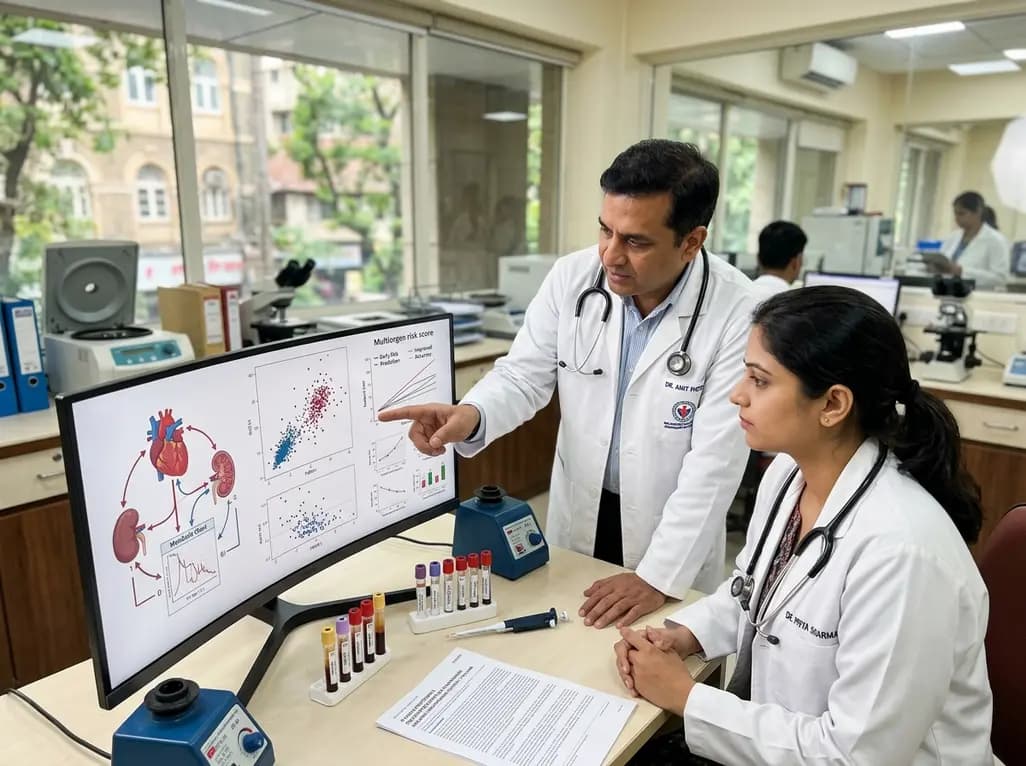
A large UK Biobank study reveals that plasma proteomic signatures capture preclinical organ damage and improve multiorgan risk prediction across early CKM syndrome stages 0 to 2 beyond traditional PREVENT clinical models.
Today
A narrative review investigates whether the articularis genus muscle functions as an independent anatomical entity or blends with the vastus intermedius. We evaluate its morphology, role in retracting the suprapatellar bursa, and direct clinical significance in anterior knee pain and arthroplasty.
Today

A Bayesian multilevel meta-analysis reveals that aerobic training combined with moderate carbohydrate restriction modestly lowers HbA1c in type 2 diabetes. However, sparse data and very low certainty leave incremental benefits over exercise or diet alone unproven, highlighting the need for individualized care.
Today
