.webp&w=384&q=75)

Loading, please wait...
Loading, please wait...
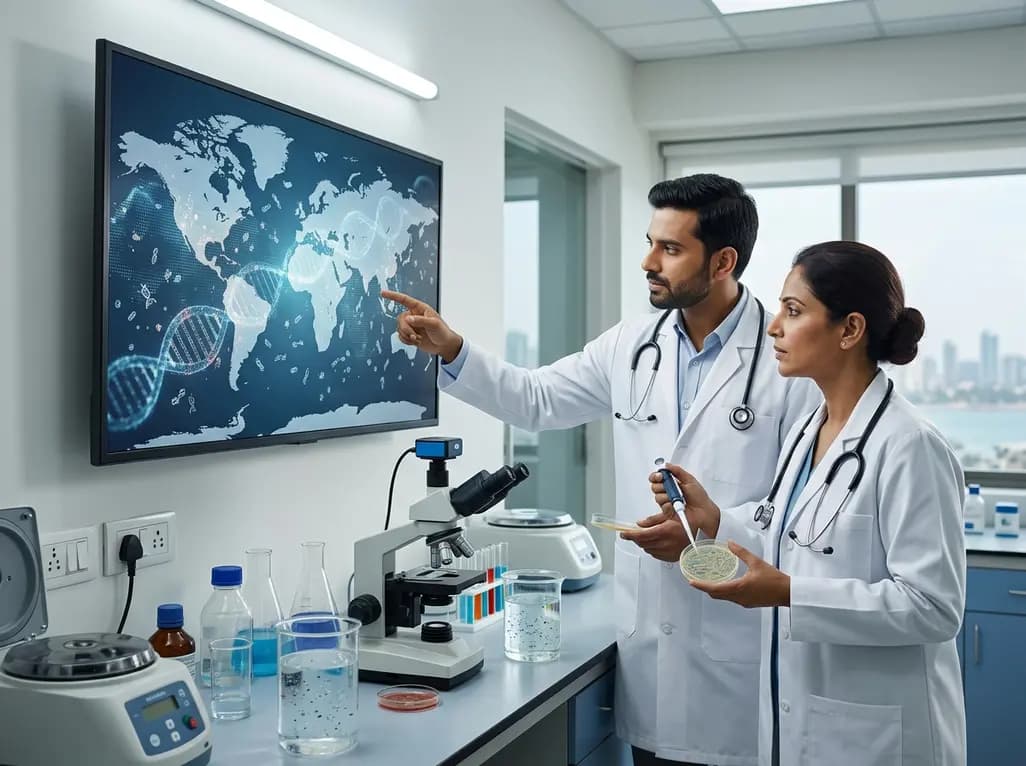
Currently, an Italian-led scientific initiative has uncovered a significant environmental concern in global waters. Specifically, researchers detected antibiotic resistance genes across multiple major ocean basins, including extremely remote areas. Indeed, this extensive study, known as the SeA Care project, analyzed seawater samples from worldwide locations. Consequently, the findings suggest that oceans now serve as a global reservoir for land-based pollution. As a result, urban runoff and human activities carry these genetic remnants far beyond their original sources.
Indeed, the research team found these genetic markers in the Mediterranean, Atlantic, and Arctic oceans. However, they observed much higher concentrations of the contaminants near busy shipping routes and densely populated coastlines. Additionally, the researchers warn that this contamination could facilitate the spread of drug resistance among isolated marine and coastal communities. Furthermore, they detected other hazardous pollutants during their extensive search. For instance, the samples contained microplastics, toxic PFAS forever chemicals, and traces of SARS-CoV-2 genetic material. Therefore, this widespread distribution demonstrates how deeply human waste impacts even the most remote marine ecosystems.
To address these threats, the SeA Care project connects environmental health directly with human health. Specifically, this initiative brings together the Italian Navy, Italy's National Health Institute, and international research partners. Together, they aim to build a robust global ocean monitoring network. Historically, monitoring oceans has been extremely expensive and logistically difficult. However, this project utilizes existing naval routes and routine scientific missions to collect samples. Consequently, this collaborative strategy dramatically reduces operational costs and minimizes additional environmental impacts. In fact, scientists gathered over 4,000 samples from 140 global sites during the first three years of the project. Ultimately, these findings prove that ocean health is deeply linked to our own survival.
Q1: What did the SeA Care project discover in global oceans?
The project detected antibiotic resistance genes and microplastics across multiple ocean basins. Additionally, researchers found toxic PFAS chemicals and SARS-CoV-2 genetic material even in remote Arctic waters.
Q2: Why are antibiotic resistance genes concentrated near coastlines?
These genes concentrate near busy shipping routes and populated coastlines. This happens because oceans act as reservoirs for urban waste, agricultural runoff, and clinical discharge.
Q3: How does ocean health impact human health under the One Health framework?
Pollutants and resistance genes spread through marine food chains and water systems. Consequently, this contamination can reach remote human populations and worsen the global drug-resistance crisis.
Disclaimer: This content is for informational and educational purposes only. It does not constitute medical advice or replace professional judgment. Refer to the latest local and national guidelines for clinical practice.
References

Read summarized clinical updates, watch expert medical content, and earn CME certifications right from your smartphone.
Open your smartphone camera to scan and install.





The Italian-led SeA Care project detects drug-resistant genetic markers, microplastics, and forever chemicals in remote global ocean waters....
4 months ago

A retrospective cohort study of 7,716 ICU patients from the MIMIC-IV database demonstrates that Gradient Boosting Decision Trees significantly outperform traditional SOFA scores in predicting in-hospital mortality among patients with sepsis and diabetes, with SHAP analysis providing clinical interpretability.
Today

Occult maternal malignancy accounts for 3.82% of persistent unreportable NIPT results with genomic noise. Multiple chromosomal aberrations, notably on chromosome 18, warrant thorough oncological evaluation and whole-body MRI to ensure timely maternal diagnosis while preserving fetal care.
Today

This article reviews the forensic and clinical complexities of acute myocarditis arising on left ventricular hypertrophy in children, highlighting early diagnostic red flags and multidisciplinary postmortem autopsy protocols.
Today

This comparative study evaluates posterior labral tears with and without glenohumeral instability, highlighting distinct demographic patterns, MRI underestimation in stable shoulders, and successful arthroscopic repair outcomes.
Yesterday

A clinical study demonstrates that early intervention with tocilizumab, either as monotherapy or bridged with corticosteroids, achieves significant proptosis reduction and resolves active inflammation in treatment-naive thyroid eye disease.
Yesterday
