.webp&w=384&q=75)

Loading, please wait...
Loading, please wait...

Surgeons typically expect the ulnar nerve to follow a predictable path within the condylar groove. However, encountering an anomalous ulnar nerve during cubital tunnel decompression can present unique challenges. This rare anatomical deviation places the nerve in an anterior position, outside the standard ulnar groove. Consequently, clinicians must recognize these variations early to prevent accidental surgical injury during routine procedures.
Recently, a 74-year-old male presented with advanced ulnar neuropathy, characterized by progressive weakness and a claw hand deformity. During the surgical intervention, the medical team discovered the ulnar nerve was not in its expected location between the olecranon and the medial epicondyle. Instead, the nerve sat medially to the epicondyle on top of the pronator retinaculum. Furthermore, the fascia of the pronator mass had entrapped the nerve in this transposed position. Interestingly, the nerve remained stable in this anterior path without subluxating into the groove during elbow movement.
Managing such cases requires immediate surgical adaptation to ensure patient safety. Because the nerve deviates from its expected course, surgeons may need to extend their incision for better visualization. Moreover, this case emphasizes the value of detailed preoperative imaging. Utilizing high-resolution ultrasound or MRI can help clinicians delineate aberrant nerve trajectories before the first incision. Therefore, surgeons should maintain a high index of suspicion when the ulnar groove appears empty. Additionally, documented reports of stable, anteriorly positioned ulnar nerves remain scarce in the literature, making this finding particularly noteworthy for surgical education.
The ulnar nerve usually runs within the condylar groove, located between the olecranon and the medial epicondyle at the elbow.
Recognizing an anomalous position is critical because an unexpected nerve location significantly increases the risk of accidental transection or injury during standard surgical approaches.
Surgeons can prepare by considering preoperative imaging like high-resolution ultrasound and being ready to extend the surgical incision for clear anatomical identification.
Disclaimer: This content is for informational and educational purposes only. It does not constitute professional medical advice, diagnosis, or treatment. Always seek the advice of your physician or other qualified healthcare provider with any questions you may have regarding a medical condition. Refer to the latest local and national guidelines for clinical practice.
References
Bandy EM et al. Surgical implications of an anteriorly positioned ulnar nerve of unknown etiology at the elbow: illustrative case. J Neurosurg Case Lessons. 2026 May 18. doi: undefined. PMID: 42150202.
Satteson ES, Li Z. Anteriorly positioned ulnar nerve at the elbow: a rare anatomical event: case report. J Hand Surg Am. 2015 May;40(5):984-6. doi: 10.1016/j.jhsa.2015.02.006.
American Academy of Orthopaedic Surgeons. Cubital Tunnel Release. OrthoInfo. Available at: https://orthoinfo.aaos.org/

Read summarized clinical updates, watch expert medical content, and earn CME certifications right from your smartphone.
Open your smartphone camera to scan and install.





Explore a rare case of an anteriorly positioned ulnar nerve found during surgery, highlighting the need for careful anatomical identification and imaging....
5 months ago
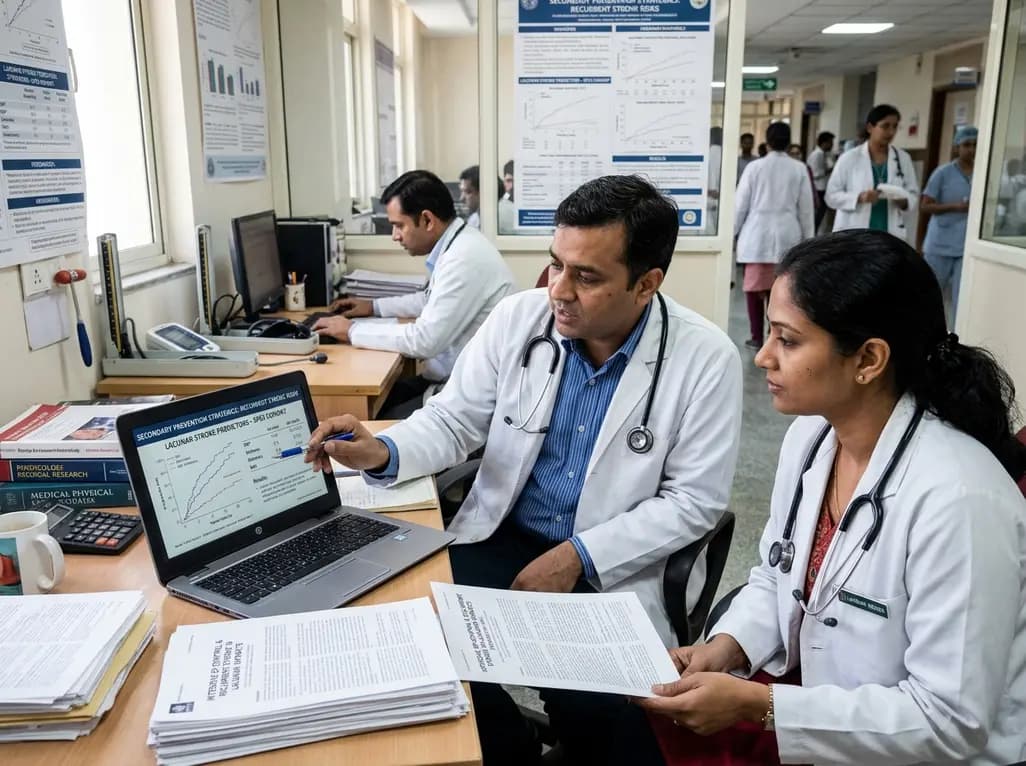
Explore vital recurrent stroke predictors in lacunar stroke patients managed with intensive blood pressure lowering. This analysis examines trial findings from SPS3 to uncover residual vascular risks, metabolic factors, and targeted secondary prevention strategies for high-risk neurological patients.
Today

A comprehensive scoping review synthesises evidence linking prenatal maternal mental health to long-term offspring neurodevelopment, evaluating neuroendocrine, inflammatory, and epigenetic pathways while highlighting clinical screening and future research priorities.
Today

The Directorate General of Health Services directs Indian states to halt the hazardous reuse and reprocessing of single-use medical devices. Discover regulatory implications under the Drugs and Cosmetics Act, critical infection risks, legal liabilities, and operational changes required across clinical specialties.
Today
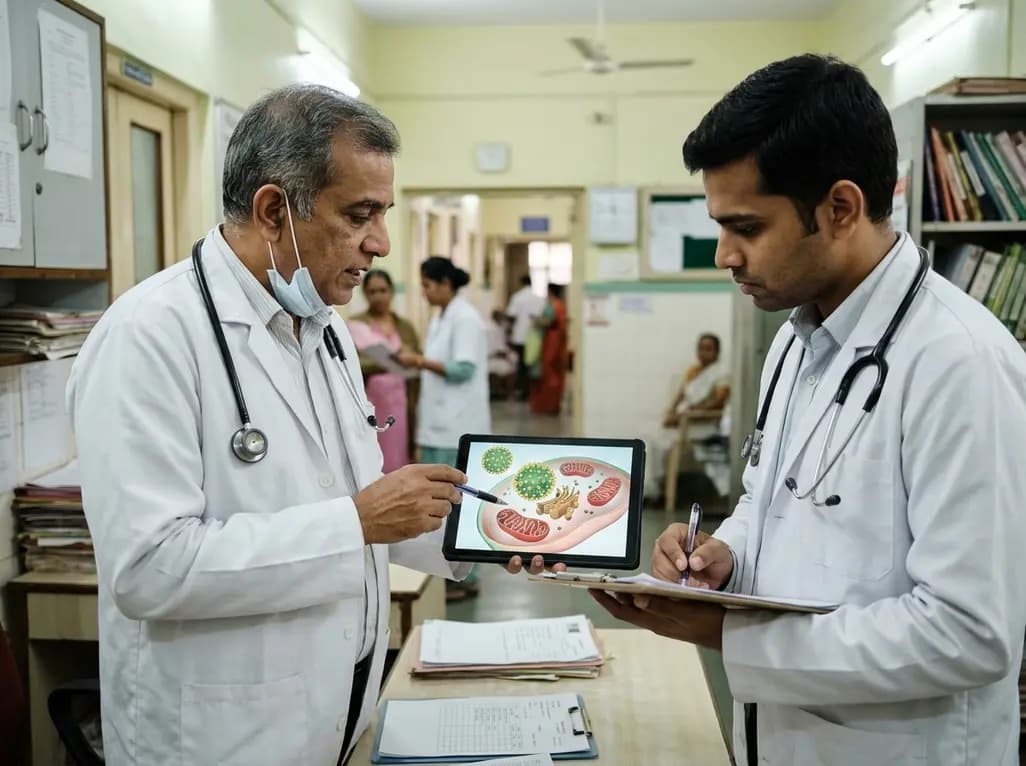
Mitochondria-targeted nanoparticles self-assembled from EGCG and L-glutamic acid effectively restore mitochondrial homeostasis, suppress synovial inflammation, and attenuate chondrocyte senescence in osteoarthritis, offering a promising disease-modifying nanotherapy.
Today

India is advancing preventive healthcare by integrating genomics, artificial intelligence, and quantum technologies. With the SANGAM programme sequencing one million Indian genomes, clinicians can unlock personalized therapies, detect cardiometabolic risks early, and curb the burden of diabetes and heart disease.
Today
