.webp&w=384&q=75)

Loading, please wait...
Loading, please wait...
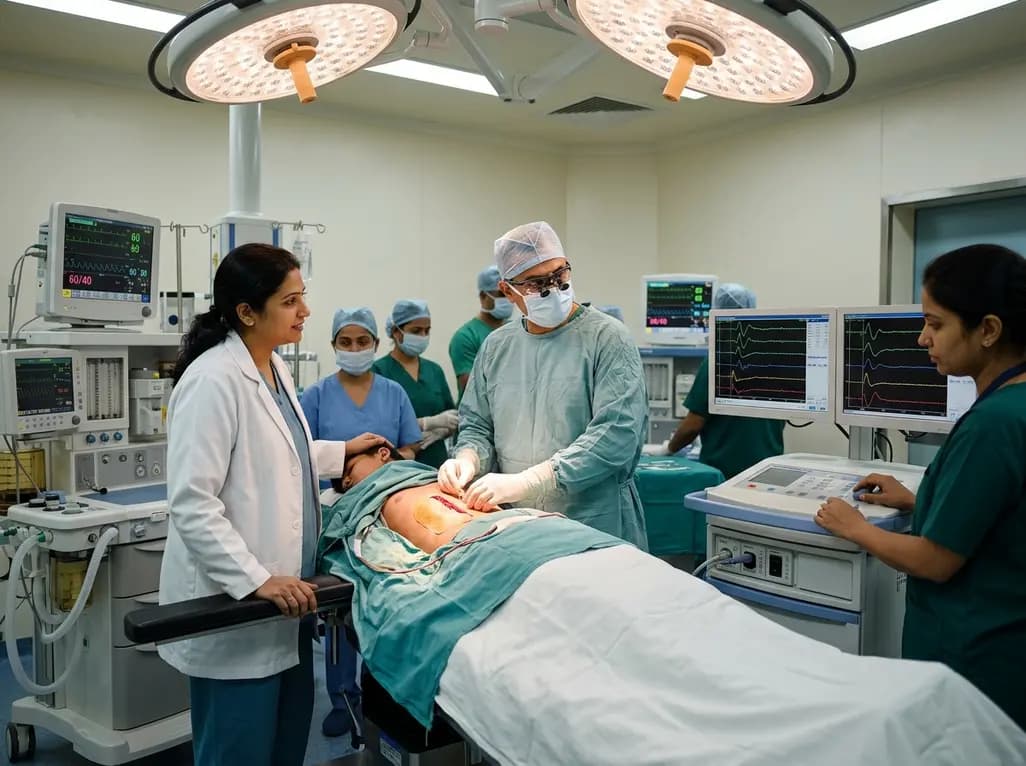
Maintaining the integrity of the spinal cord during corrective surgery is a primary concern for surgical teams. Clinicians frequently use transcranial motor evoked potentials (TcMEP) to monitor motor pathways in real-time. However, various factors, including the depth of anesthesia, can significantly influence these signals. In pediatric and youth populations, data regarding these anesthetic effects have remained limited until recently. The SCOL Study specifically aimed to clarify how deeper levels of sedation impact the reproducibility and interpretation of these critical neurophysiological signals.
Researchers conducted a prospective study involving 150 youth patients undergoing scoliosis surgery. They administered total intravenous anesthesia (TIVA) using a combination of propofol and remifentanil. Initially, the team maintained the depth of anesthesia at a bispectral index (BIS) level of 60. Subsequently, they deepened the level to a BIS of 40 before the skin incision. At both stages, the surgical team recorded and interpreted the TcMEP signals to determine if the deeper state interfered with their clinical assessment.
The results demonstrated that surgeons successfully recorded and interpreted TcMEP in every patient at both BIS levels. Specifically, deepening the anesthesia to BIS 40 led to a statistically significant decrease in amplitudes (78.7% of baseline) and an increase in latencies (103.5% of baseline). Despite these quantitative changes, the surgical team did not experience any loss of signal or difficulty in interpretation. Therefore, the study suggests that a deeper anesthetic state does not compromise the utility of surgeon-directed neuromonitoring.
This evidence provides reassurance for anesthesiologists and orthopedic surgeons working with youth patients. Many practitioners worry that deeper hypnosis might suppress motor signals, leading to false-positive results. However, this study shows that even at a BIS of 40, the reproducibility of TcMEP remains high. Consequently, anesthesia providers can maintain a stable, deep hypnotic state without fearing they will mask potential neurological injury alerts.
Deeper anesthesia generally reduces the amplitude and increases the latency of TcMEP signals. However, as shown in the SCOL study, these changes usually do not prevent successful signal interpretation when using TIVA.
While the standard range is often 40 to 60, this study demonstrates that even at the deeper end (BIS 40), TcMEP monitoring remains reliable and reproducible for surgeon-directed assessments.
TIVA, typically using propofol and remifentanil, is preferred because volatile anesthetic agents significantly suppress motor evoked potentials even at low concentrations, making monitoring difficult.
Disclaimer: This content is for informational and educational purposes only. It does not constitute professional medical advice, diagnosis, or treatment. Always seek the advice of your physician or other qualified healthcare provider with any questions you may have regarding a medical condition. Refer to the latest local and national guidelines for clinical practice.
References
Hudec J et al. The Influence of Depth of Anesthesia on Motor Evoked Potentials Monitoring During Spinal Surgery in Youth: A Single-Center Prospective Study (SCOL Study). Anesth Analg. 2026 Jun 12. doi: 10.1213/ANE.0000000000008158. PMID: 42284616.
Ohtaki S, et al. The influence of depth of anesthesia on motor evoked potential response during awake craniotomy. J Neurosurg. 2016 Mar 4;125(4):815-821. doi: 10.3171/2015.11.JNS151291.
Gadella MC, et al. The Effects of Depth of Anesthesia on Muscle-Recorded Motor Evoked Potentials: A Prospective Observational Study. Anesth Analg. 2025;140(1):145-155. doi: 10.1213/ANE.0000000000007123.

Read summarized clinical updates, watch expert medical content, and earn CME certifications right from your smartphone.
Open your smartphone camera to scan and install.





A prospective study (SCOL Study) evaluates how different levels of anesthesia depth (BIS 60 vs 40) impact motor evoked potentials (TcMEP) in youths. Findings suggest that while deeper anesthesia alters signal parameters, it does not hinder successful surgeon-directed interpretation.
4 months ago

Novel diimide and hydrazone scaffolds, particularly compound #C4, synergistically reactivate latent HIV-1 when combined with JQ1 or PKC activators. Demonstrating donor-matched proviral transcription ex vivo and non-canonical signaling, these findings advance shock and kill strategies toward reservoir eradication.
Today

A comparative cohort study evaluates vNOTES vs TLH hysterectomy for benign conditions, demonstrating shorter operative duration, faster return to daily activities, and equivalent female sexual function scores without increased dyspareunia.
Today

Review how tailored exercise programs benefit frail older patients with heart failure. Explore pathophysiological mechanisms, individualized training prescriptions, and strategies to overcome adherence barriers in clinical practice.
Yesterday

This comparative study evaluates posterior labral tears with and without glenohumeral instability, highlighting distinct demographic patterns, MRI underestimation in stable shoulders, and successful arthroscopic repair outcomes.
Yesterday

A clinical study demonstrates that early intervention with tocilizumab, either as monotherapy or bridged with corticosteroids, achieves significant proptosis reduction and resolves active inflammation in treatment-naive thyroid eye disease.
Today
