.webp&w=384&q=75)

Loading, please wait...
Loading, please wait...

The anaerobic digester resistome represents an essential component of modern environmental health surveillance. Antimicrobial resistance remains an escalating One Health threat that connects clinical facilities, animal agriculture, and environmental reservoirs. Recently, researchers applied high-throughput shotgun metagenomic sequencing to decipher resistance profiles within municipal and industrial treatment environments. Specifically, the study evaluated four publicly available datasets from the NCBI Sequence Read Archive, designated as M2, M3, M12, and M17. Sequencing generated via the Illumina HiSeq 2000 platform underwent rigorous quality control, assembly, and functional annotation. Consequently, investigators identified 1082 resistance-associated genetic annotations across the evaluated datasets. Significant numerical variation emerged among individual reactors. For instance, digester M2 harboured the highest burden with 348 annotations. Meanwhile, digester M12 yielded 276 annotations, followed by M17 with 259 annotations, and M3 with 205 annotations. Because anaerobic digesters process municipal sludges and agricultural waste, they concentrate diverse biological matrices. Therefore, microbial communities in these systems encounter continuous biochemical selection. Clinicians and environmental scientists must view these facilities as critical surveillance checkpoints. In addition, comprehensive functional profiling offers clear insights into environmental genetic pools.
Functional profiling revealed genetic determinants spanning numerous therapeutic classes vital for human and veterinary medicine. Specifically, investigators detected annotations conferring resistance against aminoglycosides, fluoroquinolones, and beta-lactams. Furthermore, the datasets contained markers linked to tetracyclines, glycopeptides, macrolides, and sulfonamides. This broad distribution indicates that treatment matrices collect multidrug-resistant determinants from varied sources. Because clinician prescribers rely heavily on beta-lactams and macrolides for routine bacterial infections, environmental accumulation causes significant alarm. Similarly, fluoroquinolones and aminoglycosides serve as critical reserve agents for refractory gram-negative pathogens in hospital environments. When resistance annotations for these reserve drugs accumulate in municipal sludge, the environmental pool of resistance elements expands substantially. However, metagenomic detection alone does not confirm phenotypic resistance or active microbial transcription. Instead, it indicates the baseline abundance of homologous DNA sequences across circulating genomes. In addition, variations in substrate composition and operational retention time heavily influence the persistence of these determinants. Digesters receiving untreated runoff or hospital effluents consistently show higher densities of clinically relevant annotations. Therefore, environmental surveillance must integrate taxonomic identification to pinpoint specific reservoir hosts.
A pivotal finding of this metagenomic investigation involves distinguishing functional housekeeping genes from acquired mobile resistance genes. Metagenomic classifiers frequently catalog essential housekeeping loci as resistance markers due to shared sequence homology in reference databases. Specifically, the analysis identified high baseline frequencies of rpoB, rpoC, gyrA, gyrB, EF-Tu, EF-G, Ddl, and KasA. Clinicians know that rpoB mutations confer rifampicin resistance, while gyrA alterations mediate fluoroquinolone insensitivity. Furthermore, Ddl represents the target enzyme for D-cycloserine, and KasA functions within the mycobacterial fatty acid synthesis cascade. However, in non-pathogenic environmental anaerobes, these loci operate primarily as essential metabolic machinery rather than acquired determinants. Standard bioinformatic matching cannot determine whether a housekeeping locus carries specific point mutations conferring clinical resistance. Consequently, automated annotation pipelines risk overestimating the true actionable resistome without variant-level inspection. Thus, researchers emphasize that mutation-level resolution is essential before declaring environmental samples hazardous. Moreover, separating intrinsic physiological genes from mobilizable plasmids avoids unwarranted alarm in public health epidemiology. Healthcare professionals must recognize that bioinformatic annotation requires careful clinical and microbiological interpretation.
To better understand genomic organization, researchers conducted exploratory co-abundance analyses across the identified loci. Notably, the study revealed robust statistical correlations between functionally paired genes. For instance, investigators documented strong co-abundance relationships between rpoB and rpoC, as well as between gyrA and gyrB. Because these paired enzymes form core structural components of RNA polymerase and DNA gyrase complexes, they naturally occur in stoichiometric equivalence within bacterial genomes. Therefore, their concurrent abundance reflects microbial cell density rather than concerted antibiotic selection. In contrast, genuine environmental dissemination often involves mobile genetic elements that capture diverse resistance determinants simultaneously. Metagenomic studies must therefore evaluate whether putative resistance genes reside on transposons, integrons, or conjugative plasmids. When resistance elements link physically to mobile sequences, the threat of horizontal gene transfer rises sharply. Furthermore, bacteriophages and insertion sequences accelerate genetic exchange between environmental saprophytes and opportunistic human pathogens. Consequently, future research must incorporate long-read sequencing technologies to resolve flanking genomic architecture. Understanding these physical connections clarifies whether resistance genes can easily cross taxonomic boundaries into clinical settings.
The findings provide critical insights for the broader One Health framework, which links environmental, animal, and human wellness. Anaerobic digestion represents a worldwide biotechnology for waste stabilization and renewable biogas production. Furthermore, agricultural industries utilize the treated effluent, termed digestate, as organic soil fertilizer. If digestates retain transferable resistance determinants, land application could seed antimicrobial resistance genes into topsoil and agricultural produce. Consequently, grazing livestock and field workers might face direct exposure to enriched environmental resistomes. Moreover, seasonal surface runoff can transport these genetic elements into groundwater aquifers and municipal drinking supplies. However, efficient anaerobic digestion can also significantly diminish sensitive bacterial populations through competitive exclusion and volatile fatty acid toxicity. Therefore, optimizing digester operating parameters, such as thermophilic temperatures and retention durations, may actively suppress pathogen survival. Environmental scientists and medical microbiologists must collaborate to establish clear microbiological safety thresholds for agricultural digestate reuse. In addition, regulatory frameworks should enforce standardized surveillance protocols before commercial soil distribution.
In developing countries like India, environmental antimicrobial resistance presents severe public health challenges. High rates of infectious diseases, widespread antibiotic consumption, and extensive agricultural manure utilization create ideal conditions for gene dissemination. Furthermore, the Indian National Action Plan on Antimicrobial Resistance emphasizes environmental surveillance as a key strategic priority. Municipal sewage treatment facilities and community biogas installations process massive volumes of human and animal waste across urban and rural landscapes. If anaerobic systems fail to eliminate resistant microbes, downstream environments become secondary vectors for multidrug-resistant hospital pathogens. For instance, Extended-Spectrum Beta-Lactamase producers and carbapenem-resistant Enterobacterales frequently enter wastewater networks. Clinicians treating complicated urinary tract infections, sepsis, and abdominal infections frequently confront limited therapeutic options due to these community-acquired strains. Therefore, understanding whether anaerobic digestion neutralizes or preserves these resistance genes directly impacts community healthcare outcomes. Indian public health agencies must invest in host-resolved metagenomics to track high-risk transmission pathways between treatment plants and human populations. Consequently, proactive environmental stewardship will bolster clinical infection control strategies nationwide.
Environmental resistome monitoring is vital because environmental reservoirs often serve as the evolutionary cradle for novel resistance mechanisms. Pathogenic bacteria can acquire mobile resistance genes from environmental microbes through horizontal gene transfer. Consequently, monitoring wastewater systems and anaerobic digesters allows public health authorities to detect emerging resistance patterns early. This proactive surveillance helps clinicians anticipate shifting antimicrobial susceptibility trends and design more effective empirical treatment protocols.
Housekeeping mutations occur within essential metabolic genes, such as rpoB or gyrA, altering target structures to prevent antibiotic binding. These physiological alterations remain non-transferable and are passed only vertically to daughter cells. In contrast, mobile resistance genes reside on transmissible plasmids, integrons, or transposons. Consequently, mobile determinants can transfer horizontally across unrelated bacterial genera, creating rapid multidrug resistance outbreaks in hospital and community environments.
Anaerobic digesters treat organic livestock waste and municipal sludge before land application, acting as biological barriers against biological contamination. When operated under optimal conditions, such as thermophilic temperatures, digesters significantly reduce bacterial pathogens and degrade residual pharmaceutical compounds. However, if digester operating conditions fail to neutralize mobile genetic elements, applying digestate to agricultural soils risks spreading resistance determinants into food supply chains and surrounding groundwater ecosystems.
Disclaimer: This content is for informational and educational purposes only... Refer to the latest local and national guidelines for clinical practice.
References

Read summarized clinical updates, watch expert medical content, and earn CME certifications right from your smartphone.
Open your smartphone camera to scan and install.





A shotgun metagenomic analysis of anaerobic digesters identified 1082 resistance-associated annotations across major antibiotic classes. The study highlights the need to differentiate essential housekeeping loci from acquired mobile genes to accurately evaluate environmental antimicrobial resistance risks.
Today
A systematic review of 41 preclinical studies reveals that baicalin dampens systemic inflammation, inhibits NF-κB and NLRP3 pathways, and improves organ preservation in sepsis models. However, substantial study heterogeneity and a complete lack of human clinical trials highlight the need for further translational research.
Today
Discover the crucial distinctions between mesonephric and mesonephric-like proliferations of the female genital tract. Learn the key histomorphologic, immunohistochemical, and molecular differences essential for accurate diagnosis and clinical management.
Today
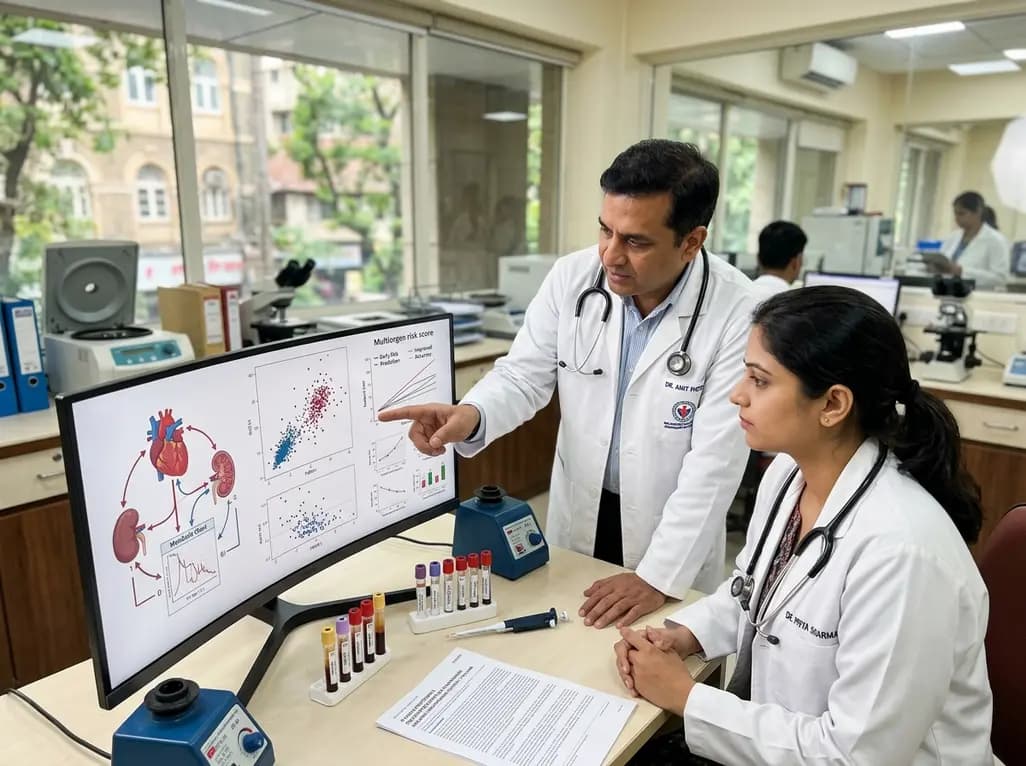
A large UK Biobank study reveals that plasma proteomic signatures capture preclinical organ damage and improve multiorgan risk prediction across early CKM syndrome stages 0 to 2 beyond traditional PREVENT clinical models.
Today
A narrative review investigates whether the articularis genus muscle functions as an independent anatomical entity or blends with the vastus intermedius. We evaluate its morphology, role in retracting the suprapatellar bursa, and direct clinical significance in anterior knee pain and arthroplasty.
Today

A Bayesian multilevel meta-analysis reveals that aerobic training combined with moderate carbohydrate restriction modestly lowers HbA1c in type 2 diabetes. However, sparse data and very low certainty leave incremental benefits over exercise or diet alone unproven, highlighting the need for individualized care.
Today
