.webp&w=384&q=75)

Loading, please wait...
Loading, please wait...
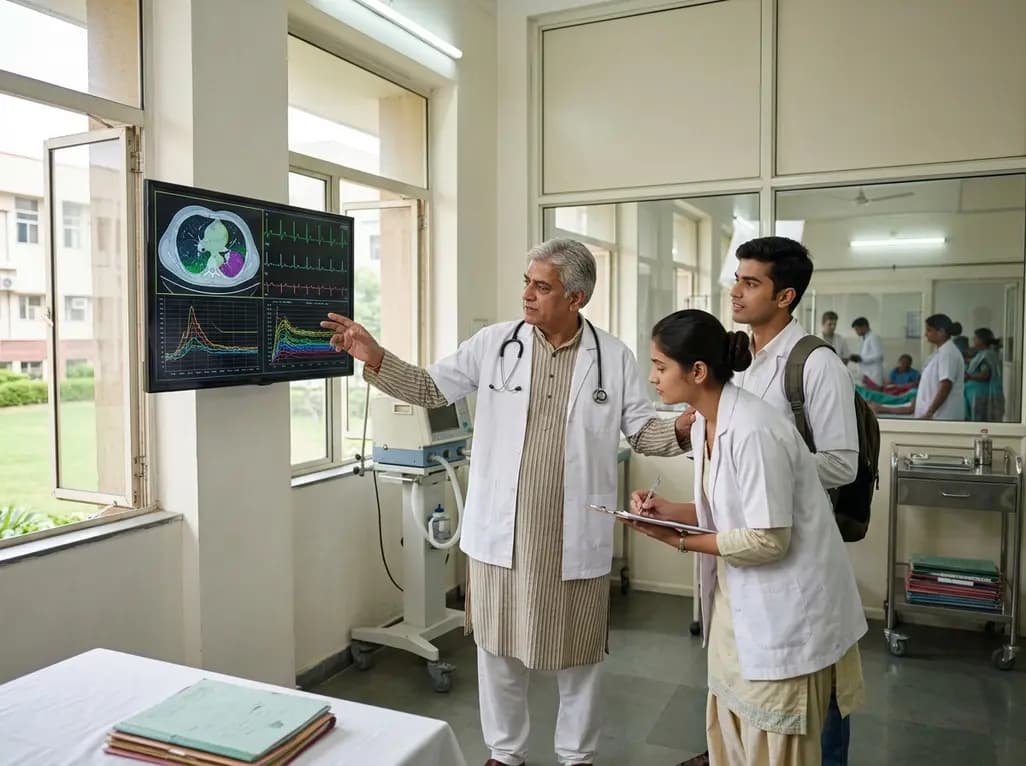
Regulatory agencies demand exhaustive safety profiles for every new therapeutic candidate before human trials. Specifically, developers must identify any potential for DNA damage or mutagenicity early in the pipeline. Traditionally, the Ames assay serves as the gold standard for detecting these risks. However, physical testing is both time-consuming and expensive. Consequently, many developers delay these studies until a candidate is nearly ready for regulatory submission. This timing creates a significant bottleneck. Late-stage failures can jeopardize millions of dollars and years of work. Therefore, the pharmaceutical industry increasingly relies on AI in toxicology assessments to streamline this process. AmesNet represents a major leap forward in this field. It uses advanced deep learning to predict mutagenic outcomes with unprecedented precision. By providing high-confidence results earlier, AmesNet allows for a proactive approach to safety. Researchers can now triage compounds based on predicted risk. This shift reduces the likelihood of catastrophic clinical failures. Furthermore, it ensures that only the safest molecules progress toward patient care. The model specifically targets the weaknesses of previous computational tools to provide a more reliable filtering mechanism.
The integration of AI in toxicology assessments has become a priority for global health authorities. For example, the FDA has launched dedicated programs to support machine learning in drug safety. These initiatives aim to replace or supplement animal testing with human-relevant computational methods. Modern guidelines now explicitly support the use of in silico models for genotoxicity. Despite this support, existing models have historically struggled with accuracy. Specifically, their performance often drops when evaluating novel molecules that differ from their training data. This out-of-domain sensitivity gap is a major concern for developers. If a model cannot recognize a new chemical structure as mutagenic, a toxic drug might enter trials. Therefore, improving sensitivity in novel chemical spaces is essential for regulatory confidence. AmesNet addresses this exact challenge by leveraging a more flexible architecture. It does not just look at molecular structure in isolation. Instead, it considers the specific experimental context used in laboratory settings. This comprehensive approach aligns with the newest regulatory expectations for robust and transparent AI tools. Consequently, AmesNet bridges the gap between theoretical modeling and practical safety requirements.
Sensitivity is perhaps the most critical metric in mutagenicity prediction. In this context, sensitivity represents the ability to correctly identify mutagenic compounds. A false negative is the most dangerous error because it permits a hazard to go unnoticed. Unfortunately, many current models suffer a sharp decline in sensitivity during out-of-domain testing. For instance, some previous challenges showed an average participant sensitivity of only 0.46. This means more than half of the mutagenic compounds were missed. Some attempts to fix this have resulted in a loss of overall accuracy. Developers often find themselves choosing between high sensitivity and balanced performance. However, AmesNet avoids this trade-off through its unique task-conditioned design. In comparative benchmarks, it reached a sensitivity of 0.72 alongside a balanced accuracy of 0.81. This represents a significant improvement over models like DeepAmes. Because it maintains high accuracy while boosting detection rates, AmesNet offers a safer alternative for screening. It recovers difficult-to-detect compounds that other systems typically miss. Therefore, it provides a much stronger safety net for researchers working with innovative chemistries. This reliability is vital for ensuring long-term drug viability.
The technical innovation behind AmesNet lies in its dual-branch architecture. Most traditional models use a single-stream molecular encoder. This approach often ignores the nuances of the Ames assay itself. For example, the physical test involves different bacterial strains and metabolic activation levels. These variables significantly impact whether a compound appears mutagenic. AmesNet utilizes a dedicated channel to condition the model on this specific context. One branch processes the molecular structure, while the second branch integrates assay conditions. Furthermore, the model uses task-conditioned learning to adjust its internal parameters based on these inputs. This allows the system to simulate how a molecule would behave under different laboratory conditions. Consequently, the model generalizes much better to new chemical spaces. It understands that the same molecule might show different results across various strains. This level of detail was previously unavailable in standard QSAR models. By capturing these assay-dependent features, AmesNet achieves superior discrimination. Thus, it provides a more authentic digital twin of the physical laboratory environment. This precision is what allows it to outperform established benchmarks consistently.
The current drug development timeline is often hindered by late-stage safety screenings. These bottlenecks occur because comprehensive genotoxicity data is usually collected late. If a mutagenic signal appears at that stage, the entire project may be canceled. AmesNet offers a way to move this triage process to the very beginning of discovery. Because it is a computational tool, it can screen thousands of candidates in seconds. This allows researchers to prioritize molecules with the cleanest safety profiles. Moreover, the high confidence provided by AmesNet reduces the need for redundant physical testing. This leads to a more efficient use of resources and capital. Developers can invest more heavily in candidates that are statistically unlikely to fail safety audits. Similarly, it helps in identifying structural alerts that can be modified to reduce toxicity. This iterative design process is much faster when powered by accurate AI. Therefore, AmesNet acts as both a filter and a design aid. It transforms safety from a final hurdle into a foundational element of the development process. Ultimately, this speeds up the delivery of safe medicines to the market.
The success of AmesNet signals a broader shift toward context-aware artificial intelligence. In the future, we can expect more models to incorporate experimental metadata. This will lead to even higher levels of predictive accuracy across diverse toxicological endpoints. Furthermore, international harmonization of AI standards will continue to evolve. As more developers adopt these tools, the reliance on traditional animal models will likely decrease. AmesNet provides a blueprint for how to build trust with regulators through transparency and sensitivity. It demonstrates that AI can meet the rigorous demands of pharmaceutical safety. Consequently, the industry is moving toward a more data-driven and ethical approach to drug discovery. This evolution will benefit patients by ensuring that new therapies are both effective and safe. AmesNet is a vital step in this ongoing transformation.
The primary advantage of AmesNet is its significantly higher sensitivity in out-of-domain chemical spaces. Many traditional AI models fail to identify mutagenic compounds when they encounter novel structures not present in their training data. AmesNet uses a task-conditioned architecture that accounts for specific assay contexts, such as bacterial strains and metabolic activation. This allows it to achieve a sensitivity of 0.72, which is a major improvement over existing benchmarks. Consequently, it reduces false negatives and prevents toxic drugs from progressing to clinical trials.
In toxicology, sensitivity measures the model\'s ability to detect actual hazards. A low sensitivity score leads to false negatives, which means mutagenic compounds are labeled as safe. For drug developers, a false negative is the most expensive mistake possible because it allows a dangerous candidate to enter human trials. While balanced accuracy provides a general view of performance, high sensitivity is essential for protecting patient safety and avoiding late-stage project failures. AmesNet prioritizes this metric to ensure a robust safety screen.
AmesNet utilizes a dual-branch system that processes two types of information simultaneously. The first branch encodes the molecular structure of the drug candidate. The second branch acts as a dedicated channel for the assay\'s context, such as the specific bacterial strain used in an Ames test. By combining these inputs, the model can adjust its predictions based on the experimental environment. This approach allows the AI to mimic laboratory results more accurately. Therefore, it provides a more nuanced assessment than unconditioned models that only look at structure.
Disclaimer: This content is for informational and educational purposes only and does not constitute medical, regulatory, or pharmaceutical advice. The field of AI in toxicology is rapidly evolving, and users should always refer to the latest local and national guidelines for clinical practice and regulatory submissions.
References
Umansky TJ et al. AmesNet: A Task-Conditioned Deep Learning Model with Enhanced Sensitivity and Generalization in Ames Mutagenicity Prediction. Chem Res Toxicol. 2026 Jun 29. doi: 10.1021/acs.chemrestox.6c00082. PMID: 42371678.
FDA (2026). Reducing Animal Testing in Nonclinical Studies: Year One Progress and the Path Forward. U.S. Food and Drug Administration Regulatory Report.
OECD (2023). OECD Guideline for the Testing of Chemicals, No. 471: Bacterial Reverse Mutation Test. OECD Publishing, Paris.

Read summarized clinical updates, watch expert medical content, and earn CME certifications right from your smartphone.
Open your smartphone camera to scan and install.





AmesNet is a new task-conditioned deep learning model designed to predict Ames mutagenicity with high sensitivity. By bridging the out-of-domain gap, it helps drug developers identify mutagenic compounds early, preventing costly late-stage failures and aligning with global regulatory trends.
3 months ago
Explore vital recurrent stroke predictors in lacunar stroke patients managed with intensive blood pressure lowering. This analysis examines trial findings from SPS3 to uncover residual vascular risks, metabolic factors, and targeted secondary prevention strategies for high-risk neurological patients.
Today

Odisha has established India's first state-level clinical protocol specifically tailored for pregnant women with sickle cell disease. Developed with NHM and UNICEF, the framework provides structured antenatal screening, crisis mitigation, standardized referral pathways, and specialized interdisciplinary care.
Today

The Directorate General of Health Services directs Indian states to halt the hazardous reuse and reprocessing of single-use medical devices. Discover regulatory implications under the Drugs and Cosmetics Act, critical infection risks, legal liabilities, and operational changes required across clinical specialties.
Today

Mitochondria-targeted nanoparticles self-assembled from EGCG and L-glutamic acid effectively restore mitochondrial homeostasis, suppress synovial inflammation, and attenuate chondrocyte senescence in osteoarthritis, offering a promising disease-modifying nanotherapy.
Today

India is advancing preventive healthcare by integrating genomics, artificial intelligence, and quantum technologies. With the SANGAM programme sequencing one million Indian genomes, clinicians can unlock personalized therapies, detect cardiometabolic risks early, and curb the burden of diabetes and heart disease.
Today
