.webp&w=384&q=75)

Loading, please wait...
Loading, please wait...
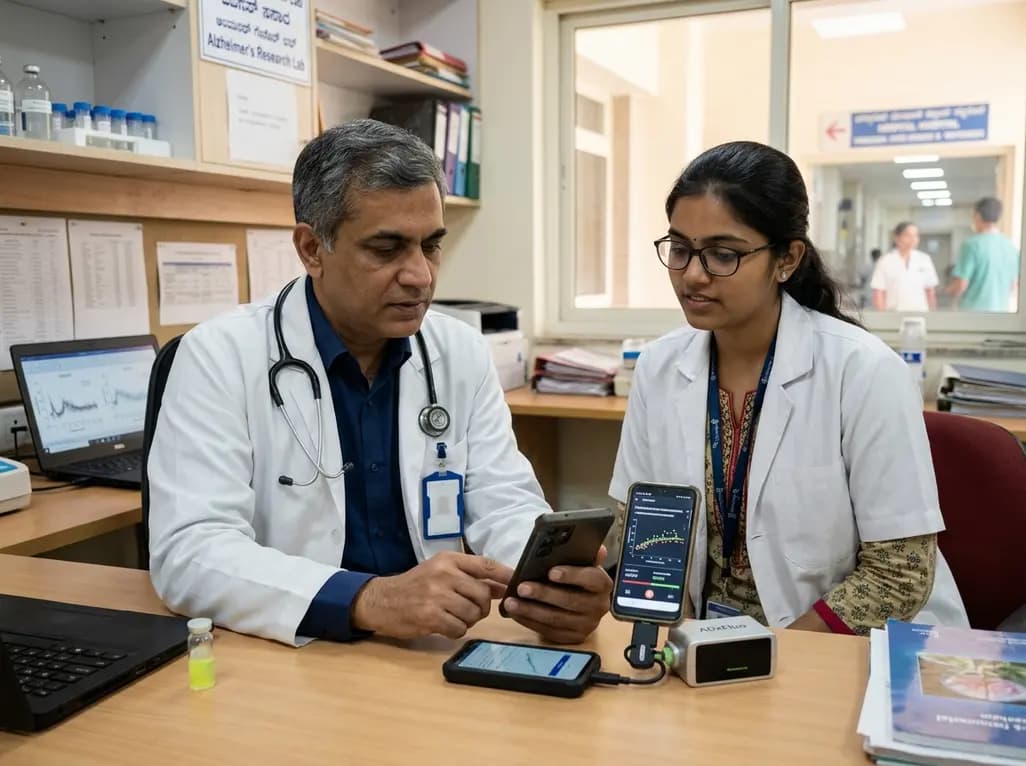
Diagnosing neurodegenerative illnesses at an early, pre-symptomatic stage represents one of modern medicine's greatest hurdles. Recently, researchers at the Jawaharlal Nehru Centre for Advanced Scientific Research in Bengaluru achieved a milestone by creating an accessible, rapid point-of-care Alzheimer's detection tool. This smartphone-integrated diagnostic platform, named ADxFluo, accurately quantifies amyloid-beta aggregates in biological fluids. Consequently, this innovation presents clinicians with an affordable and scalable method to identify pathology years before irreversible cognitive loss manifests.
Alzheimer's disease is fundamentally characterized by progressive memory loss, cognitive decline, and behavioural disturbances. At the cellular level, disease pathogenesis begins with the misfolding and aggregation of monomeric amyloid-beta peptides into toxic oligomers, protofibrils, and insoluble senile plaques. Consequently, these extracellular accumulations trigger chronic neuroinflammatory cascades, microglial activation, and severe synaptic dysfunction.
Moreover, modern clinical frameworks, such as the National Institute on Aging-Alzheimer's Association diagnostic criteria, classify amyloid-beta as a primary disease-defining biomarker. Because amyloid deposition initiates decades before noticeable memory impairment, detecting these fibrils in cerebral and peripheral compartments offers a crucial therapeutic window. Therefore, early biochemical identification enables clinicians to implement timely lifestyle interventions and initiate disease-modifying anti-amyloid therapies before extensive neuronal loss occurs.
Currently, establishing a definitive biomarker profile for neurodegenerative diseases relies primarily on positron emission tomography and lumbar punctures for cerebrospinal fluid analysis. While amyloid PET imaging delivers clear spatial visualization of parenchymal plaque burden, its astronomical cost and radiation exposure severely limit routine clinical utilization. Furthermore, the scarce availability of cyclotron facilities and specialized radiotracers restricts PET scans mostly to tertiary academic hospitals.
Similarly, obtaining cerebrospinal fluid requires invasive lumbar punctures, which carry procedural risks, post-dural puncture headaches, and significant patient hesitation. Although laboratory-based plasma assays have emerged as promising alternatives, they frequently require complex single-molecule counting equipment and elaborate sample preparations. As a result, primary care clinicians and community geriatric centers urgently need robust point-of-care tools that can deliver rapid, objective biomarker results at manageable costs.
To address existing diagnostic barriers, the research team synthesized a specialized fluorescence-responsive tiny molecule named TZ-48. This novel probe exhibits high binding affinity and exquisite selectivity for amyloid-beta fibrils over other physiological proteins. When TZ-48 encounters beta-sheet structures, it undergoes a marked conformational shift that enhances its fluorescence emission intensity significantly.
In addition to standard intensity changes, the probe demonstrates unique lifetime alterations upon binding target aggregates. Fluorescence lifetime imaging microscopy measures the decay profile of fluorophores, remaining remarkably independent of probe concentration, sample turbidity, and photobleaching artifacts. Consequently, utilizing fluorescence lifetime parameters allows the probe to maintain dependable analytical precision across diverse biological environments, including brain tissue specimens, cerebrospinal fluid, and peripheral blood serum samples.
Translating sophisticated chemical assays into daily practice requires user-friendly hardware integration. Therefore, the researchers designed ADxFluo, a modular smartphone-based diagnostic system that pairs an optical reading attachment with a dedicated analytical mobile application. When a clinical biofluid sample is mixed with the TZ-48 probe, the smartphone camera captures the resulting optical signal under controlled illumination.
Subsequently, the custom application's internal image-processing algorithm calculates the fluorescence intensity and translates optical values into calibrated biomarker concentrations within minutes. Because this automated workflow removes human subjectivity, it provides standardized and reproducible results across diverse operators. Thus, the compact platform effectively converts everyday consumer mobile phones into capable diagnostic workstations without requiring specialized laboratory infrastructure.
Implementing an Alzheimer's detection tool at the community clinic level can revolutionize proactive geriatric screening across outpatient environments. Routine health evaluations often miss early signs of mild cognitive impairment because standard cognitive questionnaires are subject to patient anxiety, educational biases, and language barriers. In contrast, objective fluid biomarker quantification provides definitive biological insights that support subjective clinical impressions.
Furthermore, portable screening tools facilitate longitudinal patient monitoring throughout clinical courses. Physicians can periodically assess serum biomarker changes to evaluate the efficacy of emerging disease-modifying treatments and monitor disease progression. By bringing rapid diagnostic capabilities directly into local consultation rooms, healthcare providers can triage high-risk patients efficiently, streamline specialized neurological referrals, and eliminate unnecessary delays in secondary care delivery.
Although preclinical evaluations demonstrate exceptional accuracy in distinguishing diseased animal models from healthy controls, extensive clinical validation remains mandatory before widespread human deployment. Large-scale multicenter clinical trials must establish robust reference ranges across diverse patient demographics, varying ethnicities, and complex comorbid conditions like vascular dementia.
Additionally, developers must evaluate how common peripheral proteins, hyperlipidemia, and renal impairment might alter serum fluorescence readings. Future research will also focus on multiplexing the system to detect phosphorylated tau and neurofilament light chains simultaneously. Establishing such multi-analyte panels will ultimately provide a comprehensive point-of-care profile, vastly improving differential diagnosis between various neurodegenerative disorders.
Q1: What is the ADxFluo platform and how does it function?
ADxFluo is a portable diagnostic platform that combines a smart chemical probe, TZ-48, with a smartphone application. The chemical probe binds specifically to amyloid-beta aggregates in biofluids, producing a distinct fluorescence signal. The smartphone's optical sensors and custom algorithms then quantify this fluorescence instantly, providing an objective measurement of amyloid biomarker load without expensive laboratory machines.
Q2: Why is amyloid-beta considered the core biomarker for Alzheimer's disease?
Amyloid-beta is widely recognized as the earliest disease-specific hallmark in the neuropathology of Alzheimer's disease. Its misfolding and accumulation into insoluble plaques initiate neurotoxic cascades, synaptic degradation, and subsequent tau pathology. Detecting amyloid-beta changes in cerebrospinal fluid or blood allows clinicians to identify the disease years before clinical symptoms and irreversible memory loss emerge.
Q3: How does this tool compare to traditional PET scans and lumbar punctures?
Traditional PET imaging and cerebrospinal fluid testing via lumbar puncture are highly accurate but suffer from prohibitive costs, limited accessibility, radiation exposure, and procedural invasiveness. In contrast, the smartphone-enabled platform offers a rapid, non-invasive, and cost-effective screening alternative. It facilitates rapid point-of-care fluid analysis, making early neurodegenerative screening feasible across community clinics and resource-limited settings.
Disclaimer: This content is for informational and educational purposes only. It does not constitute medical advice or replace professional judgment. Refer to the latest local and national guidelines for clinical practice.
References

Read summarized clinical updates, watch expert medical content, and earn CME certifications right from your smartphone.
Open your smartphone camera to scan and install.





Scientists at JNCASR have introduced ADxFluo, a rapid point-of-care screening system using probe TZ-48 and a smartphone app to quantify amyloid-beta biomarkers in biofluids. This provides a cost-effective alternative to PET scans and invasive tests for early Alzheimer's disease detection.
last month

A nationwide multicenter study identified three COPD clinical phenotypes, finding that mild smoking males experience the highest rate of rapid lung function decline. A CatBoost model using six routine clinical and socioeconomic variables accurately stratifies high-risk patients for early therapeutic intervention.
Today
Discover the crucial distinctions between mesonephric and mesonephric-like proliferations of the female genital tract. Learn the key histomorphologic, immunohistochemical, and molecular differences essential for accurate diagnosis and clinical management.
Today
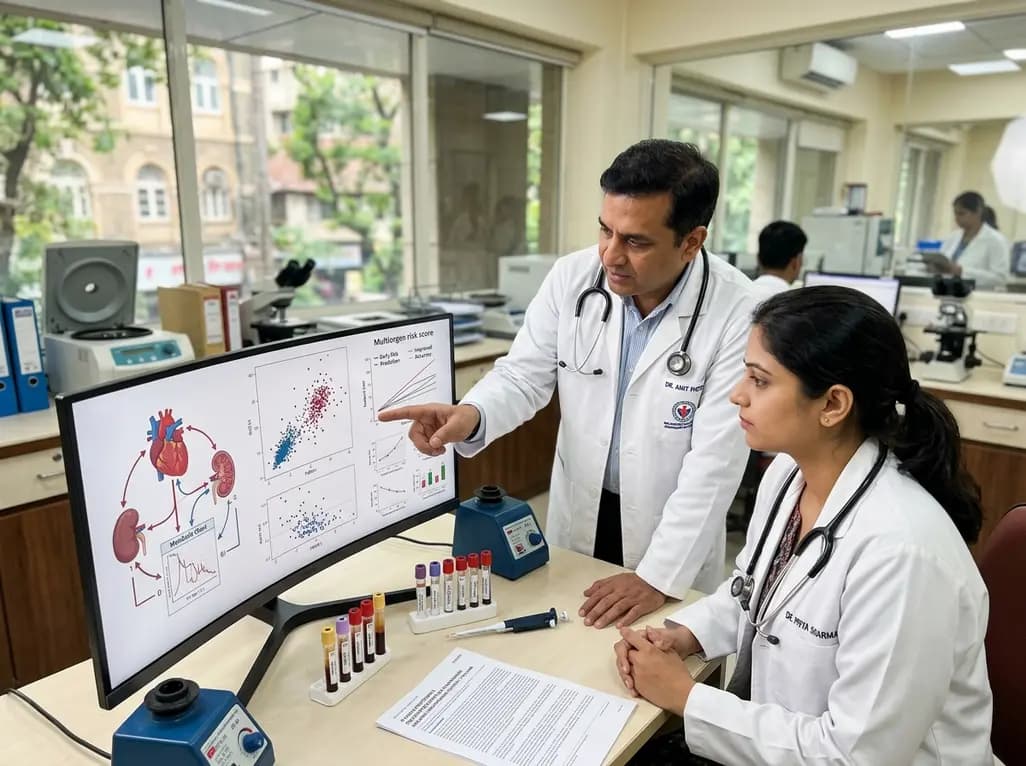
A large UK Biobank study reveals that plasma proteomic signatures capture preclinical organ damage and improve multiorgan risk prediction across early CKM syndrome stages 0 to 2 beyond traditional PREVENT clinical models.
Today
A narrative review investigates whether the articularis genus muscle functions as an independent anatomical entity or blends with the vastus intermedius. We evaluate its morphology, role in retracting the suprapatellar bursa, and direct clinical significance in anterior knee pain and arthroplasty.
Today

A Bayesian multilevel meta-analysis reveals that aerobic training combined with moderate carbohydrate restriction modestly lowers HbA1c in type 2 diabetes. However, sparse data and very low certainty leave incremental benefits over exercise or diet alone unproven, highlighting the need for individualized care.
Today
