.webp&w=384&q=75)

Loading, please wait...
Loading, please wait...

Diagnosing neurodegenerative diseases is currently undergoing a massive paradigm shift. Clinicians historically relied on complex imaging or spinal taps to identify pathology. However, the introduction of a high-performance Alzheimer's blood test is changing this landscape. Consequently, global healthcare leaders are rapidly forming partnerships to bring these tests to laboratories worldwide, providing an accessible and scalable alternative.
The underlying pathology of Alzheimer's disease involves the progressive accumulation of amyloid-beta plaques and neurofibrillary tau tangles. Specifically, the biomarker phosphorylated tau at position 217, widely known as pTau217, has emerged as a highly sensitive and specific blood marker. This protein is closely linked to the progressive neurological changes seen in the human brain. Therefore, detecting pTau217 in plasma allows clinicians to identify the pathology years before clinical dementia symptoms actually manifest. ALZpath has successfully developed a proprietary, highly selective antibody that targetedly binds to this crucial neurodegenerative biomarker. In addition, this diagnostic tool has been validated across more than 200 peer-reviewed publications spanning 18 countries. Consequently, the scientific consensus supports its high accuracy in identifying early-stage disease biology. Traditionally, clinicians could only observe these pathological changes via expensive PET imaging or invasive lumbar punctures. However, this blood-based biomarker offers a highly reliable, low-cost diagnostic alternative that is easy to perform. Ultimately, utilizing pTau217 can revolutionize screening for patients with mild cognitive impairment. This advanced test successfully streamlines their overall clinical diagnostic pathway.
Detecting neurodegenerative changes early is becoming increasingly critical with the steady emergence of new disease-modifying therapies. Historically, patients were diagnosed only after severe cognitive decline had already occurred. This late-stage diagnostic detection has historically and significantly limited the efficacy of available therapeutic interventions. Furthermore, identifying this complex disease early allows clinicians to implement highly personalized care plans, initiate timely lifestyle modifications, and prepare families. Consequently, using blood biomarkers can streamline the patient journey from initial clinical presentation to therapeutic monitoring. This specific blood biomarker, pTau217, acts as a highly sensitive, clinically validated gauge of amyloid pathology in the human brain. For instance, a simple blood draw can confirm Alzheimer's pathology in primary care settings. As a result, patients can receive timely referrals to neurologists for advanced confirmatory testing and clinical trial enrollment. Moreover, clinical trials for novel therapeutics benefit enormously from rapid, blood-based screening of potential participants. Subsequently, this high screening efficiency accelerates the global pipeline for discovering more effective therapeutic treatments. Ultimately, incorporating these biomarkers into routine assessments will improve geriatric patient care.
To scale this diagnostic revolution, ALZpath recently announced a major licensing agreement with Abbott Laboratories. Under the newly established royalty-based model, Abbott will integrate ALZpath's proprietary antibody directly into its standard diagnostic assays. Specifically, these high-performance assays are designed to run on Abbott's widely established Alinity laboratory systems, which are deployed in hospitals globally. This partnership is highly strategic because Abbott holds a massive footprint in the global in-vitro diagnostics market. Consequently, integrating this antibody into existing clinical workflows will accelerate the adoption of blood-based testing. Historically, smaller biotechnology firms faced severe struggles when trying to distribute novel diagnostic tools to remote regions. However, by partnering with established healthcare giants, ALZpath can distribute its technology rapidly to millions of patients globally. Moreover, this global agreement ensures that healthcare providers will have seamless access to highly standardized, reproducible, and reliable test results. As a result, the barrier to early diagnosis will be lowered substantially for primary care clinics. Ultimately, this collaboration represents a major milestone. It successfully transitions advanced Alzheimer's diagnostics into routine primary care and clinical laboratories worldwide, enhancing patient access.
Traditionally, diagnosing Alzheimer's required highly specialized, expensive, and invasive procedures. For example, positron emission tomography, commonly known as PET imaging, requires access to cyclotron facilities and radioactive tracers. Consequently, PET scans are extremely costly and unavailable in many suburban or rural areas. Alternatively, direct cerebrospinal fluid analysis requires patients to undergo an uncomfortable and invasive lumbar puncture. This invasive procedure often causes patient anxiety and carries a risk of post-procedural complications. Therefore, these diagnostic barriers have historically delayed timely patient evaluations. In contrast, blood-based testing presents a highly scalable, minimally invasive, and affordable alternative. Clinicians can easily perform simple blood draws in standard clinical settings without requiring any specialized or expensive equipment. Furthermore, these routine blood tests are highly reproducible and can be easily integrated into annual geriatric wellness exams. Subsequently, this democratizes access to advanced diagnostic care, particularly for underserved populations who lack access to major medical centers. As a result, the global healthcare system can gradually shift from reactive dementia management to proactive cognitive health tracking. Ultimately, blood tests will replace more invasive diagnostic procedures as the primary screening tool.
The global market for advanced Alzheimer's diagnostics is currently expanding at an unprecedented rate. By partnering with major diagnostic companies, ALZpath is positioning itself at the very center of this clinical transition. Indeed, the company has previously signed licensing agreements with other industry leaders, including Roche, Beckman Coulter, and Siemens Healthineers. With Abbott Laboratories now officially on board, approximately 80% of the global in-vitro diagnostics market will actively utilize the proprietary ALZpath antibody. Consequently, this high level of market penetration ensures that the pTau217 biomarker will become the industry standard. Furthermore, these collaborative partnerships allow each manufacturer to optimize the antibody for their specific laboratory platforms. Therefore, clinicians can expect consistent diagnostic accuracy regardless of the specific platform their local laboratory utilizes. Historically, fragmented and non-standardized laboratory technology has significantly slowed the clinical adoption of novel diagnostic tests. However, this unified approach solves the interoperability challenge. Subsequently, global regulatory bodies can evaluate these standardized tests more efficiently, paving the way for widespread clinical clearance. Ultimately, this market consolidation will accelerate the clinical availability of reliable testing options, making early diagnosis achievable.
Q1: What is the clinical significance of the pTau217 biomarker in Alzheimer's diagnostics?
The pTau217 biomarker is highly sensitive and specific for detecting early brain pathology. Specifically, it can reveal progressive neurological changes years before overt cognitive decline develops. Consequently, identifying this marker in plasma allows clinicians to diagnose patients much earlier, facilitating timely therapeutic interventions, personalized counseling, and lifestyle modifications that can help preserve long-term cognitive function.
Q2: Why is the partnership between ALZpath and Abbott important for clinicians?
This partnership integrates ALZpath's clinically validated antibody into Abbott's widely installed Alinity laboratory systems. Consequently, clinicians globally will gain easier access to standardized diagnostic tools. Furthermore, this collaboration, alongside other partnerships, covers approximately 80% of the market. This massive scale ensures consistent testing standards across clinical platforms, promoting highly reliable and reproducible results for patients everywhere.
Q3: How do blood tests compare to traditional Alzheimer's diagnostic methods?
Traditional diagnostic methods, such as amyloid PET neuroimaging and cerebrospinal fluid analysis, are invasive, expensive, and difficult to access. In contrast, blood-based diagnostic tests are highly scalable, cost-effective, and minimally invasive. They can be easily integrated into routine clinical check-ups, thereby reducing patient anxiety, lowering overall healthcare costs, and expanding access to advanced diagnostic care across diverse patient populations.
Disclaimer: This content is for informational and educational purposes only. It does not constitute medical advice or replace professional judgment. Refer to the latest local and national guidelines for clinical practice.
References

Read summarized clinical updates, watch expert medical content, and earn CME certifications right from your smartphone.
Open your smartphone camera to scan and install.





ALZpath and Abbott Laboratories have signed a global licensing agreement to develop a revolutionary, blood-based diagnostic test for Alzheimer's disease. Using the proprietary pTau217 antibody on Alinity systems, this highly scalable test will democratize early detection and improve patient outcomes worldwide.
3 months ago
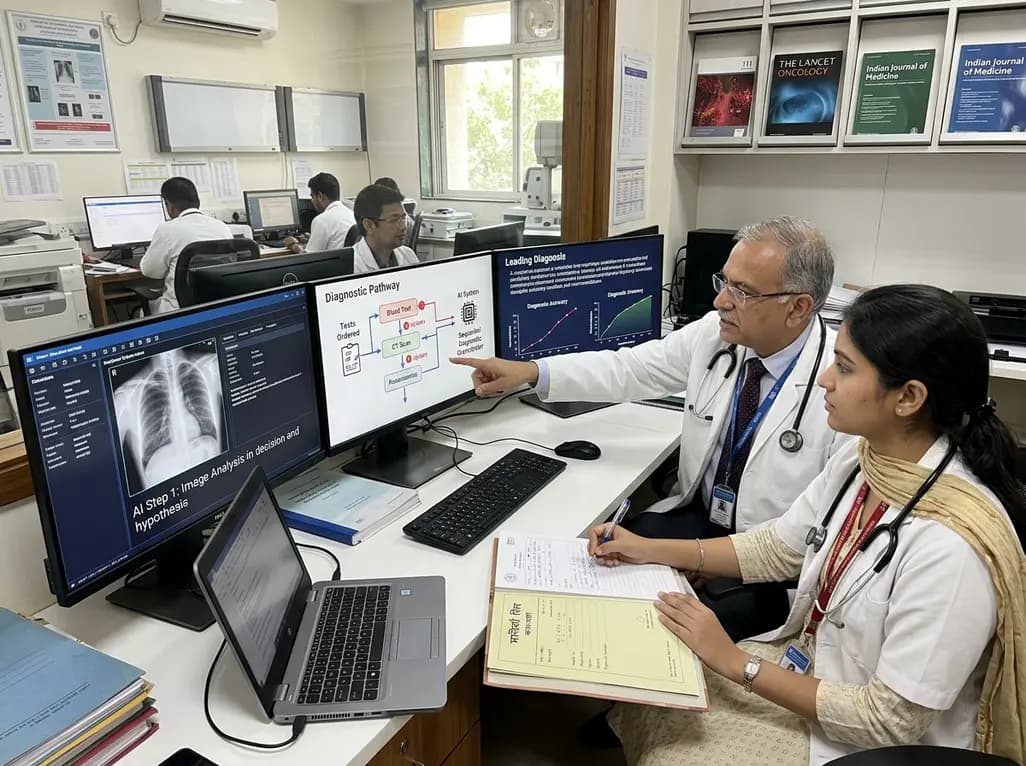
A breakthrough peer-reviewed study demonstrates that a sequential AI diagnosis system can mirror real-world clinical reasoning. By ordering stepwise tests and updating hypotheses dynamically, this multi-agent orchestrator achieved superior diagnostic accuracy while reducing investigative costs.
Today

A prenatal case highlights severe glutaric acidemia type II presenting as bilateral hyperechoic cystic kidneys at 18 weeks. Whole-exome sequencing revealed a novel homozygous ETFDH frameshift variant, demonstrating the power of rapid genetic testing in fetal renal anomalies.
Today

Review how tailored exercise programs benefit frail older patients with heart failure. Explore pathophysiological mechanisms, individualized training prescriptions, and strategies to overcome adherence barriers in clinical practice.
Yesterday

This comparative study evaluates posterior labral tears with and without glenohumeral instability, highlighting distinct demographic patterns, MRI underestimation in stable shoulders, and successful arthroscopic repair outcomes.
Yesterday

A clinical study demonstrates that early intervention with tocilizumab, either as monotherapy or bridged with corticosteroids, achieves significant proptosis reduction and resolves active inflammation in treatment-naive thyroid eye disease.
Yesterday
