.webp&w=384&q=75)

Loading, please wait...
Loading, please wait...

Clinicians frequently encounter patients experiencing both chronic insomnia and depression during routine psychiatric and neurological practice. While primary insomnia disrupts restorative rest, comorbid major depressive disorder intensifies emotional dysregulation and daytime fatigue. Therefore, understanding the neurobiological alterations underlying this dual pathology is critical for developing targeted therapeutic strategies. Recent neuroimaging research provides objective evidence demonstrating that combined sleep disruption and mood pathology alter neural circuit integrity. Specifically, researchers enrolled 112 individuals with chronic insomnia and 56 healthy control participants to evaluate these interrelationships. They stratified the clinical cohort into patients with uncomplicated insomnia and those presenting with comorbid major depressive disorder. By utilizing resting-state functional magnetic resonance imaging alongside advanced diffusion tensor imaging, the study mapped precise brain alterations. Consequently, the authors identified marked neurofunctional reorganizations that distinguish combined mood and sleep disturbances from isolated sleep loss.
The default mode network coordinates self-referential processing, autobiographical memory, and introspective thought patterns. In healthy individuals, this network demonstrates synchronized internal communication during restful states. However, patients presenting with chronic insomnia and depression exhibited significantly weakened functional connectivity within the intrinsic default mode architecture. This internal disintegration reflects profound disruptions in affective processing and cognitive stabilization. Interestingly, researchers observed a contrasting phenomenon when analyzing specific central network nodes. The posterior cingulate cortex showed enhanced functional connectivity with brain regions positioned outside the canonical default mode network. In particular, this node established hyperactive communication with the middle cingulate cortex and the supplementary motor area. Consequently, this aberrant external cross-talk sustains cognitive hyperarousal and persistent somatic restlessness during attempted rest. Thus, maladaptive connectivity patterns explain why affected patients experience unrelenting nocturnal rumination and heightened psychomotor agitation.
Beyond functional network reorganization, restorative sleep supports essential metabolic waste clearance throughout the human brain. The glymphatic system facilitates the convective exchange of cerebrospinal fluid and interstitial fluid along perivascular channels. During non-rapid eye movement slow-wave sleep, this fluid exchange accelerates to eliminate neurotoxic metabolites. To quantify this process non-invasively, investigators utilized diffusion tensor imaging along the perivascular space. This advanced imaging protocol calculates the ALPS index, which measures fluid diffusivity beside medullary veins. The resulting data revealed that patients suffering from both insomnia and depression had significantly lower ALPS values than those with isolated insomnia. Furthermore, healthy control individuals exhibited substantially superior fluid clearance efficiency compared to all patient cohorts. Therefore, co-occurring depressive illness actively worsens sleep-related glymphatic insufficiency. Because impaired waste removal fosters neurotoxic accumulation, these findings indicate that persistent affective distress compounds microenvironmental neural stress.
To determine clinical relevance, investigators correlated objective neuroimaging metrics with validated psychometric evaluations. Specifically, Hamilton Depression Rating Scale scores correlated significantly with bilateral projection fiber diffusivity values. Higher depression scores directly tracked with pronounced disruptions in directional perivascular water movement. Consequently, these findings confirm that subjective mood deterioration mirrors quantifiable structural and physiological fluid impairments within deep white matter tracts. Furthermore, the research team constructed diagnostic models using binary logistic regression to evaluate predictive accuracy. By integrating default mode connectivity alterations with DTI-ALPS indices, the model reliably differentiated comorbid patients from those suffering from uncomplicated insomnia. Therefore, multimodal neuroimaging provides objective biological parameters that transcend traditional subjective self-reporting. In addition, these quantitative biomarkers may eventually assist clinicians in stratifying patient risk and monitoring therapeutic efficacy over longitudinal treatment courses.
These neuroimaging insights carry substantial implications for modern neuropsychiatric management. Clinicians frequently encounter diagnostic dilemmas when treating patients who present with refractory insomnia accompanied by masked depressive symptoms. Because glymphatic dysfunction and default mode dysregulation occur concurrently, managing sleep disruption in isolation remains insufficient. Instead, healthcare providers must address the bidirectional relationship linking affective distress and sleep architecture breakdown. Furthermore, prolonged glymphatic failure can accelerate neurodegenerative vulnerabilities by permitting toxic protein accumulation over decades. Therefore, restoring deep slow-wave sleep emerges as a neuroprotective priority rather than merely a symptom-relief goal. In addition, clinicians should consider interventions that actively modulate hyperarousal networks and promote perivascular fluid flow. Tailoring therapeutic strategies to address both cognitive ruminations and restorative sleep physiology ensures comprehensive patient stabilization across outpatient psychiatric practice.
In Indian healthcare settings, sleep disturbances are frequently overlooked or dismissed as benign secondary consequences of lifestyle stress. However, these objective MRI findings demonstrate that unresolved insomnia comorbid with depression causes measurable physiological compromise. Therefore, primary care practitioners and psychiatrists across India should implement structured sleep assessments when evaluating mood disorders. Furthermore, cognitive behavioral therapy for insomnia represents an underutilized first-line intervention that directly reduces cognitive hyperarousal and normalizes default mode network activity. When prescribing pharmacotherapy, physicians should carefully consider agents that preserve restorative slow-wave sleep rather than compounds that merely induce sedation while suppressing deeper sleep stages. Additionally, educating patients about sleep hygiene and regular circadian rhythms can improve glymphatic clearance dynamics. Ultimately, early recognition and holistic intervention safeguard both emotional well-being and brain health.
Comorbid major depressive disorder exacerbates neuroinflammation and further disrupts restorative slow-wave sleep. Because interstitial waste clearance relies on synchronized slow-wave activity, this dual disruption markedly impairs cerebrospinal fluid exchange. Consequently, patients with both conditions display significantly lower diffusion along the perivascular space than those with insomnia alone.
The posterior cingulate cortex serves as a critical central hub within the default mode network. When hyperconnected to motor and cingulate areas outside its typical network, it promotes nocturnal hyperarousal and relentless rumination. Consequently, patients remain stuck in perseverative emotional monitoring, preventing normal transitions into deep sleep.
Clinicians should screen insomnia patients routinely for comorbid mood disorders rather than treating sleep complaints in isolation. Recognizing underlying neurobiological impairment encourages prompt combined therapeutic strategies. Specifically, incorporating evidence-based cognitive behavioral therapy alongside targeted pharmacological treatments can restore restorative sleep architecture and support long-term cerebral waste clearance.
Disclaimer: This content is for informational and educational purposes only and should not be considered professional medical advice. Always consult a qualified healthcare provider regarding clinical decisions. Refer to the latest local and national guidelines for clinical practice.
References
Tao Y et al. Altered default mode network and glymphatic function in insomnia with depression: A multimodal MRI study. Sleep Med. 2025 Jul. doi: 10.1016/j.sleep.2025.106482. PMID: 40188802.
Taoka T, Masutani Y, Kawai H, et al. Evaluation of glymphatic system activity with the diffusion tensor image analysis along the perivascular space (DTI-ALPS) index. Jpn J Radiol. 2017;35(4):172-178.
Li C, Liu C, Wang R, et al. Glymphatic dysfunction across sleep disorders: a meta-analysis of DTI-ALPS studies. Front Neurol. 2024;15:1356782.

Read summarized clinical updates, watch expert medical content, and earn CME certifications right from your smartphone.
Open your smartphone camera to scan and install.





A multimodal MRI study reveals that chronic insomnia with comorbid depression significantly weakens default mode network connectivity and exacerbates glymphatic dysfunction, highlighting shared neurobiological mechanisms that warrant integrated psychiatric and sleep care.
Today

The CARE study protocol introduces a multilingual, RAG-powered conversational interface designed by IIT Bombay to support tobacco cessation in India. Evaluating feasibility and behavioral outcomes across three cessation centers, this digital health initiative aims to enhance quitting support for diverse users.
Today

A large UK cohort study of 1.4 million women shows that pregnancy complications, including gestational diabetes, hypertension, and preterm birth, substantially raise long-term risks for hypertension, chronic kidney disease, type 2 diabetes, and cardiovascular events, highlighting early postpartum intervention needs.
Today
A cross-sectional study reveals that hypertension knowledge, illness perceptions, depression, and substance use significantly predict self-care behaviors. Addressing mental health and cognitive beliefs in primary care is crucial for optimal blood pressure control and cardiovascular disease prevention.
Today
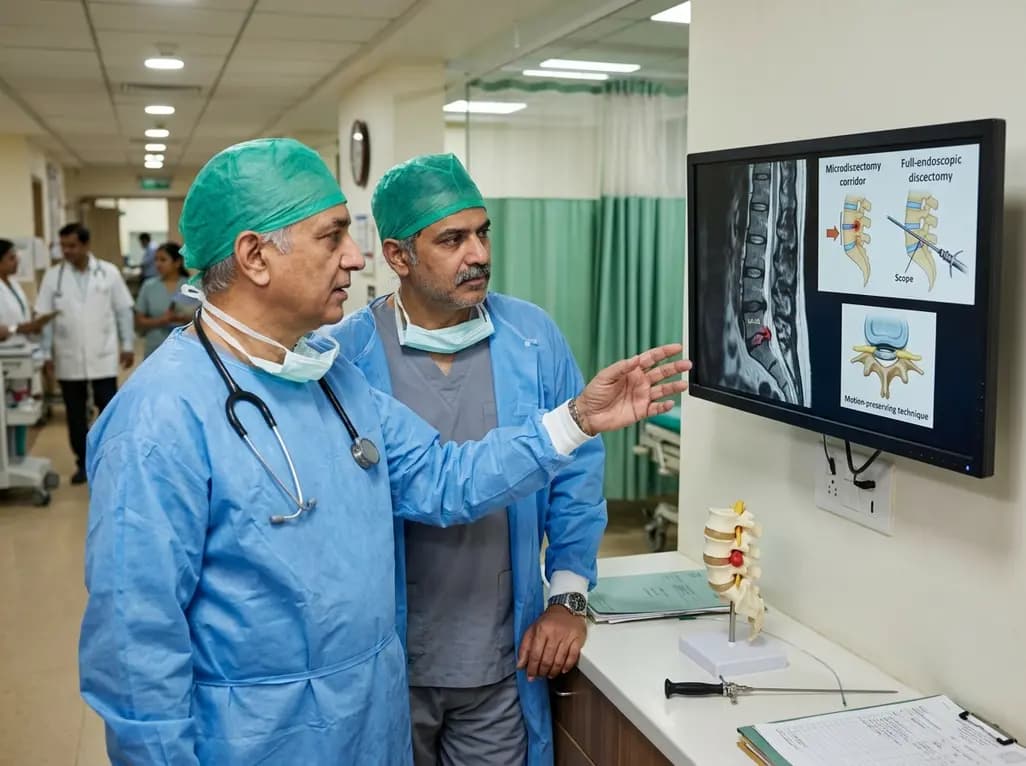
This clinical overview examines recent advancements in lumbar disc herniation surgery, comparing microscopic and full-endoscopic discectomy while highlighting biportal techniques and emerging motion-preserving innovations for spine specialists.
Today

Small interfering RNA (siRNA) therapeutics harness RNA interference to degrade disease-causing messenger RNA. By delivering hepatocyte-targeted, durable gene silencing, agents targeting PCSK9, LPA, and angiotensinogen offer potent cardiovascular risk reduction with infrequent, biannual dosing schedules.
Today
