.webp&w=384&q=75)

Loading, please wait...
Loading, please wait...

Environmental health is a growing concern for clinicians managing chronic respiratory and cardiovascular conditions. However, a recent study emphasizes that air quality sensor calibration is essential for obtaining reliable local data. The Center for Study of Science, Technology and Policy (CSTEP) recently released findings from an extensive evaluation in Bengaluru, India. This research highlights that low-cost sensors (LCSs) often provide inconsistent readings without proper adjustments for local environmental factors.
Researchers examined 48 multi-pollutant devices from six different manufacturers to assess their long-term performance. Specifically, the study monitored levels of particulate matter (PM2.5 and PM10), nitrogen dioxide (NO2), ozone (O3), and carbon monoxide (CO). The initial results showed that manufacturer-reported data varied substantially between devices and brands. Consequently, the team found that many devices failed to meet precision targets for gaseous pollutants like nitrogen dioxide and ozone.
Moreover, environmental factors such as humidity and unique pollution patterns in Indian cities can significantly skew raw sensor data. Therefore, the researchers developed locally tailored correction models based on Bengaluru's specific conditions. These localized models improved the performance of the devices significantly. This finding confirms that air quality sensor calibration must reflect the actual environment of deployment to be clinically and scientifically useful.
Maintenance is just as critical as initial setup for environmental monitoring. The CSTEP study observed sensors for up to eight months and noted a decline in accuracy over time. Some sensors even stopped working entirely or provided clearly erroneous readings during the medium-term evaluation. Because sensor accuracy declines with use, the report recommends regular performance checks every three to six months. This ensures that data remains accurate despite sensor drift or changing seasonal conditions.
Q1: Why do different air quality sensors show different readings for the same location?
Sensor readings often differ because manufacturers use different internal calibration models. These models may not account for local weather, humidity, or the specific mix of pollutants found in an Indian urban setting.
Q2: How frequently should low-cost air quality sensors be recalibrated?
According to the CSTEP study, sensors should undergo regular performance checks and recalibration every three to six months to maintain data reliability.
Q3: Which pollutants are most affected by lack of calibration?
The study found that gaseous pollutants, particularly nitrogen dioxide and ozone, showed the most significant improvement after locally tailored correction methods were applied.
Disclaimer: This content is for informational and educational purposes only. It does not constitute medical advice or replace professional judgment. Refer to the latest local and national guidelines for clinical practice.
References

Read summarized clinical updates, watch expert medical content, and earn CME certifications right from your smartphone.
Open your smartphone camera to scan and install.





A CSTEP study in Bengaluru reveals that low-cost air quality sensors require local calibration and frequent checks to ensure reliable data for health....
6 months ago
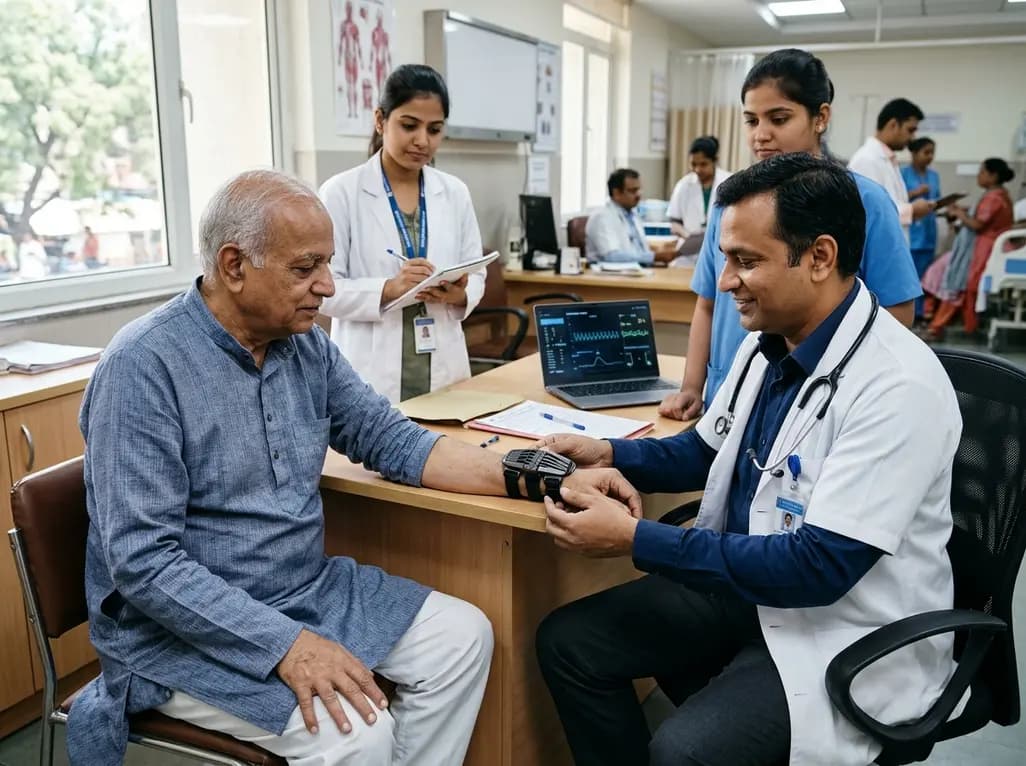
The TREM-AB open-label pilot study evaluated a wearable passive nonlinear vibration absorber for essential tremor. The Nonlinear Energy Sink bracelet reduced clinical Fahn-Tolosa-Marin tremor scores by 32.1% and electrophysiological tremor power by 49.2% with no adverse effects reported.
Today

A study in JAMIA Open shows lightweight open-source reasoning LLMs achieve up to 95% sensitivity and accelerate evidence synthesis screening by nearly twentyfold, presenting a cost-effective, scalable AI solution for biomedical research and systematic reviews.
Today
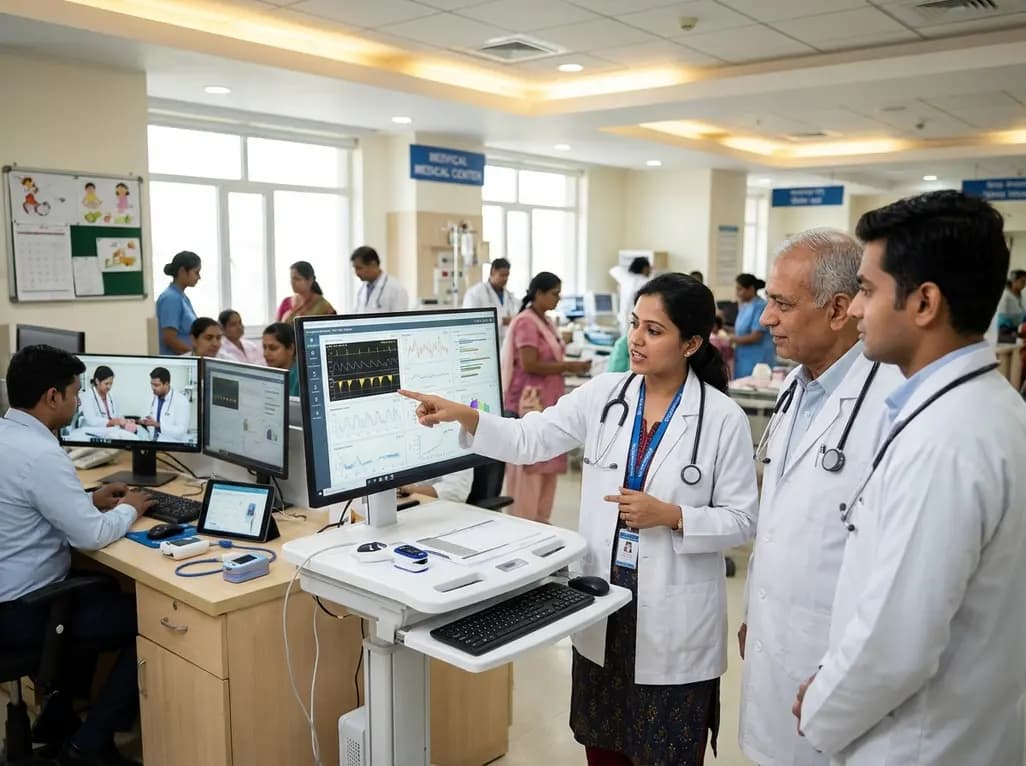
A landmark study details how an enterprise pediatric remote patient management model expanded from a single cardiology pilot to 16 diverse specialty programs by combining centralized digital operations with specialty clinical leadership.
Today

A comparative review of tension band wiring and intramedullary screw fixation in thumb metacarpophalangeal arthrodesis, evaluating union rates, hardware complications, and clinical outcomes.
Today
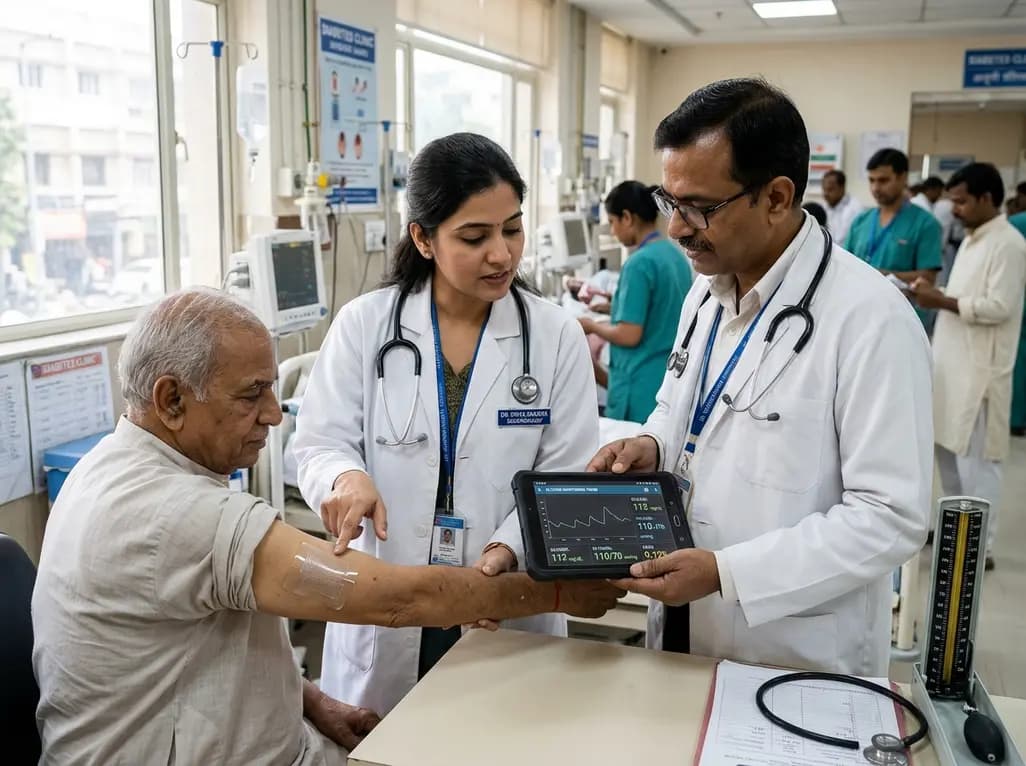
A breakthrough ultrathin multimodal sensor decouples physical hemodynamic monitoring from disposable electrochemical calibration, achieving long-term wearable glucose prediction with 81.36% accuracy and a 9.12% MARD. This offers a robust, drift-free solution for outpatient metabolic surveillance.
Today
