.webp&w=384&q=75)

Loading, please wait...
Loading, please wait...

Environmental toxins increasingly disrupt neurological homeostasis, prompting vital investigations into environmental epileptogenesis. Recent epidemiological research provides compelling evidence connecting ambient air pollution and epilepsy, demonstrating that chronic exposure to common airborne pollutants elevates the incidence of unprovoked seizures in adult populations. While clinicians traditionally evaluate genetic predisposition, cerebrovascular disease, head trauma, and metabolic insults when diagnosing seizures, environmental determinants warrant comparable scrutiny.
Epidemiological researchers have long linked atmospheric pollutants to accelerated neurodegeneration, ischemic stroke, and neuroinflammatory disorders. However, the specific influence of prolonged air contamination on seizure susceptibility has remained understudied until recently. To bridge this clinical knowledge gap, Canadian investigators designed a large-scale nested case-control study using linked provincial health records and comprehensive environmental registries in Ontario. The research cohort included adult residents aged 18 to 80 without any prior history of seizure disorders or epilepsy. Over a six-year observation window from 2010 through 2016, the investigators identified 24,761 confirmed cases of adult new-onset epilepsy. They subsequently matched each incident case with up to five disease-free controls based on age and sex, yielding a robust control cohort of 118,692 individuals. By tracking long-term exposure to ambient fine particulate matter, nitrogen dioxide, and ground-level ozone at residential coordinates, the researchers successfully evaluated how chronic atmospheric exposure shapes epileptogenic vulnerability over multiple continuous years.
The study yielded statistically significant associations between environmental exposure and incident seizure disorders. Specifically, the median three-year exposure concentrations across the study population measured 7.9 micrograms per cubic meter for fine particulate matter, 9.6 parts per billion for nitrogen dioxide, and 42.7 parts per billion for ground-level ozone. In single-pollutant conditional logistic regression models, an interquartile range increase in fine particulate matter elevated the risk of developing epilepsy by 5.5 percent. Simultaneously, an interquartile range increase in ground-level ozone produced a 9.6 percent increase in incident epilepsy risk. Furthermore, when researchers constructed multi-pollutant models adjusting for concurrent exposures, ground-level ozone maintained an independent and persistent association, increasing risk by 9.0 percent. These quantitative associations remained evident even within geographic regions exhibiting relatively low absolute pollutant concentrations compared to global standards. Consequently, these findings indicate that chronic sub-acute exposure to common oxidizing atmospheric pollutants exerts measurable biological effects on seizure thresholds across broad adult populations.
Interestingly, the regression analysis revealed complex, divergent associations for nitrogen dioxide across different demographic categories. In both single-pollutant and multi-pollutant models, overall nitrogen dioxide concentrations demonstrated an unexpected inverse association with epilepsy incidence across the general cohort. However, detailed subgroup stratified analyses uncovered a striking biological contrast among senior citizens. Specifically, among individuals aged 65 and older, elevated nitrogen dioxide exposure correlated positively with new-onset epilepsy risk. Consequently, the investigators emphasized that residual confounding, urban-rural residential patterns, or traffic proximity dynamics might explain the broader statistical anomaly. Furthermore, aging cerebral vasculature and declining physiological resilience likely render older brains uniquely susceptible to traffic-related gaseous emissions. Therefore, geriatric clinicians must recognize that ambient pollutants often interact synergistically with age-related neurovascular changes, potentially unmasking subclinical epileptogenic foci in vulnerable senior patients living near heavy vehicular thoroughfares.
The biological mechanisms linking airborne contaminants to seizure generation involve systemic inflammation, neurovascular compromise, and cellular hyperexcitability. Inhaled fine particulate matter easily bypasses respiratory defenses, penetrating deep into alveolar spaces and entering the systemic circulation. Alternatively, ultrafine combustion particles can migrate directly into the central nervous system via the olfactory mucosal pathway. Once within vascular beds or cerebral tissue, these particulates and oxidizing gases trigger sustained oxidative stress, microglial activation, and proinflammatory cytokine release. Consequently, this persistent inflammatory cascade damages the blood-brain barrier, allowing circulating neurotoxins and albumin to enter the brain parenchyma. In addition, ground-level ozone and fine particulates disrupt astrocyte glutamate uptake transporters and alter gamma-aminobutyric acid inhibitory signaling. Therefore, the combination of blood-brain barrier dysfunction, astrocyte down-regulation, and extracellular glutamate accumulation lowers the threshold for neuronal synchronization. Ultimately, these structural and chemical disruptions promote sustained network hyperexcitability and latent epileptogenesis.
These findings hold profound clinical relevance for medical practitioners and public health authorities across India. Indian metropolitan centers and industrial regions regularly record ambient particulate concentrations exceeding established global guidelines by tenfold. Although Canadian cohorts demonstrated measurable neurotoxicity at modest concentrations, millions of Indian patients experience relentless exposure to severe atmospheric pollution. Therefore, Indian physicians evaluating late-onset unprovoked seizures must incorporate detailed environmental and occupational exposure histories into their diagnostic assessments. Furthermore, clinicians managing susceptible cohorts, such as elderly adults or individuals with past cerebrovascular insults, should advise practical exposure reduction strategies. Such strategies include utilizing certified indoor air purifiers, monitoring real-time air quality metrics, and limiting vigorous outdoor exercise during peak pollution episodes. Moreover, professional medical societies should champion stringent environmental policies, recognizing that clean air initiatives directly protect neurological health and reduce epilepsy burden nationwide.
Air pollutants induce systemic inflammation and oxidative stress, thereby degrading the protective blood-brain barrier. Furthermore, inhaled particulates can penetrate neural tissues directly, activating microglia and impairing astrocyte glutamate transport. Consequently, extracellular excitatory neurotransmitters accumulate, generating neuronal hyperexcitability and predisposing susceptible individuals to unprovoked seizure activity.
Older individuals experience age-related microvascular rarefaction, latent neurodegenerative changes, and decreased antioxidant reserve. Consequently, exposure to traffic-related nitrogen dioxide in senior cohorts exacerbates neurovascular unit disruption. In contrast, unmeasured socioeconomic or residential confounders in younger urban populations may have statistically masked these adverse toxicological effects.
Clinicians should advise vulnerable patients to monitor local air quality indexes daily and avoid strenuous outdoor activities during peak pollution hours. Additionally, high-efficiency particulate air purifiers help minimize indoor contaminant loads. Physicians should also ensure optimal management of concurrent cerebrovascular risk factors to preserve overall blood-brain barrier integrity.
Disclaimer: This content is for informational and educational purposes only and is not intended as medical advice. Healthcare professionals should evaluate clinical decisions based on each patient's individual clinical profile. The conclusions and methodologies discussed reflect the researchers' analyses and should be interpreted within the context of current clinical guidelines. Refer to the latest local and national guidelines for clinical practice.
References

Read summarized clinical updates, watch expert medical content, and earn CME certifications right from your smartphone.
Open your smartphone camera to scan and install.





A landmark population-based study demonstrates significant associations between long-term exposure to ambient air pollution, particularly PM2.5 and ground-level ozone, and an increased risk of developing new-onset epilepsy in adults, offering vital mechanistic and preventive lessons for clinical practice.
Today

An Australian cohort of 34,449 adults in an unsubsidized tirzepatide digital weight loss service showed that peer-referred patients achieved significantly higher 6-month adherence (48% vs 42%) and greater weight loss (16.16% vs 14.06%) than matched non-referred peers, highlighting social support in obesity care.
Today

A randomized crossover study demonstrates that conventional and robotic laparoscopy require distinct neuropsychological and psychomotor skills. While trainees master conventional laparoscopy faster, robotic proficiency demands individualized, adaptive curricula tailored to specific learner profiles.
Today
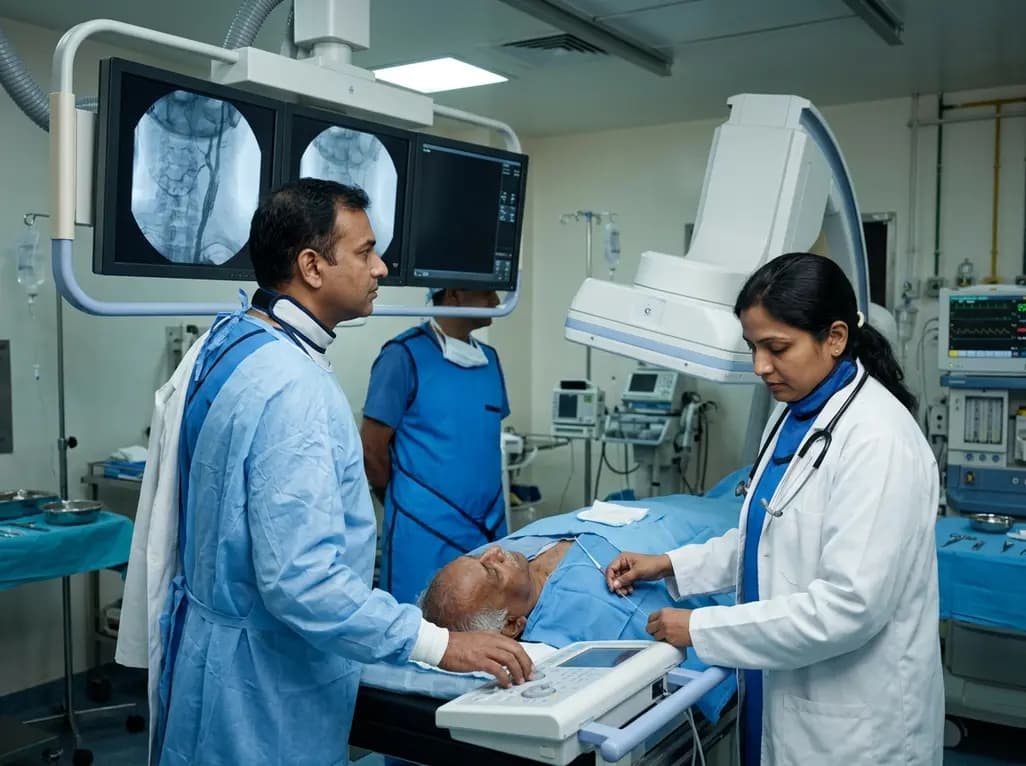
A retrospective study of 109 patients undergoing elective carotid artery stenting evaluated radiation exposure on biplane flat-panel systems. Standardized workflows and dedicated low-dose protocols provide crucial baseline data to establish neurointerventional diagnostic reference levels and optimize patient safety.
Today

A scoping review of 51 studies reveals that spinal manual therapy on the lumbo-pelvic area is commonly used for isolated lower extremity pain, predominantly knee conditions. While thrust manipulation is frequent, reporting deficits highlight the need for standardized technique descriptions to guide practice.
Today

The Supreme Court has reserved its judgment on FSSAI's proposed front-of-pack nutritional warning labels for packaged foods. With debates over compliance timelines, added versus total sugars, and ultra-processed food definitions, this landmark decision carries profound public health implications for India.
Today
