.webp&w=384&q=75)

Loading, please wait...
Loading, please wait...
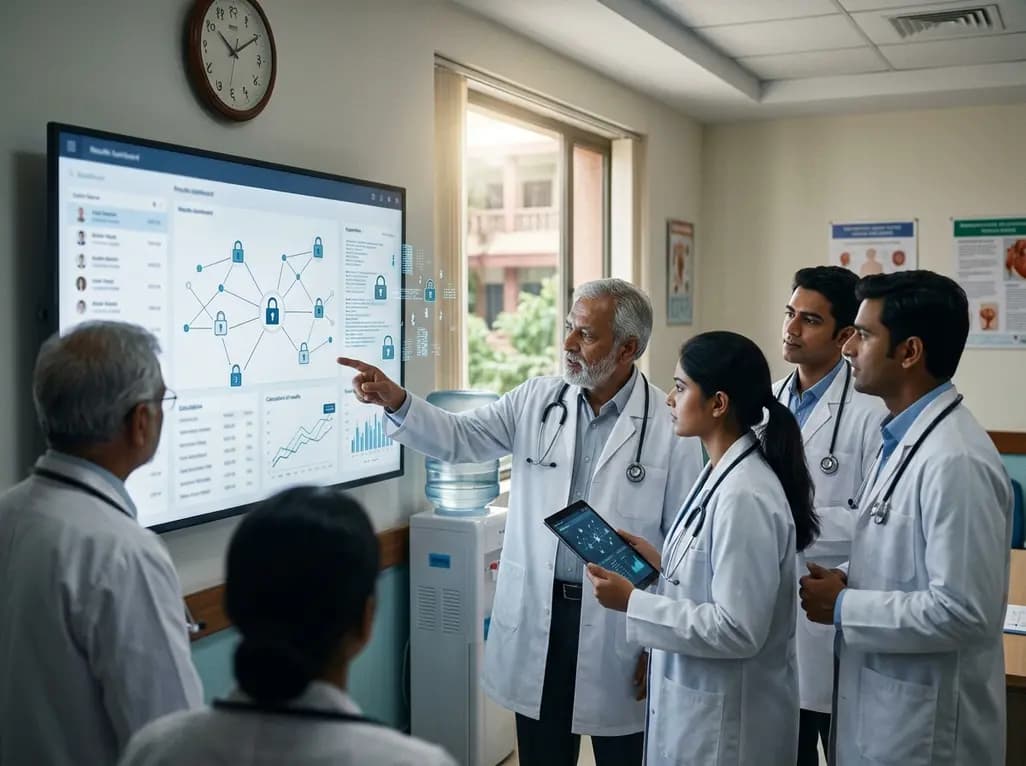
The All India Institute of Medical Sciences, New Delhi, recently announced the results of its massive faculty selection drive. This landmark development represents a significant step forward for medical education in India. Furthermore, this major initiative successfully filled over 460 vacant academic positions. Specifically, the positions span more than 50 academic and clinical disciplines. Notably, the institution leveraged cutting-edge blockchain technology to ensure absolute transparency. Indeed, this historic move successfully streamlined the AIIMS faculty recruitment across multiple premier departments. Subsequently, it covers the main Delhi campus and the newly established CAPFIMS campus. Consequently, the selected assistant professors and professors will soon join the workforce. Ultimately, these appointments will address long-standing staffing shortages in healthcare and research.
Historically, administrative processes in large-scale academic hiring have faced scrutiny regarding their pace and security. However, AIIMS New Delhi has introduced an innovative technological paradigm shift to address these concerns. By integrating blockchain systems into the AIIMS faculty recruitment workflow, administrators have eliminated traditional bureaucratic delays. Moreover, this approach guarantees that all candidate evaluation parameters remain completely tamper-proof and strictly confidential. For instance, the recruitment exercise spanned six months and attracted thousands of medical experts. Throughout this period, the technology maintained an unblemished record of digital custody. Additionally, the introduction of automated merit generation has set a new benchmark for other medical institutions in India. Consequently, other public sector enterprises are now studying this streamlined process for potential replication. Therefore, this digital transition marks a vital milestone in institutional governance. It demonstrates that combining healthcare administrative tasks with advanced technology yields exceptionally secure outcomes. Importantly, the integration of such advanced technologies mitigates the risks of external interference or human error. As a result, the institution successfully finalized hundreds of selections in record time. Thus, the academic community has widely welcomed this highly efficient framework.
To understand the scale of this initiative, one must analyze the structural breakdown of the vacancies. Specifically, the recruitment drive targeted positions ranging from Assistant Professors to senior Professors. These key appointments will serve two main campuses under the AIIMS umbrella. First, the main AIIMS New Delhi campus received allocations for 265 vital faculty positions. Second, the newly established CAPFIMS campus at Maidan Garhi secured 199 teaching and clinical roles. Consequently, this strategic distribution addresses the growing academic demand across both facilities. More than 3,200 candidates submitted their applications for these prestigious roles, creating an intense competition. Furthermore, the selection process spanned over 50 medical and allied disciplines. These clinical departments included specialized fields such as neurosurgery, pediatric oncology, cardiology, and emergency medicine. As a result of this massive intake, the institution will immediately fill critical academic gaps. Therefore, patient care and clinical research will receive a massive boost. Indeed, these new recruitments will directly enhance the teacher-to-student ratio. Subsequently, this enhancement ensures that medical students receive top-tier academic guidance. In addition, the expanded faculty roster will allow the hospital to offer specialized care to larger patient volumes.
The integration of decentralized tech required a meticulous, multi-stage protocol to protect selection integrity. First, during the initial phases, candidates submitted their credentials through a highly secure online portal. Second, evaluators recorded assessment scores and locked them digitally using one-time password authentication. This specific mechanism prevented unauthorized personnel from altering candidate profiles or grades. Subsequently, predefined cryptographic algorithms processed the locked data to generate the final merit list. Notably, this automated stage operated completely without manual or human intervention, thereby eliminating potential bias. The only exception occurred when the system resolved identical scores or ties among candidates. In those specific scenarios, administrators utilized predefined institutional policies to decide the rank. Consequently, this rigorous methodology maintained complete confidentiality throughout the six-month exercise. Furthermore, the electronic ledger created an unalterable audit trail of every single transaction. Thus, the system achieved a level of security previously unseen in public medical recruitment. Ultimately, the successful deployment of this ledger proved that complex administrative selections can remain perfectly transparent. Indeed, this technological breakthrough serves as an inspiring blueprint for other institutions. Similarly, it reassures young medical professionals that their hard work is evaluated with absolute fairness.
Crucially, the addition of 460 faculty members will immediately revitalize patient care across both premier institutions. For instance, the newly established CAPFIMS campus at Maidan Garhi has required a stable academic cadre. Because of these fresh appointments, CAPFIMS can now fully operationalize its state-of-the-art clinical and research departments. Similarly, the main AIIMS New Delhi campus will significantly reduce the workload of its existing medical practitioners. Additionally, this recruitment drive directly addresses the expanding patient footprint at both tertiary care centers. Indeed, having more professors means that clinical units can offer more specialized clinics. Consequently, waiting times for critical surgeries and outpatient consultations will drastically decrease. Furthermore, the new faculty will actively mentor postgraduate students and senior residents. This mentorship will eventually foster an environment of cutting-edge clinical research and healthcare innovation. Therefore, this recruitment represents a comprehensive upgrade to India's public health infrastructure. Ultimately, patients from across the nation will benefit from the enhanced expertise of these medical educators. In addition, the new faculty members bring fresh perspectives and diverse experiences from various global centers. As a result, the collaborative potential within the departments will reach new heights.
Looking forward, this technological achievement will likely trigger a broader digital transformation across Indian academia. Specifically, many state-run universities still rely on slow, paper-based recruitment methodologies. However, the successful precedent set by AIIMS Delhi proves that cryptographic ledgers are highly practical. Therefore, other prestigious medical and non-medical universities will likely adopt similar cryptographic frameworks soon. Moreover, this transition will significantly minimize recruitment disputes and court litigations over selection procedures. Because the decentralized ledger permanently records every administrative step, transparency remains indisputable. Additionally, this approach saves significant administrative costs and speeds up the publication of results. Consequently, the time elapsed between vacancy announcements and actual clinical induction will shorten dramatically. This rapid processing ensures that medical colleges remain fully staffed throughout the academic year. Ultimately, this system creates a highly reliable ecosystem for both applicants and recruiters. Indeed, the successful automation of these selections heralds a more secure and efficient future for public service commissions nationwide. Furthermore, this model can easily scale to accommodate larger national-level exams and selections. As a result, India's educational administrative infrastructure will become a global pioneer in digital governance.
Q1: Why did AIIMS New Delhi choose blockchain technology for this faculty recruitment drive?
AIIMS Delhi adopted blockchain digital technology primarily to guarantee complete confidentiality, transparency, and data integrity throughout the selection process. Historically, large-scale recruitment drives have been vulnerable to manual errors and security breaches. By utilizing decentralized ledger technology, the institution secured candidates' assessment scores under an unalterable format. Consequently, this eliminated unauthorized modifications and automated the final merit generation process, ensuring an objective and highly efficient hiring outcome.
Q2: How did the system prevent manual bias and human intervention during the final selection?
The selection system relied on pre-defined algorithms to automatically compile and generate the final merit lists. Specifically, candidates' assessment scores were digitally locked using secure one-time passwords during the evaluation stage. No human intervention was permitted during the compilation phase, except for resolving statistical ties between candidates. Therefore, this automated approach completely bypassed traditional manual compiling methods. Consequently, it eliminated subjective bias and expedited results.
Q3: Which campuses and clinical departments will benefit from these new faculty appointments?
Specifically, these selections will benefit two major campuses. First, the main AIIMS New Delhi campus received 265 positions. Second, the newly established CAPFIMS campus secured 199 academic roles. Furthermore, the appointments span over 50 academic and clinical disciplines. These specialties range from primary patient care departments to highly specialized surgical units. Ultimately, this recruitment will significantly bolster clinical care, medical research, and educational standards at both premier institutions.
Disclaimer: This content is for informational and educational purposes only. It does not constitute medical advice or replace professional judgment. Refer to the latest local and national guidelines for clinical practice.
References

Read summarized clinical updates, watch expert medical content, and earn CME certifications right from your smartphone.
Open your smartphone camera to scan and install.





AIIMS New Delhi has declared results for over 460 vacant faculty positions across 50 specialties using secure blockchain technology. Candidates' marks were digitally locked using one-time passwords, and pre-defined algorithms compiled the final merit list with zero manual bias, setting a new administrative benchmark.
3 months ago

India is advancing preventive healthcare by integrating genomics, artificial intelligence, and quantum technologies. With the SANGAM programme sequencing one million Indian genomes, clinicians can unlock personalized therapies, detect cardiometabolic risks early, and curb the burden of diabetes and heart disease.
Today
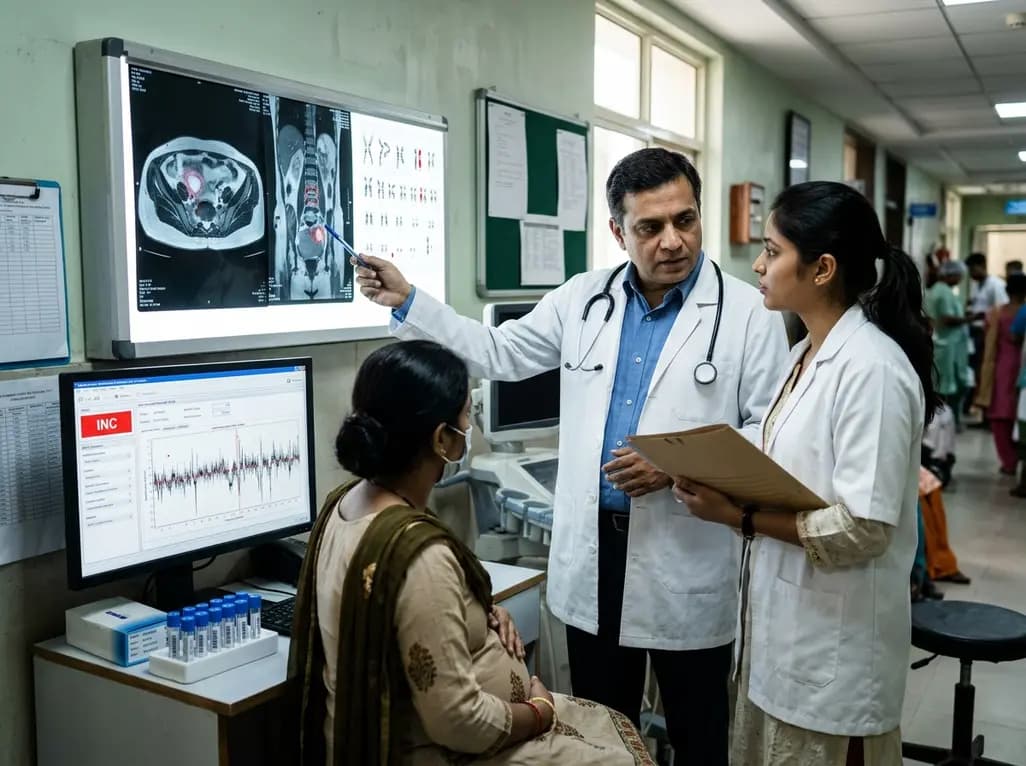
Occult maternal malignancy accounts for 3.82% of persistent unreportable NIPT results with genomic noise. Multiple chromosomal aberrations, notably on chromosome 18, warrant thorough oncological evaluation and whole-body MRI to ensure timely maternal diagnosis while preserving fetal care.
Today
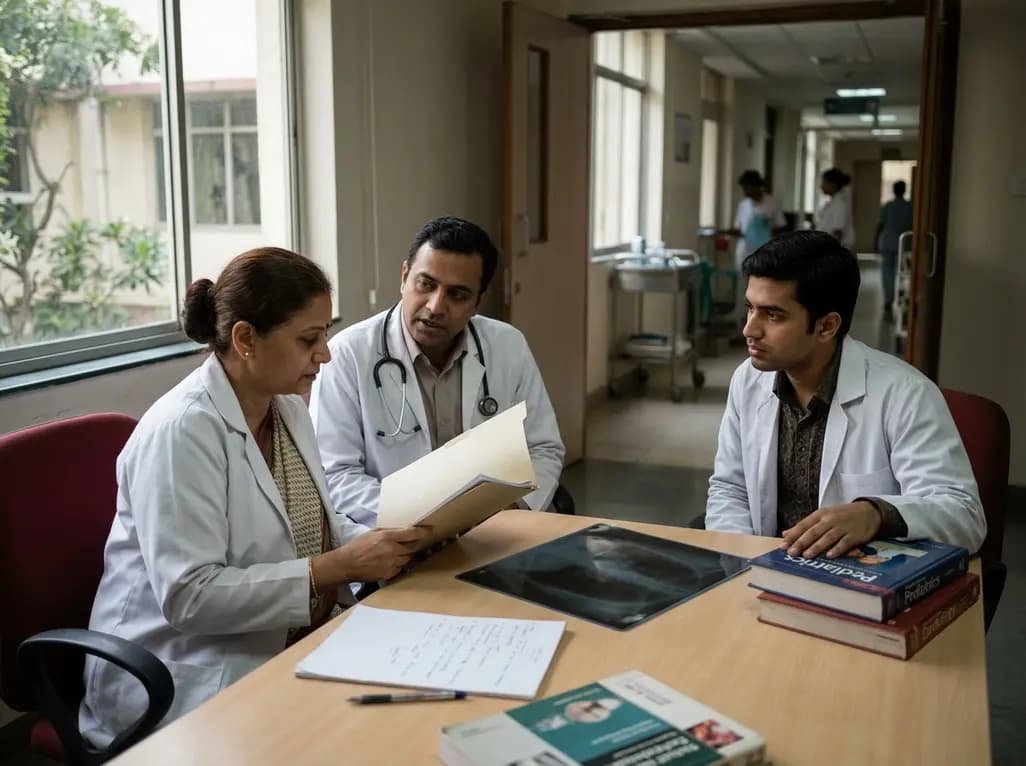
This article reviews the forensic and clinical complexities of acute myocarditis arising on left ventricular hypertrophy in children, highlighting early diagnostic red flags and multidisciplinary postmortem autopsy protocols.
Today

A randomized controlled trial demonstrates that an eight-week dual-task training intervention significantly improves static and dynamic postural control over standard balance exercises in individuals with chronic ankle instability, addressing critical neurocognitive deficits during athletic and daily activities.
Today

A retrospective cohort study of 7,716 ICU patients from the MIMIC-IV database demonstrates that Gradient Boosting Decision Trees significantly outperform traditional SOFA scores in predicting in-hospital mortality among patients with sepsis and diabetes, with SHAP analysis providing clinical interpretability.
Today
