.webp&w=384&q=75)

Loading, please wait...
Loading, please wait...
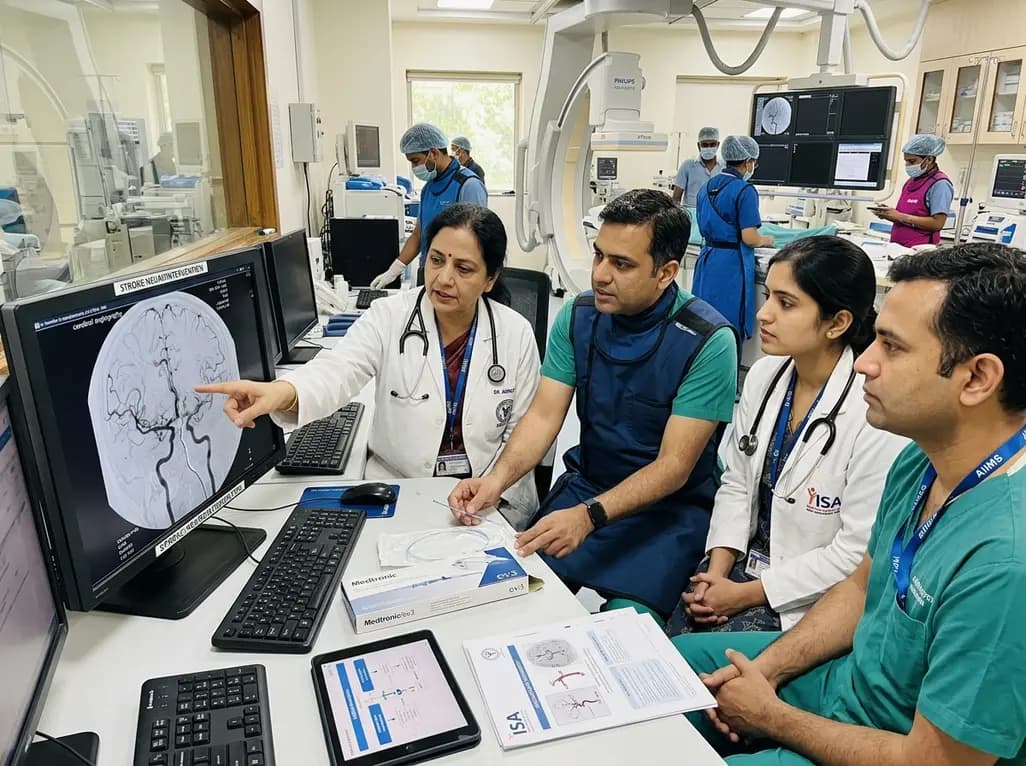
A high-impact Continuing Medical Education (CME) conference held at AIIMS New Delhi has outlined a transformative roadmap for stroke care in India. Organised by the Department of Neurology at AIIMS Delhi in collaboration with the Indian Stroke Association (ISA), the academic programme brought together over 400 healthcare leaders, neurointerventionists, physicians, and health policy experts. The event, titled Save the Brain — Stroke is Preventable and Treatable, commemorated the centenary of cerebral angiography pioneered by Egas Moniz. However, discussions extended beyond historical milestones to address urgent epidemiological imperatives. Experts collectively emphasized that medical systems must shift focus from simply managing residual neurological deficits toward actively preserving intact cerebral tissue through swift, organized clinical workflows.
Stroke medicine has undergone a foundational paradigm shift over recent decades. Traditionally, clinical management prioritized the documentation of post-stroke neurological deficits and palliative stabilization. AIIMS Delhi Director highlighted that contemporary stroke management must prioritize the active preservation of functional brain architecture. Consequently, clinicians must act swiftly to salvage the ischemic penumbra before irreversible infarction occurs. Every passing minute during a large vessel occlusion destroys nearly two million neurons. Therefore, emergency stroke workflows require seamless, coordinated protocols to minimize door-to-imaging and door-to-needle times.
Furthermore, acute stroke management requires a rapid transition from basic diagnostic confirmation to decisive reperfusion therapy. Clinicians must establish standardized clinical pathways within emergency departments. These pathways allow rapid differentiation between ischemic and hemorrhagic events using non-contrast computed tomography or rapid magnetic resonance imaging. Subsequently, eligible patients can receive intravenous thrombolysis without delay. Ultimately, modern neurocritical care measures clinical success not by survival alone, but by functional independence and long-term neurocognitive preservation.
A critical theme underscored by policymakers and clinicians was the urgent need to expand stroke care in India beyond tertiary academic hospitals. Aradhana Patnaik, Additional Secretary and Mission Director of the National Health Mission (NHM), stressed that effective stroke management begins at the primary healthcare level. India is actively strengthening this foundation through Ayushman Arogya Mandirs. These primary facilities perform structured screening for modifiable vascular risk factors, including systemic hypertension, diabetes mellitus, dyslipidemia, and atrial fibrillation. Consequently, early risk stratification can prevent catastrophic cerebrovascular events before they manifest clinically.
Moreover, health authorities are deploying structured training modules for Accredited Social Health Activists (ASHAs), Auxiliary Nurse Midwives (ANMs), Community Health Officers (CHOs), and primary medical officers. These frontline personnel learn to apply validated clinical tools, such as the BE-FAST protocol, to recognize acute stroke symptoms instantly. Simultaneously, policymakers are establishing robust hub-and-spoke networks across states. Under this structured architecture, primary spokes stabilize patients and initiate immediate teleconsultations. Spoke centres then rapidly transport confirmed cases along pre-cleared transit corridors to advanced comprehensive stroke hubs equipped for advanced neurointervention.
While intravenous thrombolysis remains an indispensable first-line intervention within the 4.5-hour therapeutic window, endovascular thrombectomy (EVT) has revolutionized outcomes for acute ischemic stroke caused by large vessel occlusions. Dr. Shailesh B. Gaikwad, Chief of the Neurosciences Centre and Head of Neuroimaging and Interventional Neuroradiology at AIIMS, underscored the clinical necessity of expanding mechanical thrombectomy infrastructure nationwide. Clinical trials demonstrate that mechanical reperfusion can reverse severe neurological deficits up to 24 hours after symptom onset in appropriately selected patients with salvageable brain tissue.
However, the widespread implementation of mechanical thrombectomy across regional healthcare facilities faces substantial economic barriers. Imported microcatheters, intermediate aspiration catheters, and stent retrievers present prohibitive costs for many patients. To overcome these economic challenges, experts strongly advocated for indigenous biomedical innovation. Domestic biomedical initiatives, such as the AIIMS GRASSROOT trial evaluating locally engineered stent retriever systems, represent vital progress. By manufacturing high-grade neurointerventional devices under national "Make-in-India" frameworks, healthcare systems can drastically reduce procedure costs. Consequently, advanced catheter-based reperfusion therapies can achieve equitable nationwide reach.
Addressing the complex public health challenge of stroke requires an unbroken continuum of care that bridges community education and post-acute neurorehabilitation. Dr. M. Srinivas, representing NITI Aayog, highlighted the national Brain Health Initiative currently operating in 12 aspirational districts. This strategic program integrates primary prevention, emergency stabilization, tertiary intervention, and community-based rehabilitation into a unified public health framework. Multidisciplinary collaboration among neurologists, emergency physicians, physiatrists, physical therapists, and occupational therapists remains essential to lower long-term morbidity and reduce recurrence rates.
Additionally, experts proposed leveraging innovative community engagement models to foster public health literacy. Educating school students as stroke awareness ambassadors empowers young individuals to identify stroke signs within their households. Because acute stroke frequently causes cognitive impairment or expressive aphasia, victims often cannot call emergency services themselves. Thus, family members and bystanders must act without hesitation. Community education initiatives focused on the acronym BE-FAST (Balance, Eyes, Face, Arms, Speech, Time) ensure that populations seek emergency medical services promptly rather than waiting for symptoms to resolve spontaneously.
Dr. Awadh Kishor Pandit and senior neurology faculty from AIIMS emphasized that stroke must no longer be managed as an isolated tertiary hospital event. Instead, India requires a cohesive public health ecosystem integrating primary prevention, rapid emergency transport, standardized acute neurocritical care, and long-term neurorehabilitation. Senior leaders from the Indian Stroke Association, including Dr. Vikram Huded, reiterated that establishing stroke-ready hospitals across tier-2 and tier-3 cities is paramount. Standardized triage guidelines, mandatory neuroimaging protocols, and tele-stroke networks can bridge existing geographical disparities in neurovascular care.
Furthermore, institutional advocacy panels highlighted the vital role of medical media and academic societies in harmonizing clinical guidelines across private and public health sectors. By maintaining robust clinical registries, Indian neurologists can generate population-specific evidence regarding intracranial atherosclerosis, cardioembolic strokes, and atypical arteriopathies. Ultimately, collective multi-stakeholder action involving academic institutions, primary care networks, government health ministries, and indigenous medical device developers will ensure that timely, evidence-based stroke care becomes accessible to every citizen across the country.
Q1: What is the primary message of the "Save the Brain" campaign launched by AIIMS and ISA?
The campaign emphasizes that stroke is both preventable and treatable through timely intervention. It shifts the primary clinical focus from merely managing neurological disabilities after a stroke to proactively preserving functional brain tissue. This approach relies on aggressive risk factor control, rapid community symptom recognition using the BE-FAST framework, and immediate emergency referral for intravenous thrombolysis or endovascular thrombectomy within established therapeutic time windows.
Q2: How does the hub-and-spoke model improve acute stroke outcomes across rural and suburban regions?
The hub-and-spoke model connects peripheral healthcare centres, such as Ayushman Arogya Mandirs and community hospitals, with advanced comprehensive stroke centres. Primary spokes screen patients, perform initial triage, stabilize vital signs, and initiate tele-neurology consultations. If an acute large vessel occlusion or ischemic stroke is confirmed, the system coordinates immediate, streamlined transport to an advanced tertiary hub for urgent interventions like mechanical thrombectomy.
Q3: Why is indigenous medical device manufacturing critical for advancing acute stroke care in India?
Advanced endovascular stroke therapies rely heavily on imported microcatheters, aspiration devices, and stent retrievers, which creates high treatment costs. Indigenous manufacturing under "Make-in-India" initiatives dramatically lowers the production expenses of neurointerventional equipment. This cost reduction allows public and regional private hospitals to acquire modern neurovascular devices, making life-saving mechanical thrombectomy accessible and affordable for diverse socio-economic populations across the country.
Disclaimer: This content is for informational and educational purposes only. It does not constitute medical advice or replace professional judgment. Refer to the latest local and national guidelines for clinical practice.
References

Read summarized clinical updates, watch expert medical content, and earn CME certifications right from your smartphone.
Open your smartphone camera to scan and install.





At a national CME marking 100 years of cerebral angiography, AIIMS Delhi and the Indian Stroke Association advocated shifting from hospital-centric treatment to a comprehensive continuum covering primary screening, hub-and-spoke referral pathways, endovascular thrombectomy, and indigenous neurovascular devices.
last month

A systematic review of 41 preclinical studies reveals that baicalin dampens systemic inflammation, inhibits NF-κB and NLRP3 pathways, and improves organ preservation in sepsis models. However, substantial study heterogeneity and a complete lack of human clinical trials highlight the need for further translational research.
Today
Discover the crucial distinctions between mesonephric and mesonephric-like proliferations of the female genital tract. Learn the key histomorphologic, immunohistochemical, and molecular differences essential for accurate diagnosis and clinical management.
Today
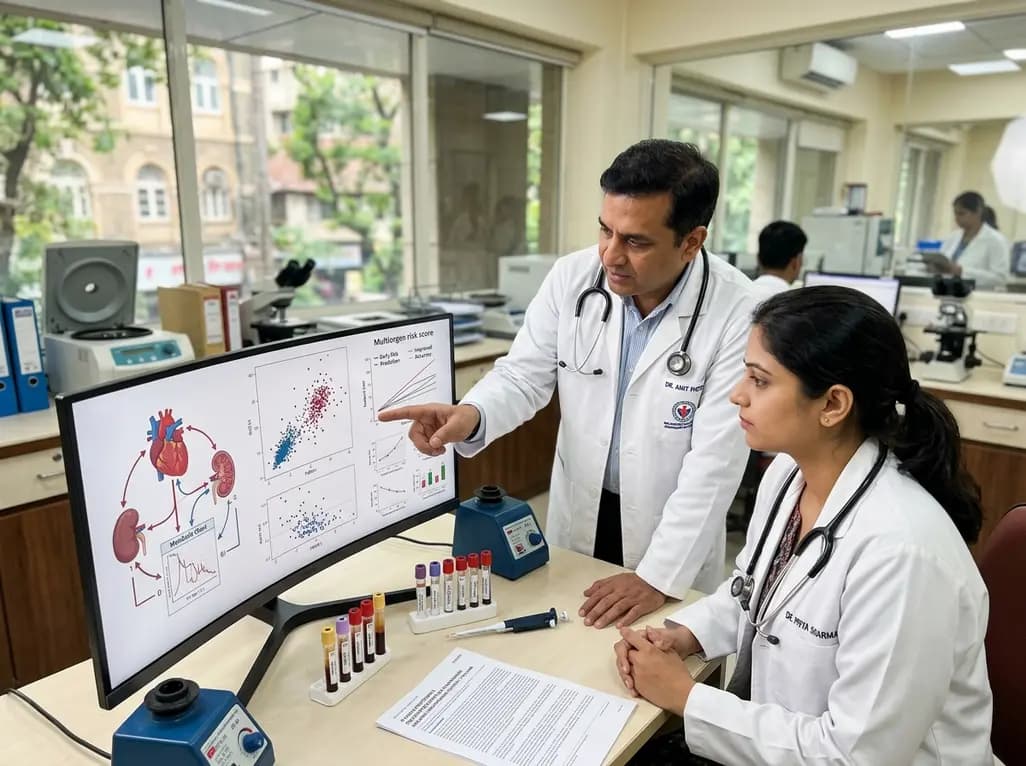
A large UK Biobank study reveals that plasma proteomic signatures capture preclinical organ damage and improve multiorgan risk prediction across early CKM syndrome stages 0 to 2 beyond traditional PREVENT clinical models.
Today
A narrative review investigates whether the articularis genus muscle functions as an independent anatomical entity or blends with the vastus intermedius. We evaluate its morphology, role in retracting the suprapatellar bursa, and direct clinical significance in anterior knee pain and arthroplasty.
Today

A Bayesian multilevel meta-analysis reveals that aerobic training combined with moderate carbohydrate restriction modestly lowers HbA1c in type 2 diabetes. However, sparse data and very low certainty leave incremental benefits over exercise or diet alone unproven, highlighting the need for individualized care.
Today
