.webp&w=384&q=75)

Loading, please wait...
Loading, please wait...
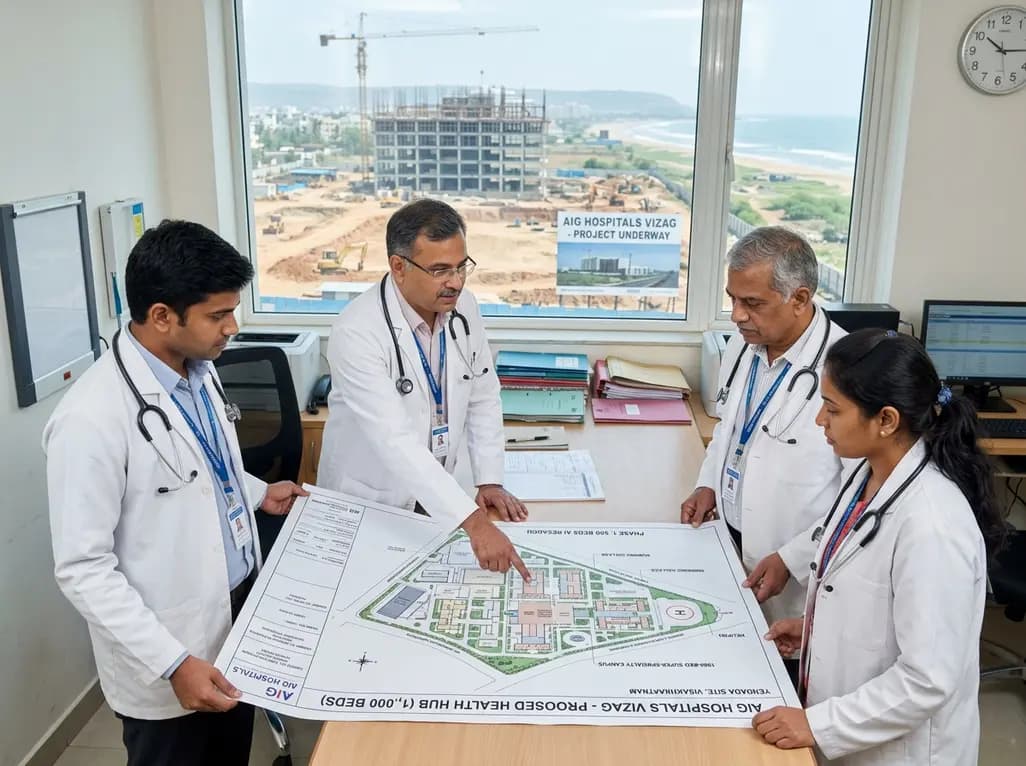
Hyderabad-based Asian Institute of Gastroenterology has announced a major regional expansion with the launch of the new AIG Hospitals Vizag facility at Yendada in Visakhapatnam. Consequently, this massive healthcare project will involve an investment of Rs 2,000 crore spread over the next five years. State Education and IT Minister Nara Lokesh laid the foundation stone for the ambitious campus, signaling a major boost to public health infrastructure in Andhra Pradesh.
Historically, patients across coastal Andhra Pradesh frequently traveled to metropolitan centres like Hyderabad, Chennai, or Bengaluru for tertiary interventions. Therefore, setting up this integrated campus in Visakhapatnam directly addresses persistent regional gaps in high-end medical care. The facility will sit on a nine-acre plot and will eventually house 1,000 inpatient beds to serve both domestic and international patients.
Furthermore, clinical planners designed the hospital layout to accommodate approximately 5,000 outpatient consultations every single day. As a result, this high-throughput capacity will significantly ease the patient load on government teaching hospitals across the district. Moreover, the campus will improve timely clinical management for acute gastrointestinal emergencies, organ transplant candidates, and oncology patients. Local clinicians will also gain easier access to collaborative consultations and modern diagnostic pathways.
To ensure steady development, the promoters are executing the project in two distinct, well-defined phases. In the initial phase, construction teams will build Towers A and B, which together will deliver 650 beds by October 2028. Subsequently, the organization will initiate work on Tower C to add another 350 beds within the succeeding two years.
In addition, the physical design incorporates state-of-the-art intensive care units, high-efficiency surgical suites, and dedicated isolation wards. Modern engineering standards will optimize hospital infection control and patient workflows across all clinical departments. Because rapid access remains essential in emergency scenarios, the campus incorporates organized trauma pathways and rapid-response triage bays. Thus, the modular architectural layout allows seamless future upgrades as clinical technologies evolve.
The upcoming medical hub will deliver comprehensive clinical services spanning more than 50 super-specialties organized into eight dedicated Centres of Excellence. In particular, the hospital will feature advanced departments for gastroenterology, hepatology, surgical oncology, cardiology, and nephrology. Additionally, the administration will establish a dedicated mother-and-child care unit to address high-risk obstetric cases and neonatal intensive care needs.
Furthermore, multidisciplinary tumor boards and specialized surgical teams will offer integrated care pathways under one roof. Advanced interventional endoscopy, robotic surgery, and organ transplantation units will form core pillars of the quaternary care ecosystem. Meanwhile, digital records and automated pharmacy dispensing will streamline in-hospital clinical operations. Consequently, patients will receive evidence-based interventions comparable to global medical benchmarks.
Beyond tertiary care delivery, the campus places significant emphasis on academic development and clinical skill cultivation. AIG Hospitals is establishing a dedicated nursing college and allied health sciences school on an adjoining 2.5-acre parcel. Consequently, this educational facility will train hundreds of healthcare professionals each year to mitigate regional workforce shortages.
Similarly, the campus will house a 500-seat modern auditorium intended specifically for continuing medical education conferences, clinical workshops, and academic symposia. Through these academic initiatives, regional practitioners can continuously upgrade their knowledge in evolving medical techniques. In parallel, on-site hostels and low-cost attendant accommodation will ensure seamless logistics for trainees and visiting patient families.
Modern clinical systems rely increasingly on high-precision data, and this campus will reflect those technological advances. Specifically, the infrastructure will incorporate an artificial intelligence research centre alongside fully equipped clinical research laboratories. These technical units will develop clinical decision-support models, predictive algorithms for sepsis, and automated image analysis tools.
Moreover, physician-scientists at the institute will conduct collaborative translational research in molecular biology, genomics, and gastrointestinal pathology. Clinicians will have access to centralized biobanks and secure data platforms to support multi-centre clinical trials. Therefore, local medical practitioners can actively participate in international research studies without leaving the region. Ultimately, these digital innovations will optimize clinical diagnostic precision and enhance long-term treatment outcomes.
Besides elevating clinical standards, the project will generate considerable socio-economic benefits for northern Andhra Pradesh. According to government estimates, the integrated medical complex will create direct and indirect employment for roughly 9,000 people, including 1,000 doctors. Consequently, the influx of skilled healthcare workers will invigorate local supporting industries, hospitality, and residential development around Yendada.
Furthermore, Visakhapatnam is steadily emerging as a major economic, educational, and medical hub along the eastern seaboard. By reducing the need for costly travel to distant metropolitan cities, the hospital will lessen financial stress on local families. In summary, this multi-crore investment represents a transformative milestone in regional healthcare decentralization.
Q1: What is the total investment and proposed bed capacity of the new AIG facility in Vizag?
AIG Hospitals will invest Rs 2,000 crore over five years to build a 1,000-bed integrated medical campus at Yendada in Visakhapatnam. The initial phase will deliver Towers A and B with 650 beds by October 2028, while the second phase will add 350 beds in Tower C within the following two years.
Q2: What specialized clinical services and academic units will the campus feature?
The facility will offer more than 50 medical specialties across eight Centres of Excellence, including a dedicated mother-and-child care centre. Additionally, the campus will feature a nursing college on 2.5 acres, paramedical training facilities, a 500-seat medical auditorium, a clinical research laboratory, and an artificial intelligence centre.
Q3: How will this healthcare project benefit medical practitioners and patients in Andhra Pradesh?
The project reduces the burden of traveling to Hyderabad or other major cities for advanced interventions, handling up to 5,000 outpatients daily. Furthermore, local physicians benefit from state-of-the-art continuing medical education programmes, clinical trial infrastructure, and collaborative multidisciplinary teams across major super-specialties.
Disclaimer: This content is for informational and educational purposes only. It does not constitute medical advice or replace professional judgment. Refer to the latest local and national guidelines for clinical practice.
References

Read summarized clinical updates, watch expert medical content, and earn CME certifications right from your smartphone.
Open your smartphone camera to scan and install.





Hyderabad-based AIG Hospitals has unveiled a Rs 2,000 crore phased investment to establish a 1,000-bed multispecialty hospital and nursing campus at Yendada in Visakhapatnam. The integrated healthcare hub will feature 50 super-specialties, an AI research centre, and clinical training infrastructure.
4 weeks back

UK Research and Innovation is deploying £80 million across the NHS to trial nine cutting-edge technologies. The initiative features seven-minute brain MRIs, blood biomarker assays, and predictive AI tools, aiming to evaluate 92% of suspected cases within 18 weeks and overcome lengthy diagnostic backlogs.
Today

A mixed-methods study identifies key drivers of PMTCT service utilization among adolescent girls and young women aged 15-24. Highlighting age disparities, PrEP uptake, and systemic barriers, the evidence guides clinicians toward adolescent-responsive, integrated maternal HIV prevention protocols.
Today

PepsiCo and Monster Beverage have challenged the FSSAI ban on the energy drink label in Indian courts. While companies highlight supply disruptions, regulatory actions spotlight severe cardiovascular and metabolic risks associated with excessive caffeine, sugar, and taurine consumption, especially in adolescents.
Today
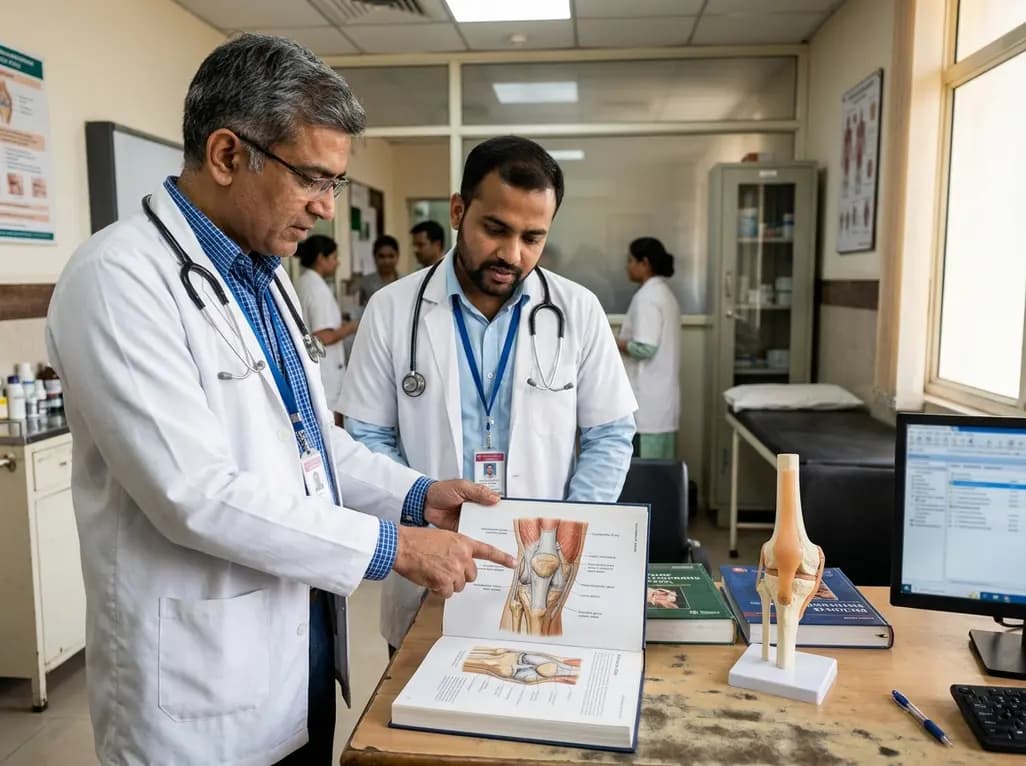
A narrative review investigates whether the articularis genus muscle functions as an independent anatomical entity or blends with the vastus intermedius. We evaluate its morphology, role in retracting the suprapatellar bursa, and direct clinical significance in anterior knee pain and arthroplasty.
Today
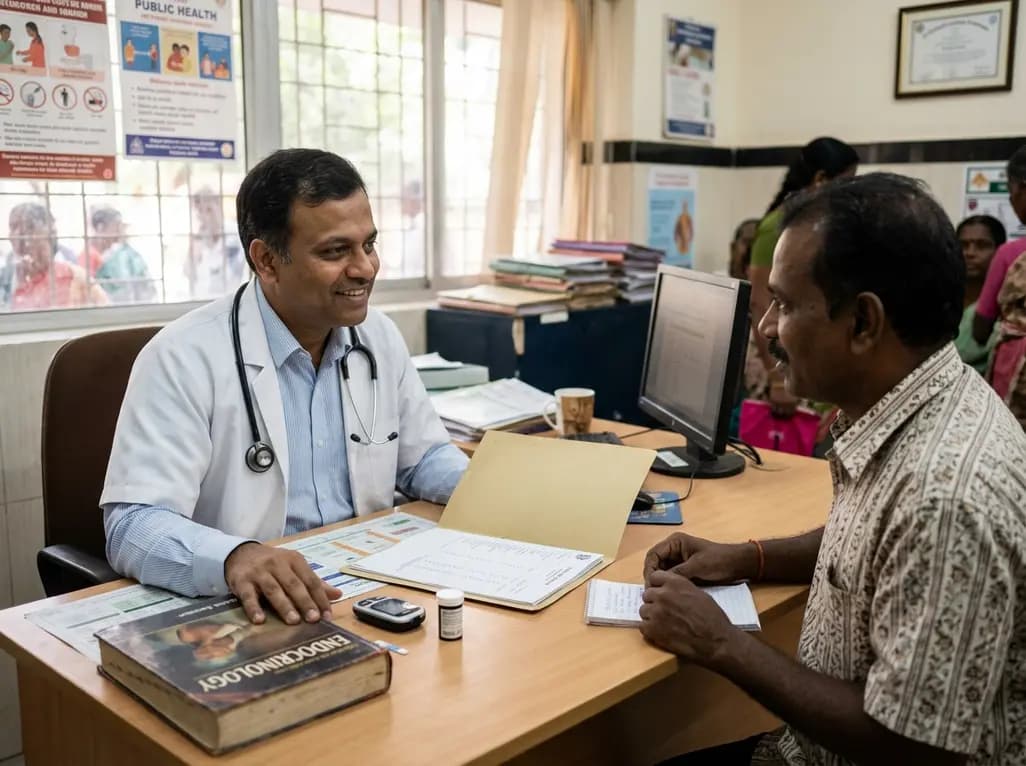
A Bayesian multilevel meta-analysis reveals that aerobic training combined with moderate carbohydrate restriction modestly lowers HbA1c in type 2 diabetes. However, sparse data and very low certainty leave incremental benefits over exercise or diet alone unproven, highlighting the need for individualized care.
Yesterday
