.webp&w=384&q=75)

Loading, please wait...
Loading, please wait...

Recent advances in computational neurosciences have spotlighted speech analysis as a noninvasive diagnostic pathway for neurodegenerative conditions. Clinicians recognize that subtle acoustic and syntactic shifts often precede overt cognitive impairment. Moreover, researchers now develop automated machine learning tools to capture subtle cognitive changes at preclinical stages. Therefore, the clinical application of AI speech biomarkers offers an objective and scalable modality for routine examinations. Systematic evaluation of these digital technologies remains essential to evaluate their diagnostic accuracy, translational feasibility, and clinical reliability.
Natural speech production requires intricate coordination across cortical regions, subcortical networks, and peripheral neuromuscular structures. Neurodegenerative diseases such as Alzheimer's disease systematically disrupt these integrated circuits long before severe functional loss occurs. Consequently, speech patterns change in noticeable ways during disease progression. For example, patients experience prolonged hesitation, semantic substitution, and altered pitch variability during casual dialogue. By leveraging machine learning algorithms, modern acoustic pipelines can extract hundreds of latent variables from brief conversational voice samples. Furthermore, deep neural networks analyze spontaneous descriptions, sustained vowels, and reading passages to detect microscopic aberrations. In contrast to conventional paper-based cognitive tests, digital vocal assessments eliminate examiner subjectivity and patient test anxiety. Additionally, patients can complete these speech assessments remotely using standard smartphones or tablets. Hence, vocal screening could expand access to cognitive monitoring in resource-limited ambulatory environments. Nonetheless, successful implementation requires transparent models that present clear physiological correlations to practicing physicians. As research progresses, these machine-driven vocal evaluations continue to bridge the gap between subtle neurobiology and objective diagnostic measurements.
Diagnostic models rely on distinct computational feature categories to differentiate impaired individuals from cognitively intact controls. First, prosodic parameters measure variations in fundamental frequency, rhythm, and intonation contours. Investigators frequently observe reduced pitch range and abnormal stress patterning in affected cohorts. Second, temporal metrics evaluate speech tempo, pause durations, and vocalization ratios. Specifically, prolonged silent pauses between words frequently signal lexical retrieval difficulties in early neurodegeneration. Third, spectral analysis evaluates voice quality by tracking formants, mel-frequency cepstral coefficients, and harmonics-to-noise ratios. These acoustic indices capture subtle changes in vocal fold coordination and articulatory precision. Finally, linguistic analysis examines structural language properties, including syntactic complexity, grammatical density, and semantic coherence. Natural language processing models evaluate whether vocabulary shrinks or if individuals repeat phrases excessively. Consequently, combining acoustic features with linguistic parameters consistently yields superior diagnostic power compared to isolated metric analysis. Therefore, multimodal algorithms offer the most comprehensive characterization of progressive cognitive degradation across diverse clinical presentations.
Systematic appraisal of the published evidence reveals a striking performance dichotomy across different disease stages. When distinguishing diagnosed Alzheimer's disease from healthy older adults, machine learning models demonstrate remarkably high accuracy. In fact, most published studies achieve area under the curve metrics exceeding 0.80 across diverse testing paradigms. These models reliably classify established dementia because widespread neurodegeneration produces pronounced articulatory and semantic anomalies. In contrast, identifying mild cognitive impairment proves substantially more challenging for automated vocal algorithms. Patients with mild impairment display subtle, intermittent communicative deficits that often blend with typical age-related changes. Consequently, diagnostic discrimination in this early cohort remains far less consistent across existing investigations. Furthermore, overlapping comorbidities such as late-life depression, sensory loss, and systemic vascular disease obscure early acoustic signatures. As a result, current algorithms cannot yet replace comprehensive neuropsychological evaluation for subtle pre-dementia states. Clinicians must interpret early risk scores cautiously while developers refine model sensitivity to minor communicative fluctuations.
Despite encouraging diagnostic figures, significant methodological shortcomings currently hinder the broad clinical translation of speech technologies. Methodological quality appraisals using validated frameworks like PROBAST and CLAIM reveal widespread risk of bias. Most prominently, the majority of published datasets originate from small, single-center cohorts. Consequently, models frequently suffer from algorithmic overfitting, memorizing idiosyncratic background noise rather than true pathology. Moreover, independent external validation on separate patient populations remains exceedingly rare across the literature. When researchers evaluate models on unseen cohorts, performance metrics often degrade substantially. Furthermore, variations in recording hardware, environmental acoustic interference, and language dialects introduce profound heterogeneity. Sociodemographic confounders, including formal educational attainment and cultural background, also skew natural conversational styles. Therefore, unstandardized recording protocols prevent direct comparisons between competing analytical algorithms. Until investigators adopt open-source benchmarks and diverse multicenter registries, regulatory clearance and broad clinical adoption will remain out of reach.
The integration of digital speech biomarkers carries profound implications for dementia care in low- and middle-income countries. In India, the rapid growth of the geriatric population coincides with a notable shortage of specialized memory clinics. Moreover, high patient volumes in primary care settings leave little time for extensive neuropsychological batteries. Under these strained conditions, automated smartphone-based vocal assessments could serve as rapid, cost-effective screening tools. However, deploying these technologies within the Indian clinical ecosystem poses distinct sociolinguistic hurdles. India features remarkable linguistic diversity, with dozens of major languages and hundreds of regional dialects. Because language structure directly shapes acoustic and semantic features, algorithms trained on Western cohorts cannot generalize to Indian patients. Consequently, local researchers must design culturally nuanced datasets that account for multilingualism, educational differences, and regional phonetics. Furthermore, validation studies must involve rural primary health centers alongside urban tertiary hospitals. Through rigorous domestic validation, Indian physicians can ultimately deploy reliable digital biomarkers to detect neurocognitive decline during routine community visits.
AI voice biomarkers detect Alzheimer's disease by analyzing subtle variations in acoustic and linguistic patterns during speech. Specifically, machine learning algorithms process parameters such as pause duration, pitch variability, articulation speed, and vocabulary diversity. These computational models identify micro-hesitations and semantic deficits caused by early neurodegeneration. Consequently, the software flags subtle cognitive changes that typically evade standard conversational interactions during early clinical evaluations.
Differentiating mild cognitive impairment from normal cognitive aging remains challenging for automated speech analysis tools. Although models identify dementia reliably, mildly impaired patients display intermittent speech anomalies that frequently overlap with healthy senescence. Furthermore, factors like dialect, educational attainment, and mood disorders can confound computational predictions. Therefore, while these digital tools show promise, clinicians cannot currently rely on speech analysis alone to diagnose mild cognitive impairment.
Clinical adoption in India faces substantial obstacles, primarily due to immense linguistic diversity, varied literacy levels, and regional dialectal nuances. Most existing algorithms rely on English datasets, which fail to generalize across multilingual Indian populations. Additionally, background acoustic noise in busy outpatient clinics hampers audio precision. Consequently, clinicians require multicenter validation across local languages and standardized protocols before adopting voice biomarkers for routine patient triage.
Disclaimer: This content is for informational and educational purposes only and should not be construed as medical advice. Always consult a qualified healthcare professional before making any clinical decisions. Refer to the latest local and national guidelines for clinical practice.
References

Read summarized clinical updates, watch expert medical content, and earn CME certifications right from your smartphone.
Open your smartphone camera to scan and install.





A systematic review evaluates AI speech biomarkers for Alzheimer's disease and mild cognitive impairment across 63 studies, highlighting high diagnostic accuracy alongside methodological challenges.
Today

At the New Delhi Summit, BRICS leaders adopted a landmark declaration committing member nations to united action against tuberculosis, non-communicable diseases, and future pandemic threats. Key actions include NIMHANS-led mental health networks, digital health architectures, and evidence-based integrative medicine.
Today
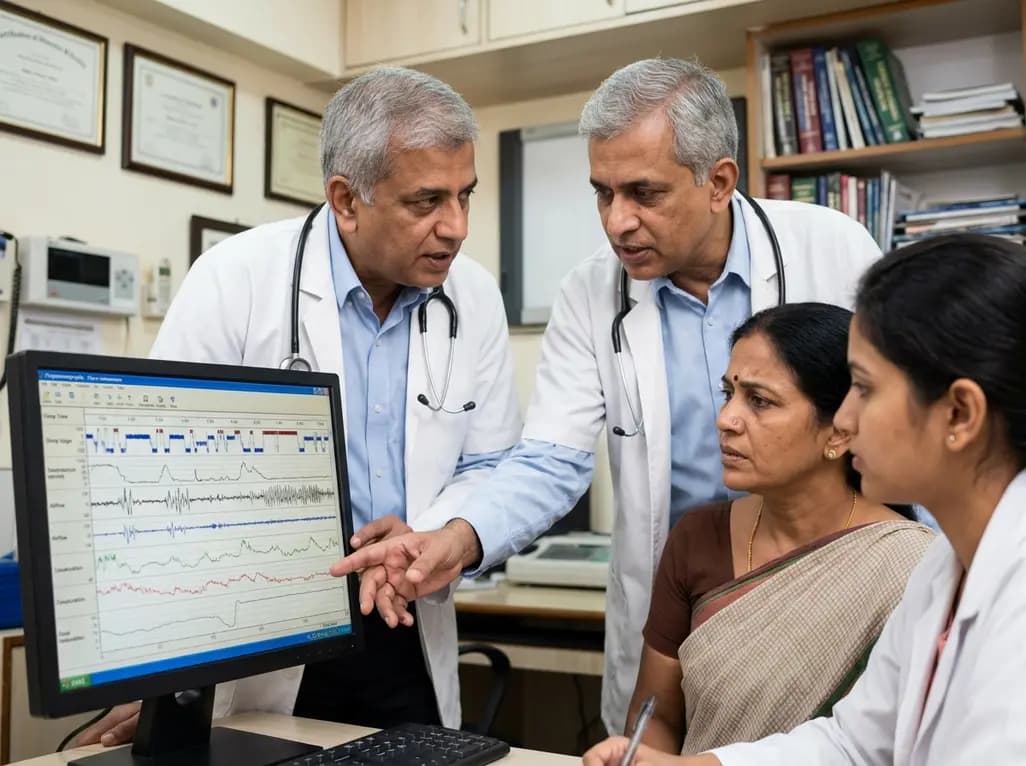
Perimenopausal obstructive sleep apnea often goes undetected due to atypical polysomnographic presentations and symptom overlap with menopause. This review details its neurocognitive mechanisms, polysomnography markers, and precision management strategies.
Today

Mitochondrial deubiquitinases regulate organelle turnover by editing ubiquitin tags on damaged mitochondria. Discover how targeting these enzymes, notably USP30, offers therapeutic strategies for neurodegenerative, cardiovascular, and metabolic disorders.
Today
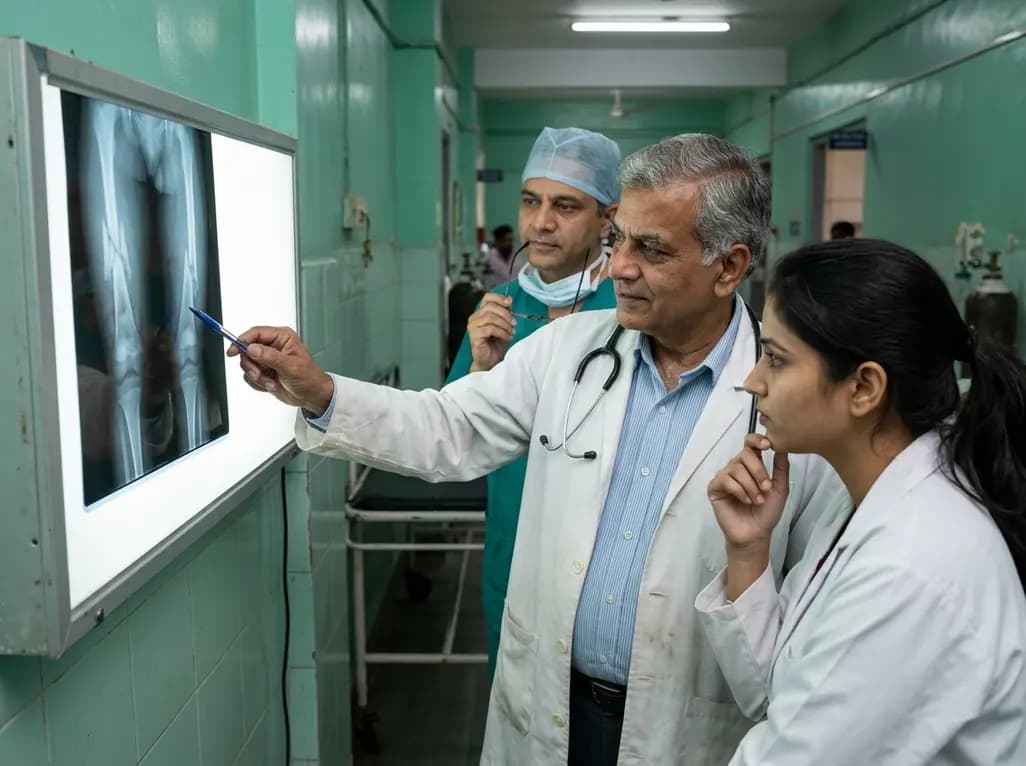
A rare case of a pediatric pathological femoral fracture caused by occult telangiectatic osteosarcoma demonstrates the risks of misdiagnosis after trauma, where intramedullary nailing prompted iatrogenic tumor dissemination and required modular total endoprosthetic reconstruction.
Today
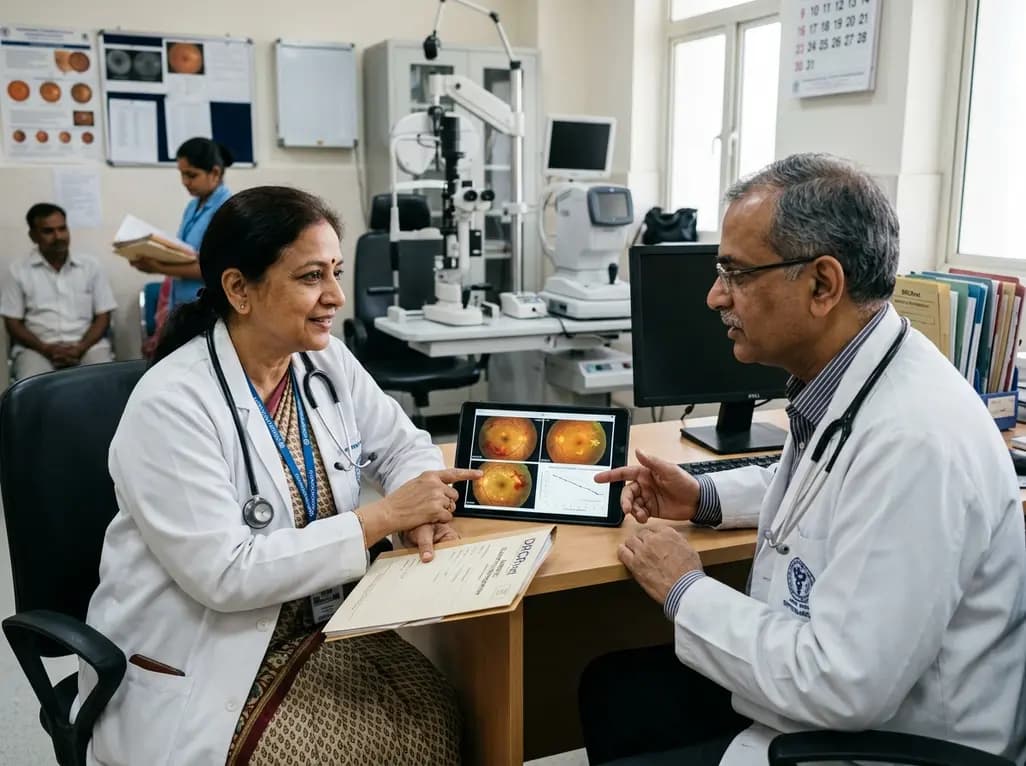
A comprehensive analysis of DRCRnet studies reveals that 15.1% of participants discontinue diabetic retinopathy clinical trials. Identifying baseline demographic and clinical predictors helps ophthalmologists and endocrinologists mitigate real-world treatment dropouts and protect long-term visual outcomes.
Today
