.webp&w=384&q=75)

Loading, please wait...
Loading, please wait...
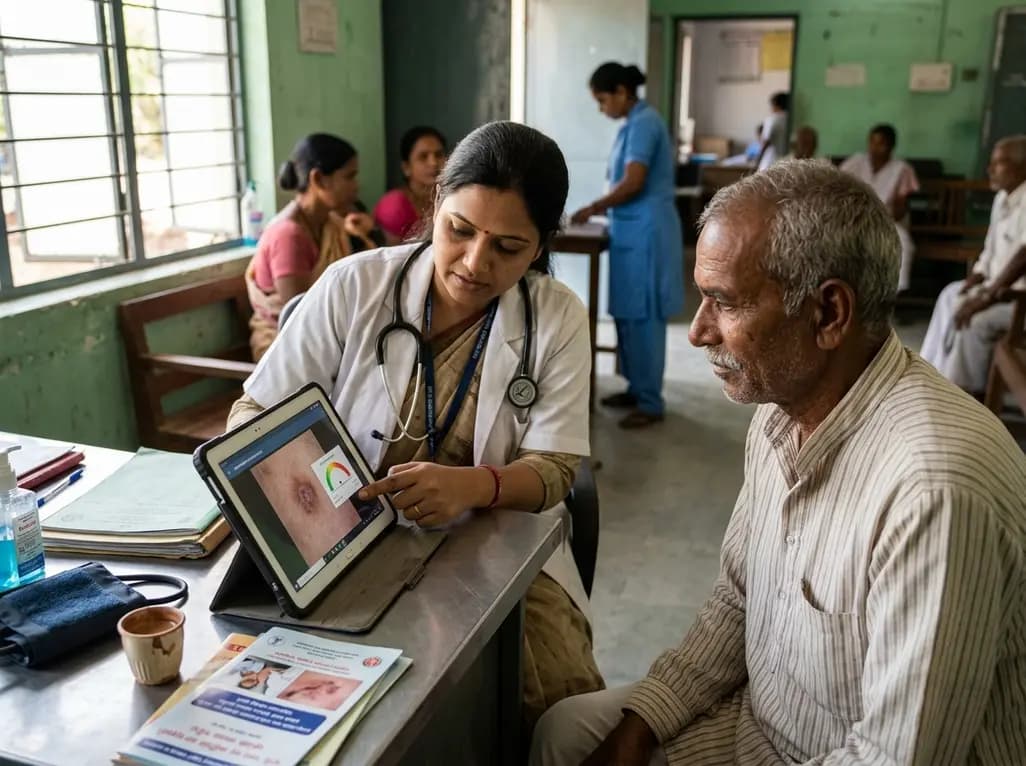
Early identification of malignant cutaneous neoplasms remains a pivotal diagnostic challenge across frontline clinical environments. Recently, digital health innovations have introduced automated decision support tools into routine triage pathways. Consequently, the integration of AI skin cancer detection offers remarkable potential to enhance diagnostic accuracy, reduce unnecessary referrals, and catch aggressive melanomas earlier. However, the successful adoption of these computational platforms depends heavily on how clinicians and patients perceive their utility, safety, and operational reliability. In addition, understanding stakeholder preferences provides vital insights for health systems seeking to implement algorithmic diagnostics responsibly.
Discrete choice experiments offer a robust quantitative methodology to measure how individuals value distinct features of healthcare interventions. In this UK-wide investigation, researchers surveyed 2,302 participants, including general practitioners, patients, and members of the public. The study presented participants with realistic hypothetical choice scenarios that systematically varied several core attributes. These attributes included false negative rates, false positive rates, out-of-pocket costs, deployment settings, diagnostic efficacy across diverse skin tones, and alignment with clinical guidelines. Furthermore, investigators utilized alternative-specific conditional logit regression models to evaluate trade-offs and calculate the relative weight of each factor.
Notably, every evaluated attribute exerted a statistically significant influence on participant decisions. General practitioners and lay individuals demonstrated clear, quantifiable priorities when choosing between alternative digital systems. Moreover, the experimental design effectively captured nuanced preferences that standard satisfaction questionnaires often fail to detect. Because the study gathered responses from diverse groups across the United Kingdom, the resulting data deliver a clear picture of real-world expectations. Ultimately, these findings provide essential guidance for digital health developers and health policymakers. By examining how trade-offs dictate clinical acceptance, health leaders can design diagnostic pathways that align closely with provider and patient needs.
When evaluating diagnostic performance attributes, participants across all groups established a unanimous hierarchy of importance. Specifically, respondents identified the false negative rate as the single most critical factor guiding their choices. Both clinicians and patients strongly penalised systems that risk missing an underlying malignant lesion. Furthermore, regression analysis demonstrated that false negative outcomes produced a significantly greater negative effect on general practitioners than on members of the public. This pronounced aversion among physicians reflects the intense ethical, clinical, and medicolegal consequences associated with delayed cancer diagnoses.
In primary care, a missed melanoma frequently leads to disease progression, invasive surgical interventions, and decreased overall survival. Therefore, clinicians demand exceptional sensitivity from any algorithmic triage platform before integrating it into daily workflows. Conversely, although false positive rates also influenced choices, respondents tolerated false alarms more readily than missed malignancies. Patients and physicians understood that a false positive typically results in a secondary dermatological evaluation or an unnecessary biopsy. While unnecessary procedures generate anxiety and resource utilization, they carry far less catastrophic harm than an overlooked lethal malignancy. Consequently, software engineers must optimise AI algorithms to minimise false negatives as an absolute clinical priority.
Following false negative rates, participants ranked algorithmic efficacy across different skin tones as the second most important attribute. This finding underscores widespread awareness regarding algorithmic bias and health disparities in medical artificial intelligence. Historically, computer vision models in dermatology relied predominantly on training datasets composed of fair skin types, particularly Fitzpatrick phototypes I and II. Consequently, many legacy algorithms exhibit reduced diagnostic accuracy when analysing pigmented lesions in darker skin phenotypes, including Fitzpatrick types IV through VI.
Both healthcare providers and patients expressed a strong preference for technologies trained and validated on diverse demographic cohorts. Moreover, general practitioners recognised that implementing biased algorithms would exacerbate existing healthcare inequities in primary care. In diverse populations, such as communities across India and multicultural metropolitan centres, skin lesions may present atypically. For instance, acral lentiginous melanoma frequently develops on palms, soles, and subungual regions in darker-skinned individuals. If diagnostic software cannot reliably interpret these variations, vulnerable patients face delayed diagnoses and poorer clinical outcomes. Therefore, regulatory authorities and clinical institutions must mandate robust cross-phenotypic validation. Developers must ensure that digital diagnostic tools demonstrate equitable, peer-reviewed accuracy across every skin phototype prior to widespread clinical rollout.
The study also revealed clear preferences regarding where and how diagnostic technology should operate. Participants strongly favored AI tools deployed within primary care clinics under professional supervision over standalone applications used by patients at home. Although direct-to-consumer smartphone applications promise enhanced convenience and accessibility, patients and the public continue to value direct clinical oversight. They view algorithmic software not as an autonomous replacement for a physician, but rather as an assistive instrument that augments clinician judgment.
General practitioners similarly expressed strong reservations regarding unguided self-triaging by patients. Unsupervised home applications can generate substantial diagnostic confusion, leading either to unwarranted panic or dangerous false reassurance. When an anxious patient receives an ambiguous algorithmic result at home, they often seek urgent, fragmented consultations that strain healthcare infrastructure. In contrast, when a primary care physician uses an AI tool during an in-person consultation, the clinician interprets algorithmic outputs within full clinical context. The doctor evaluates patient medical history, palpates lesion texture, and performs comprehensive physical examinations. Consequently, this collaborative approach preserves the essential doctor-patient relationship while leveraging machine precision. Future deployment strategies should therefore focus on clinic-integrated software that empowers healthcare professionals rather than encouraging isolated home screening.
The findings from this nationwide discrete choice experiment offer profound operational lessons for healthcare delivery worldwide, including resource-constrained primary care systems in India. In many expanding healthcare settings, general practitioners manage substantial patient volumes while triaging complex dermatological conditions with limited access to specialist dermatologists. Deploying validated digital triage tools in primary care health centres could dramatically streamline specialist referrals and reduce diagnostic delays. However, healthcare administrators must heed stakeholder preferences to ensure sustainable clinical adoption.
First, regulatory frameworks must require transparent reporting of algorithmic sensitivity, specifically establishing acceptable false negative thresholds. Health administrators cannot treat algorithmic tools as mysterious black-box applications; instead, clinicians need accessible performance metrics to build clinical confidence. Second, health systems must invest in localized clinical trials that test diagnostic accuracy on regional skin tones and endemic lesion types. For Indian clinical practice, where diverse phototypes and distinct dermatological conditions predominate, global algorithms require local calibration. Finally, healthcare systems must develop structured clinical training programs. Doctors require comprehensive education on how to interpret digital risk scores, communicate findings to anxious patients, and retain diagnostic autonomy. By prioritising clinical safety and representative data, health systems can harness digital diagnostics to enhance patient outcomes safely.
Minimizing false negative rates is crucial because a missed cancer diagnosis leads to catastrophic clinical outcomes. In dermatological oncology, overlooking an aggressive malignant melanoma delays life-saving interventions and significantly reduces long-term patient survival. General practitioners carry heavy ethical and medicolegal responsibilities during primary triage. Consequently, clinicians require software that safely captures every suspicious lesion, accepting minor increases in false positive investigations to prevent fatal diagnostic oversights during patient care.
Training data diversity directly determines whether artificial intelligence tools perform accurately across diverse patient populations. When developers train algorithms primarily on fair skin types, the software fails to recognize atypical malignant features in darker skin tones. This deficiency leads to elevated misdiagnosis rates among underrepresented demographic groups. Therefore, including diverse Fitzpatrick phototypes in validation datasets is essential to prevent diagnostic bias, protect equity, and ensure consistent clinical safety across all communities worldwide.
Patients prefer physician-guided digital tools because algorithmic assessments lack human empathy, physical examination capabilities, and holistic contextual understanding. Unsupervised smartphone applications frequently trigger severe health anxiety or provide unwarranted reassurance that prevents necessary medical consultations. In contrast, when general practitioners oversee artificial intelligence evaluations within a clinic, patients receive immediate professional guidance, empathetic communication, and reliable follow-up pathways. This supervised model fosters deep diagnostic trust while safeguarding comprehensive patient safety.
Disclaimer: This content is for informational and educational purposes only. It is not intended to substitute for professional medical advice, diagnosis, or treatment. Always seek the advice of your physician or other qualified health provider with any questions you may have regarding a medical condition. Refer to the latest local and national guidelines for clinical practice.
References
Jones OT et al. Preferences for the use of Artificial Intelligence (AI) technologies to help detect skin cancer in primary care settings: a UK-wide discrete choice experiment (DCE). Br J Cancer. 2026 Sep 11. doi: 10.1038/s41416-026-03611-x. PMID: 42728369.
Chuchu N, Takwoingi Y, Dinnes J, et al. Smartphone applications for triaging adults with skin lesions suspected of having melanoma. Cochrane Database Syst Rev. 2020;2(2):CD013192.
Daneshjou R, Smith MP, Sun MD, Rotemberg V, Zou J. Lack of transparency and potential bias in artificial intelligence data sets and algorithms: a scoping review. JAMA Dermatol. 2021;157(11):1362-1369.

Read summarized clinical updates, watch expert medical content, and earn CME certifications right from your smartphone.
Open your smartphone camera to scan and install.





A nationwide UK discrete choice experiment reveals that GPs and patients prioritize minimal false negative rates and cross-phenotypic skin tone data in AI skin cancer detection. Clinician-led use in primary care was strongly preferred over unsupervised home testing apps.
last month

Novel diimide and hydrazone scaffolds, particularly compound #C4, synergistically reactivate latent HIV-1 when combined with JQ1 or PKC activators. Demonstrating donor-matched proviral transcription ex vivo and non-canonical signaling, these findings advance shock and kill strategies toward reservoir eradication.
Today

A comparative cohort study evaluates vNOTES vs TLH hysterectomy for benign conditions, demonstrating shorter operative duration, faster return to daily activities, and equivalent female sexual function scores without increased dyspareunia.
Today

Review how tailored exercise programs benefit frail older patients with heart failure. Explore pathophysiological mechanisms, individualized training prescriptions, and strategies to overcome adherence barriers in clinical practice.
Yesterday

This comparative study evaluates posterior labral tears with and without glenohumeral instability, highlighting distinct demographic patterns, MRI underestimation in stable shoulders, and successful arthroscopic repair outcomes.
Yesterday

A clinical study demonstrates that early intervention with tocilizumab, either as monotherapy or bridged with corticosteroids, achieves significant proptosis reduction and resolves active inflammation in treatment-naive thyroid eye disease.
Today
