

Loading, please wait...
Loading, please wait...

Clear communication remains vital when surgeons provide pediatric orthopaedic discharge instructions to families. Caregivers often face overwhelming stress following an acute musculoskeletal operation. When discharge paperwork features complicated clinical prose, parents struggle to execute essential postoperative care at home. Consequently, medical teams risk preventable complications, frequent readmissions, and elevated family anxiety. Health literacy organizations consistently recommend sixth-grade reading thresholds for patient educational materials. Nevertheless, most surgical handouts operate far above these standards. Emerging artificial intelligence applications present an accessible pathway to bridge this critical information gap.
Pediatric musculoskeletal conditions demand diligent parental care after surgical stabilization. For instance, common injuries such as supracondylar humerus fractures and displaced forearm fractures require careful neurovascular vigilance. Similarly, slipped capital femoral epiphysis demands rigorous adherence to non-weight-bearing protocols. Unfortunately, typical hospital discharge sheets contain advanced anatomical descriptions, dense surgical terminology, and vague danger warnings. Because healthcare professionals author these materials from an academic viewpoint, the reading level frequently surpasses the ninth-grade mark.
This disparity creates severe hazards for pediatric patients. When parents cannot interpret symptoms of compartment syndrome or pin-site infection, they delay seeking emergency treatment. Furthermore, socioeconomic diversity and varying educational backgrounds magnify these comprehension hurdles across clinical environments. Studies consistently confirm that individuals facing low health literacy encounter worse surgical outcomes and higher emergency room utilization. Therefore, orthopaedic departments must actively modernize their patient communication strategies. Simplifying clinical documents into plain language empowers caregivers to make confident, timely decisions for their recovering children.
Recent investigations highlight the transformative capability of generative language models in rewriting surgical education. In a pivotal multi-institutional study, investigators evaluated discharge documents for closed reduction percutaneous pinning of supracondylar humerus fractures, forearm fracture fixations, and pinning for slipped capital femoral epiphysis. The researchers gathered institutional discharge summaries from nine American states to capture authentic variations in hospital communication. Subsequently, they processed every document through ChatGPT using a standardized prompt instructing the model to translate content into plain, accessible prose.
The quantitative findings revealed dramatic readability improvements. Before processing, original discharge instructions demonstrated an average Flesch-Kincaid Grade Level of 8.91, creating substantial cognitive barriers for many families. However, artificial intelligence processing reduced the mean grade level to 4.97. This shift achieved a statistically significant reduction of nearly four full grade levels. Additionally, analysis across five other validated readability indices showed equivalent linguistic gains. Sentence structures became shorter, polysyllabic words decreased, and critical care directives stood out clearly. These measurable shifts illustrate how modern natural language models can rapidly optimize text architecture without demanding hours of manual editing from busy clinicians.
Transforming complex surgical instructions requires more than superficial synonym replacement. To generate reliable pediatric orthopaedic discharge instructions, clinicians must supply structured prompts that explicitly outline clinical boundaries. For example, prompts should instruct the system to maintain essential surgical cautions while reducing readability to a fifth-grade standard. Furthermore, models perform best when they adopt clear conversational frameworks, such as separating content into daily routines, medication schedules, and urgent warning signs.
When configured correctly, artificial intelligence converts confusing descriptions into intuitive caregiver guidance. Instead of advising parents to monitor for distal neurovascular deficits, the algorithm instructs families to check if their child's fingers look pale or feel cold. Likewise, the tool simplifies cast care instructions by emphasizing simple prohibitions against inserting objects into dressings. Moreover, generative tools effectively emphasize urgent red flags, highlighting emergency contact numbers in noticeable sections. This refined presentation reduces caregiver anxiety during the vulnerable first forty-eight hours post-surgery. Consequently, parents gain practical confidence, and young patients receive safer recuperative attention at home.
Although artificial intelligence successfully lowers reading grade metrics, linguistic simplification introduces distinct clinical hazards. Medical literature underscores that unguided large language models can generate subtle hallucinations or delete safety-critical instructions. In the referenced pediatric orthopaedic investigation, independent clinical reviewers conducted a rigorous content integrity analysis across all simplified discharge documents. They quantified observer agreement using Cohen kappa to verify whether models maintained essential medical facts.
Fortunately, the review demonstrated that structured AI prompts preserved overall factual accuracy while substantially improving accessibility. However, reviewers identified occasional completeness gaps where models condensed critical nuance too aggressively. For instance, an automated summary might omit specific timelines for pin removal or fail to emphasize strict non-weight-bearing restrictions after hip pinning. Such omissions pose catastrophic risks, potentially leading to implant failure or avascular necrosis. Therefore, automated simplification cannot function as an unmonitored substitute for surgical oversight. Clinicians must establish rigorous verification checkpoints to ensure that every simplified summary retains every safety warning before delivering documents to caregivers.
In the Indian healthcare ecosystem, adopting AI-assisted discharge documentation holds extraordinary promise for bridging equity gaps. High patient volumes in government medical colleges and busy private hospitals frequently limit the time surgeons can spend on detailed discharge counseling. Furthermore, vast regional and socio-economic disparities mean that standardized English discharge summaries often elude parental comprehension. Because many families rely on regional vernacular languages, initial plain-language English simplification provides an ideal template for secondary local translation into Hindi, Tamil, Bengali, or Marathi.
To deploy these technologies safely, Indian healthcare institutions must institute standardized clinical governance workflows. First, surgical departments should develop pre-approved prompt libraries containing mandatory safety fields for common pediatric fractures. Second, resident doctors or clinical nurse specialists must review the AI-generated text against the operating surgeon's operative record before printing. Additionally, hospitals should supplement written simplified sheets with visual pictorial icons depicting cast hygiene and elevation. By combining artificial intelligence efficiency with diligent surgical stewardship, Indian orthopaedic centers can elevate patient satisfaction, minimize avoidable postoperative complications, and establish high-quality health communication.
Artificial intelligence analyzes complex clinical prose and systematically replaces multisyllabic terminology with familiar vocabulary. Furthermore, the model breaks prolonged compound sentences into concise, actionable directives that average readers easily digest. Because generative systems reorganize clinical data into structured bullet points, caregivers absorb postoperative care protocols without confusion. Consequently, readability metrics such as the Flesch-Kincaid Grade Level reflect marked numerical improvements without losing necessary clinical context.
Although artificial intelligence excels at linguistic simplification, it occasionally discards nuanced postoperative warnings or misinterprets specialized guidance. For example, algorithmic rephrasing might omit red-flag neurovascular symptoms, such as progressive numbness or severe compartment signs. In addition, unverified summaries can misstate precise weight-bearing restrictions or cast maintenance rules. Therefore, surgeons must never release autonomous translations directly to families without thorough clinical validation to protect patient safety during recovery.
Surgical departments should adopt standardized prompting templates that explicitly preserve critical surgical warnings, weight-bearing limits, and emergency contact details. Additionally, multidisciplinary teams must mandate a rapid physician sign-off before printing paperwork for families. Because India encompasses extensive linguistic diversity, hospital teams can also leverage AI to translate simplified English text into regional languages, thereby ensuring that underprivileged communities receive culturally appropriate, easily comprehensible postoperative instructions.
Disclaimer: This content is for informational and educational purposes only and does not constitute formal medical advice, diagnosis, or treatment. Clinicians must exercise independent professional judgment when reviewing patient discharge protocols. Refer to the latest local and national guidelines for clinical practice.
References

Read summarized clinical updates, watch expert medical content, and earn CME certifications right from your smartphone.
Open your smartphone camera to scan and install.





Evaluating artificial intelligence for simplifying pediatric orthopaedic discharge instructions reveals significant readability gains, dropping reading levels by nearly four grades, but demands surgeon oversight to prevent safety omissions.
Today

Depemokimab offers twice-yearly dosing for severe eosinophilic asthma and chronic rhinosinusitis with nasal polyps, significantly cutting exacerbations and hospital admissions.
Today
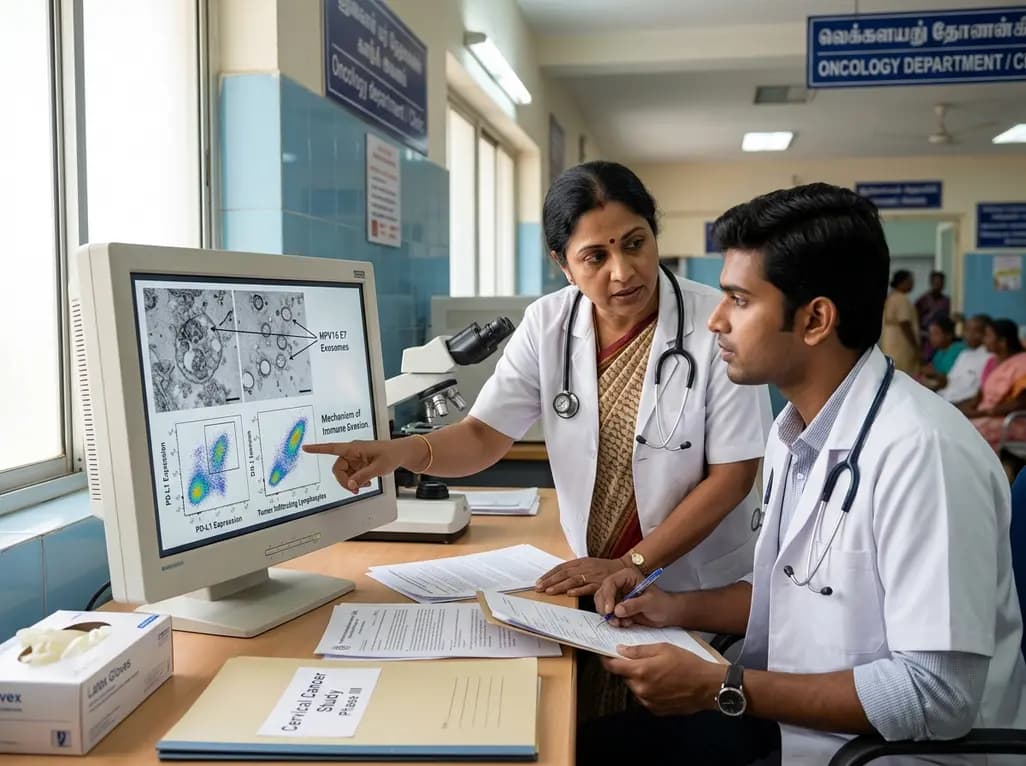
New research reveals that HPV16 E7 exosomes significantly upregulate PD-L1 on tumor-infiltrating lymphocytes in cervical cancer, driving local immune suppression and correlating with poorer patient survival. These findings expose key mechanisms of immune evasion with direct relevance to checkpoint blockade therapies.
Today

Partial heart transplantation offers living, growth-capable cardiac valve replacements for children. While orthotopic heart transplantation faces severe logistical barriers in low-resource settings, partial transplantation presents lower graft ischemia sensitivity and simplified immunosuppression protocols.
Today
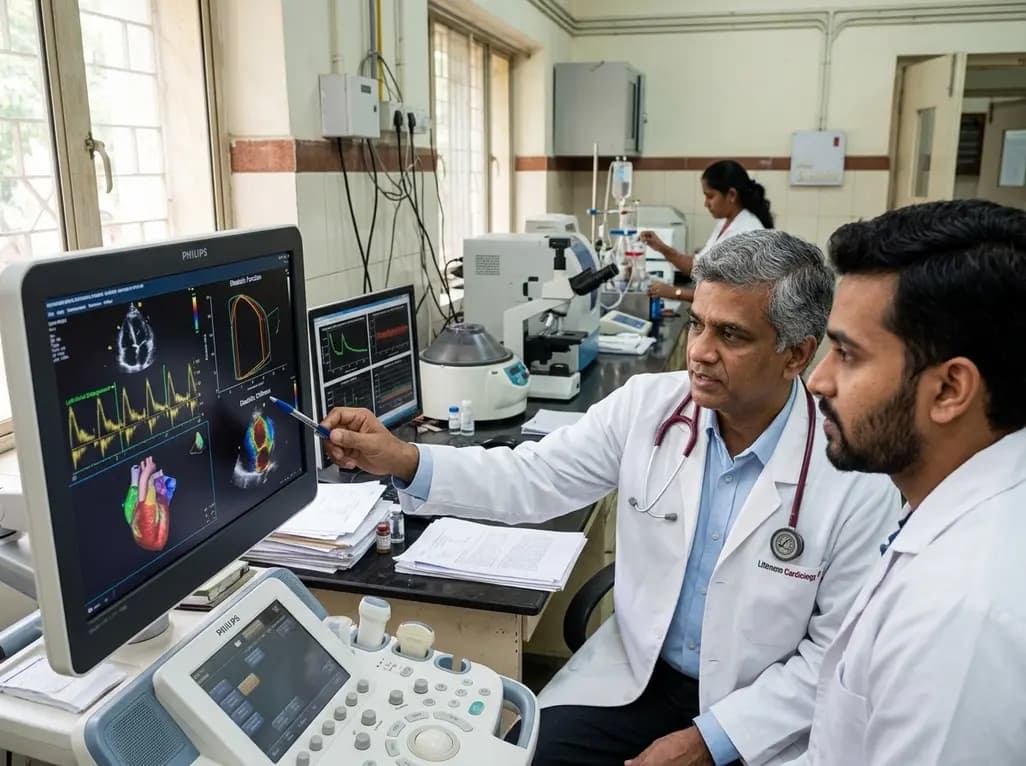
A study evaluates a cardiometabolic HFpEF model combining metabolic stress with chronic mineralocorticoid excess. The findings reveal profound diastolic stiffness, endothelial dysfunction, and pulmonary hypertension, illuminating key pathophysiological mechanisms for targeted cardiopulmonary therapies.
Today
