.webp&w=384&q=75)

Loading, please wait...
Loading, please wait...
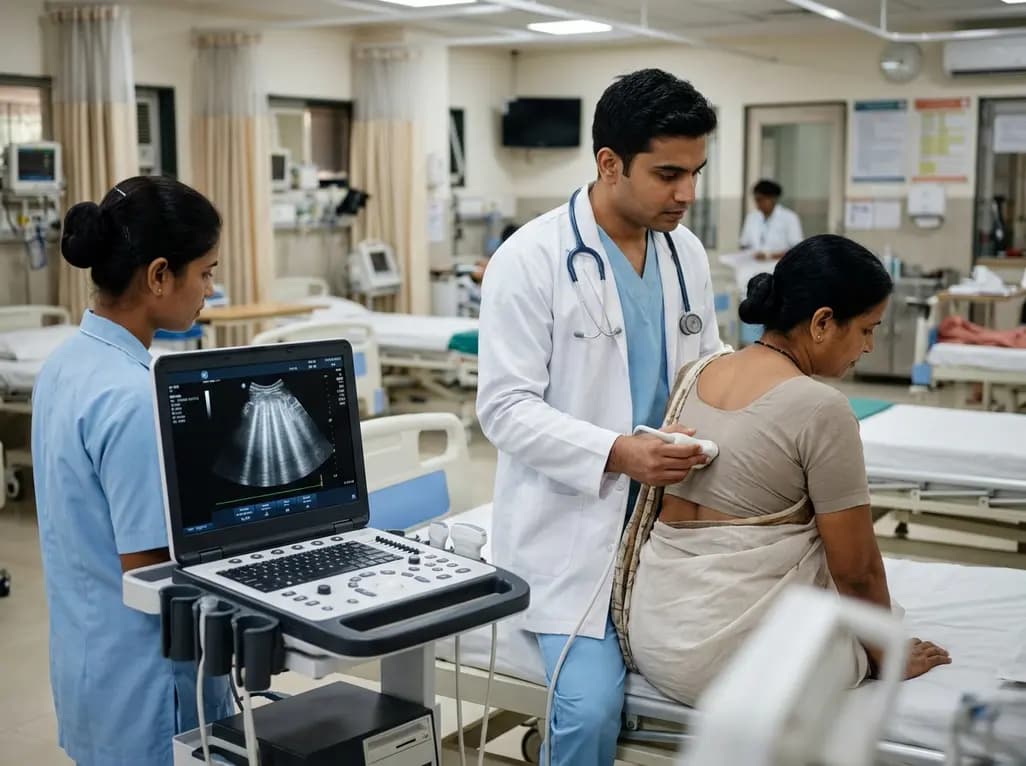
Bedside thoracic imaging has fundamentally transformed how clinicians evaluate acute respiratory distress, and recent advances in AI lung ultrasound have greatly enhanced diagnostic confidence in emergency and intensive care settings. Specifically, point-of-care ultrasonography offers rapid diagnostic clarity without exposing critically ill patients to ionizing radiation. Within this imaging modality, clinicians inspect the pleura to detect vertical hyperechoic reverberation artifacts known as B-lines. These dynamic artifacts signify alveolar-interstitial syndrome and partial lung deaeration. Consequently, they commonly alert clinicians to acute cardiogenic pulmonary edema, pneumonitis, interstitial pneumonia, or diffuse alveolar damage. Timely identification of B-lines dramatically refines differential diagnoses and accelerates targeted therapeutic interventions at the bedside.
However, traditional point-of-care ultrasonography demands substantial technical proficiency, fine motor control, and acoustic spatial orientation. Many non-radiologist physicians and frontline healthcare workers find image acquisition and artifact interpretation challenging. Subtle probe adjustments, rib shadowing, patient positioning difficulties, and tachypnea frequently impede novice operators. As a result, diagnostic reliability often fluctuates between different clinical environments and shift timings. To address these persistent bottlenecks, engineering researchers have developed advanced deep learning systems. Recent innovations in AI lung ultrasound now provide real-time scanning navigation and automatic quality verification. By guiding users through complex anatomic windows, these software platforms empower nonexpert personnel to secure dependable clinical data rapidly.
To determine whether automated guidance tools can bridge the clinical experience gap, investigators designed a rigorous multicenter diagnostic trial. Specifically, this preplanned secondary analysis evaluated an advanced deep-learning algorithm designed for real-time B-line annotation and automated clip acquisition. The study recruited adult patients presenting with acute shortness of breath across diverse clinical sites. Each enrolled participant underwent two consecutive examinations using a standardized eight-zone lung ultrasound protocol. Consequently, this comparative methodology enabled direct clinical performance benchmarking between distinct operational cadres under identical pathological conditions.
First, a trained healthcare professional, such as a nurse, respiratory therapist, or medical assistant, performed an examination using the Lung Guidance artificial intelligence platform. Importantly, these operators received brief, standardized training prior to study commencement without requiring extensive clinical sonography backgrounds. Second, a fellowship-trained ultrasound expert performed an independent examination without artificial intelligence assistance. To establish an unbiased reference standard, five blinded ultrasound experts conducted independent remote evaluations. These expert readers established the definitive ground truth validation for image quality and pathological artifacts. Furthermore, the trial examined balanced accuracy and positive predictive values to determine whether novice operators could reliably trigger automatic video capture during real-time bedside scanning.
The study yielded remarkable statistical findings that validate automated image acquisition algorithms in acute clinical practice. Overall, the deep-learning algorithm achieved strong diagnostic performance during real-time clinical execution. The balanced accuracy for detecting and auto-capturing B-line clips reached 78 percent, with a 95 percent confidence interval spanning 74.2 percent to 80.8 percent. Furthermore, the system demonstrated an impressive positive predictive value of 91 percent, with a 95 percent confidence interval between 80.4 percent and 96.1 percent. Therefore, when the software detected pathologic lung deaeration and recorded a clip, expert readers overwhelmingly confirmed true pathology.
In addition to artifact detection, the software incorporated an automated scoring function to quantify B-line severity across individual zones. Clinicians historically face substantial inter-observer discordance when counting rapid, coalescent B-lines in decompensated patients. However, this artificial intelligence model demonstrated outstanding concordance with ground truth ratings established by expert panels. Researchers evaluated the severity assessment function using Gwet's Agreement Coefficient. The model achieved a scaled agreement coefficient of 96 percent, with a confidence interval of 94.0 percent to 97.9 percent. Consequently, the automated algorithm not only identifies pathological reverberations but also grades disease burden with near-expert precision. These robust metrics prove that algorithm-guided capture preserves clinically meaningful data across heterogeneous patient cohorts.
These findings carry profound operational implications for high-volume clinical departments where time-sensitive decisions dictate patient outcomes. In overcrowded emergency rooms and intensive care units, rapid triage dictates patient survival and bed turnover. Point-of-care lung ultrasound substantially shortens the interval to targeted medical therapy, such as intravenous loop diuretics, vasodilators, or noninvasive positive pressure ventilation. Nevertheless, the lack of immediate expert sonographers frequently limits round-the-clock implementation in tertiary care hospitals. When nonexpert staff can capture diagnostic-quality clips, triage protocols become faster and considerably more resilient. Consequently, on-duty physicians can review pre-acquired video loops immediately rather than performing entire scans themselves.
Moreover, automated capture mitigates documentation burden, examination variability, and operator cognitive fatigue. In conventional clinical practice, novice operators often struggle to freeze frames or save appropriate cine loops while maintaining adequate probe pressure. In contrast, the software detects optimal acoustic windows and captures relevant video segments automatically without manual interruption. Furthermore, standardized automated severity scoring eliminates subjective grading discrepancies between serial examinations. Therefore, medical teams can track fluid overload shifts and therapeutic response across nursing shifts with unprecedented consistency. By streamlining workflow and reducing diagnostic ambiguity, intelligent acquisition tools meaningfully enhance patient safety.
Beyond tertiary academic referral centers, intelligent ultrasound guidance provides invaluable diagnostic utility for underserved and resource-constrained healthcare environments. For example, rural primary healthcare centers, community clinics, and peripheral casualty units frequently lack dedicated sonologists or advanced radiographic suites. In such environments, transferring every dyspneic patient for cross-sectional computed tomography poses substantial logistical and financial burdens. AI-guided point-of-care devices allow general duty medical officers, community health workers, and paramedics to obtain diagnostic-grade imaging locally. Consequently, peripheral healthcare networks can detect heart failure exacerbations, pneumonia, or pulmonary edema early in outpatient settings.
Furthermore, technology platforms that standardize clip acquisition lay the groundwork for comprehensive automated diagnostic systems worldwide. Future software iterations can seamlessly combine B-line auto-capture with algorithms that assess pleural effusions, subpleural consolidations, and pneumothorax. In addition, decentralized teleradiology networks can leverage these standardized cine loops for remote specialist verification and audit trails. Because the acquisition algorithm ensures optimal image quality, remote consulting physicians can interpret findings with complete clinical confidence. Therefore, scaling these intelligent tools promises to democratize point-of-care ultrasound, bridging existing healthcare disparities and improving respiratory diagnostics across diverse clinical environments.
The artificial intelligence algorithm analyzes real-time video frames using deep convolutional neural networks. It identifies pleural sliding, locates vertical laser-like hyperechoic artifacts extending to the bottom of the screen, and tracks their persistence throughout the respiratory cycle. Once the system detects characteristic B-lines that meet pre-established diagnostic quality criteria, it automatically triggers video clip recording and assigns an objective severity score reflecting the overall degree of pulmonary congestion.
Yes, clinical validation trials confirm that nonexpert operators achieve high diagnostic accuracy when supported by deep learning tools. In the multicenter study, trained healthcare professionals without prior sonography expertise utilized artificial intelligence guidance to perform eight-zone examinations. The software provided visual cues to optimize probe position and automatically captured diagnostic clips. Masked expert readers confirmed that these operator acquisitions matched the diagnostic clarity achieved by fellowship-trained ultrasound specialists.
Automated B-line capture substantially minimizes operator dependence, eliminates manual freezing errors, and standardizes image documentation across busy emergency and intensive care units. Furthermore, it accelerates clinical triage by allowing frontline nursing and allied health staff to record standardized examinations before physician consultation. Consequently, physicians can review high-quality pathology clips immediately, differentiate acute heart failure from chronic obstructive pulmonary disease faster, and track objective treatment responses with minimal inter-observer variability.
Disclaimer: This content is for informational and educational purposes only. It is not intended to substitute for professional medical advice, diagnosis, or treatment. Always seek the advice of your physician or other qualified health provider with any questions you may have regarding a medical condition. Refer to the latest local and national guidelines for clinical practice.
References

Read summarized clinical updates, watch expert medical content, and earn CME certifications right from your smartphone.
Open your smartphone camera to scan and install.





A multicenter study reveals that deep learning software empowers nonexpert clinicians to automatically capture and accurately score B-lines on lung ultrasound, achieving diagnostic accuracy and severity agreement comparable to expert sonographers in acute dyspnea.
last month

As monsoon seasons elevate arboviral disease threats, Tamil Nadu has initiated an ICMR-monitored evaluation of the tetravalent dengue vaccine in Tenkasi district. Clinicians emphasize clinical monitoring, public prevention, and high-quality early pediatric care to reduce disease morbidity across endemic regions.
Today

Leucine Rich Bio has introduced South Asia's first comprehensive vaginal microbiome test, BugSpeaks. By profiling microbial dysbiosis, pathogens, and antimicrobial resistance, this next-generation diagnostic platform provides clinicians with deeper insights into recurrent infections, fertility, and reproductive health.
Today

Review how tailored exercise programs benefit frail older patients with heart failure. Explore pathophysiological mechanisms, individualized training prescriptions, and strategies to overcome adherence barriers in clinical practice.
Today

This comparative study evaluates posterior labral tears with and without glenohumeral instability, highlighting distinct demographic patterns, MRI underestimation in stable shoulders, and successful arthroscopic repair outcomes.
Today

A clinical study demonstrates that early intervention with tocilizumab, either as monotherapy or bridged with corticosteroids, achieves significant proptosis reduction and resolves active inflammation in treatment-naive thyroid eye disease.
Today
