.webp&w=384&q=75)

Loading, please wait...
Loading, please wait...

Circadian biology dictates that resting states, energy homeostasis, and body temperature interact in a tightly coordinated physiological network. Recent preclinical investigations have shed vital light on how ambient thermal and photic conditions modulate sleep metabolic rhythms. When individuals enter slumber, profound shifts occur in autonomic tone, metabolic substrate preference, and heat dissipation. However, modern lifestyles frequently disrupt these delicate circadian programs through artificial climate control and prolonged nocturnal light exposure. Understanding how external temperature gradients interact with sleep-wake states helps clinicians better comprehend metabolic flexibility and nocturnal energy balance. Consequently, exploring these environmental interactions offers compelling insights into the pathophysiology of cardiometabolic disorders, diurnal hormonal variation, and sleep architecture disturbances.
The physiological transition from active wakefulness to sleep triggers significant systemic adjustments in energy allocation. During wakefulness, elevated locomotor activity and vigilance demand substantial energy, driving higher carbohydrate utilization and metabolic rates. Conversely, the onset of sleep initiates a restorative state characterized by marked decreases in overall energy expenditure. Preclinical research demonstrates that entry into non-rapid eye movement sleep consistently coincides with a reduction in core body temperature. Concurrently, metabolic substrate utilization shifts toward relative fat oxidation, which researchers quantify through a declining respiratory exchange ratio. This drop reflects an adaptive mechanism that preserves carbohydrate stores while supporting cellular repair during resting intervals. Furthermore, continuous electroencephalography and electromyography confirm that these metabolic shifts synchronize precisely with neurophysiological transitions. Therefore, sleep metabolic rhythms represent not merely passive consequences of physical inactivity, but actively regulated bioenergetic states. When external perturbations interrupt these rhythmic adjustments, tissue energy balance and systemic metabolic efficiency can suffer noticeable impairments. Clinicians should recognize that autonomic nervous system adjustments govern both this thermoregulatory decline and the metabolic substrate switch. Thus, preserving uninterrupted sleep cycles remains foundational for normal fuel partitioning and cellular homeostasis.
Environmental temperature exerts a profound influence on basal metabolic demands and nocturnal physiology. In sub-thermoneutral environments, such as a cool twenty-one degrees Celsius setting, organisms must expend considerable energy on thermogenesis to preserve core thermal balance. Consequently, entering sleep in these cooler environments produces a pronounced drop in metabolic rate alongside a marked increase in fat oxidation. Under these conditions, the metabolic differences between sleep and wakefulness appear sharp and well-defined. However, when ambient temperatures approach thermoneutrality, approximately thirty degrees Celsius in murine models, the metabolic landscape changes drastically. At thermoneutrality, the requirement for active metabolic heat production vanishes because minimal physical thermoregulation maintains homeostatic warmth. As a result, the prominent differences in energy expenditure and substrate utilization typically observed between sleep and wakefulness become substantially attenuated. Researchers observe that core body temperature remains higher, and the drop in respiratory exchange ratio during sleep diminishes. These findings illustrate that ambient cold amplifies the bioenergetic contrast between active states and resting intervals. Moreover, living or sleeping in persistent thermoneutral conditions might dampen normal circadian energy fluctuations, thereby reducing metabolic flexibility over time.
Beyond thermal factors, photic inputs represent primary environmental zeitgebers that govern circadian pacemakers within the suprachiasmatic nucleus. Investigators evaluated how short-term restricted-light and extended-dark conditions, such as eighteen hours of darkness paired with six hours of light, influence nocturnal rhythms. Interestingly, short-term exposure to these expanded dark phases did not dramatically alter total sleep duration or basic thermoregulatory rhythms under standard testing environments. Nevertheless, altering photoperiods produced distinctive effects on substrate selection when combined with thermoneutral temperatures. Specifically, researchers observed that the light-dark cycle interacted with ambient warmth to modify state-linked respiratory exchange ratios across sleep-wake cycles. This subtle yet meaningful interaction suggests that photic cues fine-tune enzymatic pathways and substrate preference even when sleep architecture appears grossly stable. In addition, these findings reveal that circadian regulation of fuel utilization does not rely entirely on sleep duration alone. Instead, environmental lighting and ambient temperature function synergistically to orchestrate downstream metabolic pathways. Thus, clinical assessments of circadian disruption must look beyond simple sleep deficits. Physicians must also consider how abnormal lighting schedules combined with indoor climate control affect systemic metabolic harmony.
Although primary experimental findings derive from murine models, their translational implications for human cardiometabolic medicine are extensive. Modern human environments heavily rely on continuous indoor heating, air conditioning, and ubiquitous blue light from electronic devices. Consequently, many individuals spend their lives within perpetual thermoneutral zones while experiencing chronically delayed photic cues. These artificial conditions may blunt normal nocturnal drops in core temperature, impairing healthy shifts toward lipid oxidation during restorative sleep. Over time, persistent attenuation of nocturnal fat burning can contribute to metabolic inflexibility, insulin resistance, and weight gain. Furthermore, patients with type 2 diabetes frequently exhibit disrupted nocturnal dipping patterns in blood pressure and core temperature. Disruptions in sleep metabolic rhythms may exacerbate chronic low-grade inflammation, adipose tissue dysfunction, and visceral adiposity. By appreciating how ambient temperature shapes substrate switching, endocrinologists can better understand why erratic sleep environments hinder weight management. Moreover, these mechanistic insights highlight potential therapeutic avenues focused on environmental chronobiology. Promoting healthy nocturnal cooling may help restore natural fuel utilization dynamics in patients battling metabolic syndrome and obesity.
Integrating chronobiological principles into everyday clinical counseling provides actionable strategies for improving metabolic and restorative outcomes. Sleep specialists and primary care physicians frequently advise patients on sleep hygiene, yet thermal parameters often receive inadequate attention. To facilitate natural nocturnal thermoregulation, clinicians should encourage patients to maintain cooler sleeping quarters. A moderately cool bedroom environment promotes cutaneous vasodilation in distal extremities, facilitating the physiological core cooling necessary for rapid sleep onset. Additionally, lower ambient sleeping temperatures prevent excessive thermal insulation from blunting restorative sleep stages and nocturnal metabolic adjustments. Simultaneously, minimizing ambient light exposure prior to bedtime supports endogenous melatonin secretion, which plays an integral role in both thermoregulation and glucose metabolism. Patients should eliminate intrusive light sources, avoid stimulating digital screens before retiring, and maintain consistent sleeping schedules. Furthermore, physicians managing obesity, sleep apnea, or metabolic dysregulation should routinely screen for environmental sleep disruptors. By aligning bedroom temperatures and dark-light cycles with evolutionary biological cues, patients can substantially enhance their metabolic efficiency and overall sleep quality.
Ambient temperature directly shapes nocturnal bioenergetics by altering thermoregulatory demands during sleep. In cooler conditions, the body actively downregulates core temperature and shifts substrate utilization toward increased fat oxidation. Conversely, excessively warm or thermoneutral environments blunt this natural physiological drop. Consequently, elevated nocturnal temperatures reduce metabolic flexibility, diminish nighttime energy expenditure differences between sleep states, and potentially disrupt normal circadian lipid metabolism over prolonged periods.
The respiratory exchange ratio quantifies the ratio of carbon dioxide produced to oxygen consumed, indicating metabolic fuel utilization. A lower ratio signifies predominant lipid oxidation, whereas a higher value reflects reliance on carbohydrates. During healthy sleep, this metric typically declines, demonstrating that tissues actively transition toward burning fatty acids for cellular maintenance. Monitoring this ratio provides crucial diagnostic insight into metabolic flexibility and circadian energy homeostasis during resting periods.
Altered photoperiods influence systemic metabolic signaling by shifting central circadian pacemakers without necessarily altering total sleep duration. When expanded dark periods interact with warmer ambient conditions, they modify the state-dependent selection of energy substrates. Specifically, these photic shifts modulate the respiratory exchange ratio across sleep stages. Therefore, inappropriate light exposure disrupts normal metabolic switching independently of sleep deprivation, highlighting the metabolic risks posed by modern nocturnal lighting.
Disclaimer: This content is for informational and educational purposes only and does not constitute medical advice, diagnosis, or treatment. Always consult a qualified healthcare provider regarding any clinical condition or therapeutic decision. Refer to the latest local and national guidelines for clinical practice.
References

Read summarized clinical updates, watch expert medical content, and earn CME certifications right from your smartphone.
Open your smartphone camera to scan and install.





A preclinical study in mice reveals how ambient temperature and lighting modulate sleep-associated metabolic and thermoregulatory rhythms. Cold conditions increase nocturnal fat oxidation and lower body temperature, while thermoneutrality blunts these shifts, offering key insights for cardiometabolic health.
last month

The TREM-AB open-label pilot study evaluated a wearable passive nonlinear vibration absorber for essential tremor. The Nonlinear Energy Sink bracelet reduced clinical Fahn-Tolosa-Marin tremor scores by 32.1% and electrophysiological tremor power by 49.2% with no adverse effects reported.
Today

A population-based study of 20,928 children reveals that small vulnerable newborns face sex-divergent mental capital outcomes at ages 6-7: term SGA girls show higher behavioral difficulties and lower resilience, while preterm non-SGA boys experience increased behavioral problems.
Today
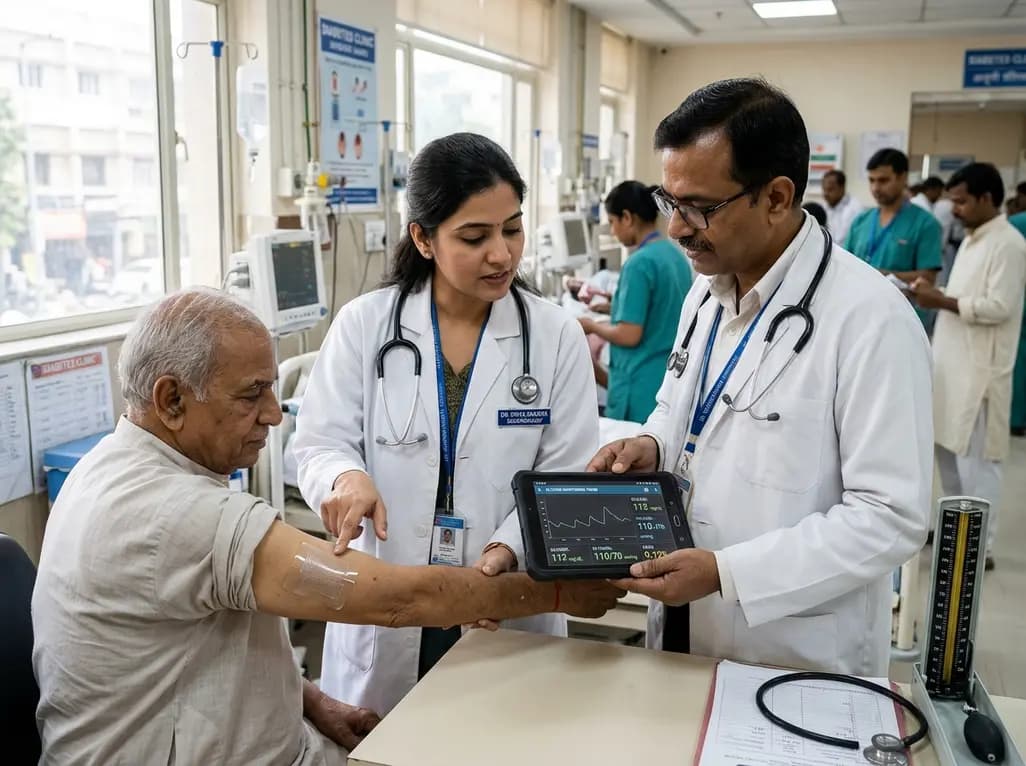
A breakthrough ultrathin multimodal sensor decouples physical hemodynamic monitoring from disposable electrochemical calibration, achieving long-term wearable glucose prediction with 81.36% accuracy and a 9.12% MARD. This offers a robust, drift-free solution for outpatient metabolic surveillance.
Today

A comparative review of tension band wiring and intramedullary screw fixation in thumb metacarpophalangeal arthrodesis, evaluating union rates, hardware complications, and clinical outcomes.
Today

Following regulatory scrutiny from FSSAI regarding promotional representations and lean muscle preservation claims, Dr. Reddy's Laboratories and Nestlé Health Science are currently reviewing the branding and marketing strategy for their joint nutritional supplement Celevida GLP+.
Today
